Smart eyewear OEM/ODM manufacturer · Shenzhen, China +86 19835872450 sales@cynrin.com
WHITE-LABEL SHELF · LOW-MOQ PLATFORMS · QUICK LAUNCH

OEM-ready smart glasses: mature platforms you can brand today

OEM-ready means the platform is already engineered, certified and shipping — your program layers brand identity, packaging and approved finish options onto it instead of funding new development. This page separates the shelf of ready platforms from the workbench of engineering programs, shows what each tier costs in minimums and calendar time, and gives a four-question decision tree for choosing between them without inventing quotes per model.

THE THREE PROGRAM TIERS

Ready, branded, engineered — know which tier you are buying

The three terms are used interchangeably across the industry even though they describe different commitments and risk profiles. CYNRIN prices and schedules them as distinct tiers; the figures below are the standing program terms, while model-specific adaptation work is always confirmed per SKU in the quotation.

Ready

Catalog / OEM-ready

A mature platform in serial production. You order the existing configuration with identity work layered on: approved colorways, brand marks, packaging, manuals and accessory bundles. No tooling, no electronic redesign, lowest first-order risk and the fastest calendar.

FROM 500 PCS · NO TOOLING · SHORTEST LEAD TIME
Branded OEM

Private-label program

The same proven platform with a broader brand scope: custom packaging systems, retail inserts, case design, coordinated accessories and configuration bundling. Engineering stays on the platform line, so certification remains inherited rather than re-run.

FROM 1,000 PCS · BRAND SYSTEM SCOPE
Engineered

ODM development

A modified or new platform: custom tooling, structural change, optical or electronic adaptation, firmware features. It opens design space but introduces NRE, tooling lead time and a staged validation arc before mass production.

3,000–5,000 PCS · TOOLING + NRE · MULTI-MONTH ARC
THE READY SHELF

Three platform families, already in production

Every family below ships today with established tooling, firmware and supplier lines. Representative models are linked so you can inspect the actual build; the full model lists live on the category pages. Platform maturity, available finish options and adaptation points per specific model are confirmed in the RFQ response rather than claimed generically.

AI CAMERA FAMILY

First-person capture platforms

Camera-first frames for creator, travel and documentation channels, with open-ear audio for calls.

  • Reference model in serial production: V03-T5 AI Camera Glasses
  • Related catalog models: CY03, CY05, KY06, MT5, MT6, L1 Pro, L2 Ultra, V03 Pro, S7
  • Brand layer: marks, packaging, manuals, approved colorways and accessory kits
  • Fit: content-led launches with a short selling season
Ready · from 500Browse camera models →
BLUETOOTH AUDIO FAMILY

Open-ear audio frames

Audio-first everyday frames: hands-free calls, voice and media without an in-ear device.

  • Reference model in serial production: E13 Bluetooth Audio Glasses
  • Related catalog models: K02, D11, D12, G07, YK12, LC-105-1, LC-105-2
  • Brand layer: marks, case, packaging, lens and finish options within platform range
  • Fit: optical, fashion and gifting channels; broadest first-season audience
Ready · from 500Browse audio models →
SPORT FAMILY

Active-use audio and camera frames

Retention-first builds for cycling, running and outdoor use, with sealing matched to the activity.

  • Reference model in serial production: K01 Sport Glasses
  • Related catalog models: V06, D17, YKC02, ZH12
  • Brand layer: sport tints, marks, rugged cases and fleet packaging
  • Fit: sport brands, corporate and field fleets
Ready · from 500Browse sport models →
TIER COMPARISON

What changes between a ready order and an engineered one

DimensionCatalog / OEM-readyBranded OEMODM development
Entry minimumFrom 500 pcsFrom 1,000 pcs3,000–5,000 pcs per program
Tooling / NRENoneNone for structure; packaging tooling as scopedTooling and engineering fees apply
Customization depthMarks, approved finishes, packaging, manualsFull brand system, cases, bundles, coordinated SKUsStructure, optics, electronics or firmware changes
Certification loadInherited from the shipping platformInherited; file reissued with brand detailsRe-assessment where the change affects radio, sealing or safety
CalendarSamples in 5–15 days; mass production typically 15–40 days after approvalAdds artwork and packaging cyclesStaged multi-month arc with EVT/DVT/PVT gates
First-season riskLowest — the product is already proven in marketLow — engineering frozen, brand variables onlyHigher — design and validation uncertainty

Indicative standing terms for planning only. Model-specific finish availability, adaptation cost and confirmed schedules are issued per configuration with the RFQ response; the phase-by-phase calendar is shown on the development process page.

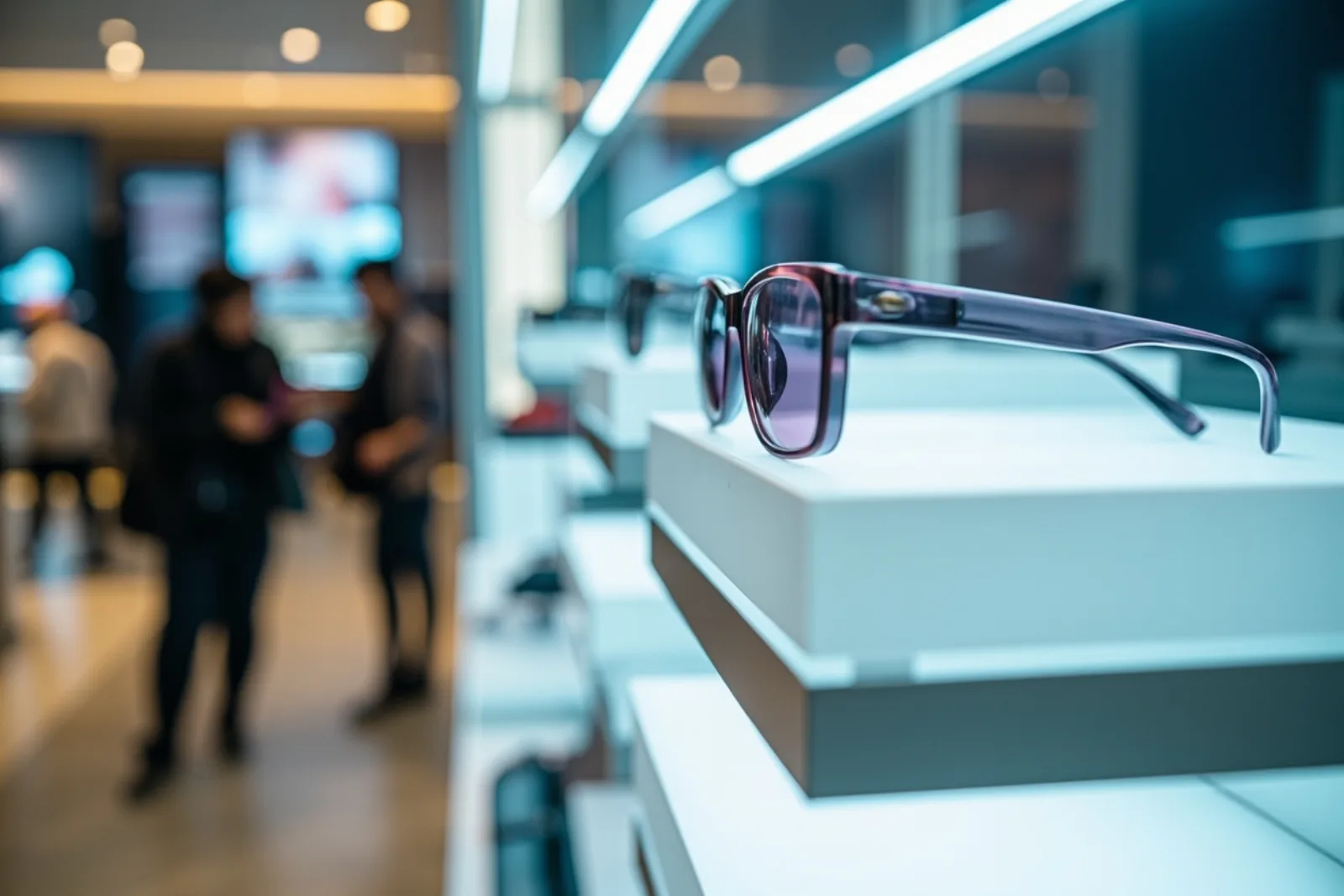
Retail shelf presentation of branded smart glasses programs in packaging systems
THE FOUR-QUESTION DECISION TREE

Ready platform or engineered program? Answer in order

Does a shipping platform already cover the feature set?

If the camera, audio or sport families match your use case, stay on the shelf. Moving to engineering only to recreate an existing platform is the most common avoidable cost.

Is your differentiation brand-level or structural?

Identity, packaging and presentation are brand-level — the ready and branded tiers handle them. A different hinge, temple geometry, lens system or electronic layout is structural and belongs in ODM.

When must goods be on sale?

A season measured in weeks points to catalog; a season measured in quarters can absorb branding cycles; only a roadmap measured in seasons supports a tooling program. Work backwards from the delivery date.

Does the budget carry one-time fees?

Ready orders carry per-unit economics only. If tooling and NRE are not in the launch budget, the answer is structural regardless of design ambition — revisit engineering for the second season after catalog revenue.

THE CHANGE BOUNDARY

What a ready platform can and cannot change

Most launch disputes come from treating structural changes as if they were branding choices. The boundary below keeps quotes honest and schedules safe.

Changes inside the ready / branded tiers

  • Brand marks on temples, lens etching where the lens program allows, and case badges
  • Approved colorways and finishes already validated on the platform
  • Packaging, retail inserts, manuals, quick-start cards and language versions
  • Accessory bundling: cases, cloths, cables, charging accessories from the approved range
  • Configuration bundles across models of the same family

Changes that move the order to engineering (ODM)

  • New frame, temple or hinge geometry, or new tooling of any kind
  • Lens-system changes beyond the platform's validated lens program
  • Battery, speaker, camera or charging-architecture changes
  • Custom firmware features, companion-app changes or new radio behavior
  • Sealing or ingress-rating changes above the platform's validated level

The same boundary governs certification: brand-layer work inherits the platform file, structural work can trigger re-assessment. Read the customization scope on the customization page, and understand the importer-side responsibilities in white label versus private label.

HOW A READY ORDER MOVES

From shortlist to first shipment on a catalog platform

1. Shortlist on family and channel. Pick the family that matches how you already sell — camera for content-led channels, audio for everyday and optical, sport for active use — and shortlist two or three models rather than twenty. The three-family comparison is the fastest starting point.

2. Validate with samples. Evaluate 1–10 units of the exact configuration before deposit: fit, finish, function, lens program and packaging mockups. The standing process and timing are on the samples page, and reference samples typically arrive within 5–15 days.

3. Freeze the brand layer. Approve marks, colorways, packaging artwork and manuals against the issued templates; artwork rounds and lead-time logic are detailed on the lead times page. Mass production on approved catalog configurations typically runs 15–40 days after approval.

4. Close the file before balance. Confirm the configuration-specific evidence — radio documents, the GPSR operator details for EU listings, and the battery shipping pack — before freight booking. The written points that protect a first purchase order are collected in the first-order checklist; EU-specific obligations are summarized in the GPSR guide.

Evidence transparency: CYNRIN does not quote model-specific adaptation cost or platform maturity ratings from generic tables. The RFQ response names, per exact configuration, which finish and branding options are open, the entry tier that applies, the calendar, and any change that would move the SKU onto an engineered path with associated fees. Lot quality on ready platforms is held to the same gates described on the in-process quality page.

FAQ

OEM-ready programs: the common questions

What exactly makes a model "OEM-ready"?
The platform is in serial production with frozen tooling and firmware, established supplier lines and an existing certification file. A buyer layers approved brand and packaging work onto it without funding development; ready programs begin at 500 pcs.
Can I change colors, logos and packaging on a ready model?
Yes — brand marks, approved colorways and finishes, packaging systems, manuals and accessory bundles are the normal brand-layer scope. Structural, optical or electronic changes are outside the ready tier and move the program to ODM with tooling and NRE.
What is the minimum order for each tier?
Catalog and OEM-ready configurations start at 500 pcs, branded OEM programs at 1,000 pcs, and engineered ODM programs at 3,000–5,000 pcs. Exact entry points are confirmed per model and configuration in the quotation; see the MOQ page.
How fast can a branded ready model ship?
Reference samples typically arrive within 5–15 days, and mass production on an approved catalog configuration typically runs 15–40 days after artwork and deposit, plus freight. Branded packaging cycles add time; the full phase calendar is on the lead times page.
Do ready models carry the certifications my market needs?
Ready platforms ship with their existing evidence file, and the RFQ identifies which documents apply to the exact configuration and destination market — for example RED/GPSR for the EU and the lithium-battery shipping pack. Brand-layer changes inherit the file; structural changes can require re-assessment.

Get the current ready list for your market

Send your channel, destination market and season window. The reply names the ready models, open branding options, entry tier and calendar — per configuration, no generic price lists.

Chat on WhatsApp
Your experience on this site will be improved by allowing cookies.