
Smart glasses technical guides for product teams
The engineering shelf behind the sourcing conversation: display and platform architecture, open-ear audio, battery reality, ingress protection, reliability testing and the quality methods that keep a shipped lot honest. Written for product managers and engineers specifying smart eyewear — technical where technical is warranted, commercial only where it changes an engineering decision.
The complete technology hub: every feature family on the production platforms
AI voice interaction, HD video recording, touch control and child-distance protection — each explained at engineering depth with the trade-offs product teams actually face: power, heat, antenna and acoustic budget. The hub is the fastest way to check whether a desired feature exists on a catalog platform or belongs in a custom ODM scope.
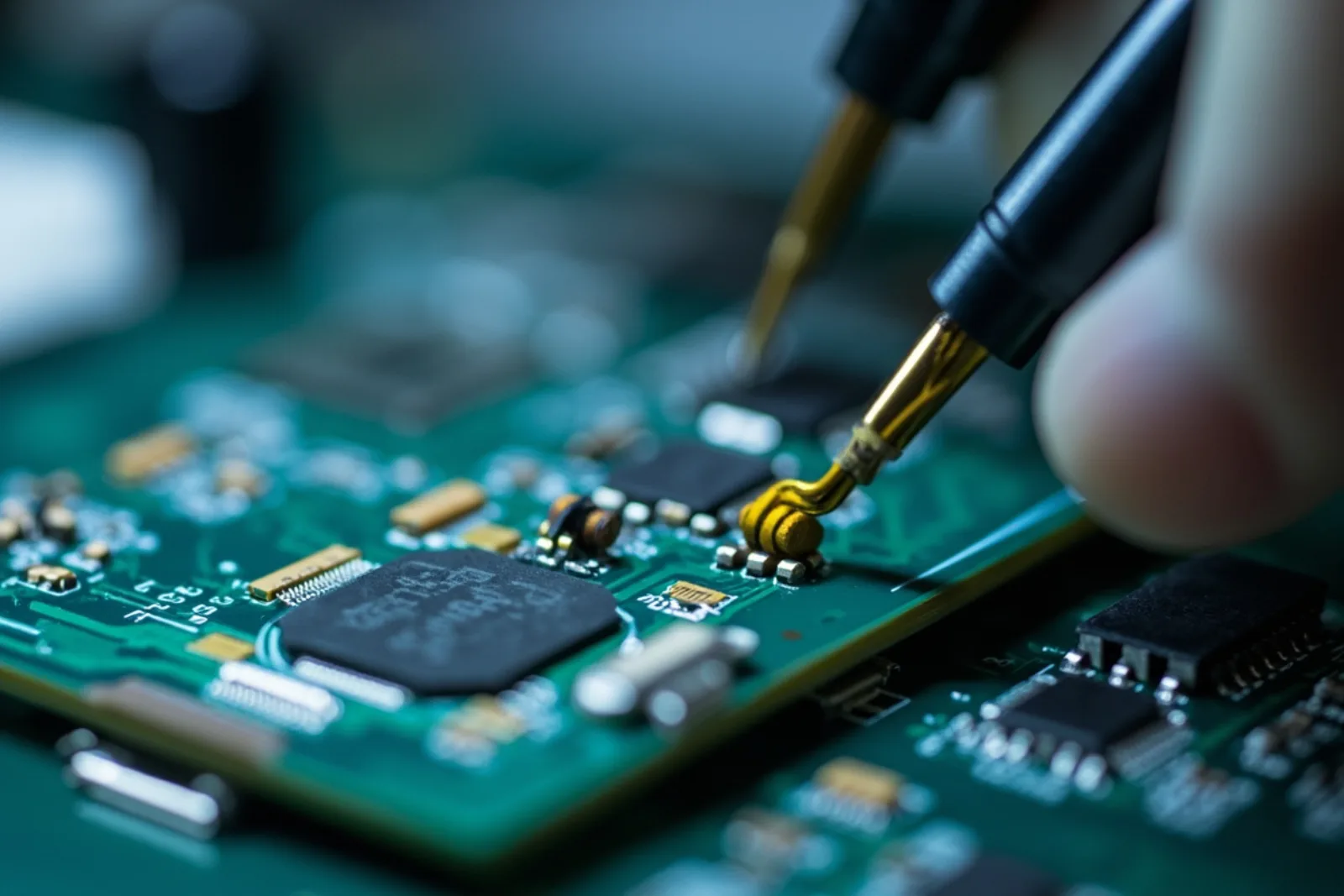
Four bays of technical reading
Guides and reference pages grouped by engineering layer. Feature notes link into the technology hub; the deeper articles live in the technology article category. Each entry states what it is — a deep article, a feature note, a reference page or a platform family — so an engineering reader can move straight from vocabulary to evidence without sorting through sales material, and a sourcing reader can forward the exact plate a compliance or quality desk asked for.
Platforms, optics & displays
Waveguide displays in smart glasses
What waveguide optics cost, weigh and demand from battery and thermal budgets — and why they stay a premium-program decision.
1.2Feature note · cameraHD video recording architecture
Sensor, encoding, storage and thermal constraints behind first-person capture on the camera platform family.
1.3Feature note · interactionTouch control engineering
Gesture zones, false-trigger control and how temple flex affects sensor placement and calibration.
1.4Platform familySport smart glasses platforms
Retention-first frames balancing weight, sealing and acoustic openness for outdoor programs.
1.5Deep article · imaging8MP vs 13MP camera glasses
Why megapixels are a ceiling, not a result — sensor size, lens, stabilization, processing and thermal limits decide real footage.
Audio, voice & power
Speakers & microphones in eyewear
Open-ear leakage, wind noise, mic placement and call-quality trade-offs for audio-first frames.
2.2Feature note · voiceAI voice interaction stack
Wake, connectivity and assistant-service dependencies — and what honestly runs on-device versus in cloud.
2.3Deep article · powerBattery life: figures vs profiles
Why headline hours disappoint, how cell choice and firmware interact, and the test profile a datasheet should publish.
2.4Platform familyBluetooth audio glasses
The audio-first catalog platforms: open-ear listening, calls and everyday-frame styling.
2.5Deep article · acousticsOpen-ear vs bone conduction
How the two transducer families work, where each wins, and why neither technology supports hearing-aid claims.
2.6Deep article · power interfaceMagnetic charging vs Type-C
Sealing, convenience, failure modes and certification load across the three charging architectures — and which channel each suits.
2.7Deep article · radioBluetooth 5.3 vs 5.4
What changed between versions, why implemented behavior beats the badge, and how to verify the LE Audio and SIG declaration story.
Sealing & reliability
IP ratings explained
IPX4/5/7 decoded: the test behind each mark, the activity it covers and the claims it never supports.
3.2Reference · test catalogTesting & reliability methods
Environmental, mechanical, life and ESD test types across DVT, PVT and ongoing production — conditions, specimens and judgment.
3.3Feature note · kidsDistance protection function
How the distance/time-reminder feature works on the kids platform — function limits and the wording boundary around it.
3.4Platform familyKids smart glasses platforms
Lightweight frames and family-oriented features, with the extra documentation discipline children's markets require.
3.5Article · evidence readingReading an IP test report
The four cornerstones of a valid IEC 60529 report, the red flags in supplier dossiers, and what even a clean report cannot prove.
3.6Article · ingress decodedWhat IP54 means for smart glasses
The two digits decoded, why dust-protected is not dust-tight, and the IP54 versus IPX4/55/56/X7 comparison behind honest sport listings.
Quality methods & build economics
In-process quality & AQL
Gates, defect classes, lot sentencing and traceability — the mechanics behind a "QC passed" line.
4.2Reference · capacityProduction capability explained
SMT, labor, aging and material accounts — how committed output and ramp curves are actually calculated.
4.3Article · QC overviewThe smart glasses QC process
IQC/IPQC/OQC in plain language for buyers writing inspection requirements into a contract.
4.4Article · audit questionsQuality questions to ask a supplier
The question set that separates factories with a system from factories with a checklist photo.
4.5Article · architectureProduct platforms beyond the BOM
The invisible systems — thermal, antenna, sealing, firmware lineage — that make identical parts lists ship different products.
Product-team questions about the guides
How do these technical guides differ from the buyer guides?
Can a feature in the hub be added to a different platform?
Are the test conditions in the reliability guide fixed or negotiable?
Where do I find platform-level specifications, not just explainers?
What should an engineering team prepare before a technical call?
Is there an article on combining product families into one range?
Specifying a platform? Bring the feature list.
One technical call maps must/should/nice features to a base platform, names the engineering trade-offs and returns the test annex outline.