Smart eyewear OEM/ODM manufacturer · Shenzhen, China +86 19835872450 sales@cynrin.com

Professional · Industrial & Manufacturing

Smart Glasses for Industrial & Manufacturing Work Assistance

Give production, maintenance and quality teams eyes-up, hands-free assistance: remote expert guidance, first-person inspection capture and step-by-step work instructions on a platform built to survive demanding environments.

Smart glasses used for hands-free work assistance in a manufacturing facility
Private-label & ODM programs — specified per program, not generically

Why smart glasses on the factory floor

Why smart glasses on the factory floor

Industrial teams already wear safety eyewear, so connected glasses add capability without adding another device to manage, charge and lose on the floor. The value is operational: faster expert reach, documented work and fewer interruptions where hands and attention matter.

Hands-free work assistance

Operators follow digital work instructions and confirm steps by voice or touch while both hands stay on the task.

Remote expert support

A first-person camera lets specialists guide on-site technicians through commissioning and faults without travelling to the line.

Inspection & audit capture

Photos and short clips document conditions, defects and corrective actions from the operator's own point of view.

Training & onboarding

New operators see guided procedures overlaid on the real task, shortening shadowing time and protecting expert bandwidth.

Four workflows, four deep guides

Industrial use cases, examined in depth

Each guide covers how the process actually runs, what belongs on the program datasheet, and where CYNRIN's hardware platform meets your MES, QMS, WMS or MDM system.

Where the platform works

Four hands-free workflows across plant and warehouse

Four operating patterns justify a head-worn endpoint. Each row links to the full guide, including the specification checklist and the integration boundary.

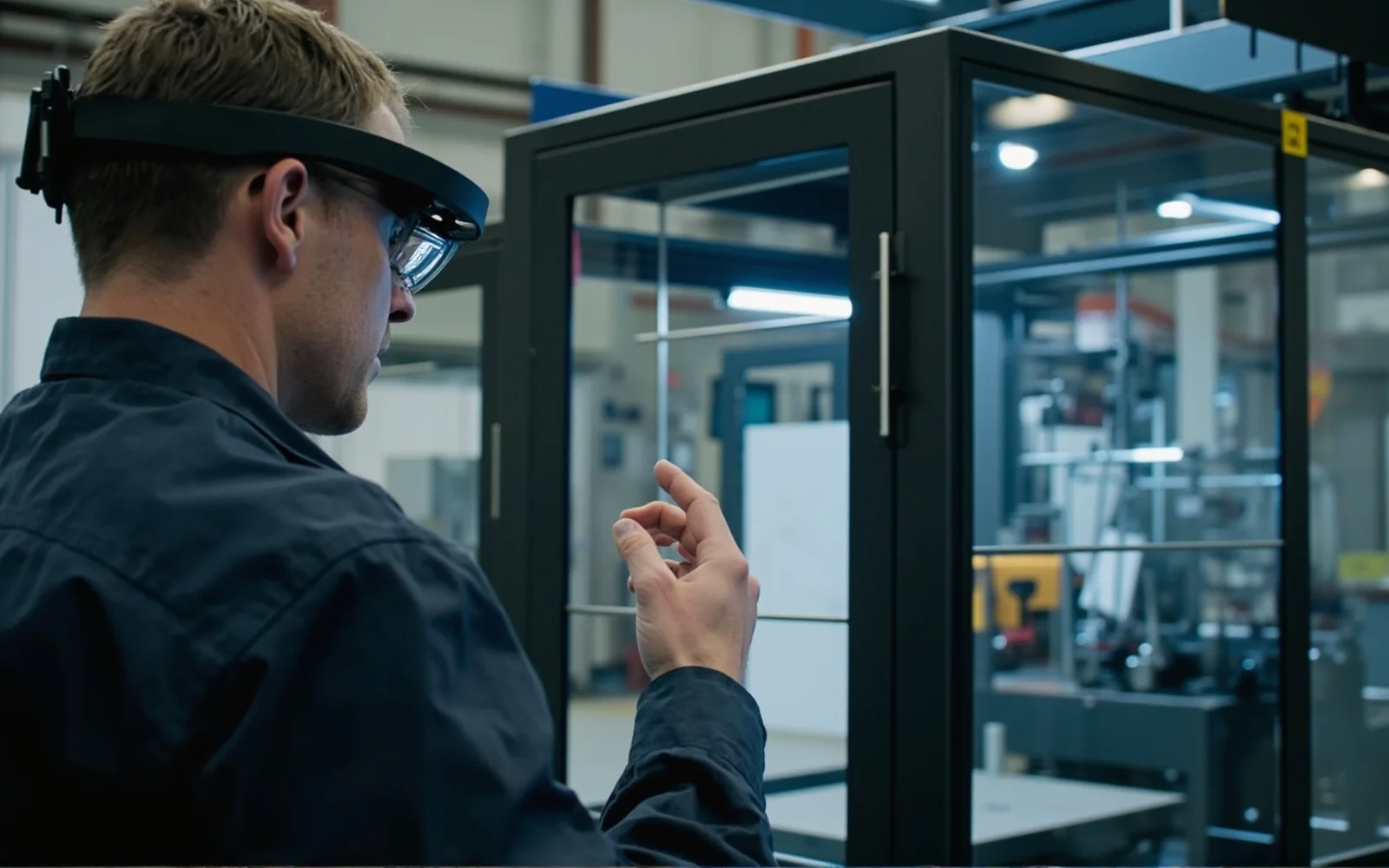
Over-the-shoulder view of a maintenance technician wearing smart glasses while gesturing toward an industrial machine01

Workflow 01 — Field & maintenance

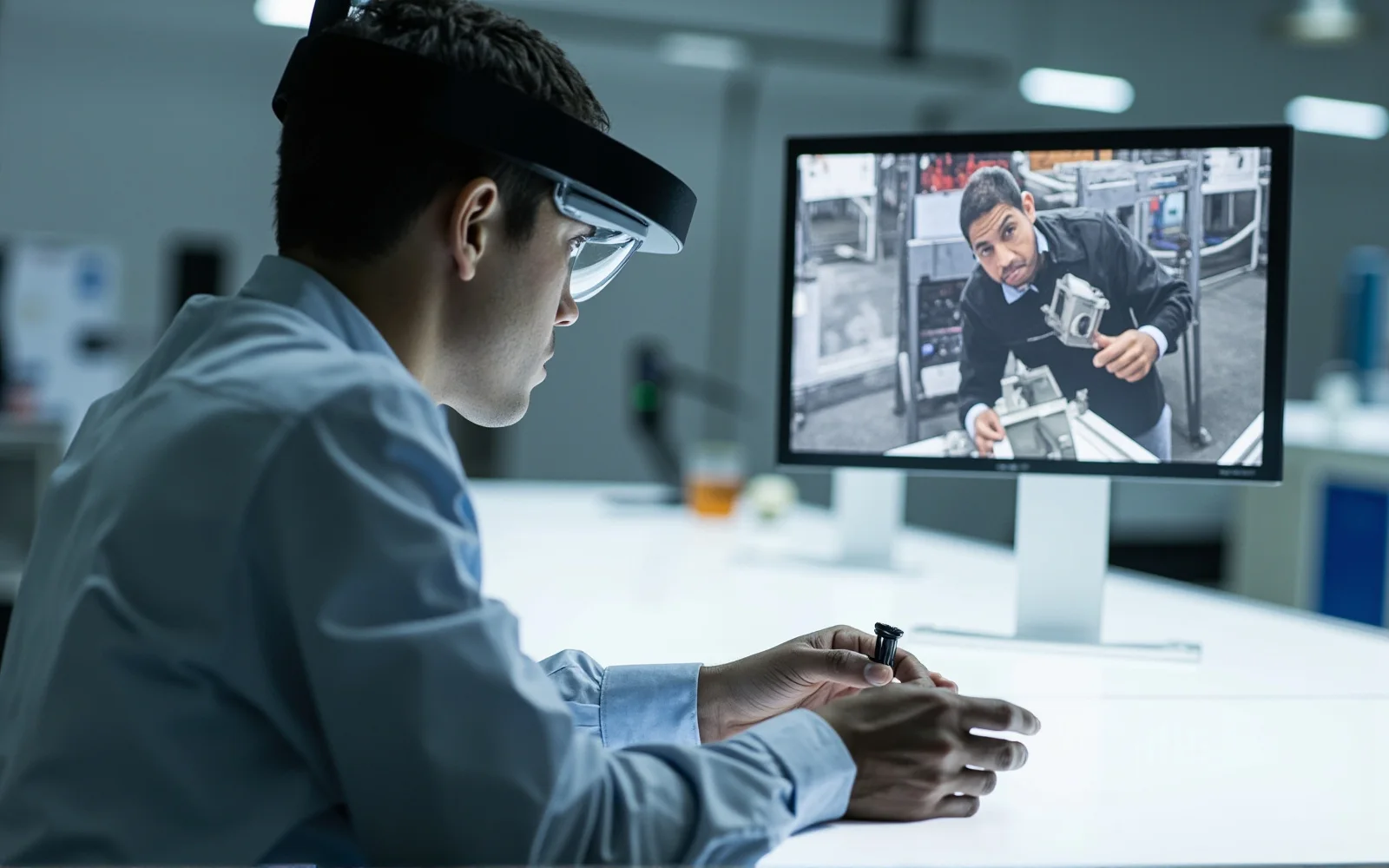
Remote expert assistance and see-what-I-see support

When a machine is down, the specialist who knows it is rarely standing next to it. Head-worn industrial smart glasses stream a first-person, see-what-I-see view so a remote expert can diagnose and talk a technician through commissioning, changeover and fault resolution without boarding a flight. Both hands stay on the equipment, and the call is captured against the asset for the next person who hits the same fault.

  • First-person live video — the expert sees exactly what the on-site technician sees, from the eye-line of the repair rather than a shaky handheld phone.
  • Hands-free for the whole call — answer, share and capture by voice or a single control while keeping gloves and tools on the machine.
  • On-screen remote guidance — pointers, snapshots and step cues sit in the field of view, so instructions land on the part instead of in a chat window.
  • A reusable resolution record — the session and any captured media attach to the work order, turning one expert fix into shared tribal knowledge.

Confirm on the program datasheet

  • Optics: monocular waveguide vs. binocular display, brightness in nits
  • Microphone and speaker performance for the shop-floor noise level
  • Connectivity: Wi-Fi 6 / 5G / Bluetooth and tethering fallback
  • Battery configuration, shift life and hot-swap support
  • Ingress (IP) and drop rating for the selected enclosure

Typical systems in the workflow

Remote-assist / AR call appEAM / CMMSWork-order softwareMDM (Android)SSO / identityPlant Wi-Fi / VPN

CYNRIN supplies the connected-eyewear platform and device layer. The remote-assist application, SSO scope and site network readiness are configured per program; no IP rating or runtime figure is promised outside the program datasheet.

Read the remote expert guide

Assembly operator at a clean workbench following hands-free guided steps through smart glasses02

Workflow 02 — Assembly & production

Digital work instructions for hands-free assembly

Paper travelers and handheld tablets break the rhythm of complex, low-frequency or high-mix assembly. Smart glasses place the next step, torque value or pick-and-place cue directly in view and let the operator confirm each step by voice or touch. Sequence, timing and sign-off travel with the job record instead of living in a binder at the workstation.

  • Step-by-step in the line of sight — guided instructions, diagrams and media advance as the job does, with no hand leaving the part.
  • Voice and touch confirmation — acknowledge steps, enter values and flag exceptions hands-free, including in gloved workflows.
  • Enforced sequence and sign-off — optional step gating keeps the build in order and records who did what and when, for traceability.
  • Faster high-mix changeover — the correct procedure loads with the job, so low-volume and seasonal builds rely less on memorised tribal knowledge.

Confirm on the program datasheet

  • Display position and readable text size at working distance
  • Input methods: voice, touchpad or hardware key
  • Offline procedure support and sync behaviour
  • Per-station provisioning and remote device management
  • Charging or shared-battery model for shift handover

Typical systems in the workflow

MESDigital SOP / e-work instructionsQuality / DHR recordsMDM (Android)Barcode / RFIDIdentity / SSO

CYNRIN delivers the head-worn endpoint and the platform integration. The instruction-authoring system and which steps are gated are configured with your MES per program; datasheet values, not generic claims, govern the production build.

Read the work instructions guide
Quality control inspector examining a small machined part while wearing smart glasses at an inspection station03

Workflow 03 — Quality & compliance

Inspection and quality-control documentation

Defects, measurements and completed work are easiest to capture at the exact moment they are found. Smart glasses document inspection from the inspector's own point of view — images or short clips tied to the job, batch or asset, without setting down a tool or filling in paper afterwards. The evidence lands where quality teams already work, time-stamped and traceable.

  • First-person defect capture — photograph or record the issue exactly as seen, tagged to the batch, serial or work order on the spot.
  • Guided inspection routes — checklists and measurement prompts walk through the pass/fail sequence and log every exception.
  • Hands stay on the part — no phone to put down or paperwork to manage, even under gloves, goggles or controlled-area constraints.
  • A traceable evidence trail — media and readings attach to the quality record with timestamp and operator, ready for audit and supplier feedback.

Confirm on the program datasheet

  • Camera count, resolution and LED / flash support
  • Image format, timestamp and captured metadata fields
  • Barcode / serial scan method and supported symbologies
  • Storage, retention and upload behaviour on unreliable networks
  • Cleaning method and enclosure rating for the QC area

Typical systems in the workflow

QMS / quality systemMES batch & DHR recordsDefect / CAPA workflowDocument controlMDM (Android)Plant Wi-Fi

CYNRIN provides the capture device and integration hooks. Which metadata is mandatory and where evidence is retained follow your QMS and are scoped per program; camera and enclosure figures come from the program datasheet.

Read the inspection guide
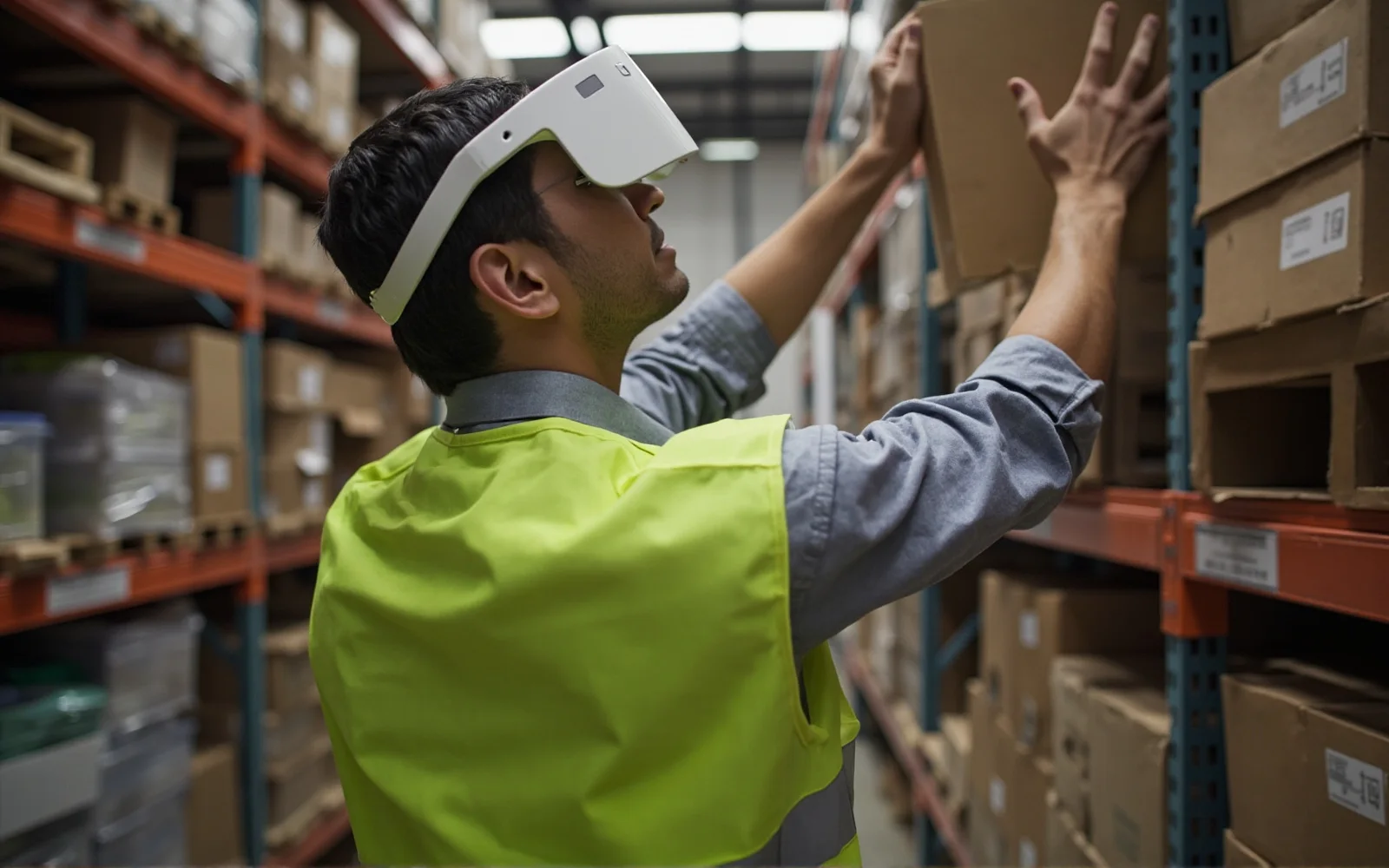
Warehouse worker in a high-visibility vest reaching for a box while wearing smart glasses04

Workflow 04 — Warehouse & logistics

Hands-free warehouse picking and logistics

In aisles, at packing stations and on loading bays, every glance away from the goods costs time and accuracy. The same hands-free interaction model supports scan-aided picking, put-away, receiving and workflow prompts, with pick lists and confirmations held in view while both hands handle cartons. Integration is scoped against the warehouse system already in place, rather than replacing it.

  • Vision- and scan-aided picking — location, quantity and item cue stay visible; confirm picks by ring scanner, voice or glasses-mounted capture.
  • Both hands on the goods — no pick list or handheld terminal to juggle while lifting, sorting or building pallets.
  • Receiving, put-away and loading — one device covers inbound checks, bin placement and outbound verification across the building.
  • Live workflow prompts — next-task and exception prompts route workers dynamically instead of sending them back to a fixed terminal.

Confirm on the program datasheet

  • Scanner type: integrated camera vs. paired ring scanner
  • Supported 1D / 2D symbologies and read range
  • Battery model across multi-shift operation
  • Safety-glasses compatibility: clip-in or prescription insert
  • Device ruggedness and Wi-Fi roaming behaviour

Typical systems in the workflow

WMSPick-by-vision softwareERP / inventoryBarcode / RFIDMDM (Android)Warehouse Wi-Fi

CYNRIN supplies the eyewear endpoint and connects to the existing WMS. Pick logic, slotting and scanning-performance targets are defined per program and validated against the datasheet and the site network.

Read the warehouse guide

Inside CYNRIN

Engineering, production and quality, on the record

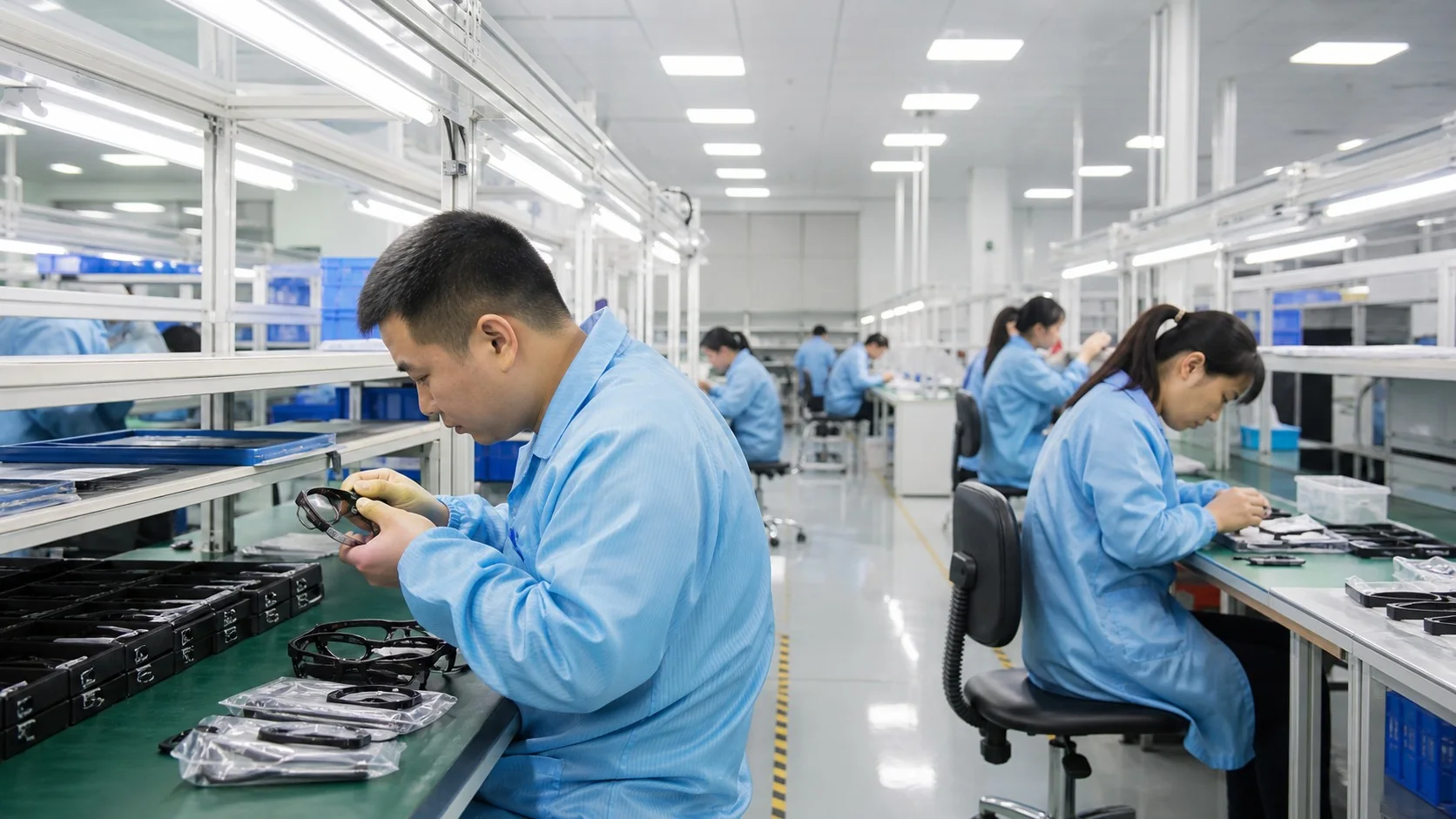
Reference platforms are built and inspected in our own production environment. The same discipline carries into every private-label and ODM build.

  • Materials and sealing selected for dust, moisture, oils and shift-long wear.
  • Optical and assembly checks run under the documented quality process before shipment.
  • Power budgets measured against realistic capture-and-call profiles, not best-case demos.
  • Branding, firmware and packaging finalized per program before mass production.
Inside CYNRIN smart-glasses engineering and manufacturing
Inside CYNRIN — engineering, production and quality processes.

How programs are specified

Committed on the datasheet, not in marketing copy

Three honest anchors for every industrial program. We do not publish generic protection or runtime figures; both are confirmed against the actual configuration.

Per programSealing, port layouts and protection levels are scoped to the real working environment.
Shift-matchedPower budgets are tuned to realistic capture-and-call profiles and stated on the program datasheet.
ODM-readyCustom frame geometry, temple profiles and fleet provisioning for managed deployments.
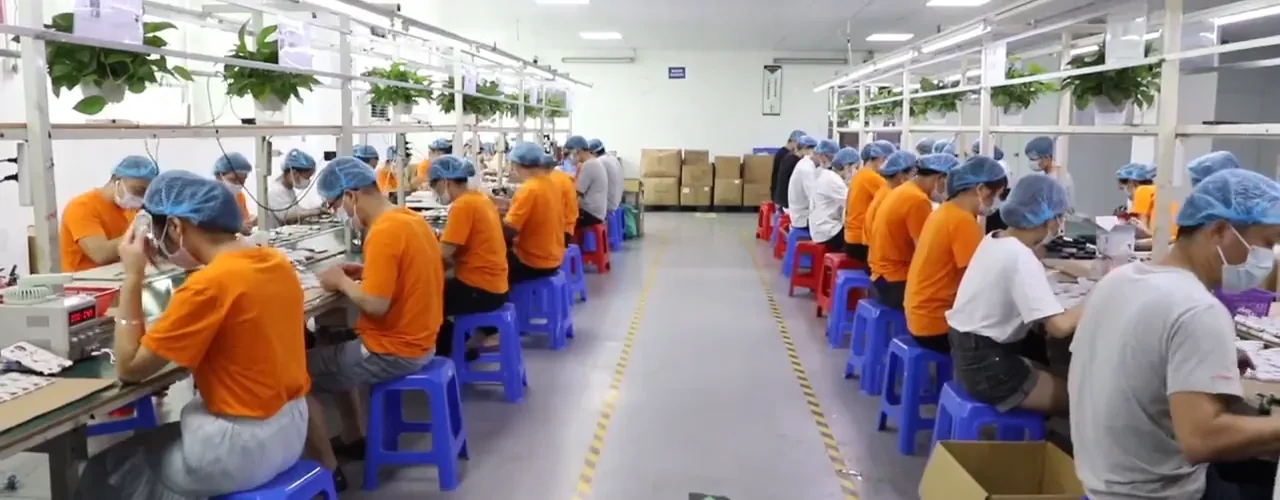
Connected-eyewear production line where reference platforms are assembled and inspected

Built where the work actually happens

Reference platforms are assembled, checked and packed under one documented process before they carry a customer brand.

Camera-first or audio-first

Three proven starting points for an industrial line

Camera-first, audio-first or lightweight value platforms. Final specifications, MOQ and certification levels are confirmed on the program datasheet, not promised generically.

Note: Indicative only. Final specifications, MOQ and certification levels are confirmed per program.

Program build

Building an industrial-grade program

The same four-stage sequence we run with every industrial customer before mass production. Durability, optics, power and compliance are specified, not guessed.

Environment scoping

Materials, sealing and port layouts are selected for dust, moisture, oils and shift-long wear; protection levels are confirmed per program.

Safety-lens options

Optical and protective lens requirements, including prescription inserts, are specified around the working environment.

Fleet & firmware

Pairing identity, enrollment and MDM-style provisioning are defined for managed deployments during ODM scoping.

Branding & packaging

Enterprise branding, rugged cases and quick-start material are handled through the customization service.

For ODM programs, firmware and companion software can be scoped against existing workflow or MDM systems. Private-label reference platforms provide capture and audio out of the box; integration depth is defined during engineering review.

Branding, rugged cases and quick-start material are handled through customization. Exact protection and certification levels are confirmed per program rather than claimed generically.

CYNRIN manufactures the connected-eyewear platform. Integration with MES, QMS, WMS or MDM systems, and every certification claim, is scoped and owned per program — never asserted generically.
Responsibility boundary — stated up front

Procurement datasheet

Questions we answer before tooling

The same checklist we run through with every industrial customer before mass production — the consideration, why it matters on a factory floor, and how CYNRIN supports it.

ConsiderationWhy it mattersHow CYNRIN supports
Environment and sealingFactory floors expose devices to dust, moisture, oils and impact; consumer-grade sealing is often insufficient.Suitable materials, sealing and port layouts are scoped per program and validated under the quality process.
Comfort across a full shiftAdoption depends on weight, balance and compatibility with caps, helmets and prescription inserts.Frame geometry and temple profiles are reviewed, including custom tooling via ODM.
Battery for shift patternsContinuous capture and calls drain power faster than intermittent use; runtime must match the shift profile.Power budgets are tuned per feature configuration and stated on the program datasheet, not in marketing copy.
Deployment and fleet needsManaged fleets need provisioning, identity and, often, MDM-style administration.Firmware, pairing identity and enrollment behavior are defined during ODM scoping.
Target-market complianceEnterprise buyers request compliance evidence before procurement.Certification work is aligned to destination markets and confirmed per program.

All protection, runtime and certification statements are confirmed per program and stated on the program datasheet. Nothing on this page is a substitute for that document.

FAQ

Frequently asked questions

Are these safety-certified smart glasses?

Protection and certification levels depend on the target standard and the program configuration. We scope suitable materials and lens options per use case and confirm specific ratings per program rather than generically. Discuss your standard early at request a quote.

Can the glasses integrate with our MES or work-instruction software?

For ODM programs, firmware and companion software can be scoped against existing systems. Private-label reference platforms provide capture and audio; integration depth is defined during engineering review.

What is the MOQ for an industrial deployment?

Branded reference platforms start at lower tiers; custom sealing, tooling or software work is structured around larger commitments. See the MOQ page; figures are confirmed per program.

Can we evaluate units before a fleet rollout?

Yes. Evaluation samples of reference platforms are available for operational trials; see the samples process.

Scope an industrial smart-glasses program

Tell us the working environment, tasks, software context and target volumes. Our engineering team will respond with a platform recommendation, indicative MOQ and sampling path.

Chat on WhatsApp
Your experience on this site will be improved by allowing cookies.