
The core difference
Open-ear glasses and earbuds are two different acoustic bets
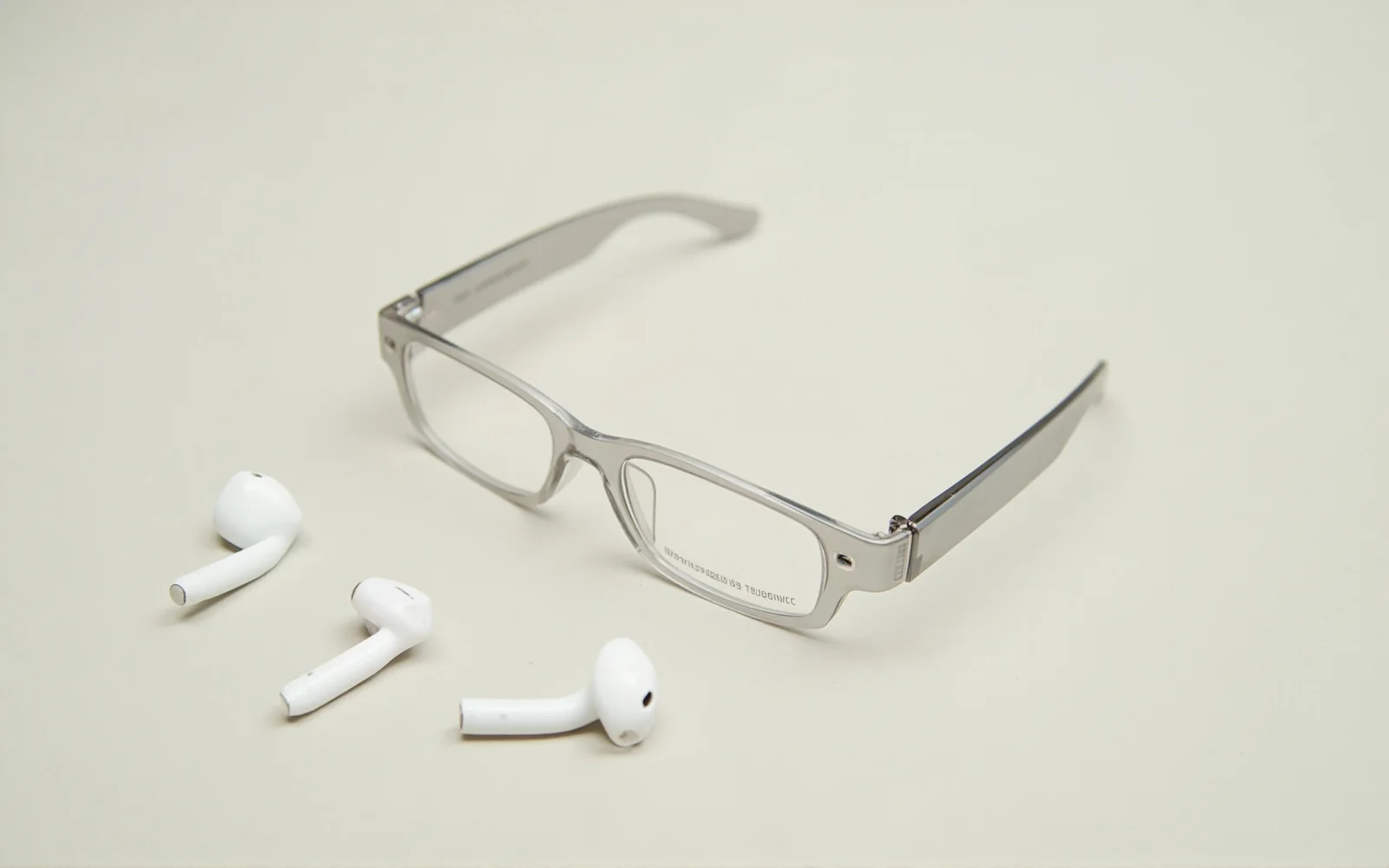
Sealed earbuds place a driver in or against the ear canal; passive isolation is built into the design, and active noise control builds on top of it. Open-ear audio glasses take the opposite bet. Small speakers live in the temples, the ear canal stays completely open, and sound is projected toward the ear while the surrounding world continues to arrive naturally. Neither approach is universally better. They make different acoustic trade-offs, and most people eventually keep both for different moments of the day.
- Sealed earbuds offer isolation, bass pressure and the option of active noise reduction, at the cost of in-ear occlusion, tip hygiene and one more device to charge and track.
- Open-ear glasses keep both ears free, insert nothing, and double as sunglasses or prescription frames, with microphones carried at head height. The trade-offs are limited low-end, some close-range leakage and weaker audibility in loud noise.
For brands, that distinction matters more than any spec-sheet comparison. Buyers rarely replace their earbuds; they move a slice of listening time — calls, podcasts, chores, all-day wear — onto a device that disappears into eyewear they would carry anyway. Defining that slice honestly is the entire category strategy on the audio & calls pillar.
Where glasses win
Comfort, environmental awareness and everyday safety
In-ear fatigue is a familiar complaint: canal pressure, itching, wax buildup, tips that never quite seal, and sore ears after a day of back-to-back calls. Audio glasses put nothing in the ear, so there is nothing to fatigue. Weight sits exactly where ordinary glasses already distribute it, across the nose and temples, and wearers who already use prescription frames or sunglasses simply put on their normal eyewear with audio added.
Because the ear stays open, traffic, station announcements, colleagues and family members remain audible without removing a thing. Runners and cyclists adopted open-ear audio for precisely this reason; the safety logic is laid out in the running safety and visibility guide. A commuter hears a cyclist’s bell, a parent hears a child in another room, and a worker hears a colleague approach from behind.
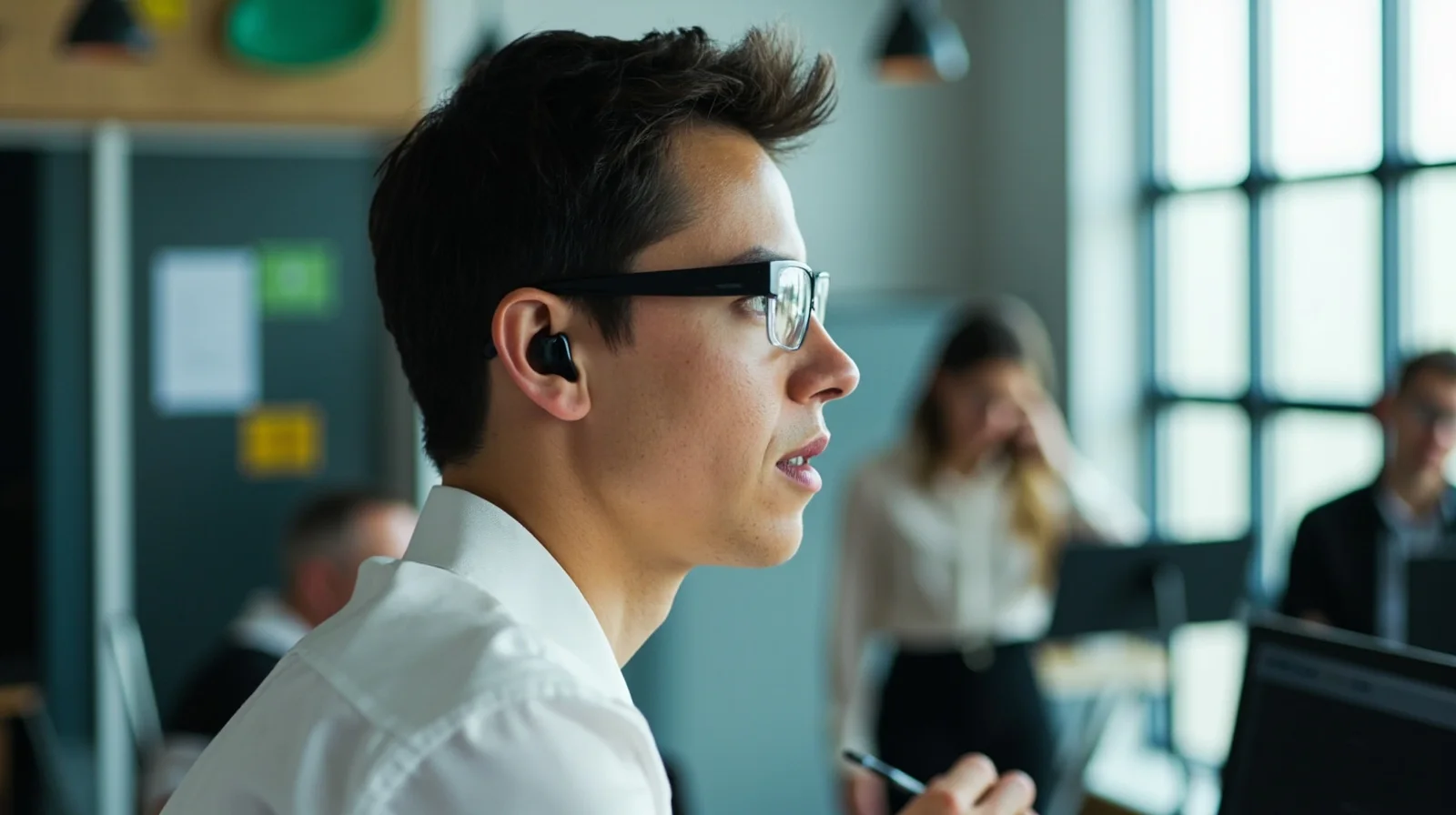
- No insertion routine — no silicone tips, no shared-hygiene issue, no fiddling between meetings.
- Wearable by people who reject earbuds, including users who find in-ear devices uncomfortable or impossible.
- Eyewear first, audio second: the device is already on the wearer’s face before a single call arrives.
Hygiene is a quieter version of the same argument. Silicone tips carry wax and moisture, shared earbuds are something many office workers simply will not borrow, and anyone who has scrubbed a tip before a commute recognises the routine. Glasses have no tip at all: a shared pair is wiped like ordinary eyewear, and wearers who can never get an earbud to seal receive usable audio for the first time. That inclusivity quietly widens the addressable market for any brand entering the category.
The same openness cuts the other way in a heavy downpour, strong wind or a roaring street — a trade-off addressed directly later in this guide.
Calls and multitasking
On calls, the microphone moves with the wearer’s head
A large share of daily audio is not music at all. It is calls, voice messages and meetings that happen while people are doing something else. Glasses have a structural advantage here: the microphones sit at head height, turn with the wearer, and keep a consistent relationship to the mouth whether the person is standing at a stove, stacking shelves or pushing an airport trolley. Calls are answered by voice, and both hands stay on the task.
- cooking lunch while following a project call
- walking through a station under navigation prompts
- taking a supplier call in a warehouse aisle
- following a long meeting while tidying, ironing or gardening
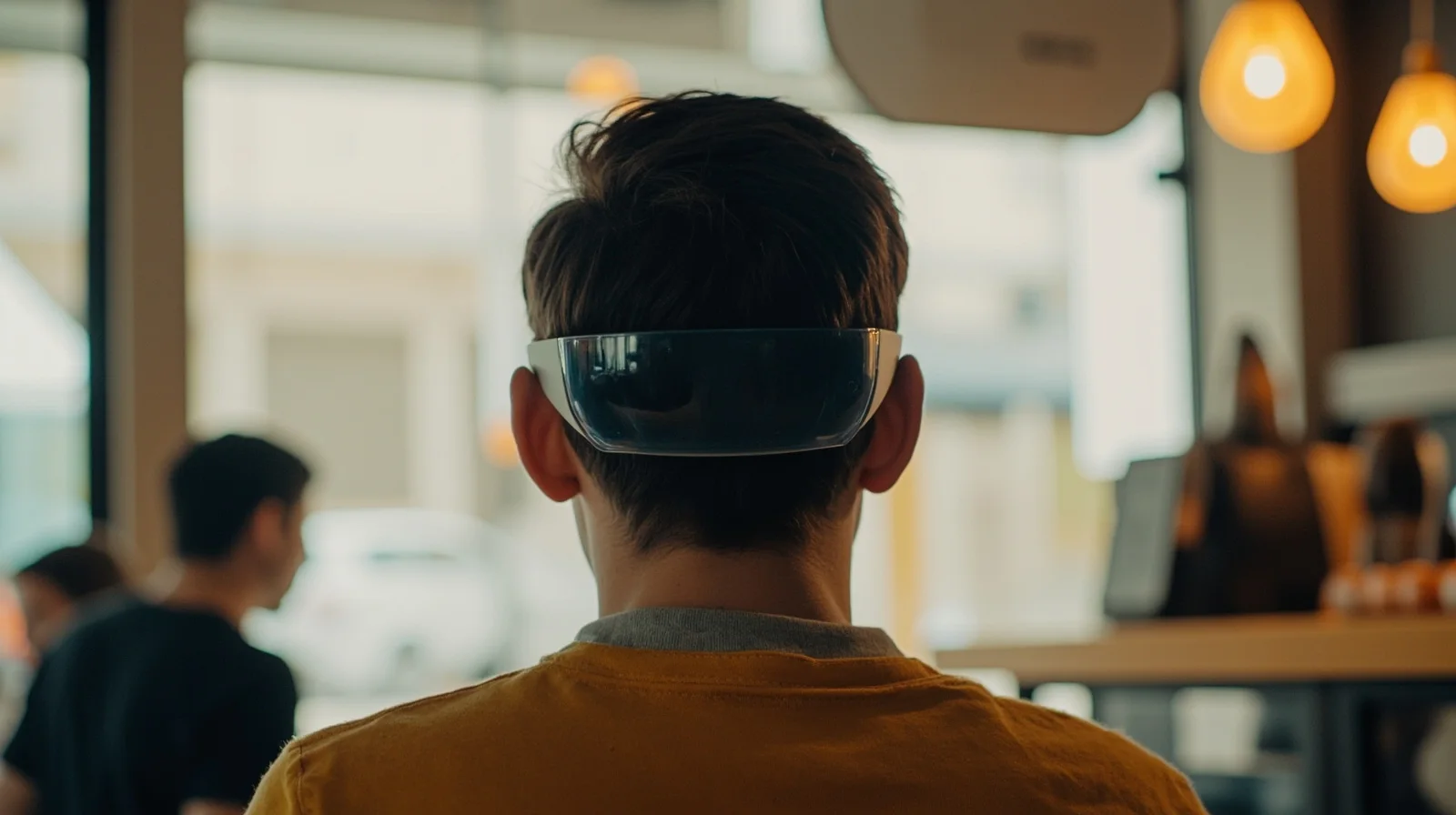
Wind and diffuse café noise remain the hardest environments for any open-mic device, glasses included. Microphone strategy is platform-specific and is judged during sample trials in the customer’s real environments rather than promised with headline numbers. The two biggest contexts each get their own guide: office and work calls and travel and commute.
Where earbuds win
Where sealed earbuds are genuinely the better tool
A fair comparison has to name the losses. Open-ear physics cannot produce sealed low-frequency response: bass weight and immersive listening at low volume belong to sealed earbuds. In a subway car, under an aircraft engine or beside loud machinery, sealing tips and active noise reduction lower the noise floor so audio stays clear without raising volume. Audio glasses do not isolate, and they should never be marketed as if they did.
- Bass-first and critical listening: earbuds.
- Sleep, deep-focus work and noisy-commute isolation: earbuds.
- Private listening in a silent room: earbuds, because open-ear speakers leak at close range.
- Calls in persistent wind: sealed or wind-protected microphones often win.
Temple speakers also generate wind noise on exposed rides and platforms, and at higher volume in a quiet train seat or library, nearby people can hear the content. Leakage behavior is tuned per program and should be one of the first attributes a buyer evaluates on samples, alongside fit. The honest claim is addition, not replacement: glasses join the audio drawer; they do not retire the sealing earplugs used on a long-haul flight.
Listeners who measure audio by chest-thumping low end will describe open-ear sound as thinner, because it physically is. The credible approach is to define a listening envelope — conversational speech, podcasts and background music at a moderate level — and let sealed earbuds own everything outside it. Program-specific tuning can refine that envelope, but no tuning turns an open-ear frame into an isolating one, and reviewers punish vague claims far harder than clearly bounded ones.
Decision guide
How to choose: map the device to the day
The useful question is not which device wins overall but which moments fill the user’s week.
- Calls and podcasts while moving or working with the hands — glasses.
- Isolation on a loud commute, focus blocks or immersive music — earbuds.
- Already wearing prescription glasses or sunglasses daily — glasses replace an item rather than add one.
- Running or cycling in traffic — open-ear awareness.
- Sharing devices, or disliking anything inserted in the ear — glasses.
Many buyers settle on a two-device rule: sealing earbuds for flights, focus sessions and bass-heavy listening; audio glasses for calls, errands, streets and multitasking. CYNRIN’s platforms tier the same way. The V03-T5 vs E13 vs K01 comparison positions the audio-first E13 and K01 platforms for everyday calls and open-ear listening, with the camera-first V03-T5 reserved for lines where first-person capture joins the feature list.
End buyers should test the glasses through one ordinary day — a real call, a windy walk, a quiet room — before deciding. Brands weighing portfolio fit should read the final section below.
For audio brands
Positioning open-ear audio as a credible new category
The commercial opportunity is not to beat earbuds on their own terms. It is to sell audio inside an object people already wear — sunglasses and prescription frames — to buyers who never think of themselves as headset shoppers. Audio and consumer-electronics brands can enter the category without learning eyewear manufacturing from scratch; the consumer-electronics brands program and the eyewear brands program explain how the work is divided.
- Position honestly: awareness, comfort and calls, never noise cancellation.
- Tier the line: an audio-first volume model with a camera flagship above it.
- Own the brand surface: custom Bluetooth pairing name, firmware identity and packaging through customization.
- Tune for real reviews: leakage and microphone behavior are reviewed during sampling; sun, clear and prescription lens programs are matched to the channel.
- Sample before committing: start through the samples process, check MOQ guidance, and scope deeper geometry work under ODM.
A defensible launch under-promises the bass and over-delivers on the everyday: comfortable calls, open awareness and one fewer device to charge. Begin scoping through request a quote or contact.
Buying considerations
What to specify in an open-ear audio brief
Listening mix
Share of calls and podcasts versus immersive, bass-first music.
Typical environments
Streets and home versus loud transit, open offices and quiet rooms.
Leakage tolerance
How much close-range sound sharing the user’s settings allow.
Lens strategy
Sunglasses, clear lenses or prescription support, confirmed per program.
Platform tier
Audio-first volume model or camera-first flagship for the line.
Branding scope
Pairing name, firmware identity, colorways, case and retail packaging.
Browse the application
More audio & calls guides
Keep exploring
Related reading
FAQ
Frequently asked questions
Are open-ear audio glasses a replacement for earbuds?
Do audio glasses have active noise cancellation?
Can people nearby hear what is playing?
Which CYNRIN platform should an audio brand launch on?
What is the MOQ for a private-label open-ear line?
Build this use case into a private-label program
Tell us the workflow, environment and volume. Engineering scopes the platform, optics, power and documentation per program.