
When running actually happens
Dawn, dusk and solo miles are the real safety conversation
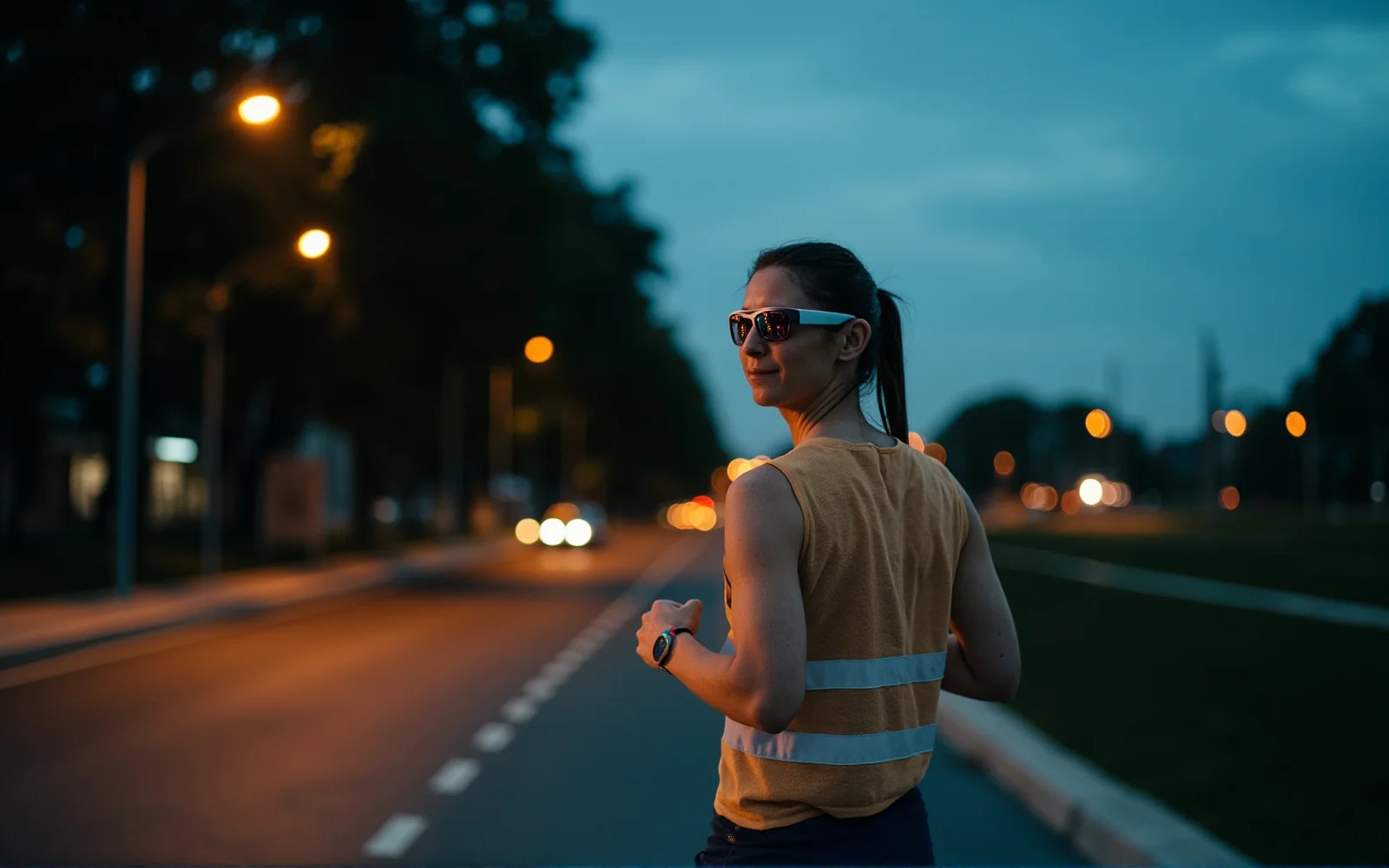
The popular image of running — sunshine, parks, midday — is not when most training occurs. Working runners train at six in the morning or eight at night, in low-angle sun, streetlight or dark, and a large share of those miles are solo. Safety questions from that audience are specific: can I hear the e-bike, can I call someone without stopping, and do I look like a person rather than an obstacle?
Two common responses make the problem worse. Sealed earbuds answer the audio question by removing the sound of approaching traffic — the single most important cue a road runner has — and holding a phone for safety removes a hand and tends not to happen past the first week. Eyewear addresses both structurally: open-ear speakers leave the road audible, and calls and prompts are handled hands-free on glasses the runner already wears for wind and glare.
The category story is anchored on the running and outdoor pillar, and the acoustic argument is the same one made for general transport in the open-ear versus earbuds guide.
Honesty is non-negotiable here because safety marketing invites trust. CYNRIN manufactures the eyewear platform. It is not reflective or certified personal protective equipment, it does not replace lights, high-visibility clothing or safe route choices, and SOS, fall detection and location-sharing are companion-application and phone services that the eyewear neither provides nor certifies. Protection and runtime figures are confirmed per program and stated on the program datasheet.
Hearing the road
Open-ear audio is the feature safety-minded runners ask about first
A runner’s ears carry the earliest warning on the road: the tire whine before the headlights, the cyclist’s bell, the engine pitch around a blind bend, another runner approaching from behind. Sealed isolation removes that layer; open-ear design preserves it while still carrying coaching cues, music or a call.
- Traffic and e-bikes. Quiet electric vehicles and fast bicycles are exactly the threats runners report not seeing in time; keeping them audible matters more at dusk than any added feature.
- Marshals and other runners. Group runs, races and shared paths stay legible — calls of “track!”, shouted warnings and conversation all come through.
- Cues without occlusion. Pace prompts and turn instructions from the training application arrive in open ears, so the runner follows a plan without a sealed canal.
- Lower, safer volume. Because nothing has to compete with isolation, open-ear listening runs at lower volumes while situational sound stays present.
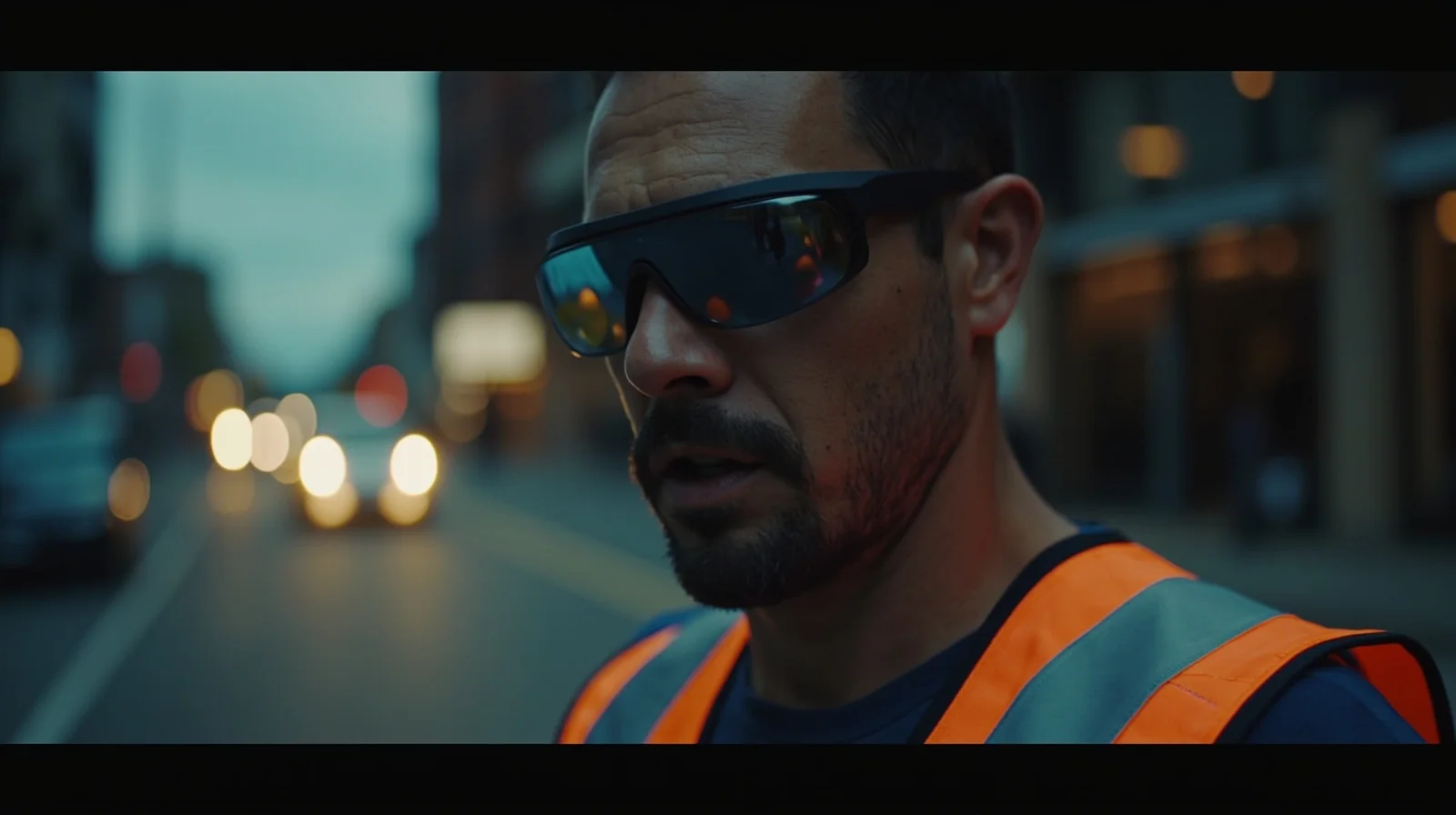
Open-ear audio does not make a runner invulnerable, and responsible programs say so: runners still follow local rules, choose lit routes and face traffic where advised. The eyewear is an awareness aid, not a certified safety device — a distinction the sports and cycling brands solution keeps consistent across the endurance range.
Running alone
Staying callable and in contact without carrying a phone in hand
Solo runners describe the same gap: they carry a phone for safety, but it lives in an armband or pocket and is unusable mid-stride. Audio eyewear turns the phone they already carry into a genuinely hands-free channel.
- Check-in calls. A scheduled call is answered with a single touch while running, no stop, no fumble with wet fingers.
- Voice prompts and messages. Short messages and coaching notifications are read aloud through the companion application instead of requiring a screen.
- Post-run coordination. Pickup and logistics calls at the end of a dark early-morning run happen on the move.
- Nothing loose to drop. No phone in hand means no dropped, smashed or forgotten device on a remote stretch.
The boundary around emergency features must be precise. Companion applications may offer live location sharing with trusted contacts, automatic fall detection or SOS escalation, and runners value those services — but they are app and phone functions, dependent on the phone, its sensors and its network connection. CYNRIN does not build, certify or market those functions as eyewear features, and no program should imply automatic crash response from the glasses themselves.
Being seen
Visible indicators, honestly framed: a signal, not reflective equipment
Runners also ask whether the glasses help them be seen. The honest answer is narrow and useful: eyewear can carry small, visible active-state indicators that read as an electronic signal on a person’s face, but it is not, and is not marketed as, high-visibility or reflective safety equipment.
- Active-state indicator. A subtle visible light shows the device is powered and paired; on camera tiers it also makes recording state unmistakable to bystanders.
- A face-level signal. At driver eye height, even a small steady cue helps a runner read as an attentive person wearing electronics rather than a dark silhouette.
- Not a replacement for lights. Reflective vests, clip lights, light-colored kit and lit routes remain the correct visibility investment; eyewear complements them.
- No fabricated certification. Programs make no claims to reflective-garment or personal-protective standards unless a certification is actually achieved and stated on the program datasheet.
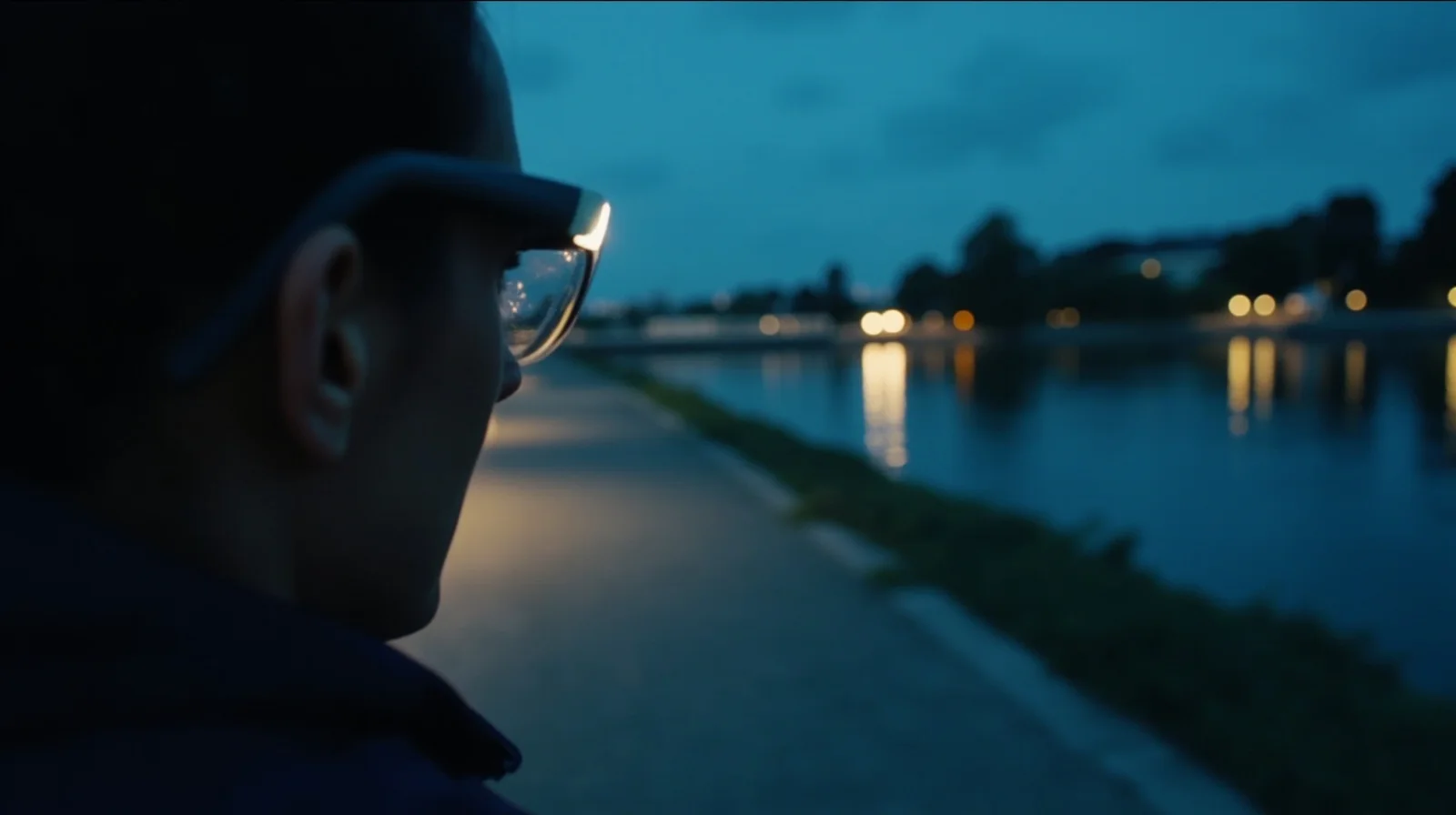
This restraint is commercially valuable. Running communities are quick to scrutinize exaggerated safety claims, and brands that promise certified protection they cannot document lose trust — and risk regulatory exposure. The same honest-claims discipline applies to protection levels and destination-market documentation, both confirmed per program.
Privacy in public space
Cameras on dark runs: etiquette, indicators and the camera-free tier
A camera on an early-morning city run raises questions a camera on a sunny trail does not. Other runners, dog walkers, driveway residents and drivers may appear in frame, often without knowing they were filmed. Responsible programs design for that reality rather than disclaiming it.
- Unmistakable recording state. A visible indicator makes active capture obvious, and deliberate short clips are the default behavior rather than hours of continuous recording.
- Private spaces. Homes, school zones, locker areas and similar places call for the same caution as any public filming; local law and event rules govern what is permitted.
- The camera-free option. Runners who want open-ear safety with no camera at all are served directly by audio-first platforms, which is why every safety-led range should include one.
The full principles — visible capture state, consent norms, event policy and footage handling — are set out in the filming and privacy guide. For brand planning, the audio-first E13 and K01 are the natural safety-line core, with the camera V03-T5 offered as an opt-in tier; the range logic appears on the sports and cycling brands solution and the consumer-electronics brands solution.
Building the program
A safety-led range built on honest claims
Brands that win safety-conscious runners do it with credible, limited promises validated in the actual conditions their customers run in. The program sequence is deliberately simple.
- Define the runner and conditions. Pre-dawn road miles, evening paths, winter climates; audio-only safety line or a camera opt-in tier.
- Select platforms. Audio-first E13 or K01 core for open-ear awareness and calls, V03-T5 hero only where content capture genuinely matters.
- Validate acoustics and fit. Open-ear intelligibility alongside real traffic on evening runs, plus bounce-free grip and cap compatibility on samples.
- Lock the claims boundary. No reflective or PPE claims without certification; SOS, fall detection and location sharing clearly assigned to the application partner; protection and runtime stated on the datasheet.
- Brand and scale. Private-label identity and run-club packaging via customization, or dedicated geometry through ODM; volumes confirmed per program.
Evaluate the open-ear difference firsthand through the samples process — a dusk test run is the most persuasive demo in the category. Review tiers on the MOQ page, scope branding through customization, and open the brief with request a quote or via the contact page. The product keeps runners alert, connected and honest about what eyewear can and cannot do on a dark road.
Buying considerations
What to put in a running-safety eyewear brief
Real run conditions
Dawn, dusk or night; city roads or paths; the actual light and traffic profile of the customer.
Open-ear audio
Traffic, bells and shouts remain clearly audible while cues, calls and music play quietly.
Hands-free contact
Single-touch calls and spoken messages, with the phone staying pocketed through the run.
Honest visibility
Active-state indicator positioned as a complement to lights and reflective kit, never a substitute.
Emergency boundary
SOS, fall detection and location sharing scoped as app and phone services, never eyewear claims.
Privacy posture
Visible recording state, deliberate clips and an audio-only tier for camera-averse runners.
Browse the application
More running & outdoor guides
Keep exploring
Related reading
FAQ
Frequently asked questions
Are these glasses certified reflective or safety equipment?
Can runners hear traffic while listening to coaching cues?
Do the glasses detect falls or send an SOS if something happens?
Which models should a safety-led running line use?
Is it a privacy problem to wear a camera while running in the city?
Build this use case into a private-label program
Tell us the workflow, environment and volume. Engineering scopes the platform, optics, power and documentation per program.