
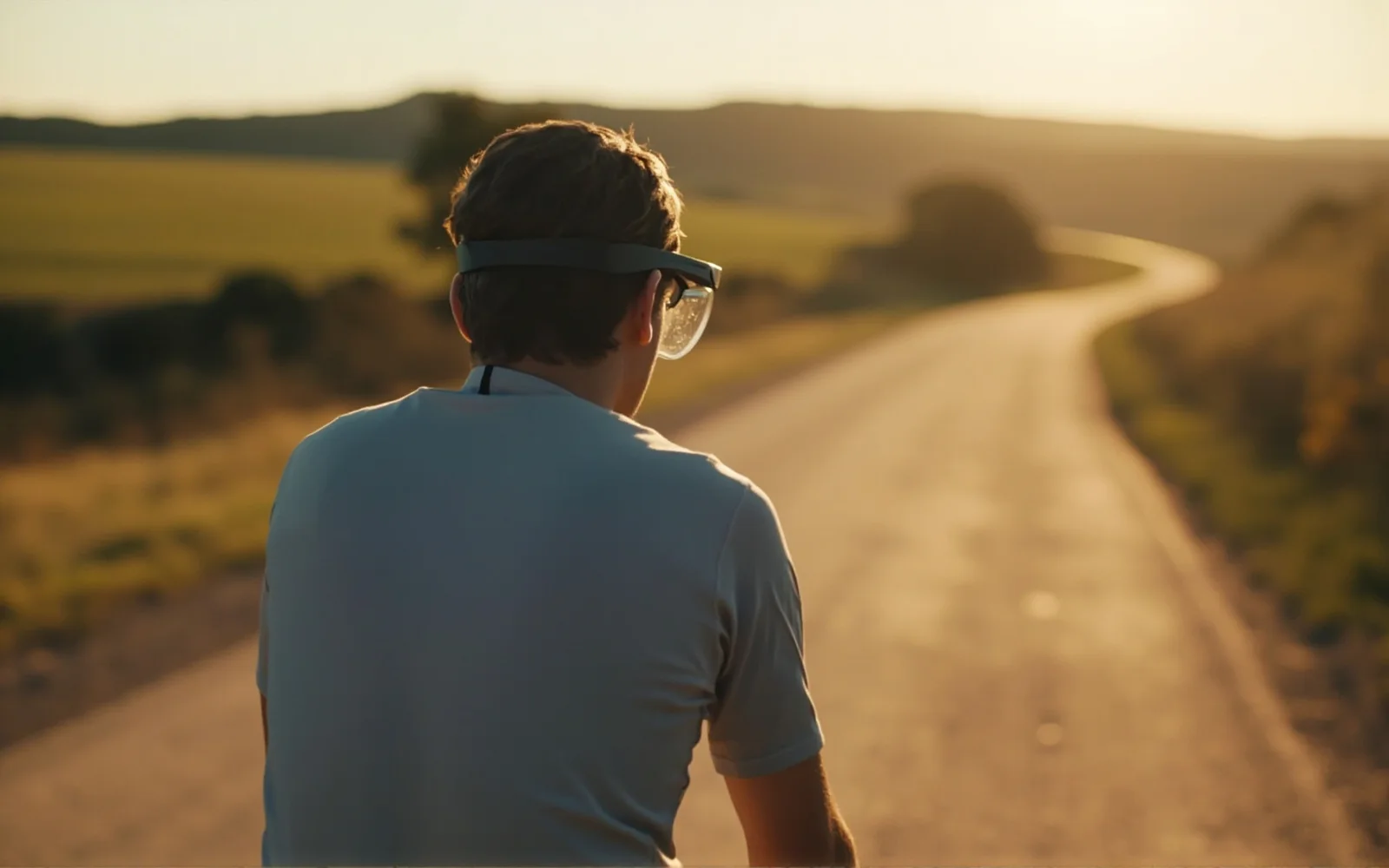
Why eyewear wins on the bike
Riders already wear glasses; the electronics just earn their place
Cycling may be the clearest product-market fit in smart eyewear. Almost every road and gravel rider already wears glasses for wind, glare, spray and debris, so adding capture and audio asks them to carry nothing new — no second camera to charge, no mount to bolt to the helmet, nothing extra to remember at 5 a.m. start lines. The choice is not “glasses versus a device”; it is “ordinary eyewear versus eyewear that also records and talks.”
The two jobs map onto two distinct ride experiences. Capture turns a descent, a gravel sector or a group-ride move into first-person footage from the rider’s own eye line, with both hands staying on the bars through technical terrain. Open-ear audio carries interval cues, turn prompts and calls while leaving wind, traffic and teammates audible — the one thing sealed earbuds structurally cannot do, and a safety issue on open roads.
For bike brands, that is a natural extension of helmets, apparel and electronics assortments rather than a foreign category. The full brand-program case is set out on the sports and cycling brands solution page and summarized on the cycling pillar.
The honesty boundary is worth stating up front. CYNRIN designs and manufactures the eyewear hardware platform. There is no holographic or projected HUD in these programs — prompts are glanceable or spoken, delivered by the companion application the brand or its solution partner provides. The glasses do not replace a cycle computer, a power meter or a dedicated helmet camera, and they make no medical-grade biometric claim. Editing, route analytics and training metrics belong to the app layer.
On the road and gravel
What capture and open-ear cues do across a real ride
A meaningful program is specified around ride moments, not abstract features. The same hardware earns its place differently on a Tuesday interval session, a weekend gran fondo and a gravel event.
- Intervals and structured training. Open-ear cues from the training app deliver segment, pace or effort prompts without a head drop to a head unit; how those cues are generated and what metrics they use belong to the training software, and no medical-grade accuracy is claimed from the eyewear.
- Unfamiliar routes. Spoken turn prompts let riders follow a gravel course or a sportive route without studying a phone at every junction.
- Climbs, descents and sectors. A camera platform captures the line and the landscape from eye line, started with a simple control that never demands a hands-off-bars maneuver.
- Group rides and calls. Open-ear audio keeps calls and music possible while road noise, shouted calls and changing surfaces remain audible.
- Post-ride content. First-person clips move to the companion application for the rider or brand to review; editing and publishing remain app-side.
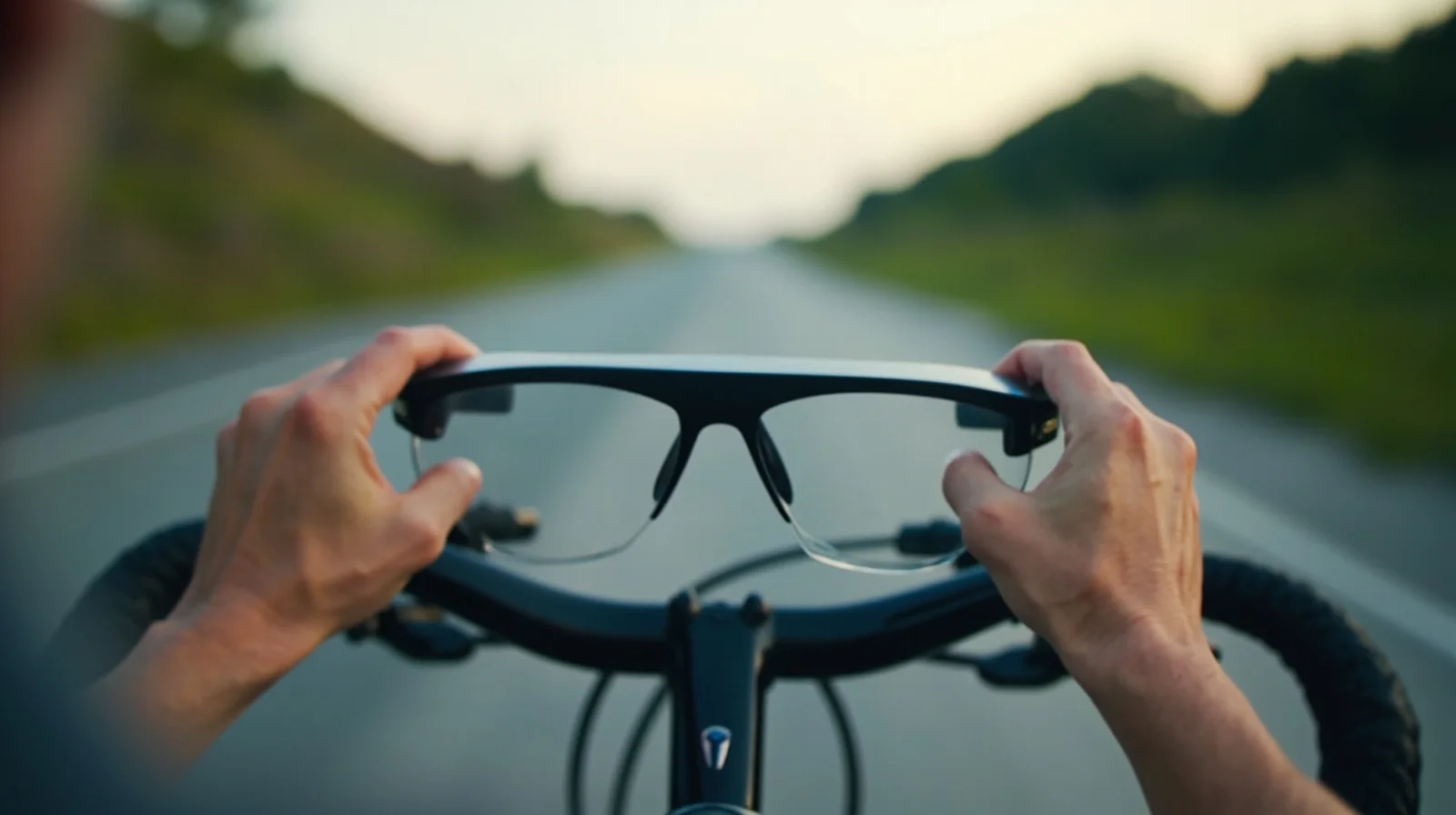
The content workflow deserves realism. Glasses are brilliant for authentic, always-with-you footage and quick clips; they are not sold as broadcast-grade replacements for a high-end action camera. Stabilization, low-light behavior and audio in wind have real limits that are better shown in samples than hidden in spec claims — the same honest treatment used in the dedicated POV ride capture guide.
Wind, light and weather
The conditions that decide whether eyewear gets worn
A cycling product is judged in conditions, not showrooms. Three environmental realities dominate the specification conversation with serious riders.
Wind noise and open-ear intelligibility
At road speed, wind is the hardest audio problem there is. Open-ear speakers are tuned for cue and call intelligibility rather than for sealed isolation, and microphone placement is reviewed against real riding positions. Programs set expectations honestly: cues and short calls work in typical riding conditions, while gale-speed descents remain difficult for any open-mic system. Sealed earbuds would hide the wind — and the cars.
Sport optics in changing light
Bright asphalt, low winter sun, forested gravel and wet roads demand different lens behavior. Sport tints and lens finishes are specified per program and checked at inspection gates, because cheap, distorting lenses fatigue the eyes at speed and undermine the entire product. Optical quality comes first; the electronics are added on top, never instead.
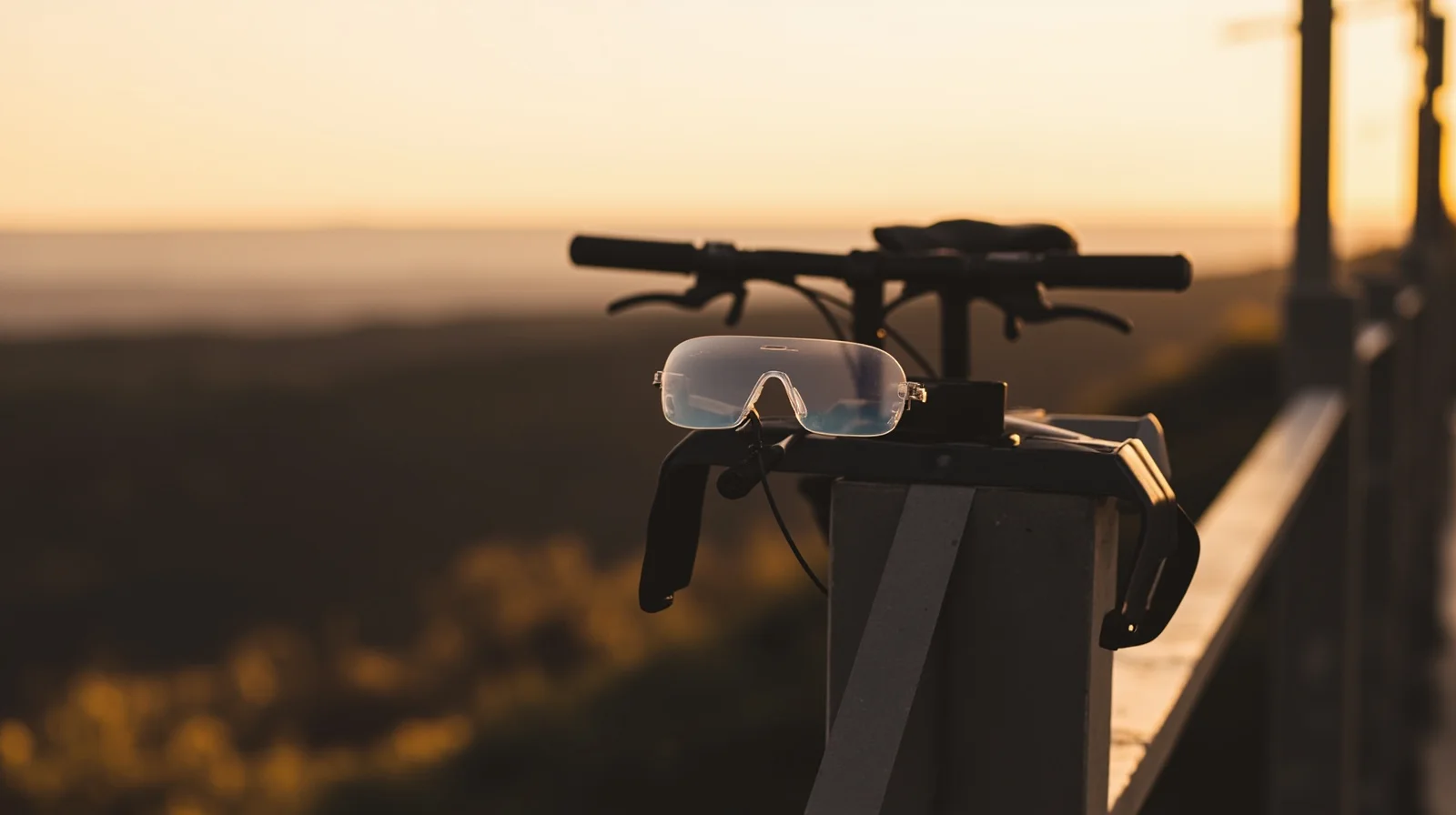
Sweat, rain and road dust define the third axis. Temple materials, sealing and port layouts are selected for real ride conditions, with protection levels confirmed per program and stated on the program datasheet rather than promised generically. A long alpine day and a wet gravel race should be part of the validation plan, not a surprise for the first reviewer.
Fit and ride-long comfort
Helmet straps, caps and the four-hour comfort test
Road and gravel riders spend long hours in one position, so fit failures compound by the hour. The most common reason connected eyewear ends up in a jersey pocket is not software; it is a pressure point under a helmet strap.
- Strap-compatible temples. Slim temple geometry sits flush under helmet straps without lifting the frame or creating a hot spot behind the ear; strap-channel shaping is reviewed during sampling and adjustable through ODM tooling.
- Caps and mirror mounts. The frame also has to work with a summer cap or cap under the helmet and coexist with handlebar mirrors and prescription inserts.
- Weight distribution. A front-heavy frame slips with sweat and head movement; balance and grip at nose and temples are validated in fit trials before mass production.
- Power for the ride profile. Capture plus audio across a gran fondo or all-day gravel event stresses runtime far beyond a short commute. The power budget is matched to a realistic capture-and-cue profile and stated on the program datasheet — no generic all-day claims.
Prescription compatibility matters in this demographic: many road riders use inserts or prescription lenses, and programs that ignore that fact shrink their audience immediately. Insert compatibility is confirmed per program during the design review.
For bike brands
Camera hero plus audio tier: planning a private-label range
Bike brands rarely succeed with a single connected SKU. The market splits cleanly between content-led riders — racers, ambassadors, creators — and the much larger audience that wants cues, calls and music without ever thinking about footage. A tiered range answers both while sharing one visual identity.
The hero tier is built on a camera-first reference platform such as the V03-T5: first-person photos and video with open-ear audio, positioned as the content and event SKU. The volume tier uses an audio-first platform — the E13 for a premium audio position or the K01 for a value-oriented sport line — carrying cues, calls and music at a more accessible price. The tier logic is the same one shown on the platform comparison.
Shared frame language, colorways, cases, pairing-name identity and companion-app experience make the two tiers read as one family at the bike shop and online. When a reference platform is not enough — for example a dedicated gravel wrap or a specific helmet-strap geometry — custom frame geometry and temple profiles are developed through an ODM program with an EVT/DVT/PVT-style engineering cycle. Branding, packaging and quick-start material for the bike channel are handled through customization.
Certification and documentation are aligned to destination markets — EU, North America and other regions expect compliance evidence before listing an electronic product — with levels confirmed per program during quotation rather than promised as a logo. Related endurance audiences overlap with team and event POV content and with the running side covered on running and outdoor.
Building the program
From evaluation samples to a branded ride-day product
Sports-program launches work best when the feature story, the optics and the ride-long power profile are validated on real roads before tooling decisions. The standard sequence with bike-brand partners runs as follows.
- Scope the rider and routes. Road, gravel or both; training cues, capture, calls or the full set; typical ride duration and climate.
- Select platforms. Camera-first hero, audio-first volume tier, or a two-tier range; lens and tint programs chosen for the riding environment.
- Ride-fit review. Helmet-strap, cap, insert and weight-distribution checks on reference samples, with temple geometry adjusted where needed.
- Validate conditions and claims. Wind, sweat and weather testing under the brand’s quality process; protection and runtime stated on the datasheet, destination-market documentation aligned.
- Brand and scale. Private-label branding and packaging, or ODM tooling for a dedicated frame; volumes and lead time confirmed per program.
Reference-platform samples are available through the samples process so product and quality teams can judge optics, acoustics and fit firsthand; volume tiers are summarized on the MOQ page, and a concrete brief starts with request a quote. Riders get eyewear that does its ordinary job better and quietly adds capture and cues; brands get a defensible, tiered line with honest specifications.
Buying considerations
What to put in a road and gravel eyewear brief
Rider and routes
Road, gravel or mixed; event distance, climate and whether training cues or capture lead the story.
Optics
Sport tints and lens finishes for bright and variable light, with optical quality checked at inspection gates.
Helmet compatibility
Strap-flush temples, cap compatibility and prescription-insert needs reviewed in fit trials.
Audio conditions
Open-ear cue and call intelligibility at road speed, with honest expectations set in wind.
Power profile
A realistic capture-plus-audio ride profile, with runtime stated on the program datasheet.
Range tiers
Camera-first hero plus audio-first volume tier, sharing identity, packaging and app experience.
Browse the application
More cycling guides
Keep exploring
Related reading
FAQ
Frequently asked questions
Do the glasses project navigation or data into my vision?
Can they replace my action camera or power meter?
Can riders still hear traffic during a ride?
How do brands build a camera-plus-audio range?
What about weather rating, battery life and MOQ?
Build this use case into a private-label program
Tell us the workflow, environment and volume. Engineering scopes the platform, optics, power and documentation per program.