
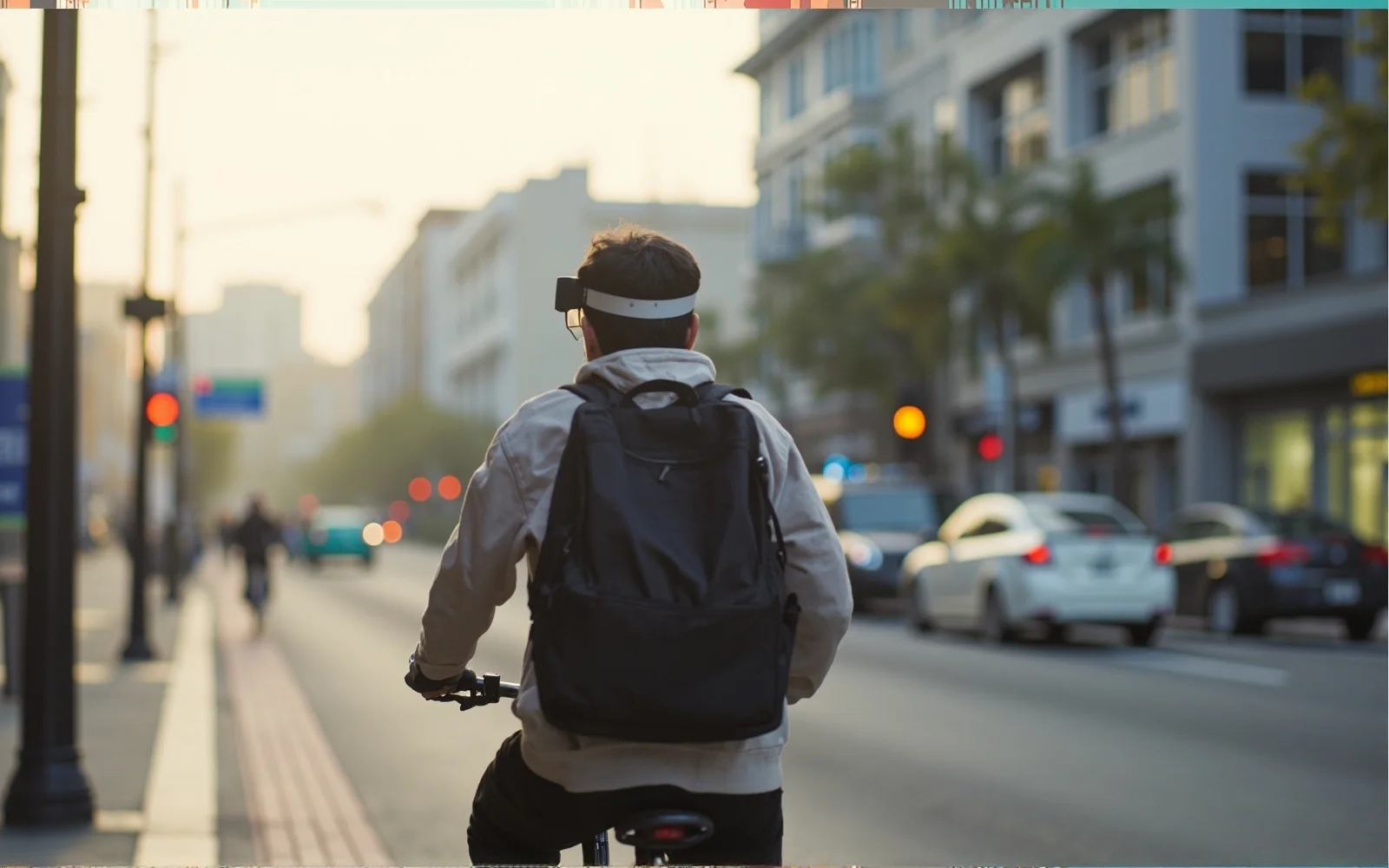
The daily-ride problem
Commuters need navigation and calls without losing the traffic lane
Commuter cycling is a different job from weekend sport riding. The route is a sequence of decisions — which turning, is that van pulling out, has the rain started, will I make the meeting — repeated across infrastructure that is sometimes a painted lane and sometimes nothing at all. A handlebar phone solves navigation by demanding repeated glances down into the lane; sealed earbuds solve calls by removing the sound of the city. Both trades are exactly wrong for riding in traffic.
Eyewear answers both without adding a device category. Spoken turn prompts arrive through open-ear speakers while the rider’s eyes stay up; a call is answered with a single touch, hands never leaving the bars; and because the audio does not seal the ears, bus brakes, taxi doors, bicycle bells and shouted warnings remain audible. That acoustic openness is not a compromise — in a city it is the primary safety feature, the same argument made for general travel and commute audio.
The second requirement is social. A commuter product has to survive the destination. Race-style shields look out of place at a desk, in a cafe or on a train, so commuter frames are designed to read as glasses first and electronics second — ordinary eyewear that happens to carry audio and, where the program chooses, a camera.
As across the category, the boundary is clear. CYNRIN manufactures the eyewear hardware platform; routing, navigation applications and call services belong to the phone and the brand’s or partner’s software. There is no projected HUD — prompts are spoken or glanceable — and weather protection is confirmed per program rather than implied by a photograph in the rain. The category overview sits on the cycling pillar.
The commute, step by step
Where eyes-up audio earns its place between home and work
The value compounds across the small, repeated moments of a daily ride rather than in one dramatic feature.
- Route following. Spoken turn prompts from the navigation app guide an unfamiliar detour or a new neighborhood without a phone glance at every junction.
- Hearing the lane. Open-ear audio keeps motor traffic, tram tracks, other riders and pedestrian crossings audible while music or a podcast plays quietly underneath.
- The logistics call. Answering a single-call confirmation — “running ten minutes late” — happens hands-free at a light instead of stopping to dig out a phone.
- Weather transitions. Lens options and the frame’s handling of light rain address the stop-start conditions of city riding; protection levels are confirmed per program.
- The last mile. The same pair stays on for the train, the office elevator and the walk to a meeting, with no visible device to stow.
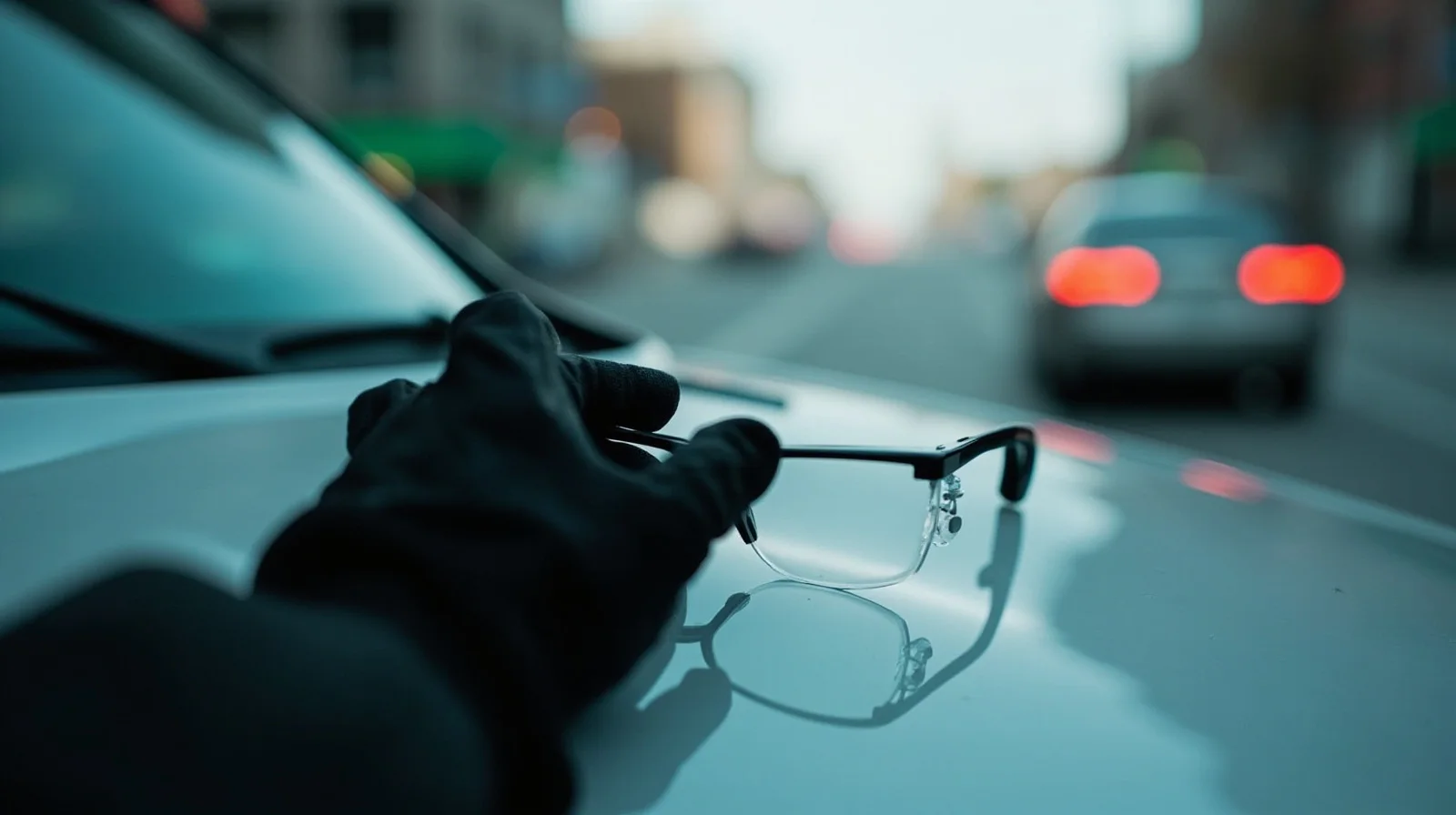
For programs that include a camera, the commuter use case is deliberately modest: a quick clip of an incident or a notable stretch, started from a simple control — not continuous surveillance of the street. Capture indicators and public-space etiquette matter here and are treated the same way as in the filming and privacy guide. Many commuter lines skip the camera entirely and lead with audio.
Glasses first, electronics second
Why the product has to work after the ride ends
Sports eyewear is worn for the session; commuter eyewear is worn for the day. That single difference changes the entire design brief and the merchandising story.
Everyday appearance
Commuters are a broad audience — office workers, students, delivery riders, mixed-mode travelers — and few want a race shield in a meeting room. Slim, conventional silhouettes in neutral colorways let the electronics disappear. The product sells to people who would never shop at a bike store, which is why lifestyle and fashion eyewear brands build on the same audio platforms as cycling brands; the eyewear brands solution covers that path.
All-day wearing comfort
A frame worn from eight in the morning to seven at night is judged on weight, nose-pad feel and temple pressure more than on peak volume. Balanced, light construction and soft contact points dominate the sampling criteria, and power budgets reflect an audio-led day of prompts and calls rather than continuous filming; figures are stated on the program datasheet.
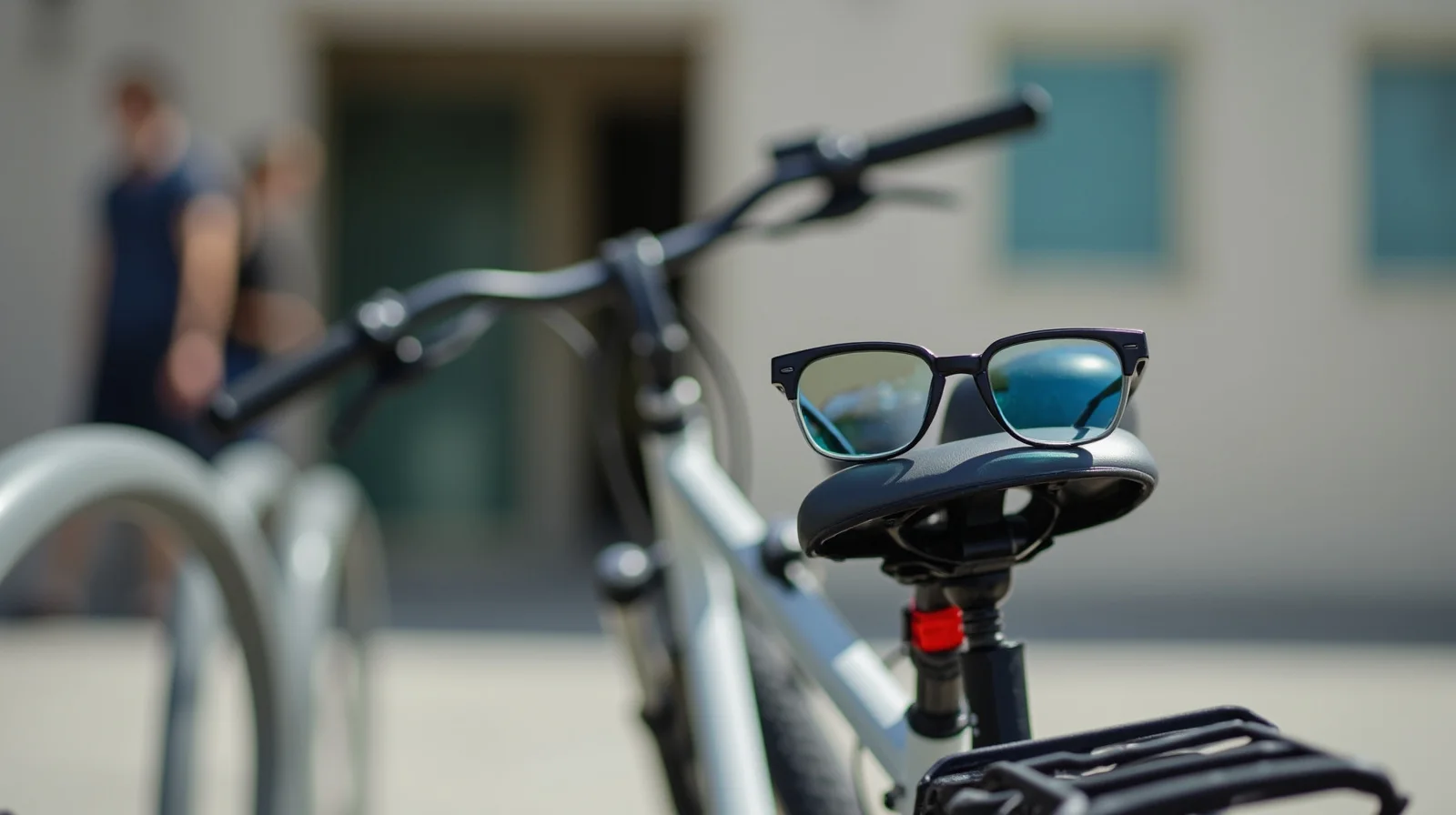
That dual life is precisely what makes the category giftable and broadly distributable: one purchase covers the ride, the walk and the workday, which supports retail placement beyond the bike channel — electronics, optical and lifestyle shelves alike.
Security and weather honesty
Low-theft design, and what rain readiness actually means
Commuters ask two questions sport riders rarely do: will this get stolen at the bike rack, and will it survive the weather I actually ride in? Both deserve straight answers.
- Nothing valuable left on the bike. The smart device is worn, not mounted — there is no head-unit or camera to detach and carry, which removes the most common theft-and-forgetting cycle of bike electronics. The glasses simply come inside with the rider.
- Low-contrast appearance. Frames that read as ordinary eyewear attract less attention than conspicuous gadgets, and pair-lock style behaviors can be defined with the app partner.
- Rain and sweat. Materials, sealing and port layouts are selected for sweat and wet-ride exposure; exact protection levels are confirmed per program and documented in quotation rather than promised in an image.
- Temperature and fog. City riding moves repeatedly between cold outdoors and heated stations and offices; lens behavior through those transitions is part of the specification.
We do not market eyewear as dive-rated or storm-proof. Where a brand sells into genuinely wet climates, the protection requirement is stated up front, validated under the quality process, and reflected on the program datasheet. The same discipline applies to destination-market wireless documentation, which is aligned to each region rather than assumed globally.
Specifying the platform
Audio-first platforms, optional camera, honest power
The commuter assortment is audio-led by nature. The reference starting points are the open-ear audio platforms — the E13 for a premium everyday position and the K01 for a value-oriented sport-and-city line — both carrying calls, music and spoken prompts with full environmental awareness. A camera-first platform such as the V03-T5 exists for brands that want an incident-and-content SKU at the top of the range; the full trade-offs are laid out in the platform comparison.
Three specification questions decide adoption. Open-ear tuning — speech intelligibility at low, city-appropriate volume with the street still present. Weight and all-day balance — validated in fit trials rather than asserted on a box. Power for an audio day — a prompts-and-calls profile rather than a capture profile, with runtime confirmed on the datasheet. Lens programs cover clear-to-tinted and bright-sun options for riders who keep one pair across seasons.
For brands extending a helmet, apparel or optical range, the commercial model is the standard one: private-label reference platforms with logo, colorways, cases and bike-channel packaging through customization, and dedicated commuter geometry or accessory tooling through ODM. The wider brand case is on the sports and cycling brands solution page.
Building the program
From city ride trials to a retail-ready commuter line
A credible commuter program validates the product in actual cities, not only on test benches. The sequence with brand partners follows five steps.
- Define the rider mix. Pure commuters, mixed-mode travelers, delivery and campus riders; camera-included or audio-only; climate and rain expectations.
- Select platforms and optics. Audio-first E13/K01 range with optional V03-T5 hero; everyday silhouettes and lens programs suited to year-round city light.
- Ride and wear trials. Evaluate open-ear intelligibility in traffic, all-day comfort after the ride, and helmet-strap behavior on reference samples.
- Confirm the honest details. Protection levels, runtime figures and destination-market documentation confirmed per program and stated on the datasheet.
- Brand and launch. Private-label identity and lifestyle or bike-channel packaging, scaling from samples to committed volumes.
Start with the samples process to let your product team ride the platforms in their own city, review volume tiers on the MOQ page, and turn the brief into a configuration through request a quote. The result is a product that makes the daily ride safer to hear and easier to navigate, and that commuters keep wearing at the destination — the quiet definition of a successful everyday electronic.
Buying considerations
What to put in a commuter eyewear brief
Rider profile
Daily commuters, mixed-mode travelers or campus and delivery riders; camera-included or audio-only.
Everyday style
Slim, conventional frames in neutral colorways that work at the desk after the ride.
Open-ear audio
Spoken prompts and calls at city volume with traffic and bells still clearly audible.
Weather expectations
The real rain, sweat and temperature profile of the target city, validated rather than assumed.
All-day fit and power
Balanced light frames and an audio-led runtime profile stated on the datasheet.
Channel and tier
Bike, optical or lifestyle retail; audio-first volume tier with an optional camera hero.
Browse the application
More cycling guides
Keep exploring
Related reading
FAQ
Frequently asked questions
Do the glasses show a navigation map or projected arrows?
Is it safe to wear them in traffic?
Are they waterproof for riding in rain?
Can a brand private-label commuter glasses?
How do samples, MOQ and battery figures work?
Build this use case into a private-label program
Tell us the workflow, environment and volume. Engineering scopes the platform, optics, power and documentation per program.