
The productivity problem
Picking lives and dies by seconds, steps and errors
Picking is the heartbeat of a warehouse and the largest share of its labor cost. Every pick is a small chain of actions: travel to the location, confirm it, read the quantity, retrieve, confirm again, and move on. Each glance away from the rack, each walk-back for a missed line, each mis-pick caught at packing — or, worse, by the customer — compounds across thousands of lines a day.
Paper pick lists and RF guns improved each stage in their era, and both still set a respectable baseline. But paper requires looking down, writing and re-keying; the handheld scanner occupies a hand for the entire walk and must be aimed, triggered and holstered at every location. Pick-to-light and put systems raise throughput but are expensive to install and fixed to the racking, which is hard to justify in leased, seasonal or rapidly changing facilities.
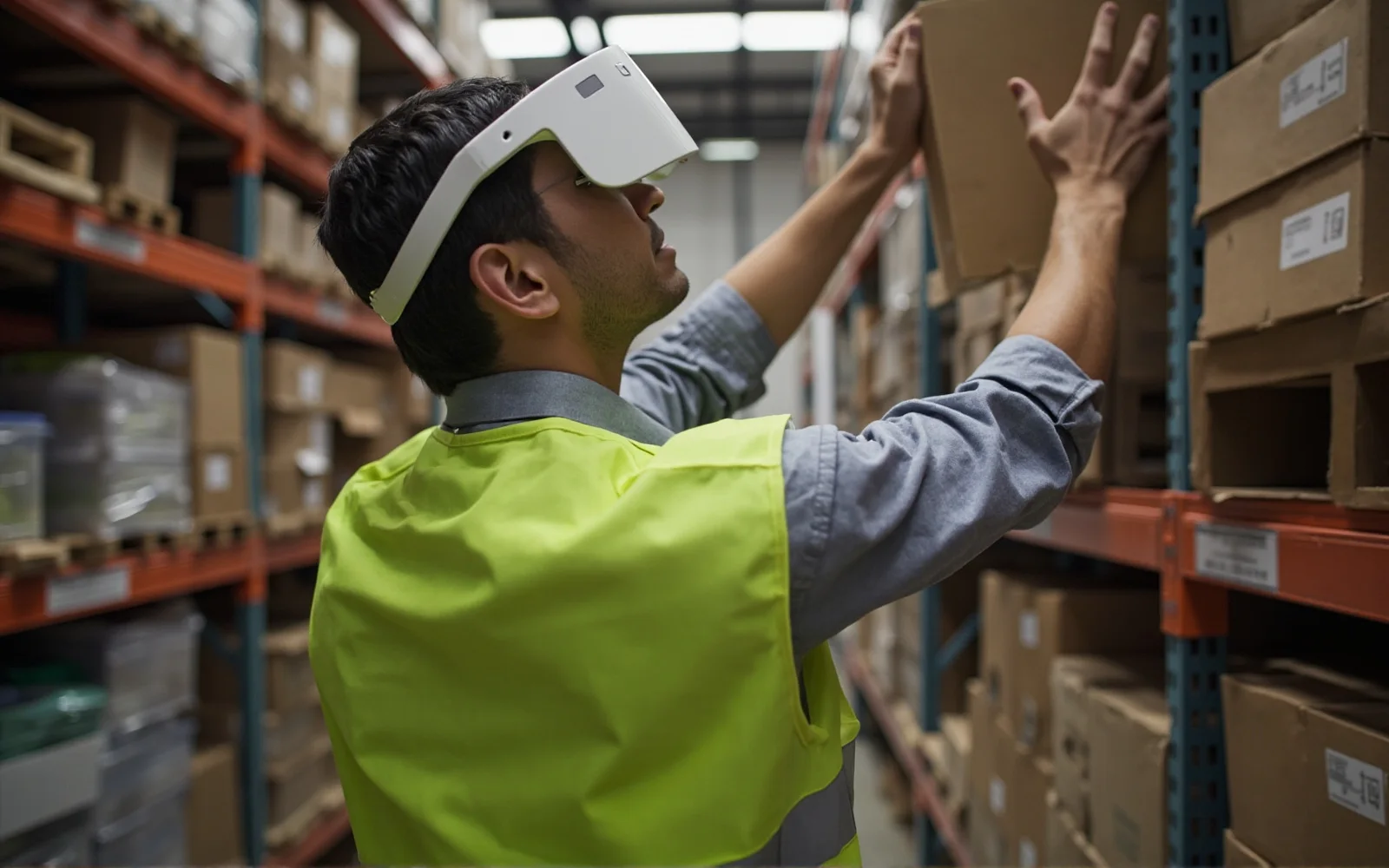
Eyes-up picking on eyewear attacks the chain differently. Location and quantity cues meet the picker’s gaze at the rack, confirmation happens by scan, voice or glance while both hands handle product, and nothing is mounted to the shelving. New or temporary workers follow the flow with minimal training, and seasonal ramp — the perennial warehouse headache — shortens because the procedure is cued rather than memorized.
Honesty is essential because picking buyers measure everything. CYNRIN supplies the connected-eyewear hardware and fleet platform; the warehouse management system, pick logic, inventory transactions and any throughput claims belong to the WMS or pick-software partner. Glasses are a strong fit for specific picking profiles and a poor substitute for a ring scanner in others — a good program says which before it sells anything.
How pick-by-vision runs
Cue, pick, confirm, walk — and an honest word on scanning
The shift starts with a device from the charging bench, logged into the picker’s session under the site’s device policy. The WMS releases work — a batch, a cluster or a goods-to-person assignment — and the partner application sequences locations. At each stop a glanceable cue identifies the position and quantity; the picker retrieves with both hands and confirms; the next cue unlocks. Exceptions — short picks, damaged stock, bin discrepancies — are reported by voice or prompt without abandoning the cart.
- Eyes on the rack. Location and quantity are presented without looking down at paper or away from the slot, reducing time at each stop.
- Hands stay on product. No trigger gun to juggle; both hands retrieve, count and pack, which matters especially for multi-unit and two-hand picks.
- Guided, not memorized. Optimal sequence and slot changes arrive from the WMS, so seasonal staff follow the current flow immediately.
- Exception capture. Damage and shortage can be recorded hands-free, optionally with a first-person image routed to the inventory record.
The scanning question deserves a straight answer. A glasses camera can read barcodes in defined conditions — well-lit, reasonably close, undamaged labels — and the partner software determines recognition and pairing. It is not universally equivalent to a dedicated 1D/2D scanner for dense, damaged, distant or rapid-fire codes on fast-moving cartons. Many real deployments are hybrid: eyewear carries the cues and workflow while a ring or wearable scanner handles the high-volume confirmations. The fit is assessed against the actual labels, distances and rate in the warehouse, not asserted in a brochure.
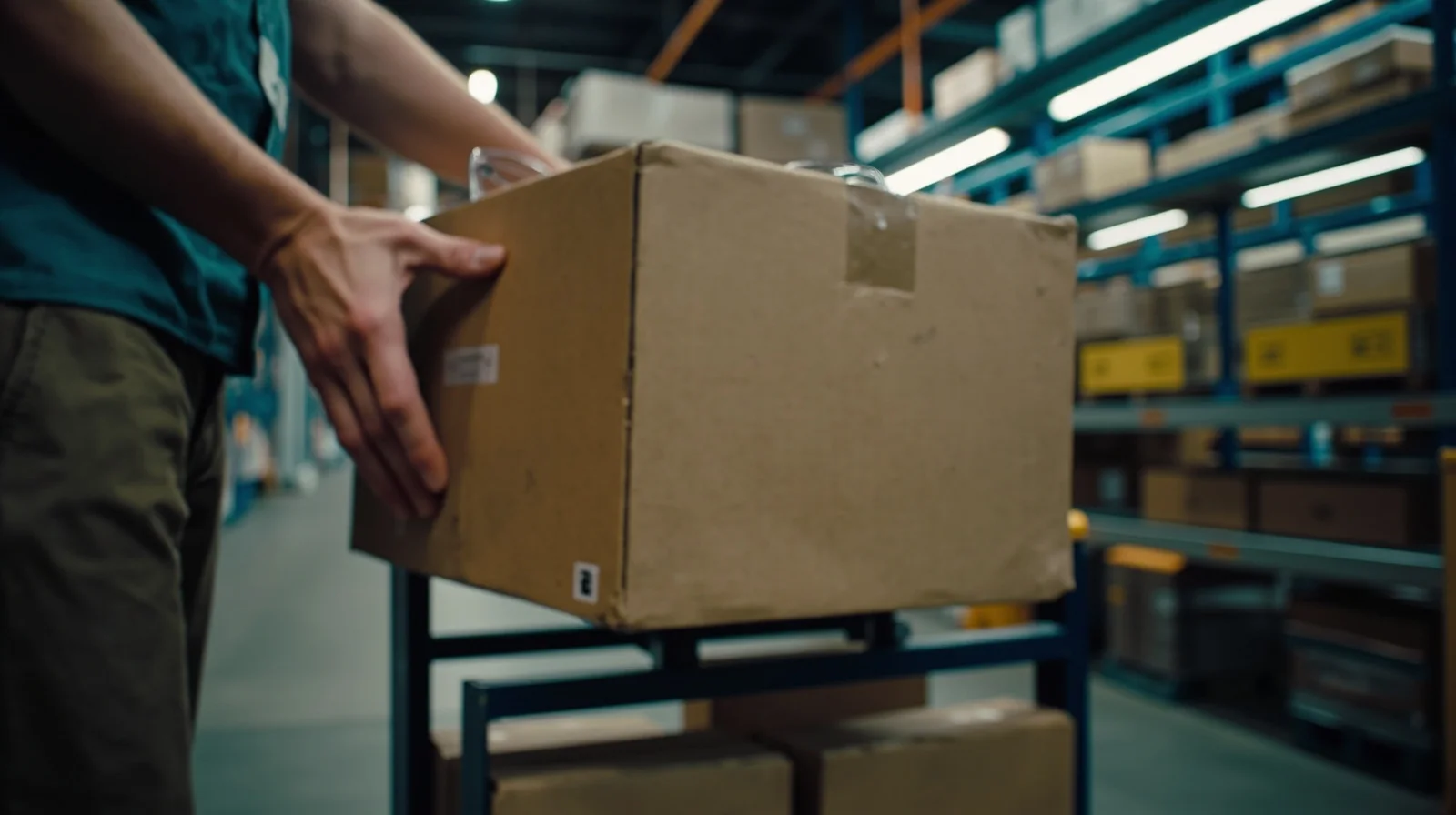
Where confirmation does not require a barcode — count checks, bin verification, putaway and loading — voice and glance confirmations are already the natural input, which is where eyewear-only workflows stand most strongly on their own.
Where it is used
Picking profiles and the wider building
The business case varies by operation; a credible pilot names the profile instead of claiming the whole building on day one.
Piece and e-commerce order picking
High-line-count, two-hand, multi-order batch and cluster picking gains most from eyes-up cues and hands-free confirmation, especially where temporary staff swell the workforce for peaks.
Kitting and putaway
Manufacturing kitting and warehouse putaway share the same cue-and-confirm structure as assembly guidance; the production-side version is covered under digital work instructions.
Loading, staging and dock work
Dock personnel follow staged-loading sequences, verify trailer and dock assignments by voice, and document damage or discrepancies hands-free amid moving equipment — where open-ear audio preserving forklift and voice awareness is a genuine safety property.
Yard, cold store and challenging environments
Bright outdoor light, cold-chain condensation and dim bulk locations test both display readability and condensation behavior; honest programs trial the exact zone rather than extrapolate from a warm demo room, with frame and sealing options scoped per program.
Fleet and acceptance
Shared devices across shifts, and the workers who wear them
Warehouse eyewear is a shared, shift-based fleet: charged on a bench, issued at clock-on, identified to the pick session, and reset at clock-off so transactions never attach to the previous wearer. Provisioning, session login, lost-device handling and firmware policy are designed against the operation’s existing rugged-device and MDM practice. Battery planning follows the picking shift — hot-swap or rotation at break times, with the exact configuration confirmed on the program datasheet rather than quoted as universal all-shift runtime.
Acceptance among pickers is the make-or-break metric in a job measured to the second. The device must not slow a fast operator: cue latency, display readability under rack lighting and the effort of each confirmation are tested against the current scanner workflow, not an empty aisle. Open-ear audio keeps colleagues and forklifts audible, which is why sealed earbuds are generally inappropriate on an active floor. Frames fit over prescription eyewear and under caps, and shared contact parts are selected for cleaning between users.
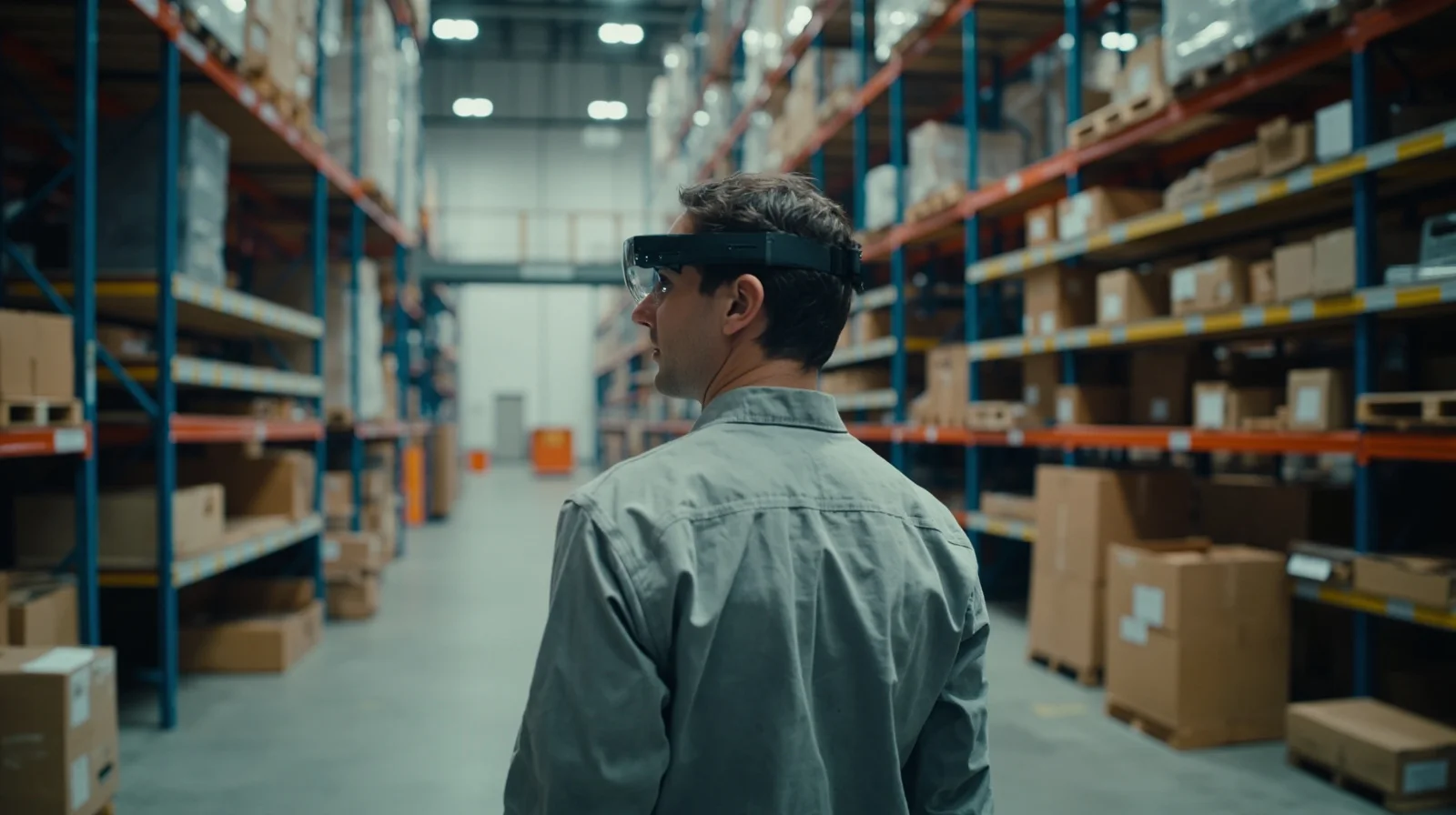
Privacy framing is straightforward but should be explicit: the device exists to guide and confirm work, with visible capture state and job-bounded operation, not to film individuals continuously. Workforce consultation and a written capture policy precede rollout, as they do across the wider industrial application.
Specifying the hardware
Readable cues in rack light, ears open to the floor
Warehouse conditions stress hardware in a particular order. First, the cue must stay readable from dark bulk aisles to sunlit dock doors; display behavior across that range is confirmed during evaluation rather than assumed from office lighting. Second, open-ear speakers must keep voice prompts intelligible above conveyor and forklift noise while preserving environmental sound — the wearer needs to hear a reversing alarm. Third, where the program uses scan-aided confirmation, the camera’s real barcode performance is tested on the site’s own labels, distances and damage rate.
Frames are kept light and balanced for walking shifts, balanced with safety footwear and high-visibility wear in mind, and reviewed for fit over prescription glasses and under headwear. Durability targets the realities of carts, conveyors and weather at the dock: frame finishes and any protective-lens or sealing levels are scoped and confirmed per program — the reference product is not generically presented as certified safety eyewear. Cleaning, strap and retention options support shared, multi-user fleets.
Platform choice tracks the confirmation method: camera-led hardware such as the V03-T5 camera glasses where image confirmation and occasional capture matter, voice-led platforms such as the E13 Bluetooth audio glasses for prompt-and-voice workflows. Custom frame geometry, accessory tooling and fleet case/packaging are available through ODM and customization.
Building the program
From one picking zone to a private-label fleet
Programs come from WMS and warehouse-execution vendors, logistics integrators, 3PL operators and retailers running seasonal peaks. Because warehouse teams have hard productivity baselines, the sequence is deliberately evidence-led.
- Name the workflow and labels. Define the picking profile, confirmations, real barcode types and distances, and decide eyewear-only versus hybrid scanning honestly.
- Scope the platform. Display readability across the building’s lighting, open-ear audio, power/rotation, headwear and cleaning needs.
- Confirm the WMS architecture. The solution partner owns transaction integration, session login, exception flows and device policy before fleet commitment.
- Pilot against a baseline. Run evaluation units in one zone, measure throughput per line, mis-pick and training time against the incumbent gun or paper process.
- Scale with the deploying brand. Private-label identity, fleet cases, charging logistics and destination-market documentation are confirmed per program via the samples process, MOQ guidance and quality control.
The result is an eyes-up workflow adopted because it is genuinely faster and easier for the picker — not because the vendor hid the scanning tradeoffs. Begin with request a quote or discuss the operation via contact.
Buying considerations
Warehouse picking program brief
Picking profile
Piece, batch, cluster, kitting or putaway; line count and two-hand frequency.
Scanning reality
Barcode types, label condition, read distance and rate; eyewear-only versus hybrid ring scanner.
Lighting and environment
Dark aisles, dock glare, cold-chain condensation, dust or moisture in pilot zones.
Noise and safety
Forklift and conveyor noise; open-ear awareness and headwear compatibility.
Fleet operations
Session login, reset between pickers, charging rotation and device-loss handling.
Baseline metrics
Current seconds per line, mis-pick rate and seasonal training time to beat.
Browse the application
More industrial & manufacturing guides
Keep exploring
Related reading
FAQ
Frequently asked questions
Do smart glasses replace dedicated barcode scanners in a warehouse?
Can pickers still hear forklifts and colleagues with the audio on?
How does the system connect to our WMS?
How are shared glasses managed across shifts?
Can a 3PL or retailer brand the eyewear, and what is the MOQ?
Build this use case into a private-label program
Tell us the workflow, environment and volume. Engineering scopes the platform, optics, power and documentation per program.