
The evidence gap
The defect is found now; the record is written later
Inspection is fundamentally about evidence, yet most of that evidence evaporates. An inspector finds a weld defect, a cosmetic blemish or an assembly discrepancy on the line, marks the traveler, and reconstructs the finding afterward at a desk — or, worse, verbally. By the time the nonconformance is typed, the angle, the context and sometimes the part itself have moved. The record describes something nobody can see anymore.
Dedicated cameras and phones improve the picture but reintroduce friction at exactly the wrong moment. Inspecting is a two-hand task: rotate the part, hold the gauge, part the wiring, steady the panel. Fetching a camera, waking it, framing, uploading and later correlating loose image files to the correct batch is slow enough that “no photo” becomes the default, especially under line pressure. Evidence survives for dramatic failures and disappears for the routine ones — precisely the population needed for trend analysis and supplier claims.
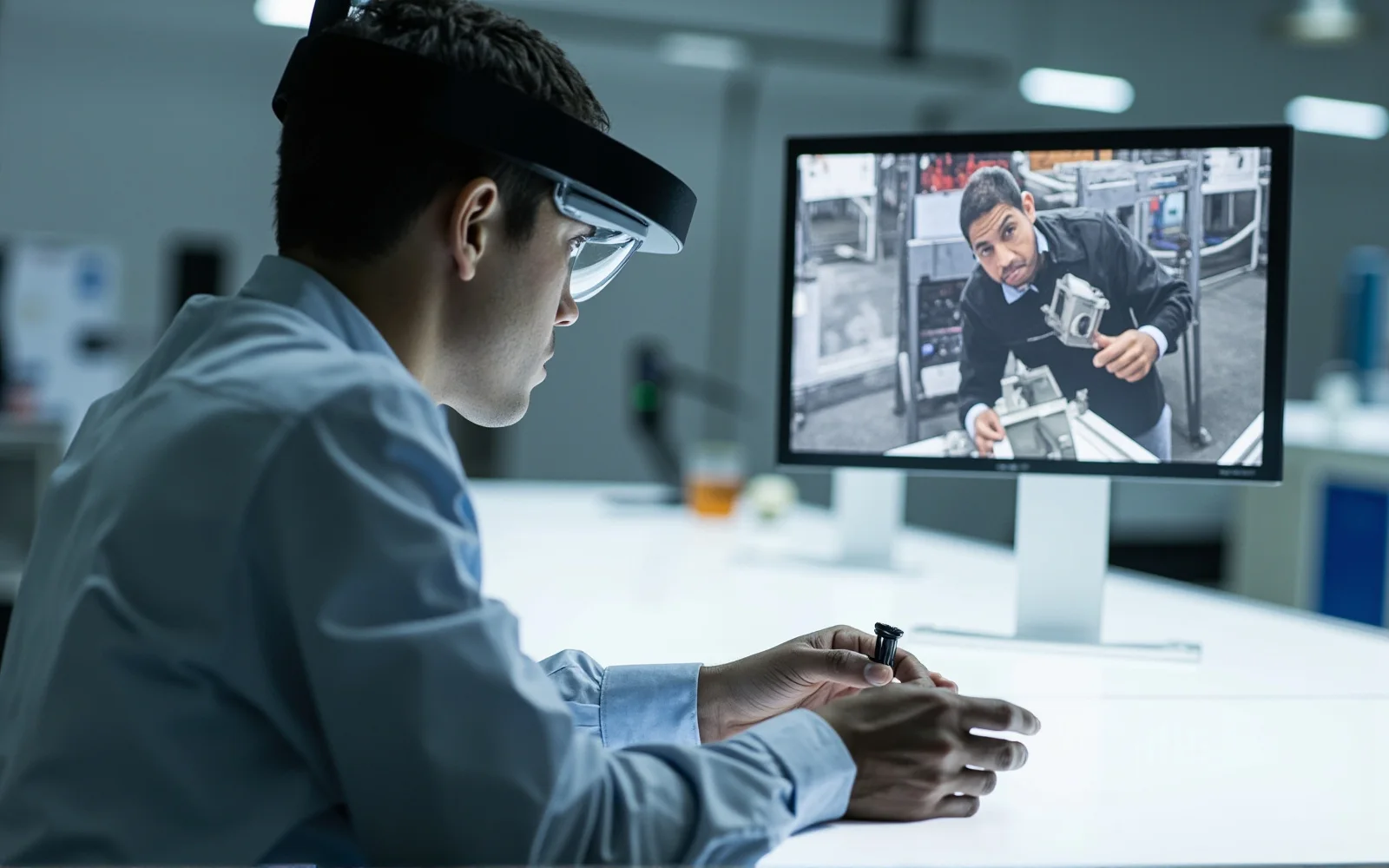
Head-worn first-person capture closes the distance between observation and record. The camera is already aimed at whatever the inspector is examining, a still or short clip is captured hands-free in context, and the software attaches it to the job, batch or supplier record automatically. The finding becomes defensible evidence: the actual defect, at the actual location, observed during the actual check, rather than a paraphrase.
The same discipline applies to QC walkthroughs and supplier audits, where an escorted tour produces pages of notes but few images that prove where and when an issue was seen. In care settings the analogous workflow is hands-free clinical documentation; industry demands the same timing but attaches the output to quality and supplier processes. Here, as always, CYNRIN manufactures the eyewear platform — the QMS, metadata handling, storage and audit chain belong to the solution owner.
The inspection flow
Hands-free capture tied to a real record
A documented inspection follows the checklist the quality team already owns; eyewear changes how evidence enters it. The inspector identifies the job or batch — scanning the traveler or selecting it at the station terminal — and works the checklist. At a finding, a glance or single-control capture takes a first-person still while both hands keep presenting the part; a short clip covers intermittent behavior that a still cannot show.
- Evidence in context. The image shows the defect in situ — position on the assembly, surrounding parts, gauge reading — because the camera shares the inspector’s line of sight.
- Record binding. The partner application associates the capture with the job, operation, batch or supplier and with the checklist step, so files never wait in a gallery to be matched by hand.
- Structured disposition. The inspector classifies the finding by voice or prompt; severity, containment and rework routing return to the quality system instead of a paper tag.
- Walkthrough and audit capture. Layered-process audits, supplier visits and pre-shipment checks become narrated first-person tours with observations timestamped to the route.
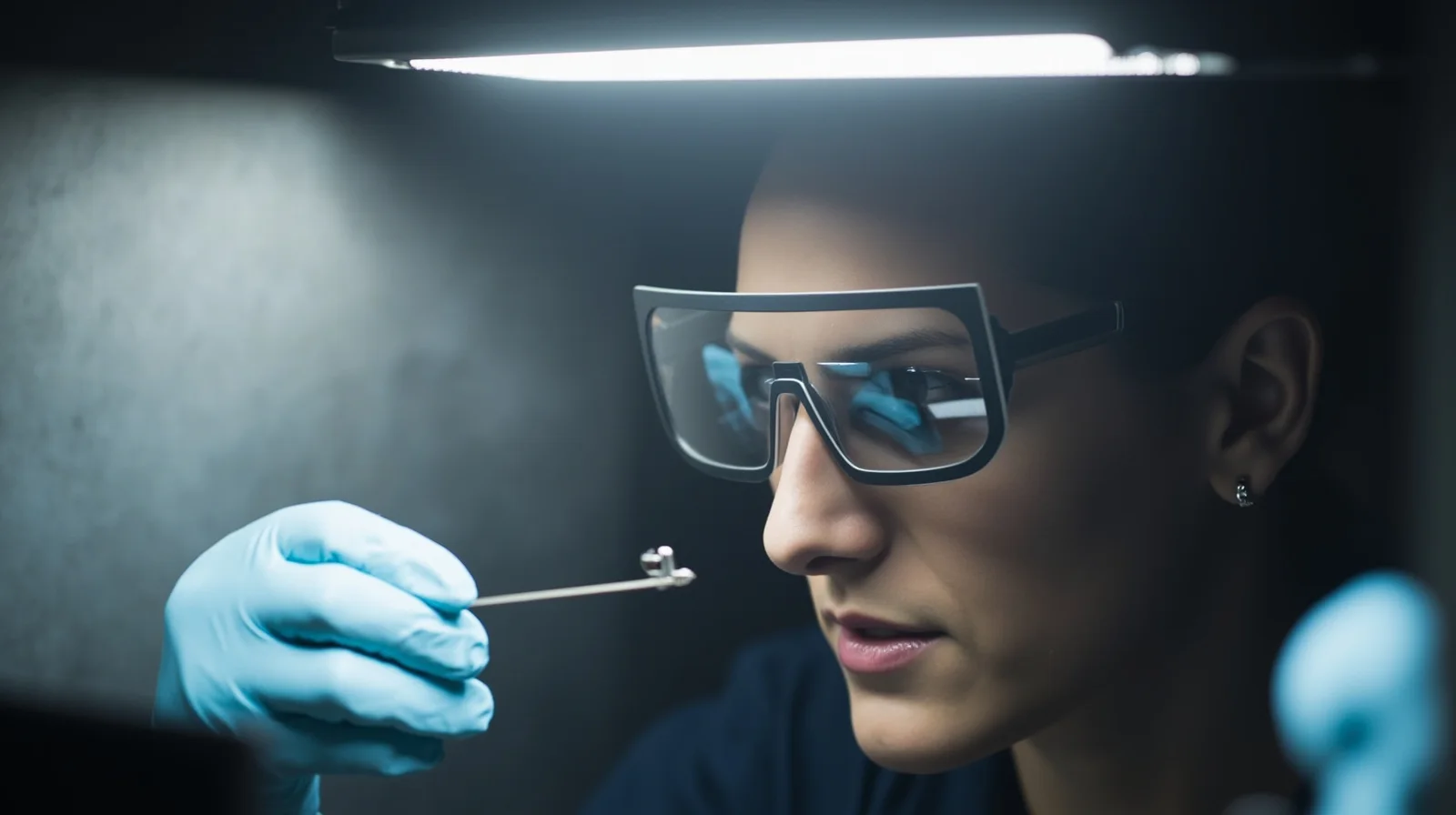
Timestamps, identity, checksum or location metadata and retention are generated and governed by the software platform and its deployment — the glasses are a trusted capture endpoint, not a standalone evidence vault. Buyers evaluating audit-grade use should ask the solution partner exactly how the chain of custody is constructed and exported.
Where it is used
Four places first-person quality evidence pays back
The pattern suits any check where showing the finding is more reliable than describing it, and where the record must travel — to engineering, to a supplier, or to a customer audit.
Incoming and supplier inspection
Receiving inspection attaches first-person evidence to the supplier and purchase record, which transforms a later claim: the discrepancy is shown on the dock, not asserted in an email. It pairs naturally with field-side assessment work in field and insurance inspection, where the same evidence-in-the-field logic applies.
In-process and final QC
Checkpoints along the line capture defects against the exact operation, feeding containment and root-cause review. Final inspection evidence ships with the quality record rather than living only in the inspector’s memory.
Audits and layered walkthroughs
Narrated first-person walkthroughs document housekeeping, safety and process adherence against the route and timestamp, and are far easier to review and trend than handwritten notes.
Commissioning and site sign-off
Machine builders and integrators record completed installation and punch-list items from the technician’s viewpoint, giving the customer verifiable acceptance evidence. This overlaps directly with remote expert assistance: the same session often both fixes and documents.
Evidence and trust
Audit chains and a visible capture state
Evidence that might reach a supplier dispute or a customer audit has to be trustworthy by construction, not by reassurance. Three properties separate a defensible deployment from a wearable camera producing orphan files.
- One record, one binding. Captures are associated to a job, batch, operation or audit point at capture time; a folder of undated images has no evidentiary value.
- Metadata and retention owned by the system. Timestamp, inspector identity, device identity and any location or checksum data are generated, stored and exported under the quality platform’s controls and the site’s retention policy.
- Obvious capture state. A visible indicator tells operators, suppliers and visitors when the device is active; recording is job-bounded, not continuous, and indicator behavior is configurable per program.
The visible-state point is also an industrial-relations one. Inspecting other people’s work — operators on the line, supplier staff during an audit — needs clear rules about what is captured, who can view it and how long it is kept. Mature programs consult the workforce and suppliers, scope capture to the check, and document the policy. The hardware supports that discipline with unambiguous indicators and controlled pairing; it cannot substitute for the policy itself.
What CYNRIN explicitly does not claim is a quality system. The eyewear does not certify conformity, render accept/reject judgments, or guarantee tamper-proof evidence; those are the solution owner’s software and the deploying organization’s procedures.
Specifying the hardware
Close-work optics, honest durability and shared-fleet design
Inspection optics differ from casual capture. The camera must resolve a close workpiece under station lighting — machined surfaces, solder, cosmetic finishes — with a first-person framing that keeps both the defect and its location recognizable. Focus behavior at typical inspection distance, response to glare on glossy parts, and still-versus-clip capture are the practical questions; exact optical specifications are confirmed on the program datasheet.
Open-ear audio supports spoken classification and narration while the inspector stays aware of the line, and a low-friction capture control matters because it is used hundreds of times a shift. Frames are tuned for extended wear over prescription eyewear and under station headwear, with contact-part options for cleaning and multi-user rotation; charging and reset between inspectors are planned as fleet logistics from the start.
Durability is specified against the actual station: oils, coolant mist, washdown routines and rough handling vary by plant, so frame finishes and any protective-lens or sealing levels are scoped and confirmed per program rather than certified by a generic marketing claim. Camera-first platforms such as the V03-T5 carry the evidence use case; voice-led checkpoints can run on audio-led platforms like the E13. Custom geometry, lens options, case tooling and fleet packaging are handled through ODM and customization.
Building the program
The program path for inspection eyewear
Programs originate with quality-software vendors, inspection-service and audit companies, machine builders shipping acceptance evidence, and manufacturers tightening supplier claims. The rollout that works begins with one evidence-heavy checkpoint and an explicit chain-of-custody design.
- Define the check and record. Choose incoming, in-process, final or audit work; specify which system receives the capture and what fields it requires.
- Scope optics and environment. Working distance, lighting, glare, contaminants, PPE and cleaning routine drive the camera, lens and frame selection.
- Design the evidence chain. The solution partner defines binding, metadata, retention, export and capture-state policy before any supplier-facing use.
- Pilot with evaluation units. Run one checkpoint, measure accepted-photo rate, dispute resolution time and adoption under real line pressure.
- Scale the branded fleet. Commit volumes with the deploying identity, multi-unit packaging and destination-market documentation confirmed per program; see the samples process, MOQ guidance and quality control.
The outcome is quality evidence that exists because it was effortless to create — first-person, record-bound, and governed by the quality organization rather than the device vendor. Start via request a quote.
Buying considerations
Inspection and QC eyewear brief
Checkpoint scope
Incoming, in-process, final QC, audit or commissioning; stills, clips or both.
Record system
Which QMS, supplier portal or job record receives captures and required fields.
Optics reality
Working distance, station lighting, glare surfaces and resolution expectations.
Chain of custody
Binding, metadata, retention, export and how audit-grade evidence is constructed.
Environment and PPE
Contaminants, washdown, headwear and protective-lens or sealing needs per program.
Capture policy
Visible indicators, job-bounded capture and workforce/supplier consultation.
Browse the application
More industrial & manufacturing guides
Keep exploring
Related reading
FAQ
Frequently asked questions
How do inspection photos get attached to the correct batch or job?
Can the glasses record short video for an intermittent defect?
Is it obvious to workers and suppliers when recording is active?
Are the frames certified safety glasses for an inspection area?
Can an inspection-service brand private-label the eyewear?
Build this use case into a private-label program
Tell us the workflow, environment and volume. Engineering scopes the platform, optics, power and documentation per program.