
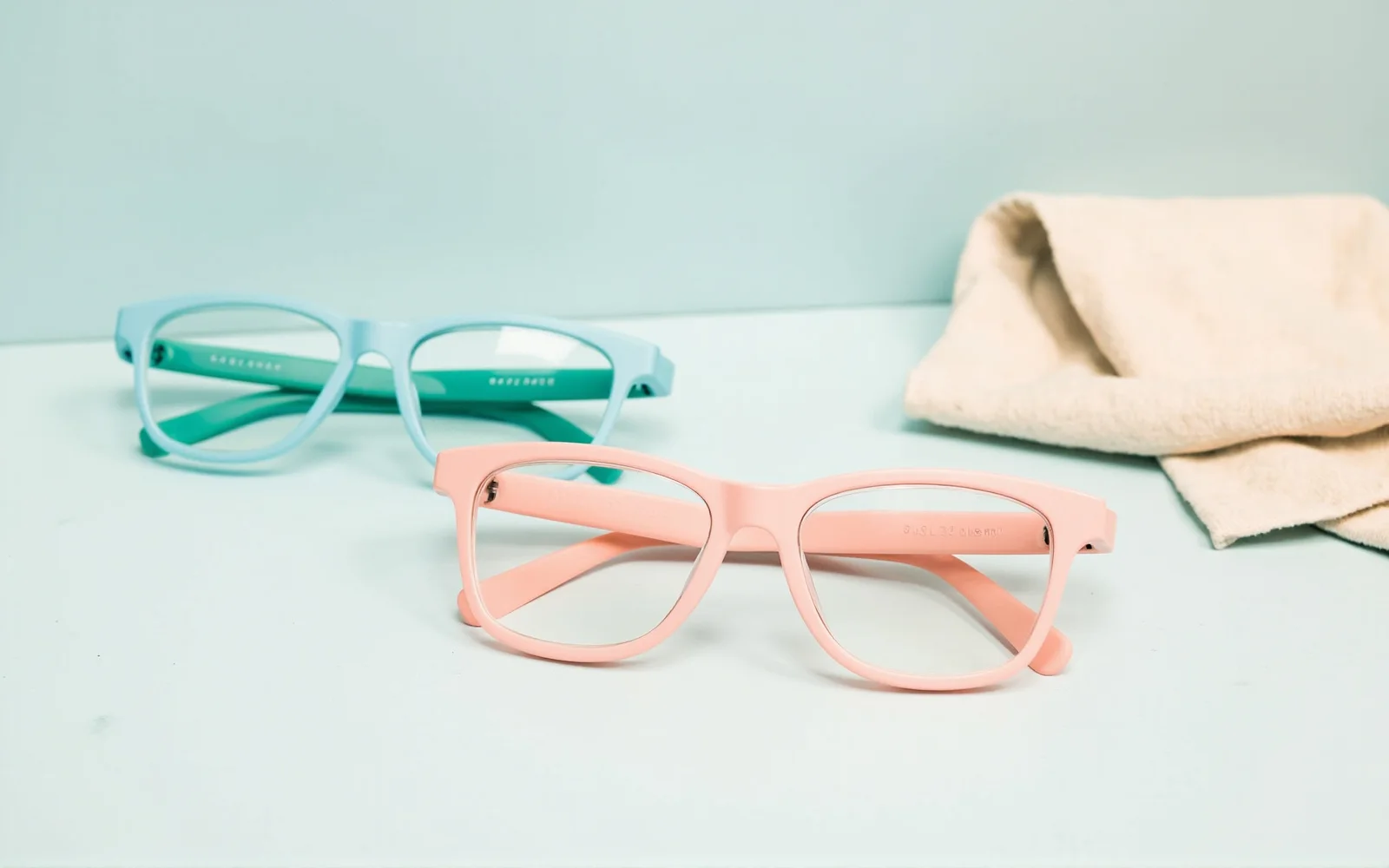
Start with the need
Protection and habit aids, or camera-free audio
The smartest thing a parent — or a retailer building a kids category page — can do is ignore the word “smart” for a moment and answer one practical question. What is the actual daily problem? If the answer is fogged lenses and a child reading with the book on their chest, the product is a protection frame. If the answer is wanting stories, music and family calls without a tablet or sealed earbuds, and with no camera in the mix, the product is an audio frame. The CYNRIN kids range is built around that honest fork.
- A05 Kids Smart Protection Glasses. Electronic anti-fog atomizer plus posture and reading-distance reminders — comfort and habit aids for reading, homework and school-day transitions.
- A06 Kids Smart Protection Glasses. The same proven protection platform as the A05, specified as a second tier so a brand can merchandise two price or color positions.
- A07 Kids Smart Audio Glasses. Camera-free, audio-only eyewear for stories, music and open-ear family calls; it targets roughly 20 hours of use on the reference datasheet.
A family can, of course, want both as children age, which is exactly why brands launch the three models as one tiered range rather than three unrelated SKUs. The deeper feature logic is covered in the eye care and posture guide and the parental and safety controls guide.
One caution for both parents and buyers: none of these models is a medical or vision-correction device. The anti-fog and reminder features are everyday comfort and habit aids, and retailers should treat any stronger claim as a red flag rather than a selling point.
The head-to-head
A05 and A06 versus A07, feature by feature
The models are not better or worse; they do different jobs. The comparison below is the honest way to present them on a retail or education page.
What each platform carries
A05/A06 protection frames carry the electronic anti-fog atomizer and the posture/distance reminders, aimed at head-down reading and the fog that comes from masks and temperature changes. A07 audio frames carry open-ear speakers and hands-free calling, with no camera at all, aimed at independent listening and family communication. The A07 is the choice when “no camera” is a hard requirement.
Choosing across a family
A younger child building reading habits suits a protection frame; an older child wanting their own music and grandparent calls, especially on a walk to school, suits the camera-free audio frame. Budget-conscious families start at the value protection tier; gift and travel purchases skew toward audio. Brands mirror this with two protection tiers (A05/A06) plus one audio tier (A07), sharing colors, cases and companion identity.

Detailed model information lives on the individual product pages — A05, A06 and A07 — with exact feature behavior and figures confirmed on the program datasheet rather than as generic marketing numbers.
Fit, weight and durability
The things that decide whether children actually wear them
A kids product with impressive features that lives in a school bag is a failure, so the wearing criteria deserve more attention than the electronics. The list below is what parents should feel for and what brands should validate in fit trials.
- Weight and balance. Children notice every gram across a day. Light frames with balanced weight and no pressure points get worn; front-heavy frames get pushed up constantly and then abandoned. Actual weights are confirmed per program.
- Nose and temple contact. Soft-touch nose pads and temple tips suit small noses and fine hair, and should grip without pinning.
- Durability for real handling. Hinges, finishes and contact materials survive drops into bags, desk edges and playground handling; replaceable contact parts help a pair last a growth spurt.
- Lenses and fog behavior. For protection frames, evaluate how the lenses and atomizer behave through real temperature changes rather than a showroom demo.
- Sound that stays open. For the A07, confirm stories are clear at comfortable volume while a voice across the room is still heard.
Because children’s faces vary so widely, fit samples matter more than a dimension chart. We recommend brands run fit trials across the target age range before mass production; geometry, grip zones and accessory tooling can be adjusted under an ODM program.
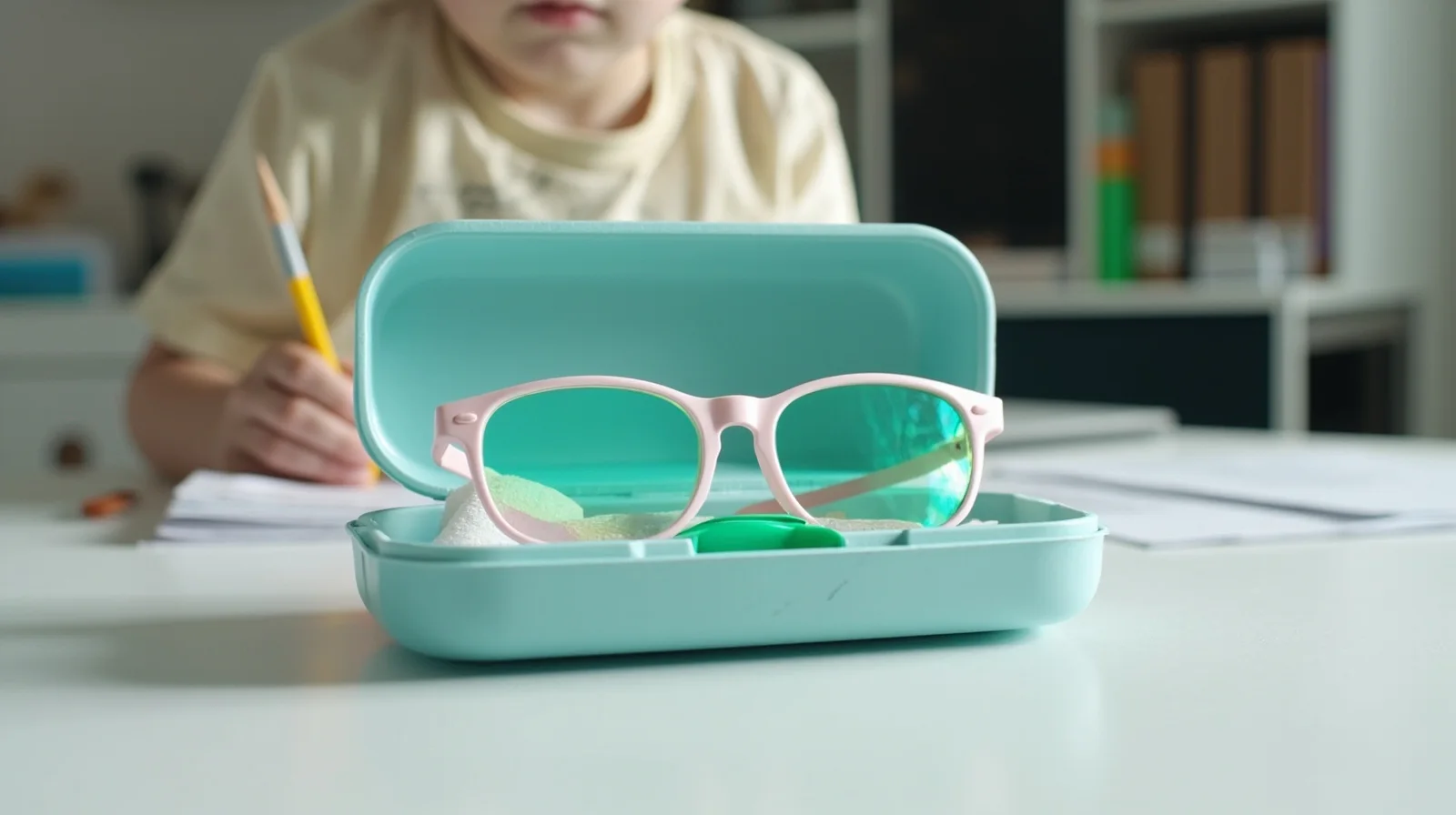
Materials, finishes and supporting safety documentation are aligned to the destination market’s children’s-product requirements and confirmed per program; we do not decorate packaging with generic certification marks.
Safety and honest claims
What parents should trust — and what to distrust
The kids-electronics category is crowded with exaggerated language, and parents have learned to discount it. A responsible product makes a small set of claims it can support.
- Trust: anti-fog and posture/distance cues described as comfort and habit aids, with behavior explained plainly.
- Trust: “camera-free” on the A07, verifiable by looking at the frame — no camera means no filming of the child or classmates.
- Trust: open-ear audio that keeps environmental sound audible, and runtime figures stated on the datasheet.
- Distrust: promises of vision correction, myopia prevention, medical protection or guaranteed posture outcomes from a general connected-eyewear product.
- Distrust: vague safety-certification badges with no alignment to the actual destination market.
Privacy deserves the same discipline. Pairing, parental controls and content are owned by the brand or app partner, and parents should be told plainly what the companion application does with data. CYNRIN supplies camera-free or protection hardware and builds neither hidden recording nor location tracking into the platform; the safety-control responsibilities are detailed in the parental controls guide.
For brands and retailers
Building a tiered private-label kids line
For maternity brands, kids eyewear labels, family retailers and education-adjacent companies, the commercial opportunity is a coherent range rather than a single gadget. A typical line uses the A05 and A06 as two protection tiers and the A07 as the camera-free audio tier, unified by frame language, colorways, cases and one companion identity so the shelf reads as a family.
The customization depth follows the usual CYNRIN routes. Logo, color, packaging and pairing-name identity are handled through customization for the fastest path to market; custom kids geometry, sizing or accessory tooling goes through ODM with an EVT/DVT/PVT-style engineering cycle. The range-planning logic is the same one described for consumer-electronics brands extending into connected kids products.
Retail education is part of the product. Because parents need the protection-versus-audio fork explained, brands that publish honest comparison content — like this guide and the sibling spokes — reduce returns and pre-sale questions. The platform comparison page shows the same comparison approach for adult camera and audio lines.
Samples, MOQ and next steps
How a branded kids program comes together
The purchasing path is deliberately straightforward, and identical in shape to other CYNRIN programs.
- Define the range. A05/A06 protection, camera-free A07 audio, or a tiered mix; confirm target age group and destination markets.
- Confirm the claim boundary. Comfort and habit-aid language, camera-free positioning and market-aligned documentation, all before packaging design.
- Order fit and evaluation samples. Validate weight, contact feel, fog behavior and open-ear sound on real children; see the samples process.
- Scope branding and tooling. Private-label logo and packaging first, custom geometry via ODM where the range needs it.
- Commit volume. Volumes, lead time and terms are confirmed per program, with tiered guidance on the MOQ page.
For parents, the advice is simpler: decide which job the glasses must do, choose the protection or camera-free audio model accordingly, and judge the product on fit, honest claims and open-ear sound rather than on a long feature list. For brands, the conversation starts with request a quote or contact, with a brief covering market, age range and the protection-to-audio mix.
Buying considerations
Kids glasses buying checklist
Primary job
Reading comfort and habit aids (A05/A06) or camera-free stories, music and calls (A07).
Fit and weight
Light, balanced frames with soft contact points, validated on real children through fit samples.
Durability
Hinges, finishes and replaceable contact parts that survive school-bag and playground handling.
Honest claims
Comfort and habit aids only; reject vision-correction, medical or exaggerated posture promises.
Privacy posture
Camera-free A07 when zero capture matters; app partner defined for pairing, contacts and content.
Market documentation
Materials and wireless documentation aligned to each destination market, confirmed per program.
Browse the application
More kids smart glasses guides
Keep exploring
Related reading
FAQ
Frequently asked questions
Should I buy the A05/A06 or the A07 for my child?
Are the glasses a medical or vision-correction product?
Is the A07 really camera-free?
Can a brand order samples and set its own branding?
What MOQ and certification should a kids program plan for?
Build this use case into a private-label program
Tell us the workflow, environment and volume. Engineering scopes the platform, optics, power and documentation per program.