
The trust question
Privacy is the adoption bottleneck for the whole camera-glasses category
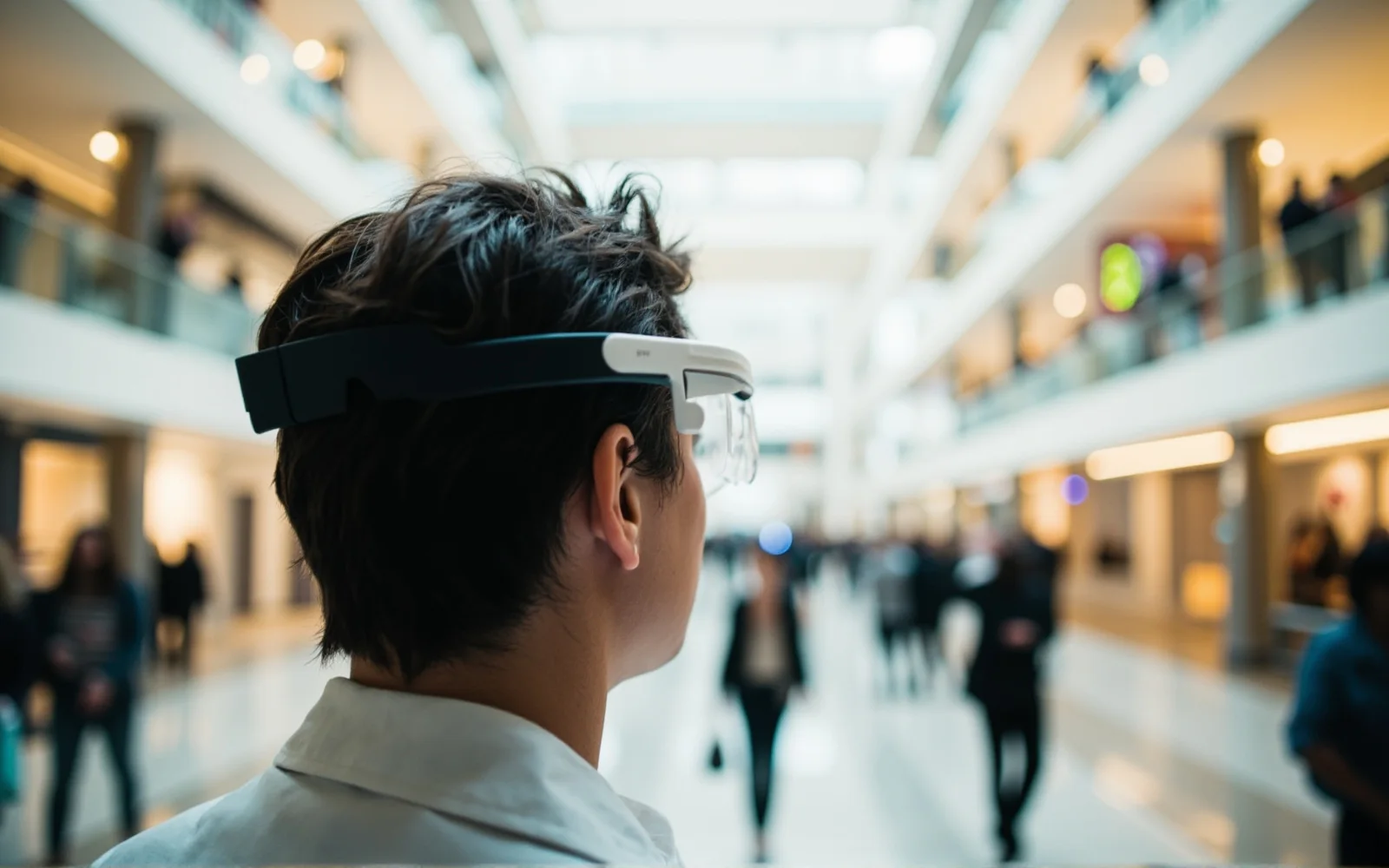
Search interest around smart glasses is dominated by worry: can they record people without anyone knowing, are they allowed in schools and attractions, what happens to the footage. Shoppers ask these questions because a camera pointed at eye line feels different from a phone held in the air — the subject cannot always tell which way it is facing or whether it is recording. That ambiguity is the single biggest barrier to mainstream acceptance, and it does not disappear behind better marketing.
It is addressed by design and by honesty. At the hardware level, a camera product can make its recording state unambiguous and refuse to help anyone conceal it. At the policy level, the brand selling the device can tell customers plainly what is allowed, what is not, and who is responsible for the footage. At the user level, the wearer applies the same consent and venue rules that govern any camera, with more care because the device is less visible.
CYNRIN’s position is deliberately explicit. The reference camera hardware ships with a clearly visible recording-status indicator, is not engineered for discreet or covert capture, and offers no feature whose purpose is to defeat detection. What CYNRIN cannot do is decide where a traveler, creator or employee may legally film, how long footage is kept, or what a companion application does with it — those are the responsibility of the brand, the solution owner and the wearer under the law of the destination market.
This page answers the questions buyers and users actually ask, and gives brands a structure for writing defensible product policy. The capture side is covered on the photo & video pillar and the creator POV and travel vlogging guides.
Hardware-level trust
What CYNRIN builds in: visible state, no covert design
Trustworthy camera eyewear starts with properties that can be inspected on the product, not promised in a privacy policy. Four hardware behaviors define the category’s credible floor.
- A visible recording indicator. An obvious status light makes active recording clear to the wearer and to people nearby; capture state is not left ambiguous.
- No concealment features. The platform does not include and will not be customized to include covert modes, indicator defeat or silent-surveillance behavior. Requests for hidden-capture products are declined.
- Configurable, not removable, behavior. Indicator timing and capture workflows can be configured per program to align with destination-market expectations, but always in the direction of making state clearer, never harder to read.
- A camera-free alternative. The E13 and K01 audio platforms carry no camera at all, giving brands a genuine zero-capture SKU for sensitive markets, children’s lines and privacy-conscious buyers.
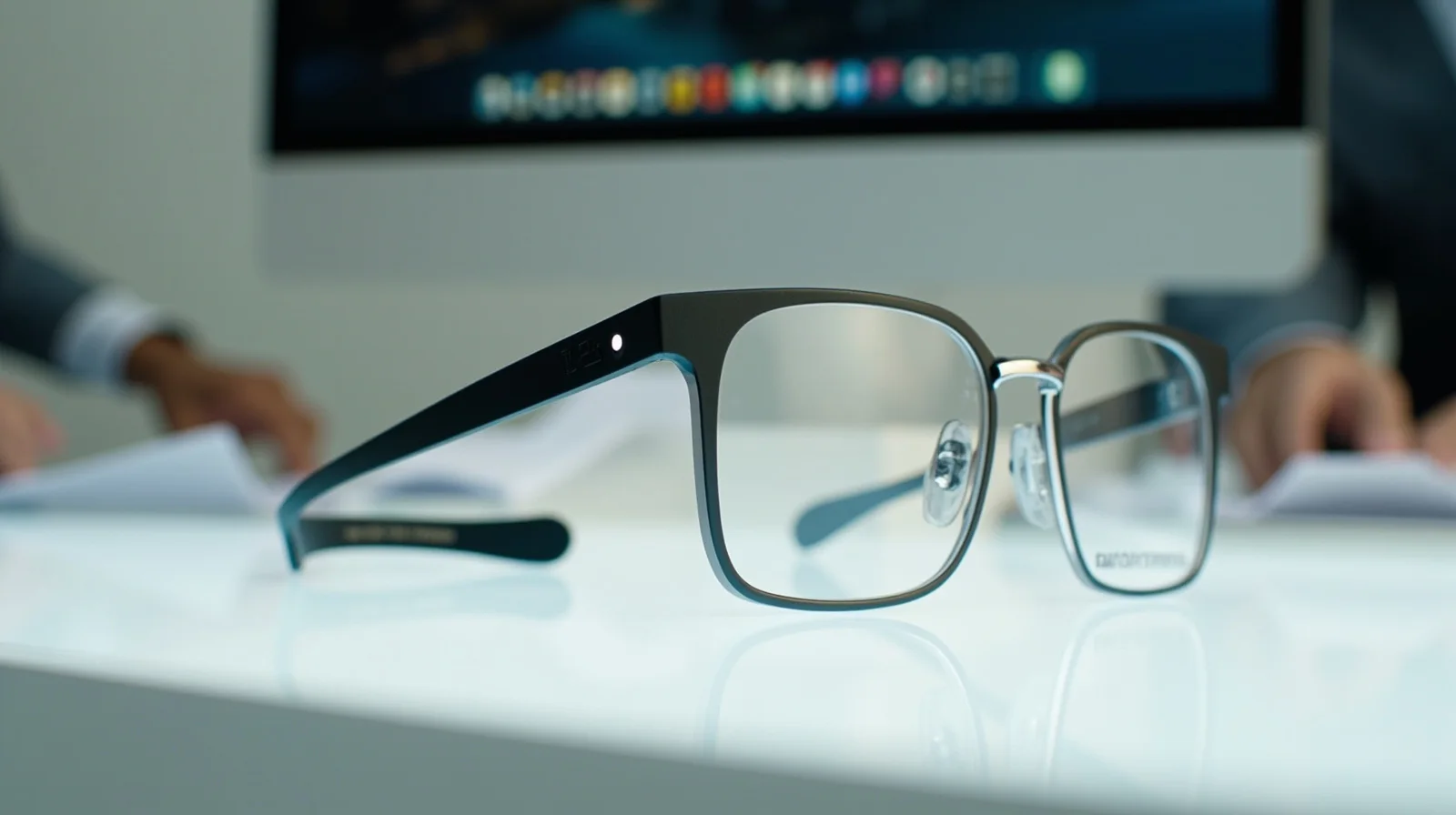
What happens after capture sits elsewhere. Footage transfer, storage, retention, cloud sync, account access and any AI processing are implemented by the companion application and governed by the solution owner’s privacy policy and its deployment region. The hardware is built to support transparent, user-controlled capture — not to act as an unmanaged data store. Camera programs start from the V03-T5 platform; exact behavior is documented on the program datasheet.
Where filming is contested
Public space, attractions, schools: the rules are not one rule
“Is it legal to wear these in public” has no single answer, because the question bundles several different legal and social situations that brands should keep separate in customer material.
- Wearing versus recording. Wearing camera glasses in public is generally permissible, but recording people is governed by a patchwork of image, privacy and wiretap-style laws that differ sharply between jurisdictions — some require consent for identifiable video or audio in private-feeling settings even in publicly accessible places.
- Private premises set their own terms. Museums, galleries, attractions, concerts, stores, restaurants, gyms and transit operators can prohibit or condition recording through entry terms and signage, and venues increasingly name camera glasses explicitly. Posted rules win on the premises whatever local public-space law says.
- Children and schools. Schools, childcare settings and events involving minors apply some of the strictest rules anywhere, often regardless of whether recording is active. Brands should advise users to seek explicit authorization and to choose camera-free devices where capture is not needed.
- Sensitive locations. Border and security areas, military sites, courts, medical settings, changing rooms, washrooms and houses of worship frequently ban recording outright; the correct response to a request to stop is to stop.
- Cultural norms vary. Even where filming is lawful, expectations around pointing a camera at strangers, filming staff or recording in markets and on transit differ by city and country — legality is the floor, not the etiquette.
The responsible summary for a user guide is short: check venue terms, ask where people are identifiable, respect objections immediately, keep the indicator visible, and when in doubt do not film. The wearable does not grant permission; the place and the people do.
Writing the product policy
What a brand should publish before it ships a camera product
Retailers, platform reviewers and increasingly regulators expect camera-glasses brands to answer the privacy questions up front. Brands that bury the topic invite exactly the coverage they fear. A credible launch includes the following.
- A plain-language capture statement. When the device records, what the indicator shows and how the wearer starts and stops capture — stated in the listing and quick-start, not hidden in a manual.
- A user etiquette and venues guide. Clear guidance on posted rules, consent, children, sensitive locations and stopping on request, localized to destination markets rather than translated from one source.
- The companion-app privacy boundary. What data the app collects, where clips are stored, how sharing and cloud features work, retention and deletion, and the account model — owned and validated by the brand or solution provider.
- Market-by-market review. Indicator behavior, labeling and documentation aligned to destination-market expectations, handled during quotation rather than after a listing rejection.
- A camera-free option on the shelf. An audio-only SKU gives resellers and cautious buyers a defensible alternative and demonstrates that the brand is selling capture by choice, not by stealth.
For institutional buyers — education, facilities, security services — the same questions arrive as procurement clauses: indicator specification, managed pairing, fleet reset, acceptable-use ownership. The operational side of that conversation overlaps with incident evidence & livestream, where capture governance is formalized for organizations rather than consumers.
Specifying trust
Privacy requirements to put in the hardware brief
Procurement and brand teams can turn the trust conversation into concrete specification items, the same way they specify battery or optics.
- Indicator specification. Visibility, position, illumination behavior and the capture states it represents, reviewed against each target market.
- Capture-control behavior. How recording starts and stops, what feedback the wearer receives, and the absence of any concealment mode — confirmed in firmware review.
- Pairing and identity. Controlled device pairing, naming and reset between users for managed or shared deployments.
- Data path assumptions. What the hardware does and does not store, and the interface the companion application is expected to govern.
- Camera-free SKU. Whether an E13- or K01-based audio variant is part of the launch range.
- Destination-market documentation. Labeling, manuals and compliance packs aligned to the markets on the launch list, delivered per program rather than assumed.
None of these items substitutes for the brand’s own legal review of recording law and app privacy practice in each market — CYNRIN provides hardware evidence and configuration support, not legal advice. That division of responsibility is what makes the program auditable.
Building the program
A privacy-credible launch path for eyewear brands
Brands that navigate this category best treat privacy as a launch pillar alongside optics and battery. The engagement structure reflects that. The eyewear brands and consumer-electronics brands solution pages describe the commercial paths.
- Scope markets first. List every launch market up front, because indicator expectations and documentation follow the destination list.
- Choose camera and audio platforms. The V03-T5 camera hero for capture buyers; an E13 or K01 audio tier for zero-capture buyers and sensitive channels.
- Configure indicator and capture behavior. Agree the visible-state specification and controls during engineering review; no covert options exist at any tier.
- Prepare policy and app documentation. The brand delivers the capture statement, etiquette guide and app privacy policy while CYNRIN supplies the hardware evidence and program datasheet.
- Evaluate, then commit. Reference samples support compliance and retail review before volume; MOQ, lead time and market documentation are confirmed per program via samples and MOQ.
Frame cosmetics, labeling and packaging run through customization; custom optical or form-factor work through ODM. Bring the market list and the privacy questions to the first conversation via request a quote or contact.
Buying considerations
Privacy requirements for a camera-glasses brief
Launch market list
Every destination market named early, since indicator and labeling expectations follow it.
Visible-state spec
Indicator position, behavior and the capture states it must make obvious.
No-covert confirmation
Firmware and controls reviewed to confirm no concealment or silent-capture mode exists.
App data boundary
Who owns storage, retention, sharing and deletion policy in the companion application.
User etiquette material
Localized guidance on venues, consent, children and stopping on request.
Camera-free tier
An E13 or K01 audio SKU for sensitive markets and zero-capture buyers.
Browse the application
More photo & video guides
Keep exploring
Related reading
FAQ
Frequently asked questions
Can smart glasses record people without them knowing?
Are camera glasses allowed in public, at attractions or in schools?
Can the recording light be switched off or hidden?
Who stores the footage and what does the app do with it?
Can we sell a camera-free version for privacy-sensitive markets?
Build this use case into a private-label program
Tell us the workflow, environment and volume. Engineering scopes the platform, optics, power and documentation per program.