
The creator problem
The best creator moments are the ones a camera ruins
Anyone making hands-on content knows the friction. To film the hands, a phone has to be propped, a mirrorless camera needs an operator or a fixed tripod, and an action camera goes on a chest mount or a head strap that announces itself. Each rig buys the shot at the same cost: setup time, one more thing to carry, and a literal object between the creator and the work. While the camera is being framed, the moment that made the content worth filming has already passed.
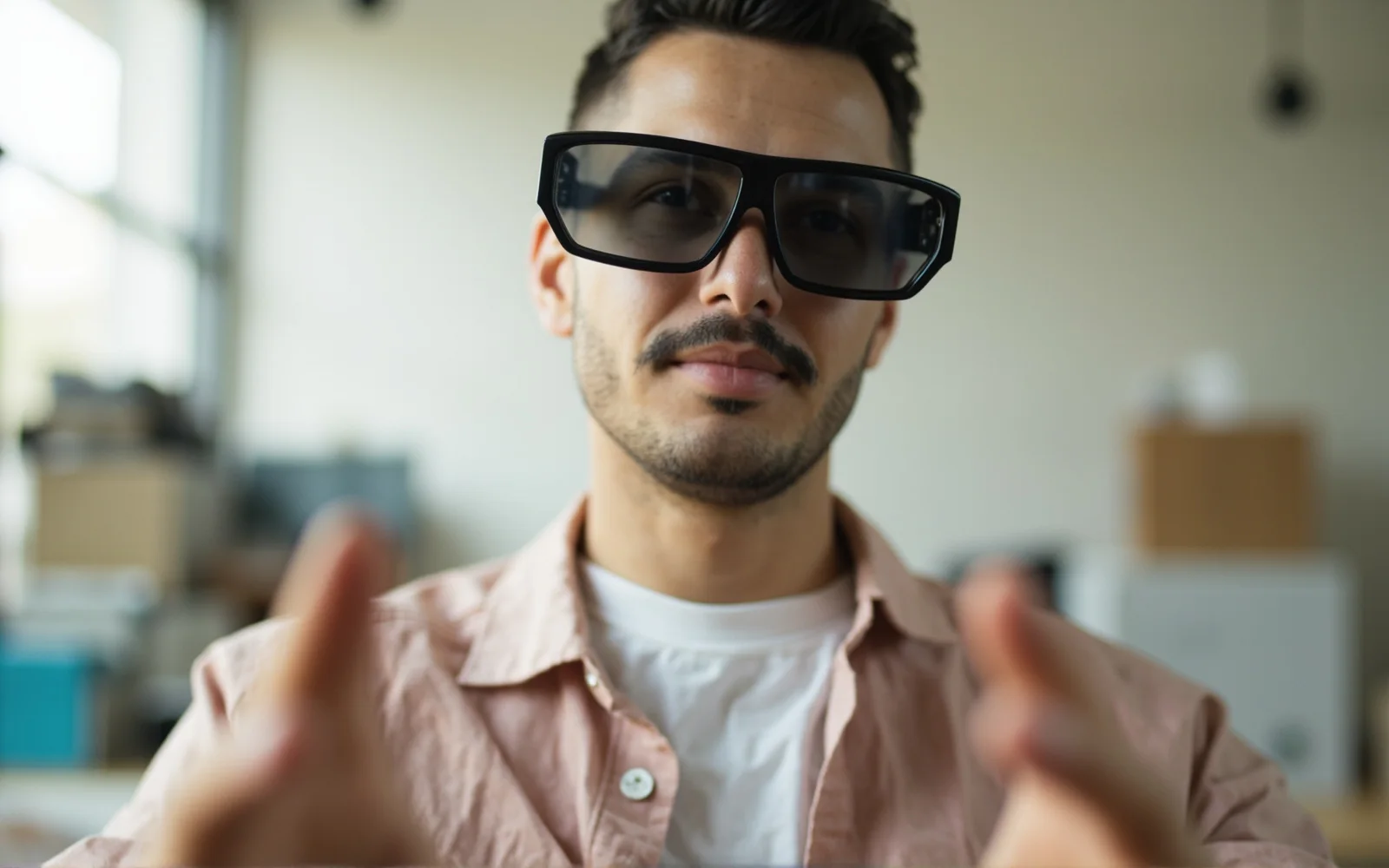
Head-worn capture removes that trade. The camera sits at eye line and follows the wearer’s gaze by default, so the footage matches what the creator is actually looking at — the cutting board, the half-finished build, the reaction across the table — while both hands stay on the task. There is no mounting point to claim and no framing pass to run. Capture starts from a simple touch or voice control and becomes a by-product of making rather than a second production job.
Audiences read the difference instantly. Eye-line footage feels like being shown something by the person doing it, not watching a performance staged for a lens. That first-person intimacy is why POV formats keep winning on social feeds, and why creators describe glasses footage as the angle they always wanted from a chest cam but never quite got.
The honest framing matters too. These glasses are not a cinema camera and not a replacement for a full-frame kit on paid productions. They are a capture tool for a specific, valuable job: frequent, frictionless, genuinely first-person material that would otherwise never be filmed. For brands serving the creator economy, that job is large enough to anchor a whole product line; see the photo & video pillar for where it sits in a tiered range.
Why POV works
What eye-line footage keeps that other mounts lose
The value of glasses capture is not novelty; it is fidelity to the creator’s real point of view. Several properties follow from where the camera sits.
- True working distance. A camera at the temple sees the bench, pan or keyboard at the same distance the creator does, so close-hand work stays framed without an operator.
- Gaze leads the shot. Looking up to check a timer, down to the hands and back to the result produces natural cuts and reveals in a single take, instead of three setups.
- Reactions from inside. Walk-up reveals, first tastes and unboxing reactions are captured as the creator experiences them, which reads far more authentically than a lens pointed back at the face.
- One less rig to manage. There is no tripod to clear away between scenes, no chest strap under clothing and no phone sacrificed to the tripod mount while it is needed for something else.
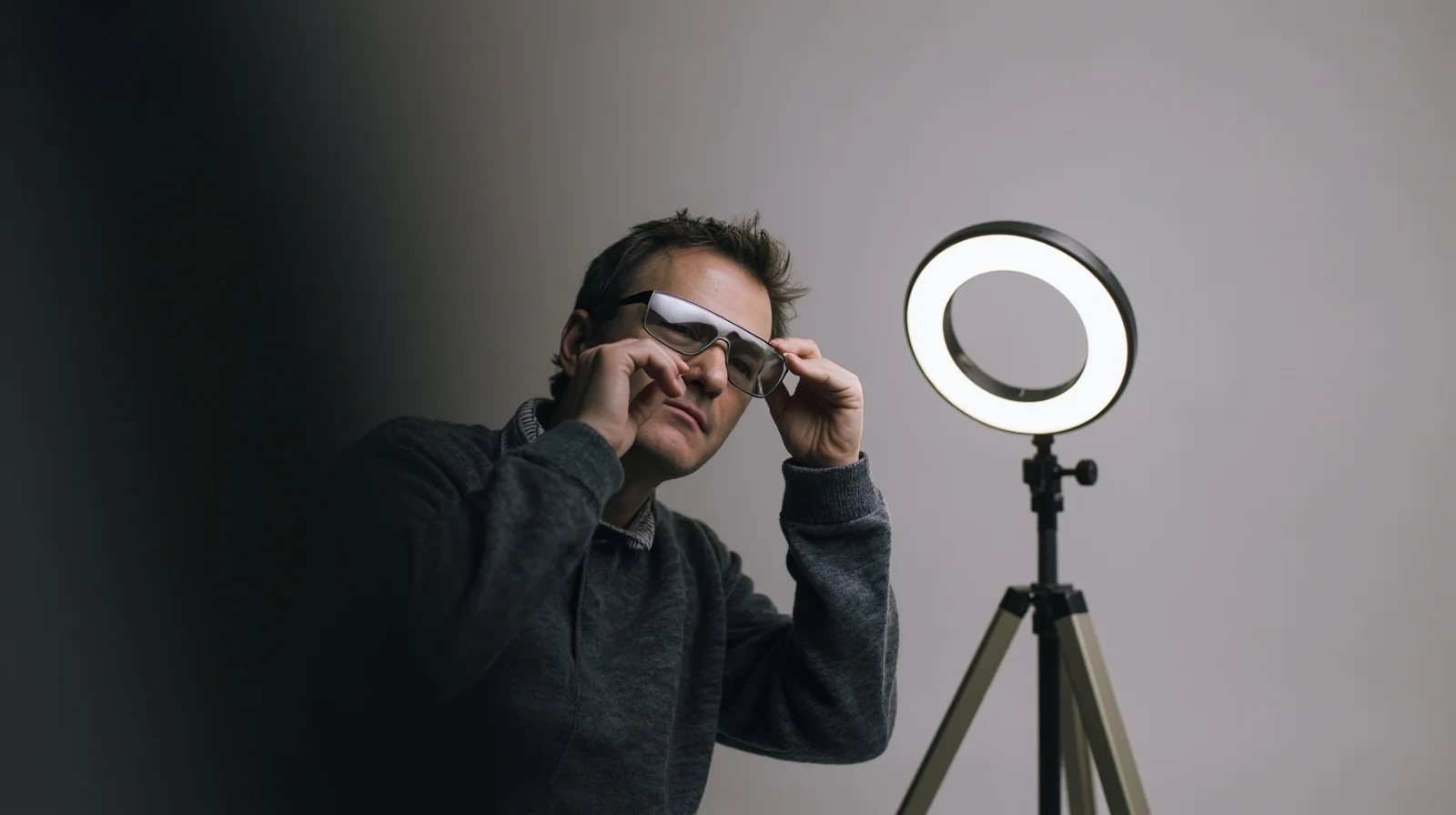
For team and ambassador productions the same property compounds: multiple people can each carry a first-person angle without a camera operator, which is exactly the workflow covered in the team & event POV content guide. The footage is produced by the people having the experience.
Content formats
The creator formats eye-line capture actually fits
The strongest use cases share one trait: the hands and the viewpoint are the content. Four formats come up again and again in briefs from creator-economy brands.
Cooking, crafts and making
Recipe steps, builds, repairs and studio work are conventionally the hardest to film alone. POV capture records the knife work, the glue-up or the wiring exactly as the maker sees it, with natural glances at ingredients or instructions baked into the take. The creator narrates to an audience that is effectively standing at their shoulder.
Reviews, tutorials and demos
A product being unboxed, assembled or tested can be shown in continuous first-person use instead of staged tabletop shots. For tutorials, the learner sees the screen, tool or part from the instructor’s reference frame, which is the same reason POV is valued for procedural teaching in other industries.
- Lifestyle and behind-the-scenes vlog. Market walks, studio days and day-in-the-life material cut together from clips captured while living the day, not while posing for it.
- Sport and movement POV. Rides, runs, slopes and water-side activity filmed from the athlete’s view, with hands free for bars, poles and gear; the dedicated POV ride capture guide covers cycling in depth.
None of these formats asks the glasses to be the only camera in a creator’s kit. Most successful creators use POV clips as connective, immersive tissue between shots from their existing camera — and that honest division of labor is what makes the output look professional rather than gimmicky.
Honest limits
What brands must tell creators before they buy
Credible marketing on camera glasses means stating the limits as clearly as the strengths. Brands that overpromise here pay for it in returns and reviews. The real-world profile is consistent across small head-worn cameras.
- Low light is the ceiling. Tiny optics and sensors perform best in daylight and good indoor light; evening, candle-lit and backlit scenes are where footage softens and noise appears fastest.
- No real zoom. The camera captures a fixed field of view, so distant detail and tight product close-ups are framed by movement, not optics; the hero product shot still comes from a real camera.
- Wind and noisy rooms. Open-ear mics capture natural narration well in ordinary environments, but strong wind and crowded venues challenge any small wearable mic; outdoor voice work has a genuine wind profile.
- Heat and battery over long takes. Continuous recording is the most demanding load on a head-worn device. Realistic session profiles, not an all-day recording claim, are stated on the program datasheet, and creators plan shoots in segments around them.
- Editing happens elsewhere. Trimming, storage management, transfers, captions, AI-assisted shot selection and sharing live in the companion application and the creator’s own editor — the glasses capture; the software finishes.
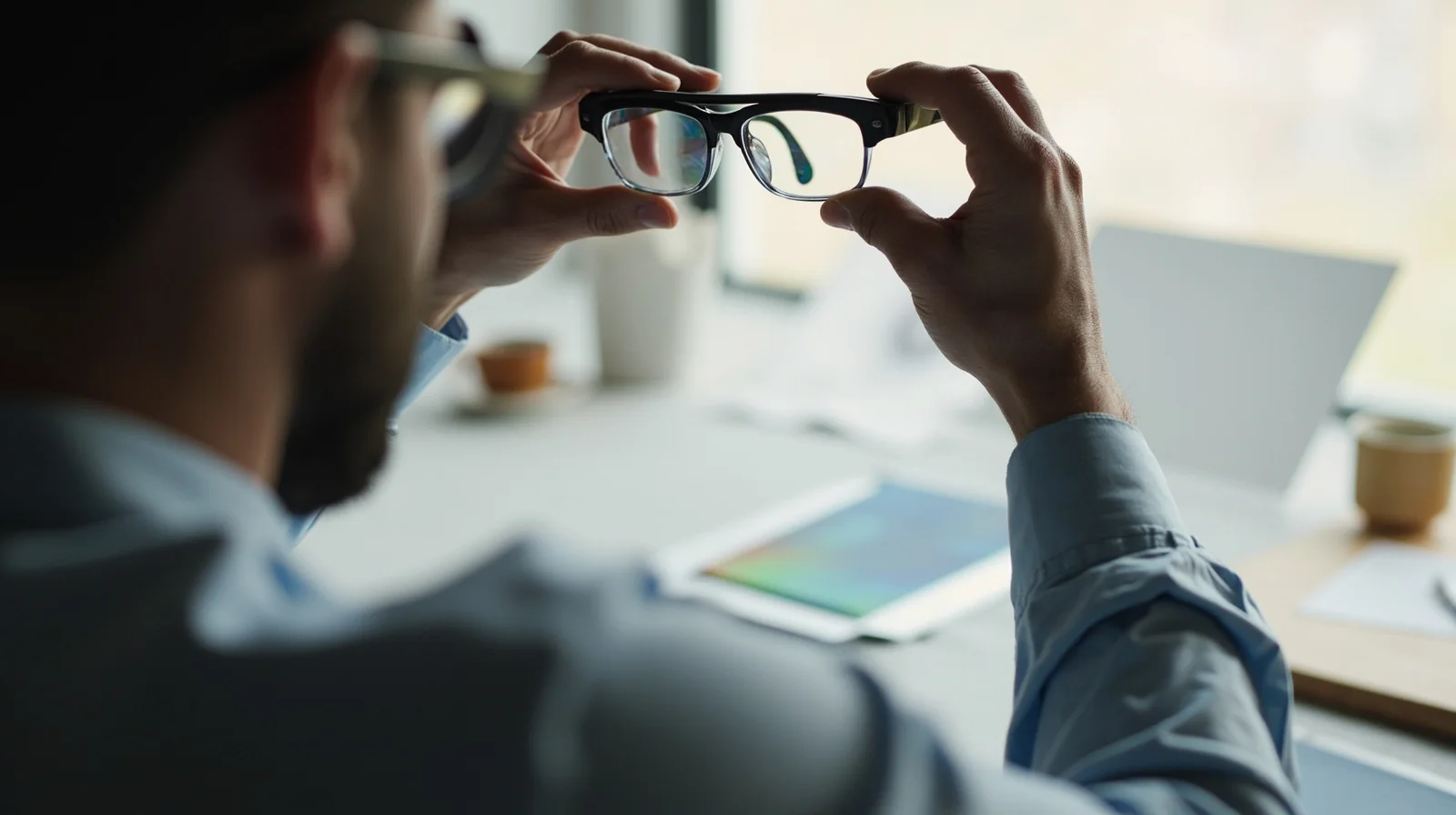
This is the posture the V03-T5 camera platform is specified around: honest, characterized capture behavior with no blanket resolution or storage figures in marketing copy. Any AI shooting or framing feature is documented per program rather than promised generically.
Specifying the platform
Camera hero plus audio tiers: a family for creators
Content-led brands usually launch a tiered family rather than a single camera device. The V03-T5 is the camera-first hero: photo and video from eye line, touch- and voice-led capture, open-ear audio for calls and narration, and a companion-app workflow for getting clips onto a phone. Exact capture specifications are delivered on the program datasheet rather than quoted in generic marketing.
Beneath it, two camera-free audio platforms cover buyers who want the open-ear, eyes-up experience with no capture at all. The E13 anchors the everyday tier and the K01 suits a value tier. Sharing frame language, packaging and pairing identity across camera and audio variants makes the range legible on shelf and online, and gives privacy-conscious customers a real option instead of a camera they do not want.
Because creators wear these for hours while making, weight, balance and temple pressure are tuned as product features, not cosmetic details; lens and tint programs can be matched to the environments the audience actually films in. Frame colorways, logo placement, case and quick-start material carry the buying brand through customization. When a brief calls for a new optical direction or form factor, custom camera development runs through ODM with EVT/DVT/PVT validation before production.
The brand opportunity
Building a creator POV program as a content brand
The buyers behind these programs are consumer-electronics brands, creator-economy and lifestyle brands, and accessory companies that already own a community and a distribution channel. They come to CYNRIN for the hardware platform and a manufacturing partner that speaks the vocabulary of retailer review, returns and honest specifications. The consumer-electronics brands solution page maps the engagement; eyewear-first brands can start from the eyewear brands page.
- Define the creator and the format. Cooking makers, reviewers, travelers or athletes each imply different lenses, tints and power profiles; the format sets the specification.
- Select camera and audio platforms. One camera hero and one or two camera-free tiers, with shared identity and packaging.
- Align the app story. Review, transfer and sharing behavior is configured so customers meet the brand experience, and every AI or storage claim is validated against the real firmware.
- Specify privacy behavior. Visible recording indicators and labeling are reviewed against the destination markets, the way the pillar buying table describes.
- Sample, pilot, commit. Reference units support creator pilots and seeding before volume; MOQ, lead time and documentation are confirmed per program via the samples process and MOQ guidance.
The result is a defensible content product: hardware that genuinely removes the friction from POV filming, claims that survive retailer review, and a clear companion-app boundary. Start the conversation through request a quote.
Buying considerations
What to put in a creator-camera brief
Creator and format
Cooking, crafts, reviews, vlog or sport; the format drives the lens and power profile.
Capture profile
Stills, short clips or longer takes; the realistic session length the audience will shoot.
Audio expectations
Narration indoors, outdoors with wind, or calls; the honest mic profile for each.
App and storage story
Who owns transfer, trimming, AI features and sharing, and what is actually shipped.
Range architecture
Camera hero plus camera-free E13 or K01 tiers with shared identity.
Markets and indicators
Destination markets, visible-indicator behavior and labeling expectations.
Browse the application
More photo & video guides
Keep exploring
Related reading
FAQ
Frequently asked questions
Do camera glasses replace a creator’s main camera?
How do clips get from the glasses into an editor?
What are the exact resolution and storage specifications?
Can we build a custom camera model instead of the reference platform?
Build this use case into a private-label program
Tell us the workflow, environment and volume. Engineering scopes the platform, optics, power and documentation per program.