
The travel trade-off
Travelers carry cameras to remember trips, then hide behind them
The paradox of travel content is familiar to anyone who has edited a holiday. The phone comes out to record the square, the meal or the arrival, and for the seconds it is held up the traveler is looking at a screen instead of the place. Action cameras need mounts, gimbal bags and charging cubes; vlogging cameras attract stares and turn a quiet walk into a production. By the end of a trip, the bag is heavier than the itinerary planned for and half the best moments were never filmed because the camera was packed away.
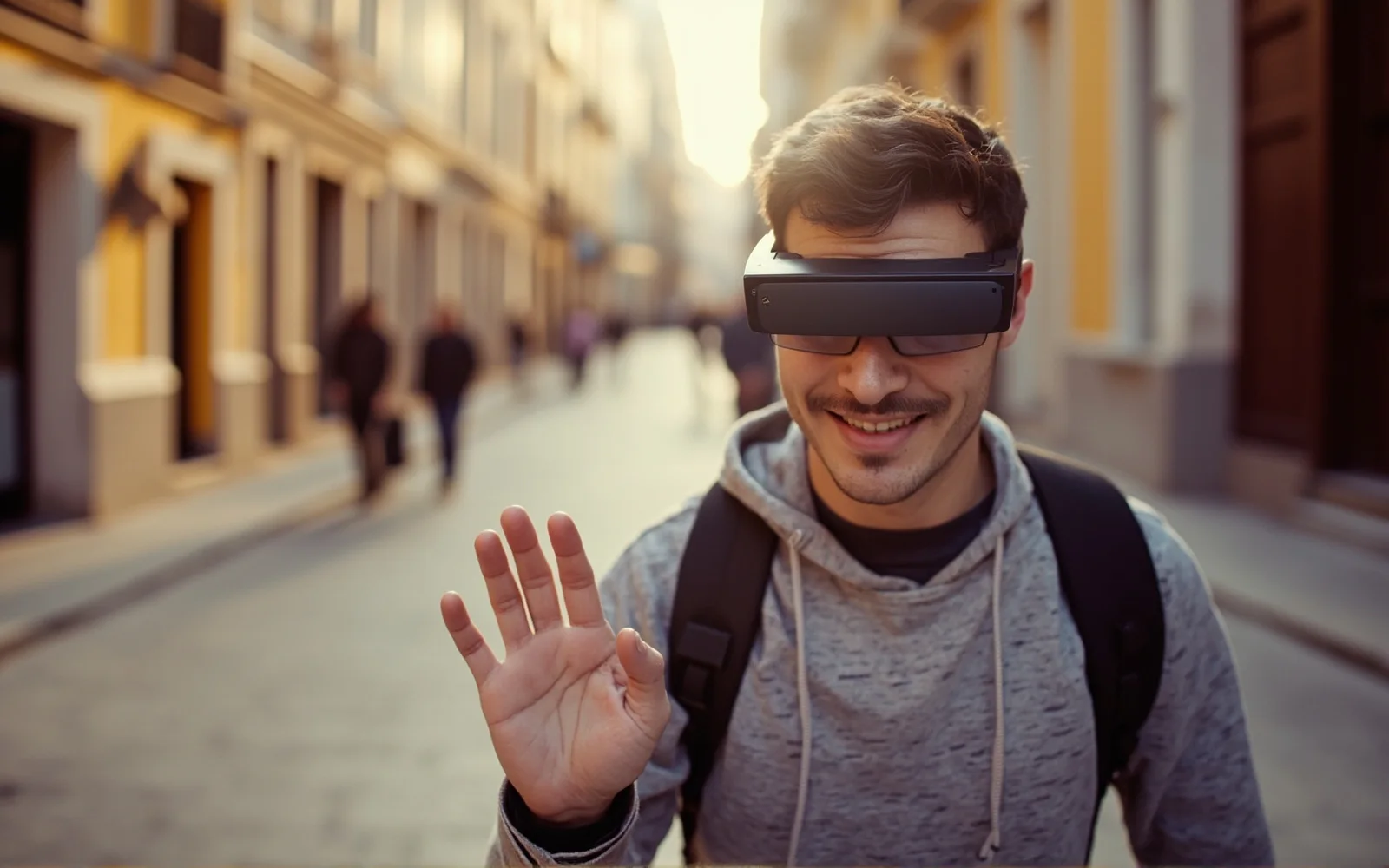
Camera glasses answer a specific part of that problem. The capture point is already worn at eye line, so a market walk, a border crossing, a first look at a viewpoint or a cooking-class counter can be recorded while the traveler simply does the traveling. Nothing is raised, nothing is aimed and both hands stay free for luggage, tickets, coffee or a handrail. In places where a visible vlogging setup changes how locals react, ordinary-looking frames keep the wearer low-key.
The same device carries open-ear audio, which matters far more on the road than at home. Turn-by-turn navigation, translation prompts, messages and hands-free calls arrive without sealing the ear, so announcements, traffic and the person at the counter stay audible. One pair of glasses quietly replaces a camera rig, an earbud and a few awkward phone-in-hand moments.
It is not a passport to film everything, and it is not a replacement for a real camera for hero footage. The companion filming & privacy guide covers etiquette and law in depth; this page covers how the hardware actually performs on a trip.
A day on the road
How capture changes when the camera is already on
The biggest difference is rhythm rather than image quality. A glasses-wearing traveler does not decide to start filming and then set up; they capture the small connective moments that conventionally never make it past the memory of the day.
- Arrivals and transitions. Train platforms, airport people-movers, hotel corridors and the first steps into a neighborhood, filmed continuously as lived instead of skipped for being too hard to set up.
- Walking scenes. Markets, hikes and old-town wanderings where the footage moves at walking pace with natural glances and reactions.
- Hands-full moments. Street food, market stalls, tickets, luggage and rental counters, where holding a phone is genuinely awkward.
- Eyes-up navigation. Open-ear directions and prompts keep the phone in the pocket at confusing junctions, which removes most of the map-holding that kills travel footage.
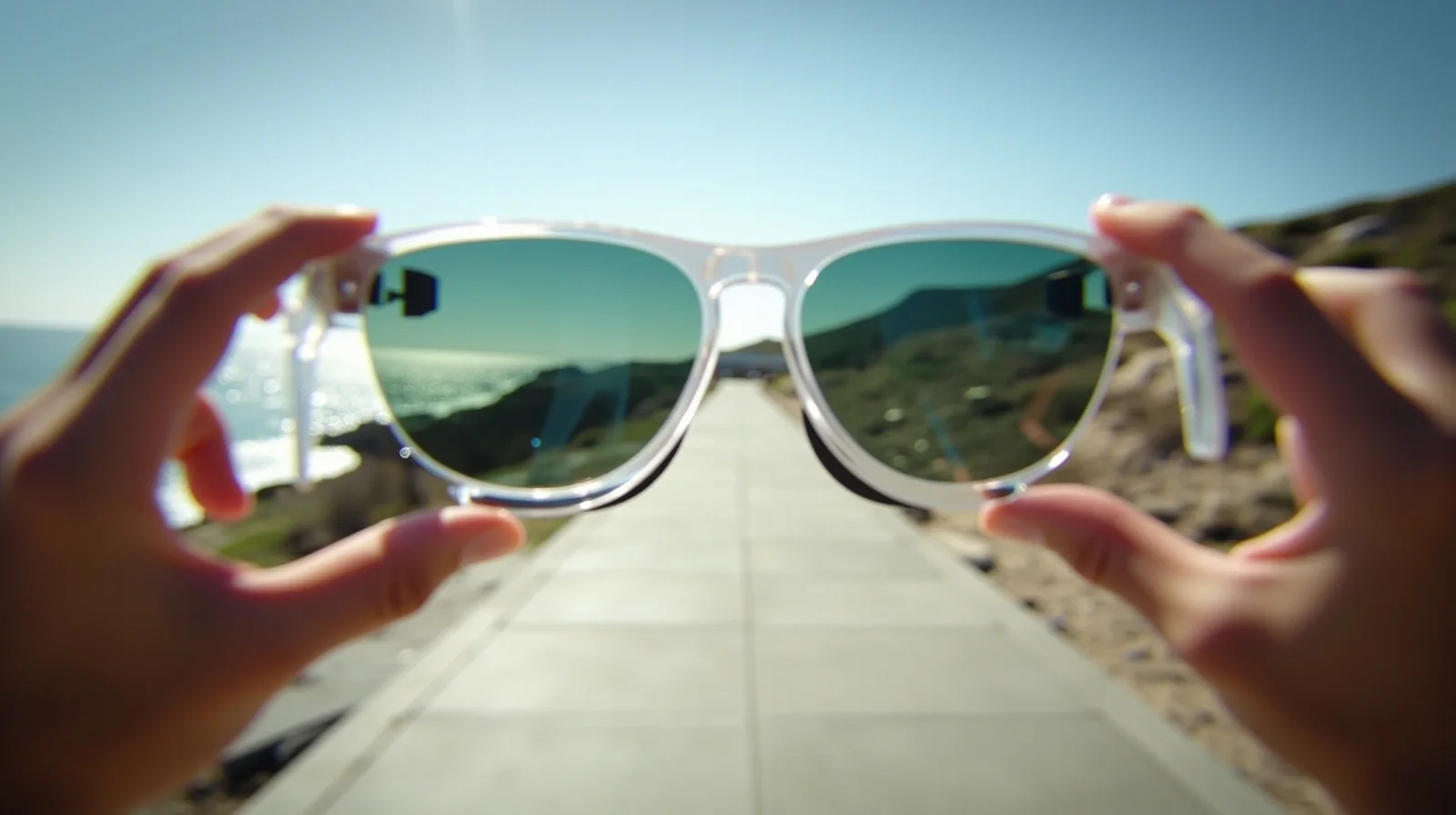
For travelers who ride between towns or tour by bike, the same workflow extends onto two wheels; the POV ride capture guide covers the cycling profile, including wind and handling. Calls and music on the road share the same open-ear behavior covered in the audio calls application.
Where it earns the pack space
Cities, nature and the one-device trip
Glasses travel best in trips defined by walking, transit and long days out — the kinds of itineraries where every extra gram is reviewed at the hostel bed.
City and culture trips
Dense cities reward low-key capture most. A traveler can record street life, food halls and viewpoints without a visible rig changing the scene, and can take navigation prompts and the occasional hands-free call without stopping on the sidewalk. The frames double as ordinary eyewear between shots, including tinted lenses for bright destinations.
Outdoor and active days
Hikes, boat days and resort activities produce steady eye-line B-roll while the traveler keeps hands free for poles, ropes and rails. Sport geometry and open-ear awareness matter more here, which is why active brands commonly position the same hardware through the sports & cycling brands lens.
- One device, several jobs. Capture, directions, calls and ambient listening on a single wearable reduces the daily carry inventory.
- Connective footage, not the whole edit. POV clips are the traveler’s connective tissue; establishing shots and portraits still come from a phone or camera, and an honest edit uses both.
Etiquette and trust
Filming places and people without becoming the problem tourist
Discreet capture creates a responsibility, not a free pass. A device that is easy to wear is also easy to point at people who did not agree to be filmed, and attractions, museums, schools and places of worship frequently restrict or ban recording regardless of the camera form factor. Brands selling into travel have to equip customers to make those calls.
- Respect posted rules. Ticketing terms and venue signage govern filming at attractions, museums, galleries and sacred sites; no wearable changes that, and some venues explicitly exclude camera glasses.
- People are not backdrop. Close, identifiable filming of locals, children or other travelers calls for the same consent and discretion as any camera, and in some destinations the legal bar is higher.
- Security and border settings. Follow instructions around checkpoints, airports and sensitive infrastructure, and stop filming wherever staff or signage asks.
- Use the visible state. The hardware ships with a clearly visible recording indicator, and travelers should leave it doing its job rather than trying to minimize it.
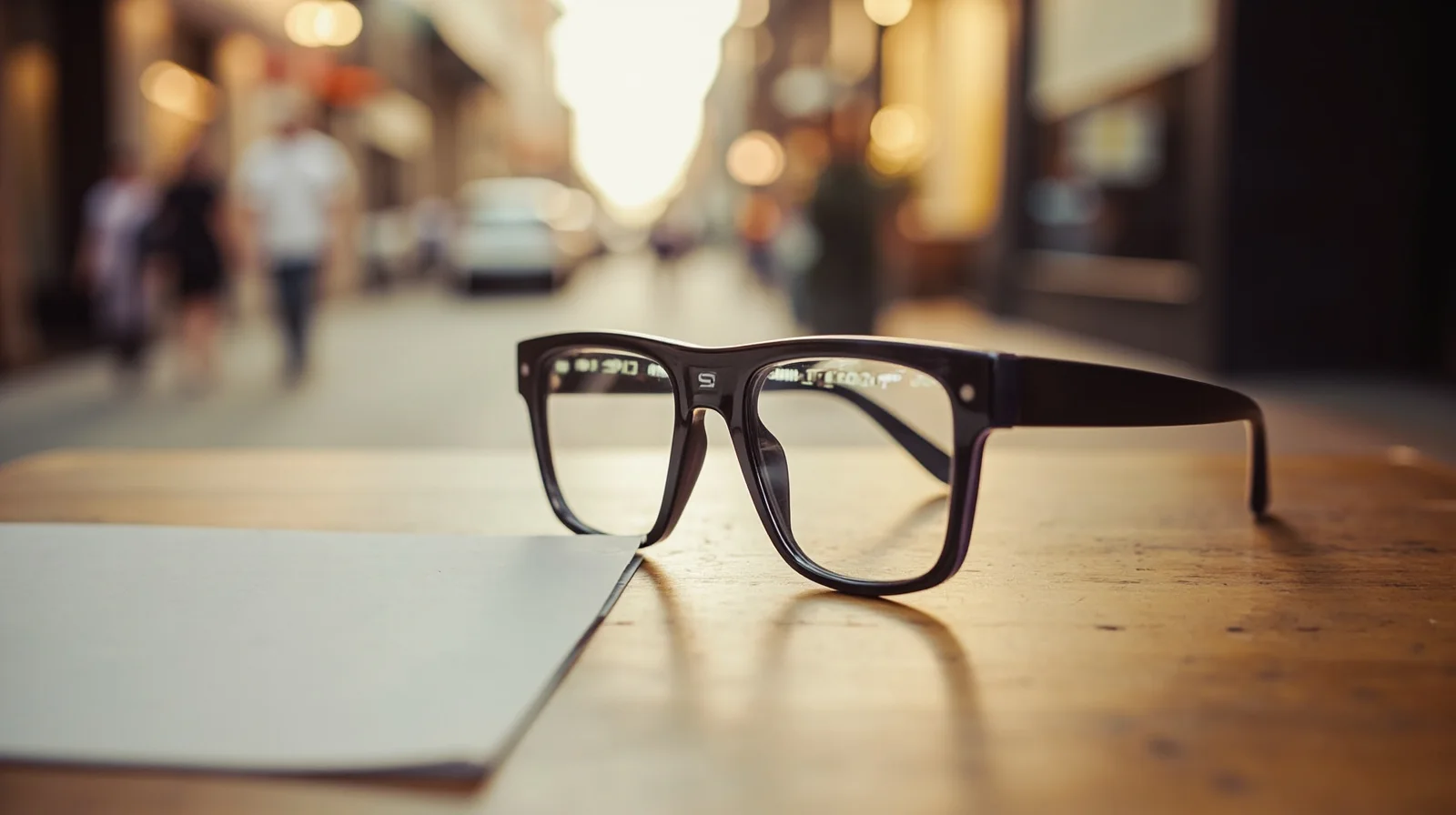
CYNRIN hardware uses a clear recording-state light and is not designed for concealed capture; indicator behavior is configurable per program for destination-market expectations. What is legal, what is polite and what a venue allows remain the traveler’s and the brand’s responsibility. The full treatment lives in filming & privacy.
Realistic expectations
What travel footage from glasses really looks like
Listing copy that promises a travel-cinema camera in a pair of glasses sets up returns. The honest profile of small head-worn optics is stable and well understood.
- Daylight first. Outdoor days, bright interiors and golden-hour walks look strong; night markets, dim churches and backlit sunsets expose the limits of a small sensor fastest.
- Fixed framing. There is no optical zoom for distant signage, wildlife or architectural detail; travelers frame by moving and keep the hero shot for another camera.
- Wind on open roads. Narration survives ordinary street noise, but boats, viewpoints and motorbike segments have a real wind-noise profile.
- Battery across a sightseeing day. Recording, navigation and calls all draw power; the realistic mixed-use session profile is stated on the program datasheet, and travelers typically top up between segments rather than record continuously.
- Connectivity and storage abroad. Clip transfer, cloud behavior and roaming assumptions belong to the companion app and the traveler’s plan, not to the glasses.
Positioned honestly — the always-with-you POV and audio device, not the only camera in the bag — the product fits how people actually travel. Specifications, lens options and destination-market documentation are all confirmed per program.
Building the program
For travel, lifestyle and consumer-electronics brands
Travel-themed programs are typically run by consumer-electronics brands, lifestyle and accessory houses, and creator brands merchandising through airports, outdoor retail and online marketplaces. A defensible launch follows the same path as the wider consumer-electronics brands program.
- Define the traveler. City-hopper, backpacker or active traveler; the audience sets the lens tints, geometry and power profile.
- Tier the range. The V03-T5 camera hero plus a camera-free E13 or K01 tier shares identity across capture and audio-only buyers.
- Configure the app story. Transfer, review and sharing behavior carries the brand, with storage and AI claims validated against real firmware.
- Localize the privacy story. Indicator behavior, labeling and quick-start etiquette guidance are aligned to the destination markets rather than translated from a single source.
- Sample and ship. Creator and ambassador trips are seeded from reference units; MOQ, lead time and documentation are confirmed per program via samples and MOQ.
Frame colors, cases and travel-ready packaging run through customization, and bespoke optical or form-factor work through ODM. Begin with request a quote or talk to the team via contact.
Buying considerations
What to specify in a travel program
Traveler profile
City, backpacking or active travel; the itinerary sets lens, geometry and power choices.
Capture rhythm
Short walk-up clips and transitions versus long takes; the realistic session pattern.
Open-ear audio
Navigation prompts, calls and ambient awareness across noisy travel environments.
Power on the road
Mixed-use day profile and top-up plan, stated on the program datasheet.
Etiquette material
Quick-start guidance on venues, consent and the visible indicator for each market.
Markets and range
Destination documentation, plus camera-free E13 or K01 tiers in the same family.
Browse the application
More photo & video guides
Keep exploring
Related reading
FAQ
Frequently asked questions
Can people tell I am filming with these glasses?
Can I use the glasses for navigation and calls while traveling?
Am I allowed to film at attractions, museums and schools abroad?
Will the battery last a full day of sightseeing?
Can we order private-label travel glasses in small launch volumes?
Build this use case into a private-label program
Tell us the workflow, environment and volume. Engineering scopes the platform, optics, power and documentation per program.