
The floor problem
Store work is hands-on, but the tools keep pulling hands away
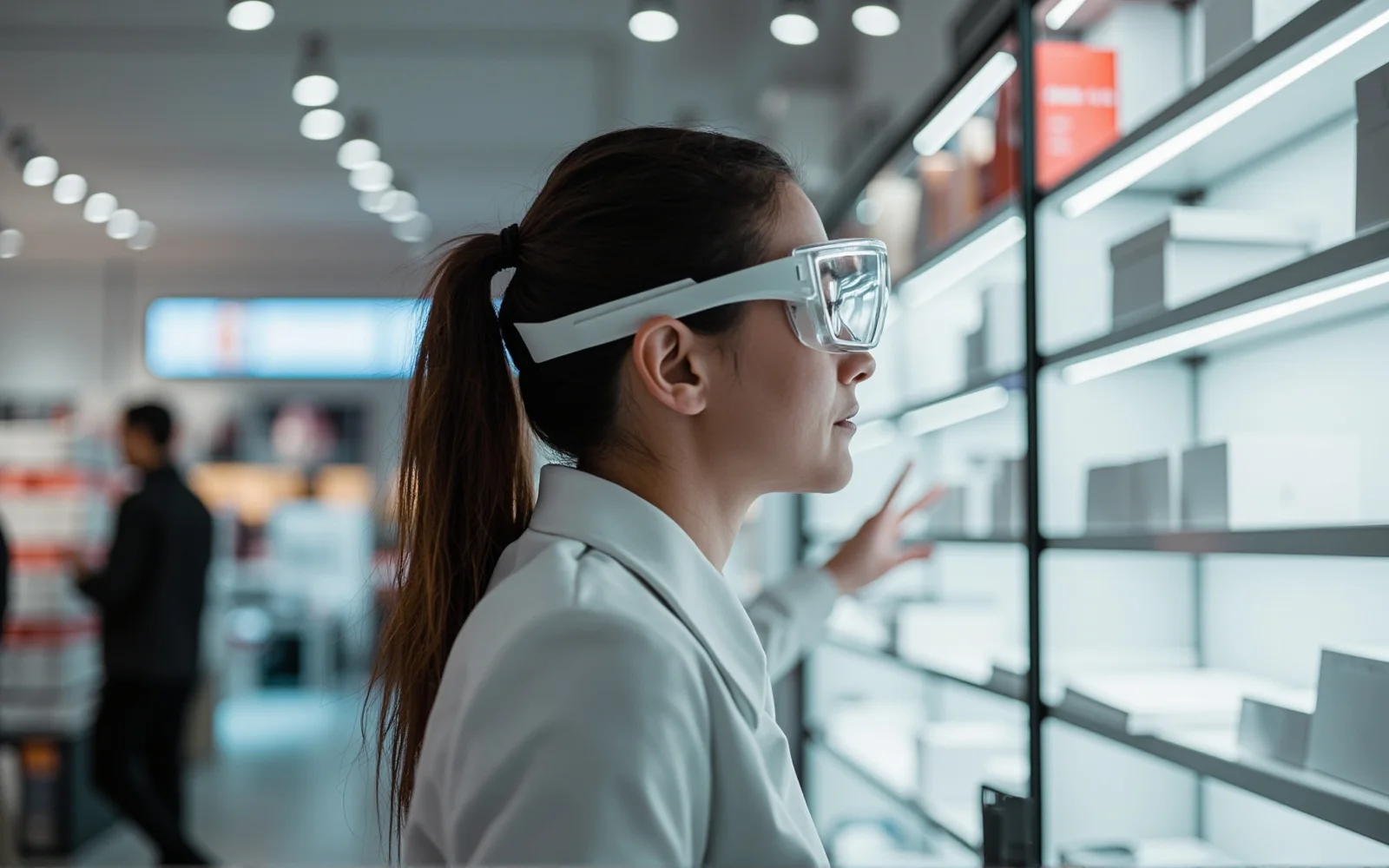
Retail execution is a parade of small physical tasks: checking a shelf edge, correcting a planogram, counting a facings gap, finding a size in the back, walking a new associate through a fixture. The tools meant to help — handheld scanners, phones, printed checklists and two-way radios — all demand a hand and a downward glance. The work stops while the tool is operated, then resumes. Across a shift, that switching is where execution time and attention disappear.
The cost is most visible in tasks that combine looking with doing. A merchandising audit photographed with a phone means hold the phone, frame, type a note, put the phone away, adjust the display, repeat — per fixture, across dozens of stores. A customer question about an out-of-stock line means abandoning the conversation to find a terminal or radio it in. New associates learn by shadowing, but the expert has to pause the actual task to explain it into a device.
Head-worn eyewear changes the geometry rather than the task. The camera sees what the associate sees and the audio connects to the team without occupying a hand or pulling the eyes down for long. A shelf gap is captured in passing, a remote expert sees the same fixture the associate sees, and a floor call comes through open-ear speakers while the customer standing in front of the associate is still heard.
The division of responsibility is explicit. CYNRIN supplies the connected-eyewear hardware — durable, brandable, manageable as a fleet. The task application, inventory integration, mobile-device management and any service-level claims belong to the retailer or its solution partner. The glasses are an endpoint for workflows the retailer already governs, not a retail platform from a component maker.
How it is used
Hands-free execution across the store day
Deployments that work target specific recurring moments rather than asking glasses to replace every device. The same hardware supports four well-bounded jobs.
- Shelf and inventory checks. The associate walks an aisle capturing planogram gaps and price discrepancies from their own point of view, with both hands free to correct facings and counts as they go.
- Visual merchandising audits. First-person photos and short clips document fixture state across many stores, giving a central merchandising team comparable, dated evidence instead of written self-reports.
- Clienteling and remote expert. An associate brings a specialist into a high-value sale — jewelry, electronics, home improvement — showing the product or installation question exactly as it appears on the floor.
- Floor calls and training. Open-ear audio carries team calls and coaching while the associate keeps helping customers, and new hires record or follow guided routines during onboarding.
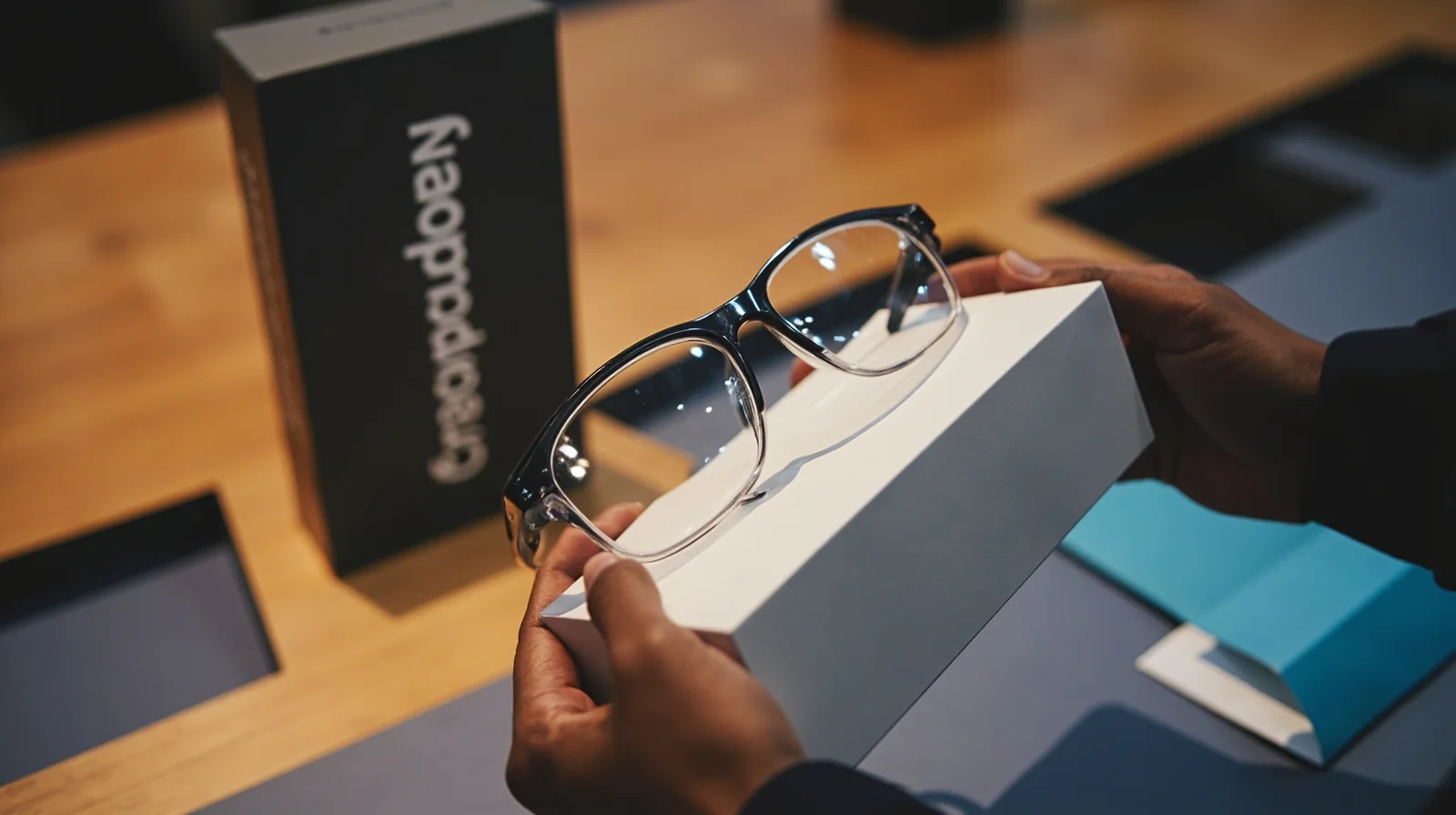
The remote-expert pattern is the same see-what-I-see model used in industrial service; the difference is context, where discretion and customer-facing appearance matter more than ruggedization. For voice-led floor communication without any capture, the pattern overlaps with office and work calls on open-ear hardware.
In every case the application decides workflow: what is captured, where it is stored, which backend it updates. The hardware’s job is to make input effortless and capture state visible — nothing more.
Where it earns its place
Formats and roles that justify a fleet
The strongest retail cases share scale: many stores, many fixtures, many customer-facing minutes, where shaving seconds from a repeated task compounds.
Multi-store chains and field teams
Regional and field managers run compliance and merchandising visits wearing the glasses, returning standardized first-person evidence from each location. Central teams gain a consistent view of execution that written forms cannot match.
Complex and considered-purchase retail
Electronics, furniture, appliances, home improvement and luxury sell with questions. A floor associate connects a customer to a product specialist or installer remotely, showing the exact setup rather than describing it — protecting the sale without staffing an expert in every branch.
Stockroom and receiving
Hands busy with boxes, the associate captures delivery condition, confirms locations and takes verbal notes. Camera use stays in non-public areas by policy, which simplifies the customer-privacy question for that part of the day.
Onboarding and associate training
New hires follow voice-guided opening, replenishment and recovery routines and record practice sessions for manager review — a lighter version of the instructional-capture model explored in hands-on education & training.
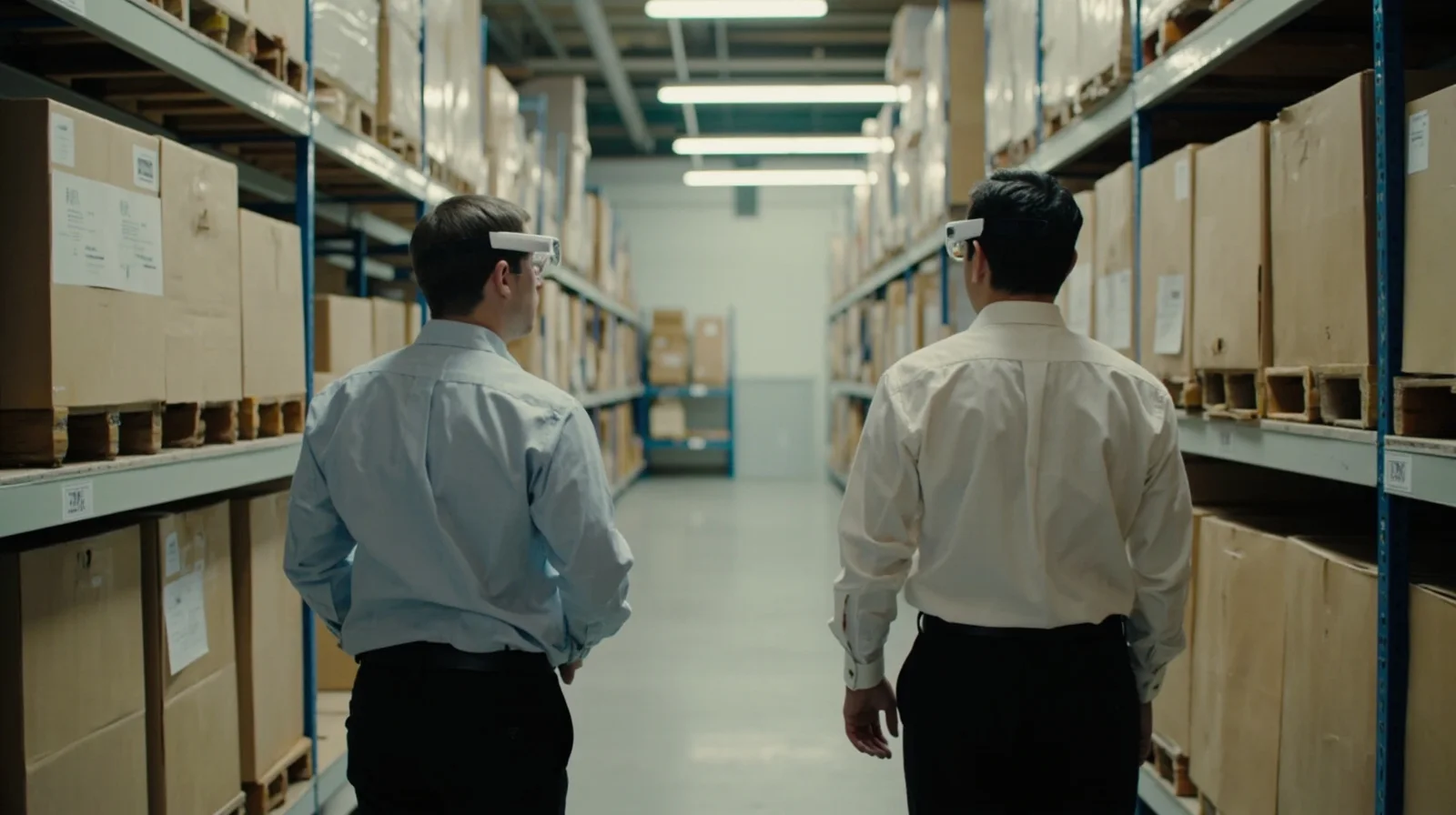
For brands that sell through dealer networks rather than owned stores, the same kits become a partner-enablement tool: branded units shipped to key accounts for training, planogram compliance and joint customer calls. The commercial home for that approach is the distributors and retailers solution.
Fleet and privacy
Shared devices, obvious capture state and customer trust
Unlike consumer electronics, store eyewear is almost always shared across shifts, and it points at customers who never consented to a device. Both facts make fleet discipline and privacy part of the product specification.
- Visible capture state. A clear indicator tells customers and colleagues when the glasses are active; indicator behavior is configurable so recording can never be mistaken for ordinary wear.
- Customer-area policy. Most programs scope camera capture deliberately — fixtures and shelves rather than people — and set explicit rules for fitting rooms, counters and conversations.
- Reset between shifts. Pairing identity and sessions are cleared when a unit is returned, so one associate’s login never rides into the next shift.
- Provisioning for fleets. Enrollment, approved-application lock and device naming follow the retailer’s management model; the MDM itself belongs to the retailer or solution partner.
- Camera-free option. Where the use case is floor calls and coaching only, audio-only frames remove the capture question entirely — often the right choice for pilot programs.
Durability follows the same logic. Frames are handled dozens of times a day, tossed into counters and worn for a shift at a time, so temple construction, contact parts and finish are specified for frequent handling and easy cleaning; compatibility with the retailer’s cleaning agents is confirmed per program rather than asserted. The institutional privacy posture mirrors the standard held across healthcare deployments: obvious indicators, bounded capture, provider-controlled data.
Specifying the hardware
Light for the shift, durable in the drawer
An operations device competes for the same real estate as ordinary glasses for eight working hours, so comfort is an adoption metric. Frames are kept light and balanced, with neutral styling that fits a staff uniform rather than a gaming desk. Open-ear speakers are tuned for intelligible calls in the actual acoustics of a store — music, announcements and customer chatter — while the wearer keeps hearing the floor.
The camera is specified for the real task: readable first-person evidence of shelves, labels and products under warm, uneven retail lighting, rather than for hero video. Where the use case is clienteling calls, microphones and open-ear audio take priority and a camera-first platform such as the V03-T5 is the natural reference. For voice-led store programs the E13 Bluetooth audio frames or the value-tier K01 deliver calls and prompts with zero capture.
Fleet packaging is specified up front — numbered units, multi-bay charging, protective trays and quick-start cards — because a device that cannot be collected, charged and re-issued in five minutes does not survive contact with store operations. Power budgets match a mixed shift of standby, calls and short capture bursts and are confirmed on the program datasheet; no generic all-day claims. General electronics and wireless documentation is aligned to destination markets through the standard quality-control process.
Building the program
A path for retail brands, chains and solution vendors
Buyers are typically retail brands and chains equipping owned stores, retail-technology companies that already run task-management or workforce software and need a wearable endpoint, and distributors kiting key accounts. Programs tend to converge on the same sequence.
- Scope one workflow. Pick a single high-frequency task — planogram audits or remote-expert selling, not the entire store — with a defined software owner.
- Choose camera or audio. Match the platform to whether first-person evidence drives the case or whether open-ear calls alone deliver the value.
- Define the privacy model. Indicator behavior, customer-area rules, reset between shifts and the MDM provisioning path before units reach a floor.
- Brand and package the fleet. Identity, uniform-conscious styling, charging trays and quick-start material through customization; custom geometry via ODM.
- Pilot, measure, scale. Reference samples support a store pilot with a measurable target; MOQ, lead time and market documentation are confirmed per program.
The outcome is a wearable that removes hand-offs and phone glances from a defined floor workflow, managed as responsibly as a payment terminal and branded as the retailer’s own tool. Start through request a quote, review the samples process, or explore distributor and retailer programs.
Buying considerations
What to put in a retail operations brief
Target workflow
One bounded first task — audits, clienteling, receiving or floor calls — with a named software owner.
Camera or audio
Whether first-person evidence is essential or camera-free open-ear audio is the honest fit.
Shared-fleet model
Number of wearers per unit, shift reset, charging layout and enrollment routine.
Customer privacy
Visible active-state indicator, capture rules in public areas and staff communication plan.
Handling and cleaning
Frame durability for frequent hand-off and compatibility with the actual cleaning agents.
Store environment
Lighting, noise floor, uniform styling and prescription-lens needs of associates.
Browse the application
More retail & education guides
Keep exploring
Related reading
FAQ
Frequently asked questions
Do the glasses connect directly to our inventory or task-management system?
How do we stop customers being recorded without knowing it?
Can shared glasses be reset between associates?
Will they survive daily handover on a busy shop floor?
What is the MOQ for a branded store-operations program?
Build this use case into a private-label program
Tell us the workflow, environment and volume. Engineering scopes the platform, optics, power and documentation per program.