
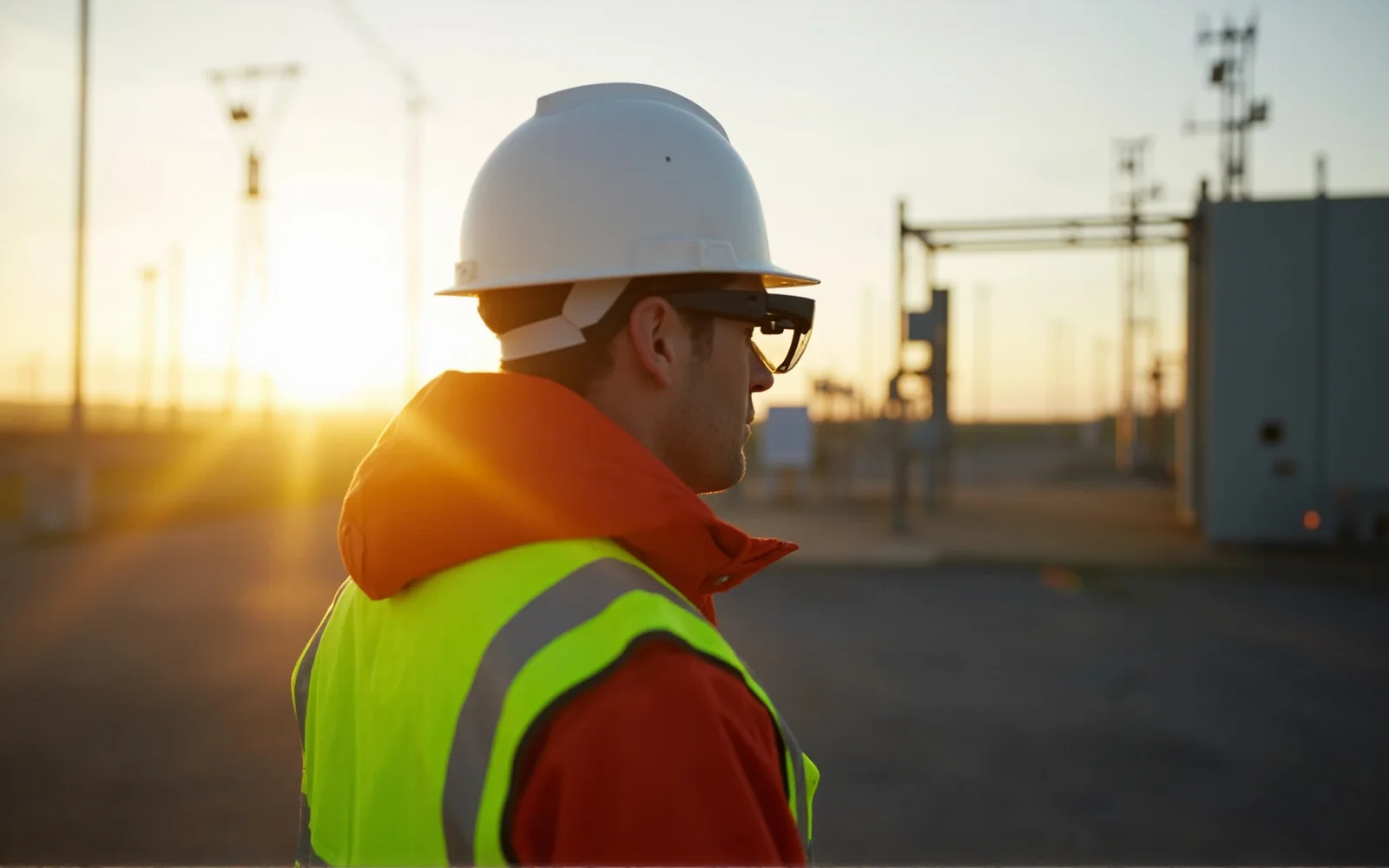
The solo-shift reality
The most dangerous moment is when no one is watching
A large part of the field economy works alone: technicians opening roadside cabinets, engineers in plant rooms after hours, wardens at remote sites, maintenance staff in empty buildings, keyholding officers responding to alarms. Their employers manage this with lone-worker policies — risk assessments, schedules, buddy systems — and, increasingly, monitoring technology. The weak point in every system is the same: summoning help when the worker cannot reach, unlock or operate a phone.
Pockets are zipped under overalls. Hands are full at the top of a ladder. The phone is in the van. Gloved fingers miss the unlock pattern. After a slip, the device may be feet away. Dedicated lone-worker pendants help, but they are another item to charge, forget or lose, and many workers keep them in a bag rather than on their person. Any device that is not already worn and already on fails precisely when the hazard materializes.
Smart glasses address the reachability problem directly. They are already on the face, calls are initiated by voice, audio arrives through open-ear speakers that do not mask approaching vehicles or machinery, and there is nothing to retrieve. For a technician wedged in a cabinet space or standing on a gantry, speaking a call request is meaningfully easier than fishing for a handset.
Here too the boundary must be honest. CYNRIN manufactures eyewear hardware. Certified lone-worker alarm services, monitoring centers, escalation procedures, regulatory compliance and sensor-based detection are provided by specialist safety partners. Glasses are an excellent hands-free communication endpoint for those systems; they do not ship from the factory as a certified alarm device.
The check-in loop
How a hands-free lone-worker session runs
Mature lone-worker programs are built on a simple loop: declare the job, check in on a schedule, escalate if a check-in is missed, and make summoning help instant. Eyewear makes each step easier because none of them requires stopping work.
- Start the session. The worker declares the visit or job through the partner safety application — location, expected duration — by voice while already walking to the asset.
- Scheduled check-ins. Open-ear prompts cue timed confirmations; the worker acknowledges by voice or touch without putting down tools or leaving the task.
- Missed-check-in escalation. If a check-in lapses, the partner service follows its defined escalation — callback, colleague dispatch, emergency services according to policy. The glasses are the contact endpoint; the monitoring logic belongs to the safety platform.
- Hands-free emergency call. In an incident the worker initiates a call by voice to a supervisor or the monitoring line, both hands remaining free to hold on, move to safety or administer self-care.
- Close-out. The session ends when the job does, again by voice, so close-out is never skipped because the phone stayed in the van.
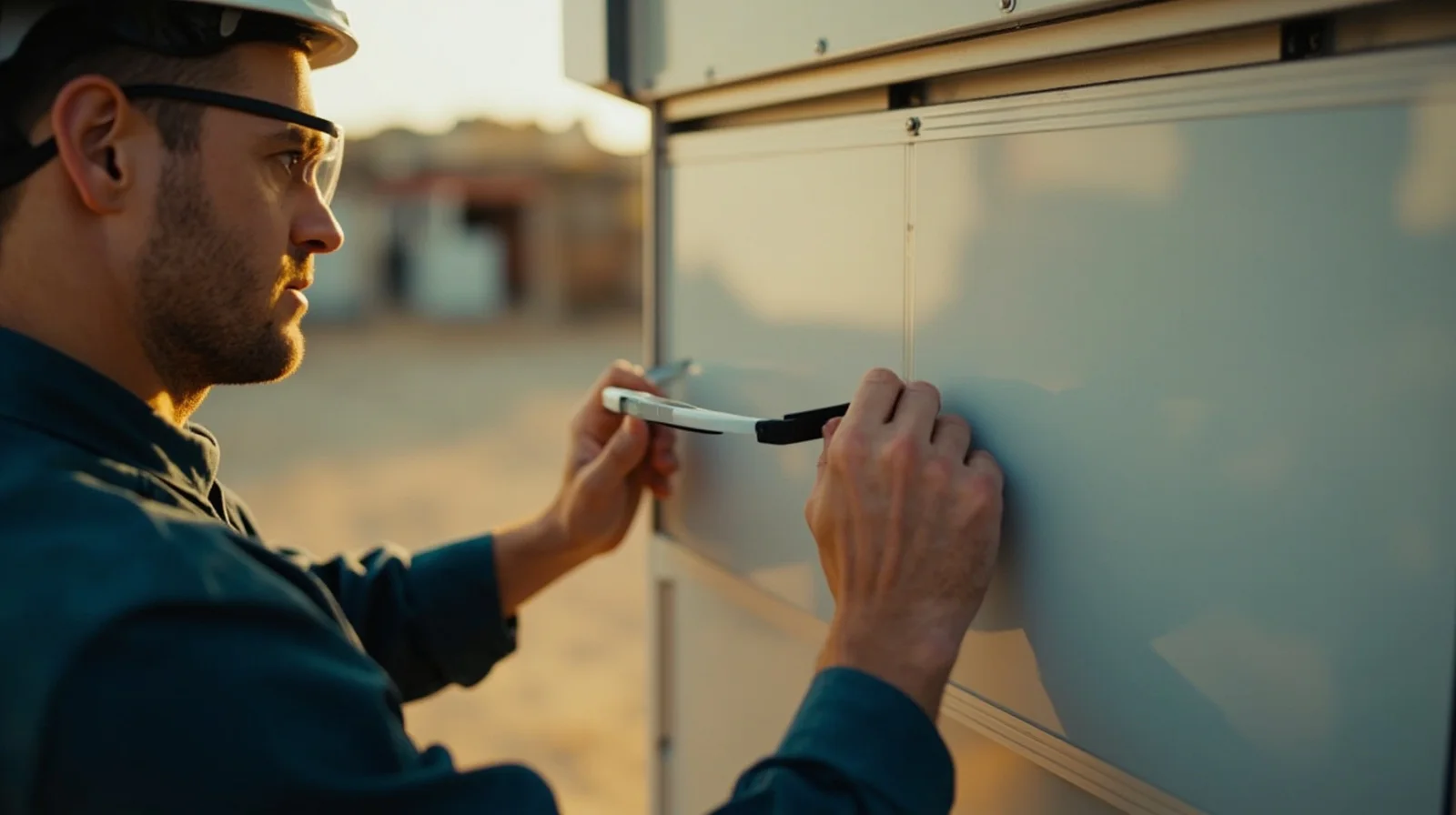
Open-ear audio carries a second safety benefit beyond calling: situational hearing. Unlike sealed earbuds, the speakers leave traffic, wind, machinery and voices audible, so a worker cued by a spoken prompt is not acoustically isolated from the hazard environment. The same pattern serves coordinated teams on patrols, described in the patrol reporting guide.
Who works alone
Field roles where hands-free contact changes the risk picture
Lone-work deployments cluster around jobs that combine remote locations, hands-busy tasks and irregular schedules.
Utilities and telecom field service
Technicians visit distributed assets — cabinets, poles, meters, pump stations — often at night and in bad weather, climbing, kneeling or working in constrained spaces where a handset is impractical.
Facilities, estates and property maintenance
Engineers attend plant rooms, rooftops and vacant tenancies outside normal hours. Voice check-ins cover the gap between sign-in at reception and sign-out, including the unstaffed basement in between.
Security, keyholding and alarm response
Solo officers attending activations at empty commercial premises combine lone-worker exposure with the evidence needs covered in the incident evidence guide; one platform can serve both briefs.
Surveyors, inspectors and environmental staff
Site surveys, loss-adjusting walks and agricultural or environmental rounds take workers onto private land, construction sites and remote infrastructure where the phone signal — and the phone itself — cannot be taken for granted.
What we do not promise
Certification, fall detection and connectivity stay honest
The lone-worker market is heavily standardized for good reason, and buyers should treat three claims with particular care.
- No certified alarm from the factory. Regional lone-worker alarm and monitoring standards — for validated provider services, alarm receiving centers and device behavior — are met by the solution partner’s certified offering. CYNRIN hardware does not ship carrying that certification; the partner service and the deploying employer own compliance.
- Automatic man-down detection is not promised. Whether a program includes automatic fall or non-movement detection depends on the partner solution and its sensors. Buyers should require the safety vendor to demonstrate and validate detection and false-alarm behavior rather than assume it exists on eyewear.
- Connectivity is a field condition, not a guarantee. Hands-free calling relies on the paired device and available network. Dead zones at remote assets are real; procedures must define what happens without signal — check-in windows, satellite or radio backup — rather than assuming the glasses remove coverage gaps.
Privacy offers a fourth, often decisive, option. Many lone-worker visits happen inside homes, hospitals or sensitive sites where a camera is unwelcome regardless of safety benefit. An audio-only platform — the E13 or K01 references — delivers hands-free calling and open-ear check-in cues with no camera present at all, eliminating the capture question for those assignments. Camera-bearing units can be reserved for outdoor and evidence-led roles.
This is the same honest split maintained across the security and field-work application: a reliable wearable endpoint from CYNRIN, certified safety outcomes from the specialist provider, and risk-management ownership with the employer.
Hardware for the hazard environment
Comfort under headgear, voice in the wind, power for the route
Solo fieldwork punishes fragile or fussy devices. The hardware brief starts with wearing comfort through a full route: light, balanced frames worn under a hard hat or bump cap and over prescription lenses, with lens tints for glare and changing outdoor light. Temple and hinge geometry is reviewed against headgear straps rather than discovered on the first site visit.
Audio performance matters as much as comfort. Microphones are selected for reliable voice activation and call intelligibility in wind, traffic and plant-room noise; open-ear speakers keep instructions audible without blocking the ambient cues a lone worker relies on. The standby-plus-call power profile is matched to the actual shift and stated on the program datasheet — no generic all-day figure — with charging cases specified for multi-site days.
Weather, sweat and dust handling follows the outdoor field standard: materials, sealing and port layouts are chosen for the stated environment and confirmed per program under the quality-control process. Camera-first and audio-only variants let a program issue the right capability to the right role — capture glasses for outdoor evidence work, camera-free audio glasses for sensitive indoor visits — with shared identity, provisioning and fleet packaging defined through customization.
Building the program
Pairing eyewear with a certified safety service
The strongest programs are partnerships: an employer or safety-solution provider owns the monitored service and compliance; CYNRIN supplies the branded hardware fleet. The rollout follows a familiar sequence.
- Map the lone-work risk. Roles, locations, check-in cadence and the specific hazards — height, confined space, after-hours access — define the required endpoint.
- Choose camera or camera-free. Match camera-first or audio-only platforms to the environments visited and the privacy expectations of each site type.
- Integrate the safety application. Pairing, voice behavior and any deeper firmware hooks are scoped with the safety-software owner under an ODM program; certification remains with the service.
- Pilot with real routes. Evaluate units on actual shifts, including known poor-coverage sites, and test check-in and emergency workflows end to end.
- Scale the fleet. Branded units, charging cases, enrollment and reset roll out per role; volumes, lead time and documentation are confirmed per program.
Reference samples support the pilot through the samples process; begin with request a quote and review MOQ guidance for fleet tiers. The result is a safety program workers will actually wear: eyes up, ears open, help one spoken request away — backed by a monitoring service the employer can certify against.
Buying considerations
Lone-worker program requirements
Operating environment
Remote yards, plant rooms, rooftops, homes or mixed; weather, dust, noise and headgear.
Shift and check-in design
Real route durations, check-in cadence and the escalation path when one is missed.
Safety certification owner
Which certified partner service meets regional lone-worker alarm and monitoring requirements.
Detection expectations
Whether automatic fall or man-down detection is required and who validates it.
Camera or camera-free
Site privacy expectations; audio-only units for sensitive indoor visits.
Connectivity and provisioning
Coverage at actual sites, backup procedures for dead zones, and fleet enrollment/charging.
Browse the application
More security & field work guides
Keep exploring
Related reading
FAQ
Frequently asked questions
Do the glasses automatically detect a fall or a man-down event?
Are they a certified lone-worker alarm device?
Can a worker call for help completely hands-free?
Is a version without a camera available for home visits?
Can we evaluate units before committing to a fleet?
Build this use case into a private-label program
Tell us the workflow, environment and volume. Engineering scopes the platform, optics, power and documentation per program.