

A comparison across a range is only as good as the axes it uses, and the most common failure in this category is comparing on the axes that are easy to read rather than the ones that decide the purchase. The published record for the camera models in this range is short enough to be read in a minute, and that makes it easy to mistake a table of six fields for a comparison.
This article sets out the axes on which the camera models in the catalogue can actually be compared, where the V06 sits on each of them, and what the exercise settles and what it has to leave open. It deliberately produces no ranking. A range comparison that ends in an order is usually a comparison that has quietly substituted preference for evidence, and the fields available here do not support one.
The V06's own published position is these: an eight-megapixel resolution class, a 260 milliampere-hour cell, a five-to-eight-hour endurance rating, a charge ceiling of two hours, magnetic charging, and four feature rows — an ergonomic design, an endurance descriptor, a removable inner frame and an IP54 marking — with four colour names published alongside.
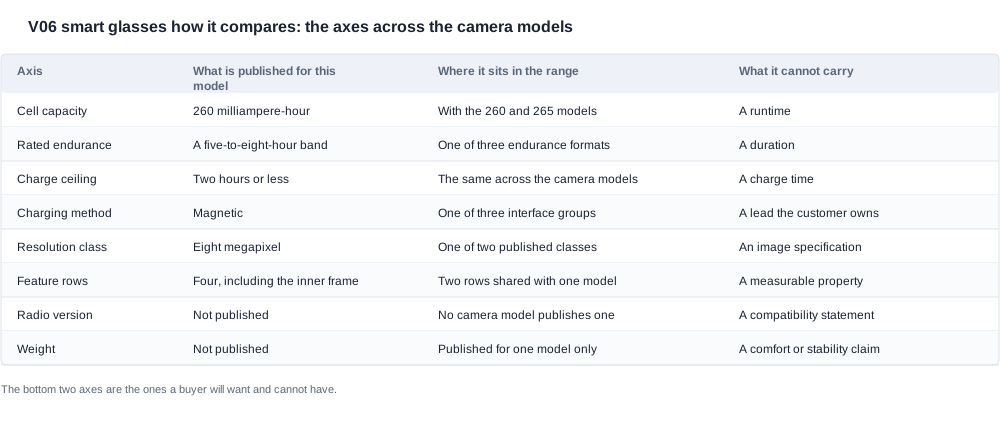
V06 smart glasses how it compares: the axes the catalogue publishes
Six axes are available for the camera models in this range, and they are worth separating into two kinds: the ones that carry a published number and the ones that carry a published description.
The numeric axes are the cell capacity, the rated endurance, the charge ceiling and the resolution class. These are the axes on which a comparison can be made precisely, and each of them has a limit that has to travel with the number. A cell capacity is a capacity rather than a runtime. A rated endurance is a rating, and several models in this range are published as a band rather than a point. A charge ceiling is a ceiling. A resolution class is a resolution class and not a camera specification.
The descriptive axes are the charging method and the feature rows. The charging method is a published value that carries a large operational consequence, because it decides whether the product in the box is charged with a cable the customer owns or with a part the customer has to be given. The feature rows are the descriptions that distinguish some camera models from others: the removable inner frame and the ingress marking appear on this model, and the rows about the remote shutter and the surround-sound arrangement belong to models in the sport section rather than to the camera section.
Two axes that a buyer will want to use are not available at all, and it is worth saying so before the comparison starts rather than discovering it at the end. The catalogue publishes no radio version for the camera models, so the radio cannot be placed on a table. And the catalogue publishes no weight for any camera model except one, so the products cannot be placed on a weight axis either.
The consequence is that a comparison on the six available axes produces a table of differences, not a table of merit. It tells a buyer which products differ in which published fields, and it leaves the decision to the deployment — and that is the correct division of labour, because the deployment is the one thing about the purchase that the catalogue knows nothing about.
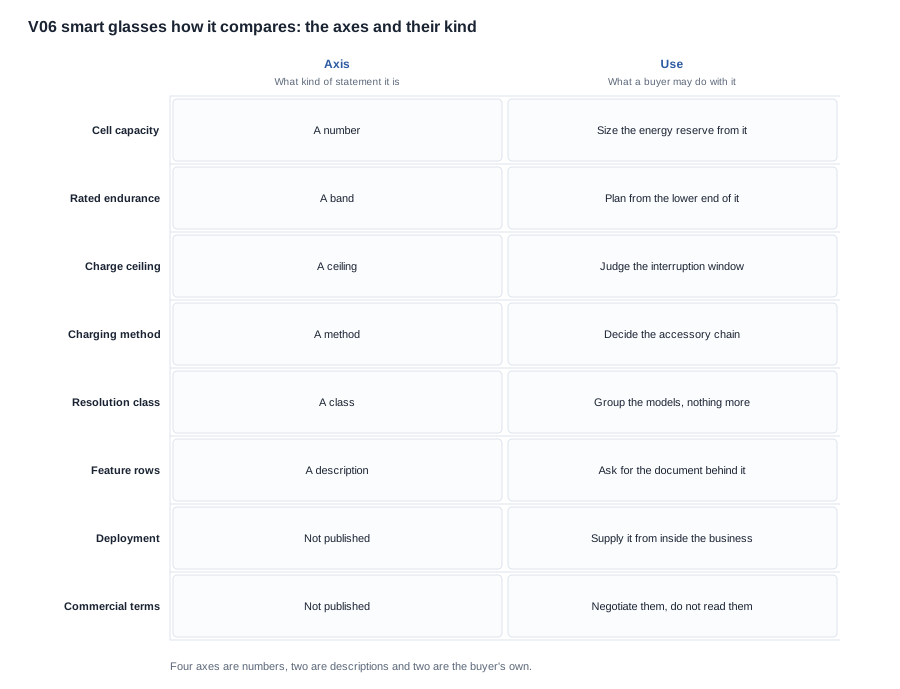
Where the V06 sits on cell size, endurance and interface
Three of the numeric axes are worth taking one at a time, because the way this product sits on them is not obvious from the product itself.
On cell capacity. The published figure is 260 milliampere-hour. Within the camera models that places it with the models published at 260 and with the one published at 265, below the four models published at 290, and above the three published at 220. What it does not place is a runtime, because capacity and runtime are different quantities and this range publishes both separately, with several models carrying a single-point runtime and several carrying a band. A buyer who turns the 260 into hours has answered a question the record does not answer.
On rated endurance. The published figure is a band of five to eight hours. Within the camera models, three groups appear: a five-to-eight-hour band, a six-to-eight-hour band, and a single rating of about seven hours. A wider band is not a longer runtime; it is a less precise statement, and a buyer who reads a wider band as a generous figure is reading the opposite of what it says. The honest use of the band is as a planning envelope, and the question worth asking the supplier is what the condition behind the band is.
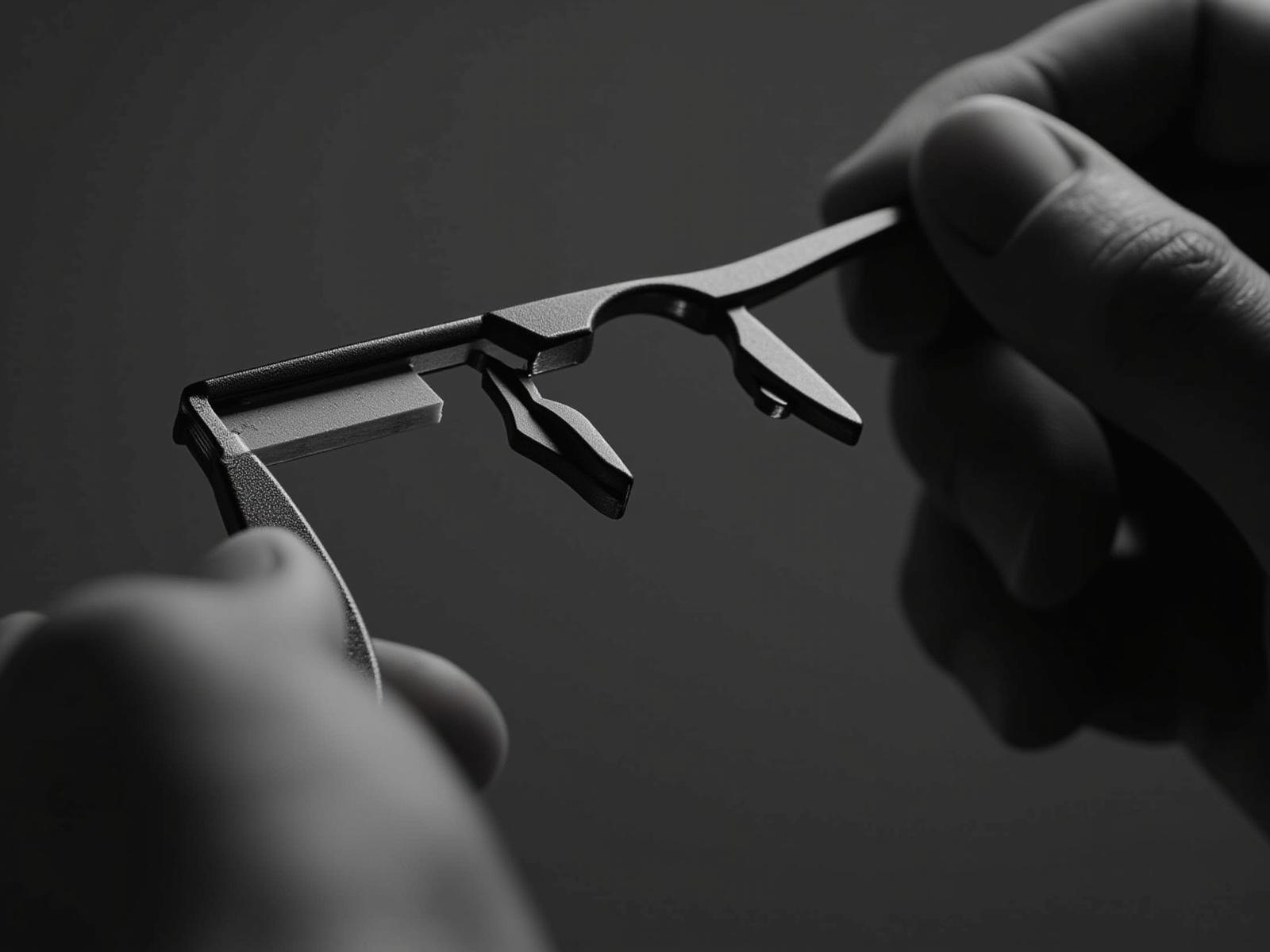
On the charging interface. The published method is magnetic. Across the camera models the charging method splits three ways: a set using magnetic charging, a set using a Type-C port, and a set for which the catalogue publishes no charging-method row at all. This product sits in the magnetic group, alongside the models published that way, and the group matters commercially for a reason that has nothing to do with the connector: a magnetic contact means the charging item in the carton is a specific part, while a port means the customer can substitute a cable they already have.
The same three-way split appears when the case position is considered, and it is worth noting that the two splits are not the same. A case row is published for some camera models, and for two of them the capacity is published as well. For this model the catalogue publishes no charging-case row, and the same is true of the S7 and the V03 Pro, and the V03. Those are two different positions — a published capacity or a published case, against an arrangement the catalogue leaves unpublished — and a buyer who treats them as one loses the distinction between what the documentation settles and what it leaves open.

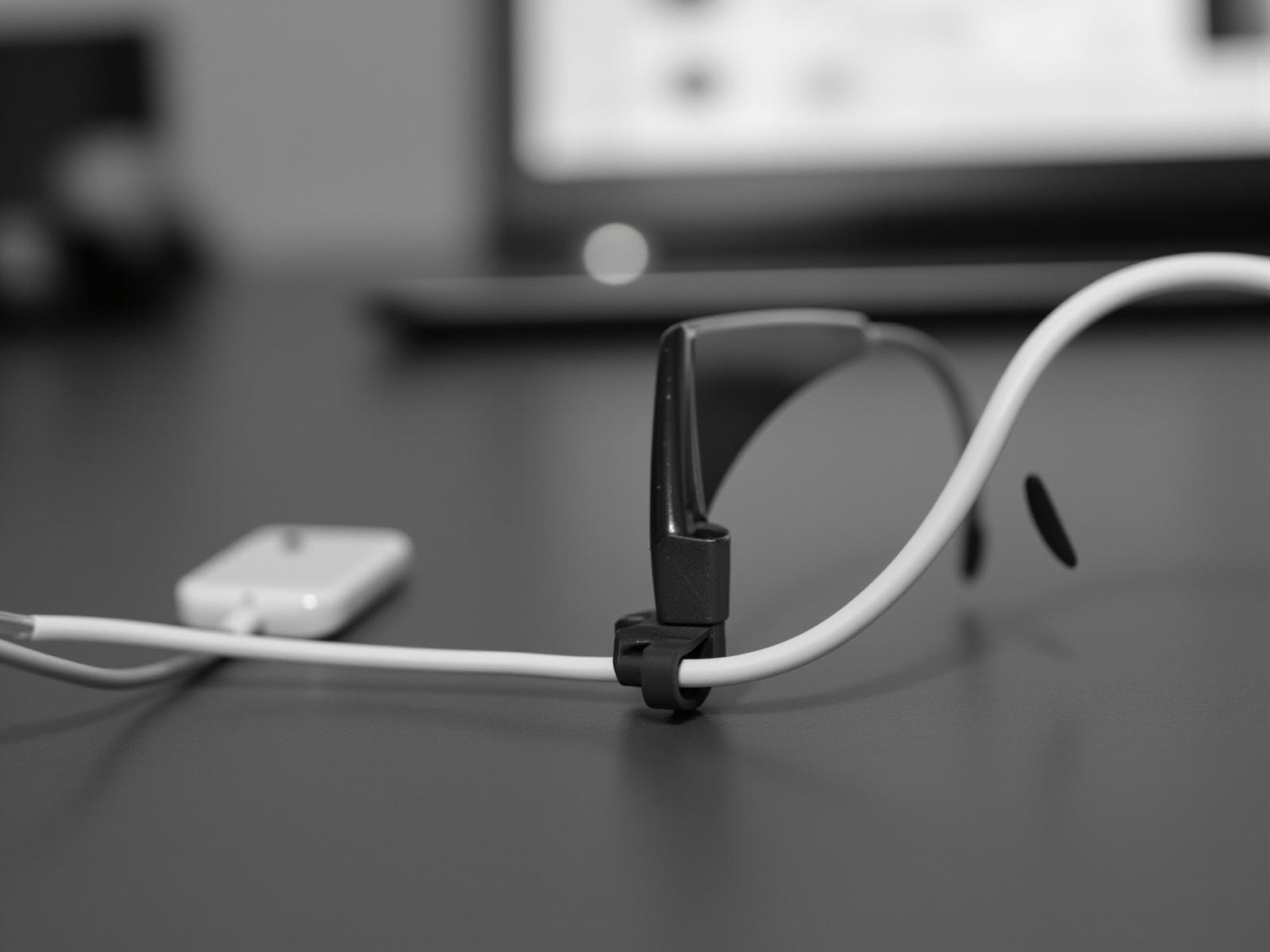
The removable inner frame and the IP54 row, against the other camera models
Two of the four feature rows published for this model are shared with one other camera model, and they are the two that change what the product is rather than what it does.
The removable inner frame. Among the camera models, this row appears twice. Everywhere else in the camera section the frame is fixed, and the inner frame therefore distinguishes a configuration option from a single product. What the row does not say is everything a buyer needs in order to run it: how many frames are supplied, what sizes exist, how the frame is released, whether frames can be bought separately, and what changes when one is removed. Those are questions for the supplier, and the same feature row appearing on a second model is what makes the question about interchangeability worth asking.
The ingress marking. The IP54 marking is published on two camera models and on no others, and it is the one published field in this range that is a statement about an assembly rather than about a component. A marking is a summary of a test, the test is what sets out the conditions and the acceptance criteria, and the report is the only place those are actually written down. Nothing in the published record ties a report to this product, so a buyer intending to print the marking has a document request rather than a citation.
The other two feature rows for this model, the ergonomic design and the long battery life, are the two that are hardest to use in a comparison, and it is worth being explicit about why. Both are design descriptions rather than measurements. An ergonomic design is not a measurable property, and comparing two products on it produces an impression rather than a finding. The long battery life row is a summary of the endurance figure, which is a published band, and a summary of a published band does not add anything to a comparison that already carries the band.
That leaves the resolution class as the one remaining published number for this model, and it is where the range comparison has its sharpest edge. The catalogue publishes an eight-megapixel class across eight of the camera models and a thirteen-megapixel class across three. This product is published in the eight-megapixel group. That is a placement in a group, and it is not a statement about the quality of the images, because a resolution class says nothing about the sensor behind it, the coverage the lens gives, what happens in low light, or whether the product records anything but still frames.

What a comparison can settle, and what it has to leave open
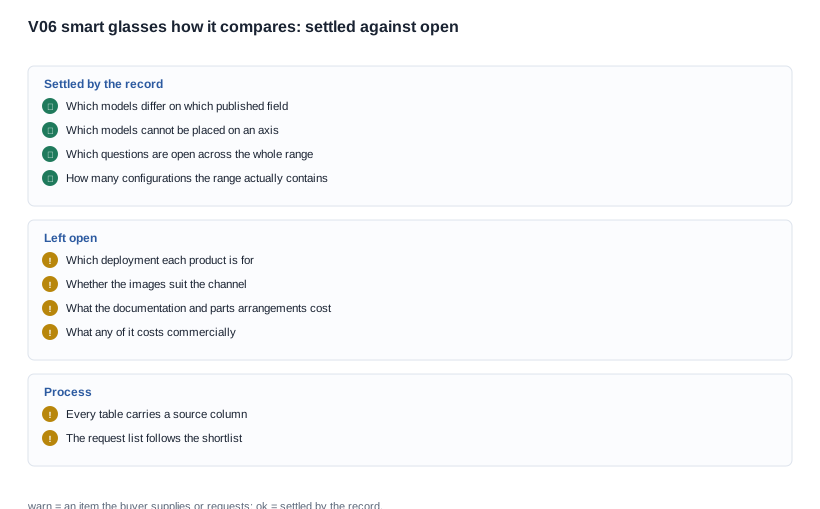
A range comparison of this kind settles four things, and leaves four others open. The four it settles are the ones a buyer can act on directly.
- Which models differ on which published field. The cell, the endurance, the charge ceiling, the charging method, the resolution class and the feature rows. This is a fact about the catalogue and it is available immediately.
- Which products in the range cannot be placed on a given axis. No radio version for the camera models; weight for only one model; a case position that is published for some, unpublished for others and explicitly absent for one.
- Which questions the catalogue cannot answer for any model. The camera specification, the ingress report, the frame details, the accessory references and the commercial terms are open across the whole range, and a supplier request is the only route to any of them.
- How many configurations a range actually contains. Four published colours, a removable frame and a resolution class are three separate configuration variables, and a range plan built by treating the model as one product will mis-state what is being ordered.
The four it leaves open are the ones that decide the purchase.
- Which deployment each product is for. The published fields describe a product; only the business knows whether the session is continuous or intermittent, whether the charging point is controlled, and whether the device is shared.
- Whether the images are what the channel needs. Nothing published describes the camera beyond its resolution class, and a channel selling on image quality is working from an unpublished field.
- What the documentation and the parts arrangements cost. Every model in this range needs a file and a set of accessories, and none of them is published.
- What any of it costs. No price, no minimum order quantity and no delivery schedule is published for any model in the range, so the comparison cannot be completed on a commercial basis from the catalogue at all.
The useful way to hold the two lists together is to treat the first as the shortlist criteria and the second as the request list. A buyer who has a deployment in mind can select on the first list and then put the second list into a single request, and the order of the two matters: the request follows the shortlist, because the questions that matter are the ones the shortlist leaves open for the configuration the business has actually chosen.
It is worth setting out what the procurement task behind a range comparison actually consists of, because the comparison is the easy part and the task is where the cost sits. A brand owner building a range from this catalogue is making a sourcing decision across several suppliers, a tooling and artwork decision for each configuration, a documentation decision per market, and a channel decision about which models are carried. The comparison table is one artefact inside that task, and the one that is easiest to produce and easiest to over-trust.
The sourcing decision has three parts that the published rows help with and three that they do not. The published rows narrow the candidate set: the cell, the endurance format, the interface and the resolution class tell a buyer which models can sit in the same family and which cannot, because a model with a different interface carries a different accessory chain and a different instruction set. What the rows cannot do is price the candidates, and they cannot tell a buyer which of two equally plausible configurations the channel will actually reorder, which is the question that actually determines the minimum order quantity on the packaging artwork and on the spare parts.
The tooling and artwork decision follows the configuration count rather than the model count, and it is the decision most often taken on a model basis when it has to be taken on a configuration basis. A model with four published colours, a removable inner frame and a resolution class is not one item to the factory; it is a set of items, and each of them can carry its own artwork and its own minimum. A range plan built on the model count will under-state the programme, and the number it under-states by is the number of artwork sets and the number of spare-parts lines.
The documentation decision is per market and per model, and a buyer who has built a comparison table with a source column can see immediately which of the models in the range need a document request of their own and which can share one. That is a genuine saving, and it is the kind of saving that a table without sources cannot deliver, because the table cannot show that two models are the same request.
The channel decision is the one the catalogue cannot inform at all, and it is the one that determines whether the range is viable. A range of camera models that differ only in a resolution class and a colour is a range that a channel cannot merchandise without help, because the customer has nothing to choose between. A range that differs in the interface and the frame is a range a channel can merchandise, because the difference is visible in the hand. Which of those two ranges a business has assembled is therefore a commercial decision made long before the production order, and the comparison table is the document that should surface it.
There is a failure mode specific to this kind of comparison that is worth naming because it is invisible in the finished document. A comparison table gets circulated, a colleague adds a column, another colleague fills it in from a product page, and the table is then used as if every cell in it came from the same source. The table does not show which cells were published and which were typed in from somewhere else, and a buyer who is not the person who built it cannot tell. Building the table with a source column is a small amount of work and it is the difference between a document that can be relied on and one that can only be re-checked from scratch.
A word on the sourcing and quality questions that sit underneath all of this, because they are the ones a buyer raises when a comparison is circulated internally. Whether the models in a range are produced on the same line, whether the suppliers are the same supplier or different suppliers with different quality control arrangements, whether a defect in one model is a defect across the range or a defect in one production run, and whether the warranty terms apply uniformly — none of that is published, and all of it changes the total cost of a range considerably. A range that is sourced from one supplier with a common quality regime is a different commercial object from a range sourced from three suppliers with three regimes, even when the two ranges present the same published rows. That is a question for the quotation and the agreement rather than for the catalogue, and it is the question that determines whether a range plan is an aggregation of products or a single programme.
There is a supply chain point behind it. The catalogue's own structure — models grouped into audio, sport and camera sections, with charging methods split across the whole range and cells of several sizes — describes a manufacturing operation with a real product line behind it rather than a set of unrelated products. A buyer who is ordering across several models and is not sure whether they come from the same line is exposed to a different kind of risk from one ordering a single model, and the questions that settle it are the ordinary ones: who produces them, whether the production lines are shared, what the defect and rework process is, and whether the sample a buyer approves is representative of the run that follows. Those are procurement questions, they are answerable, and they belong in the same file as the comparison.
Our own position on the range is that the published fields are what the catalogue publishes and that the comparison between them is a comparison of specifications rather than a comparison of products. We will not turn that comparison into a ranking, and we will not carry a field from one model onto another to make the table tidier. The V06 is published at an eight-megapixel resolution class, with a 260 milliampere-hour cell, a five-to-eight-hour rated band, a two-hour charge ceiling, magnetic charging, a removable inner frame, an IP54 marking and four colour names, and what that set of published fields is worth in a deployment depends on facts the catalogue does not hold.
If a range comparison is the task, the useful inputs are the deployment, the channel, the number of markets and the configurations intended for the first run, and from them the comparison can be built with its source column and the request list that follows from the gaps.


