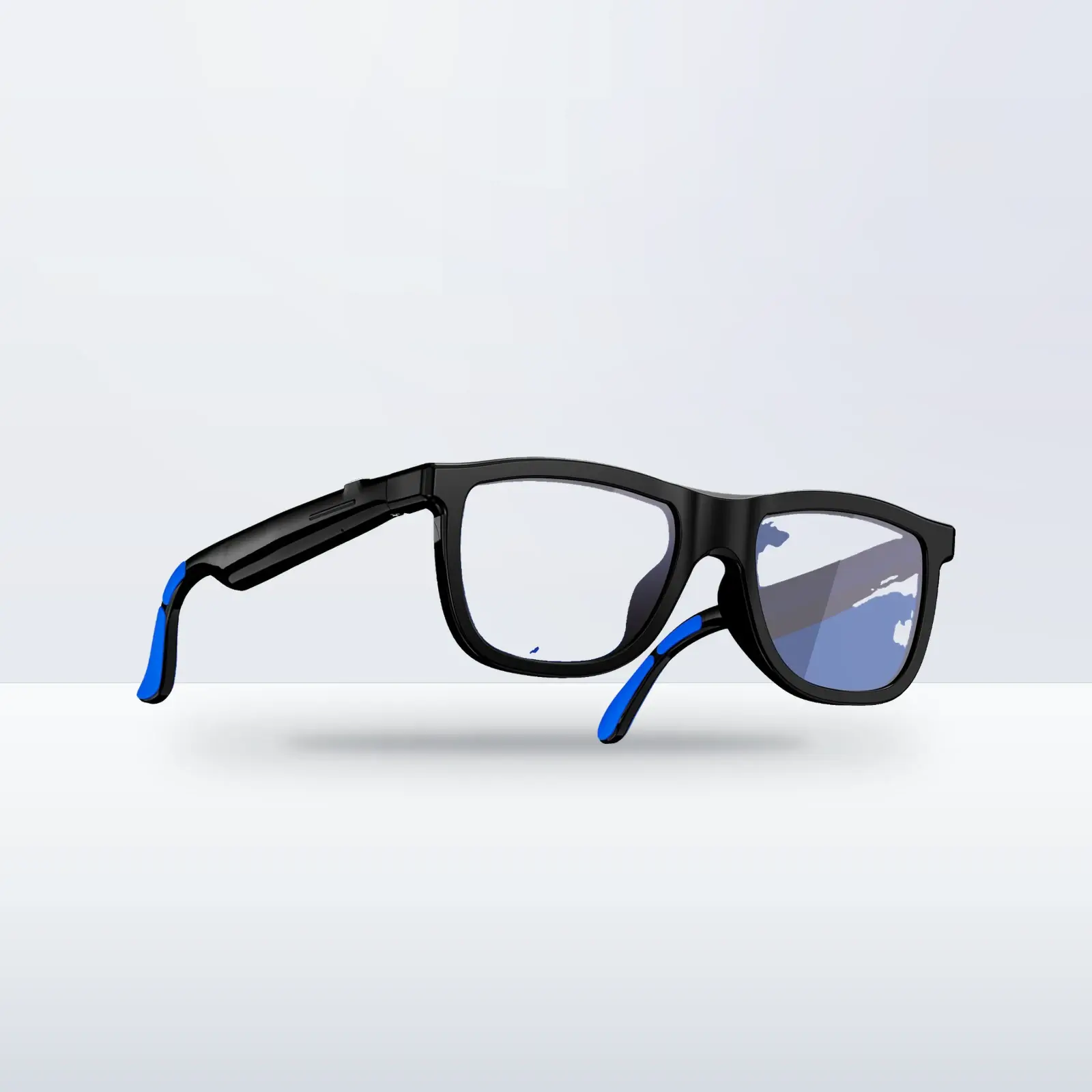
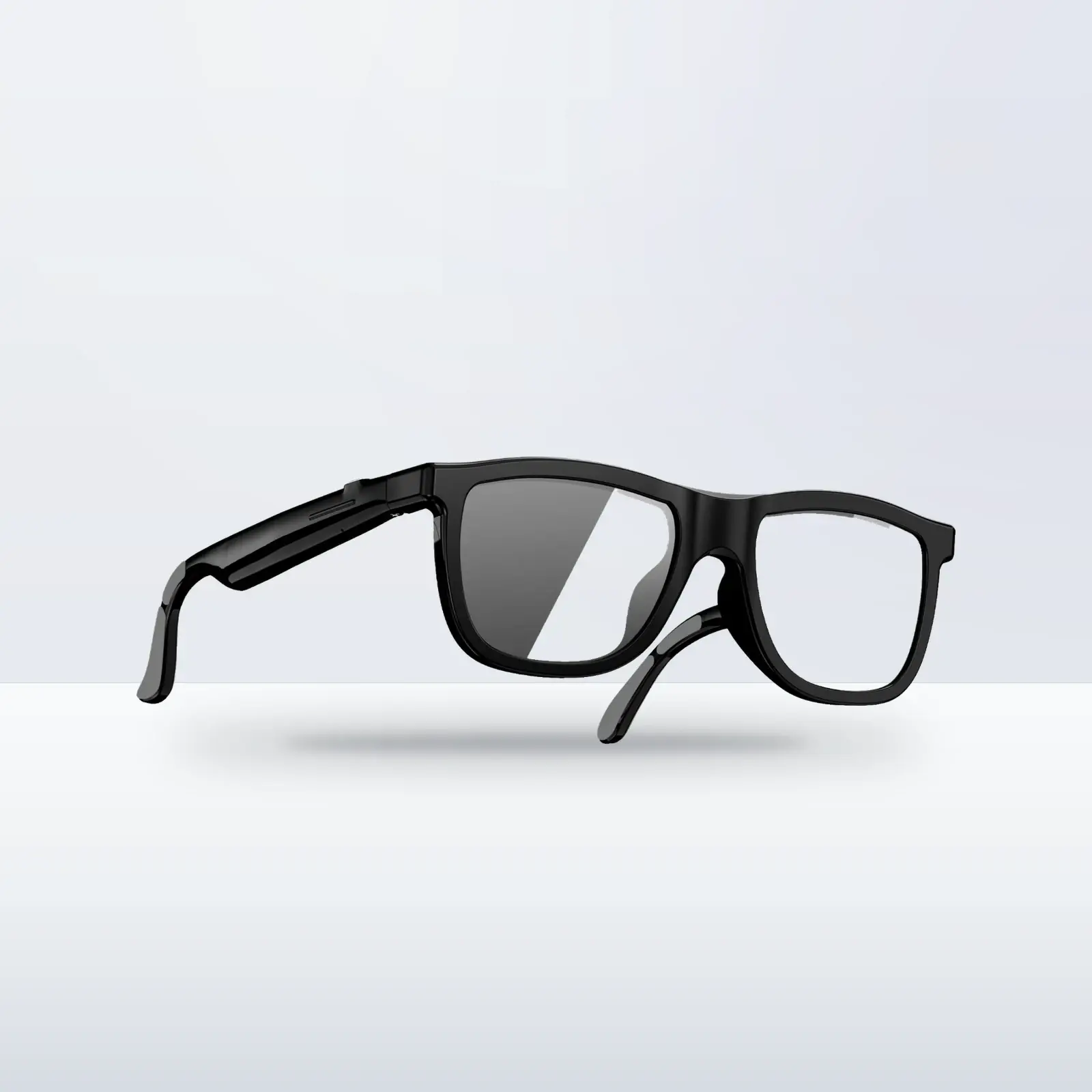
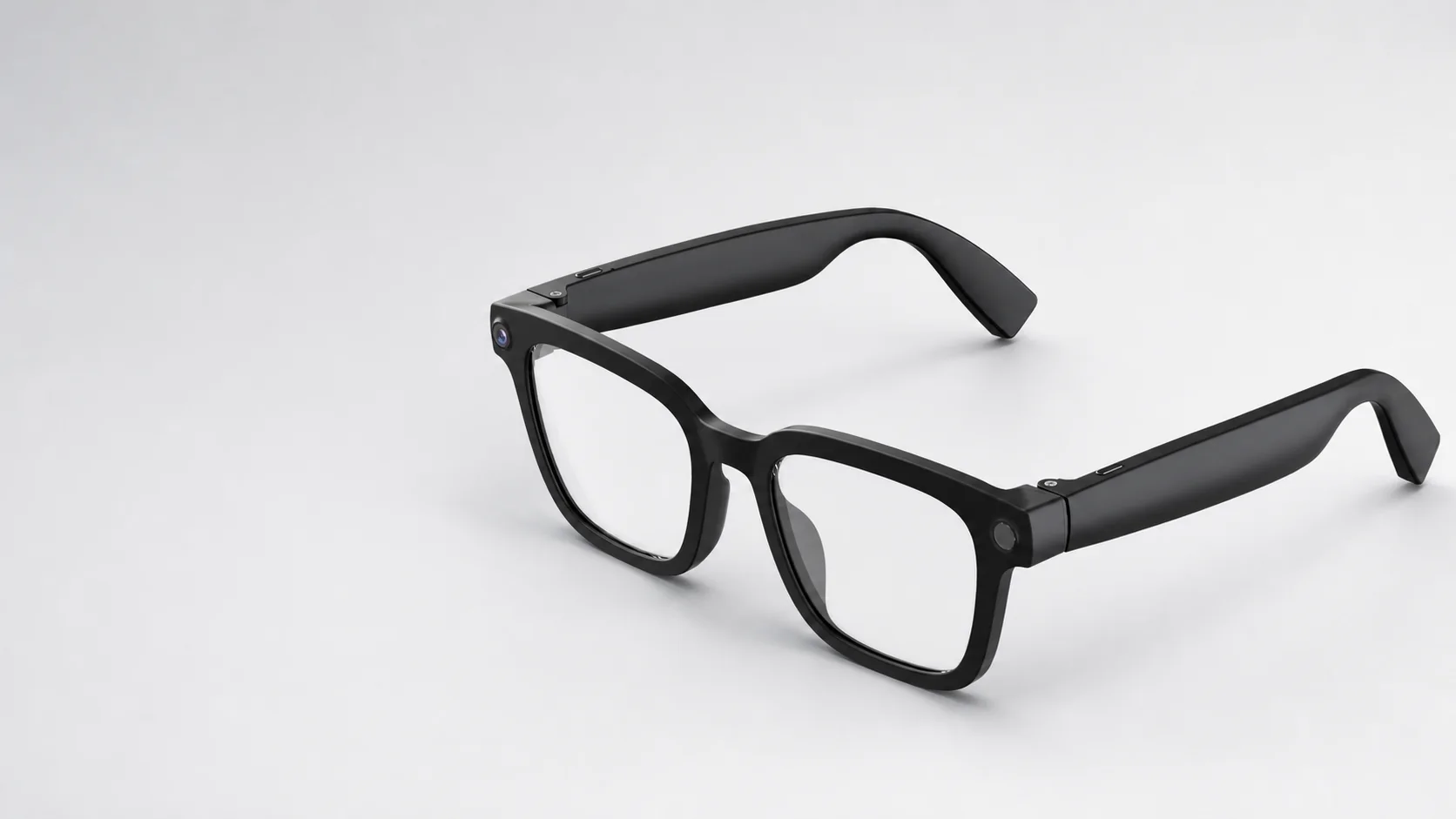
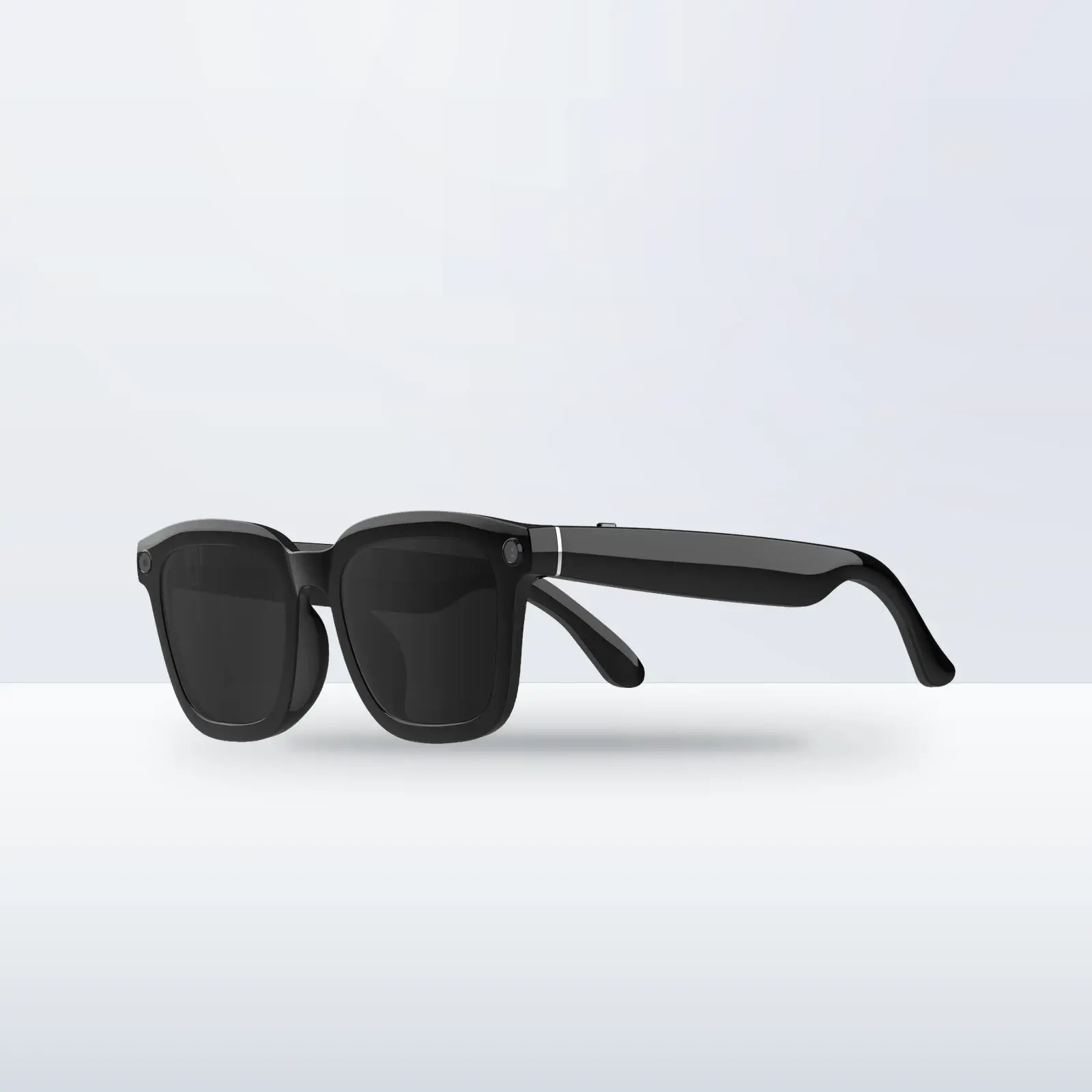
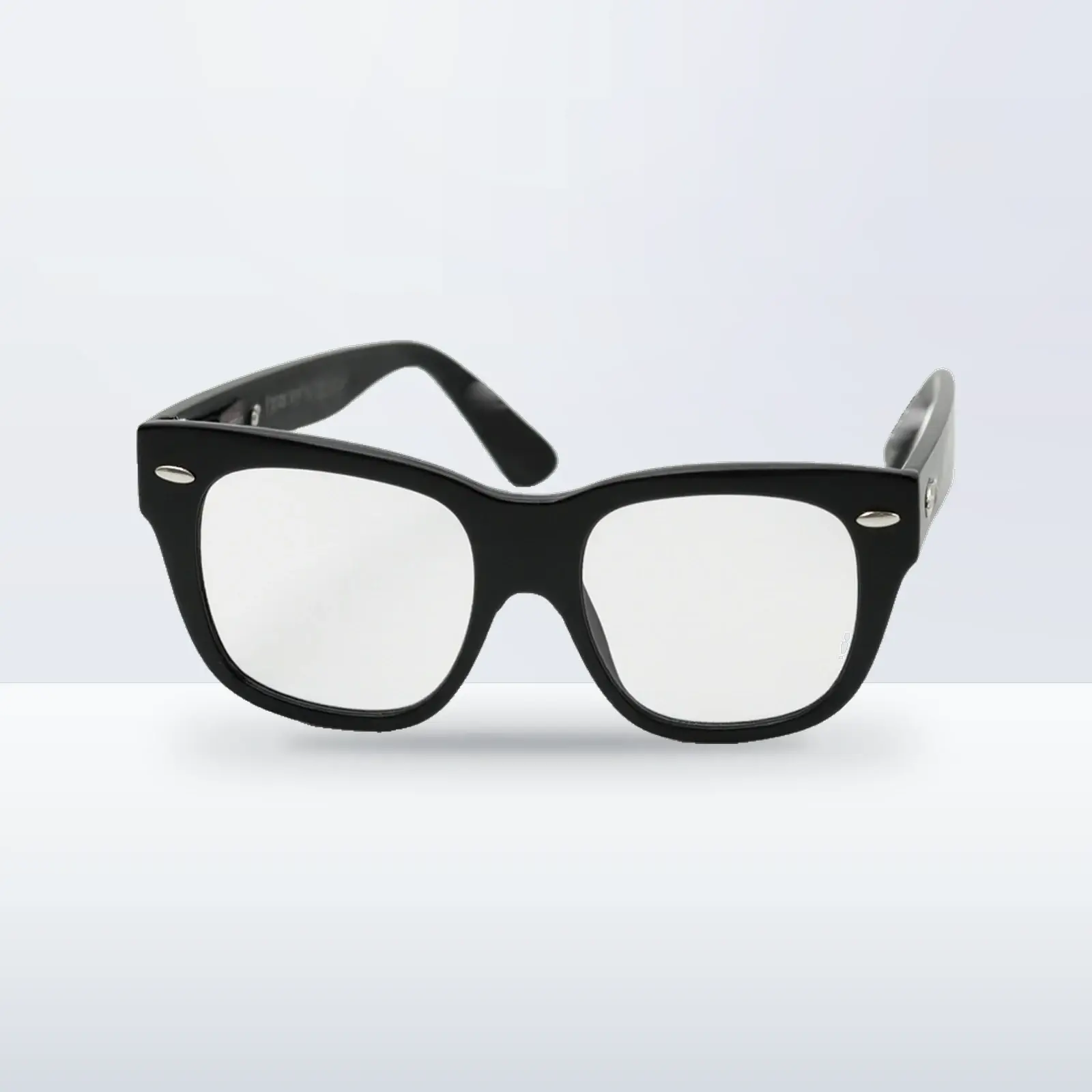
What is the PHOTOCHROMICSMARTGLASSES and what is it designed for?
PHOTOCHROMICSMARTGLASSES is an electrochromic smart glasses model in the CYNRIN specialty photochromic family. Its published record lists Bluetooth 5.4, a 100mAh battery, magnetic charging, a reference charge time of ≤2h, about 7h reference music playback and Lens options as Electrochromic (auto-tint). It is built for daily wearers who want one pair that adapts to changing light together with wireless audio, supplied as a configurable OEM and ODM platform rather than a fixed retail box.
What does the published Electrochromic (auto-tint) lens wording actually mean?
Electrochromic (auto-tint) is the only lens wording the specification publishes. It describes a lens that changes tint as light conditions change, removing the need to swap between clear and sun frames during the day. The record does not publish the electronic control details, voltage profile, number of tint states or transition seconds, so CYNRIN describes the capability strictly in the published terms and confirms deeper optical parameters on the configuration sheet per project.
How fast does the lens switch, and how dark does it get?
Neither tint-switch seconds, state count, darkness percentage nor recovery time appears in the specification, so those values are not published and must not be estimated or borrowed from the V03-PRO column, which publishes different lens wording. During Configure, CYNRIN supplies the electrochromic parameters of the nominated production lens on the configuration sheet, including test conditions, so brand copy and retail claims can be written against confirmed numbers before tooling or packaging is approved.
Does PHOTOCHROMICSMARTGLASSES include a camera?
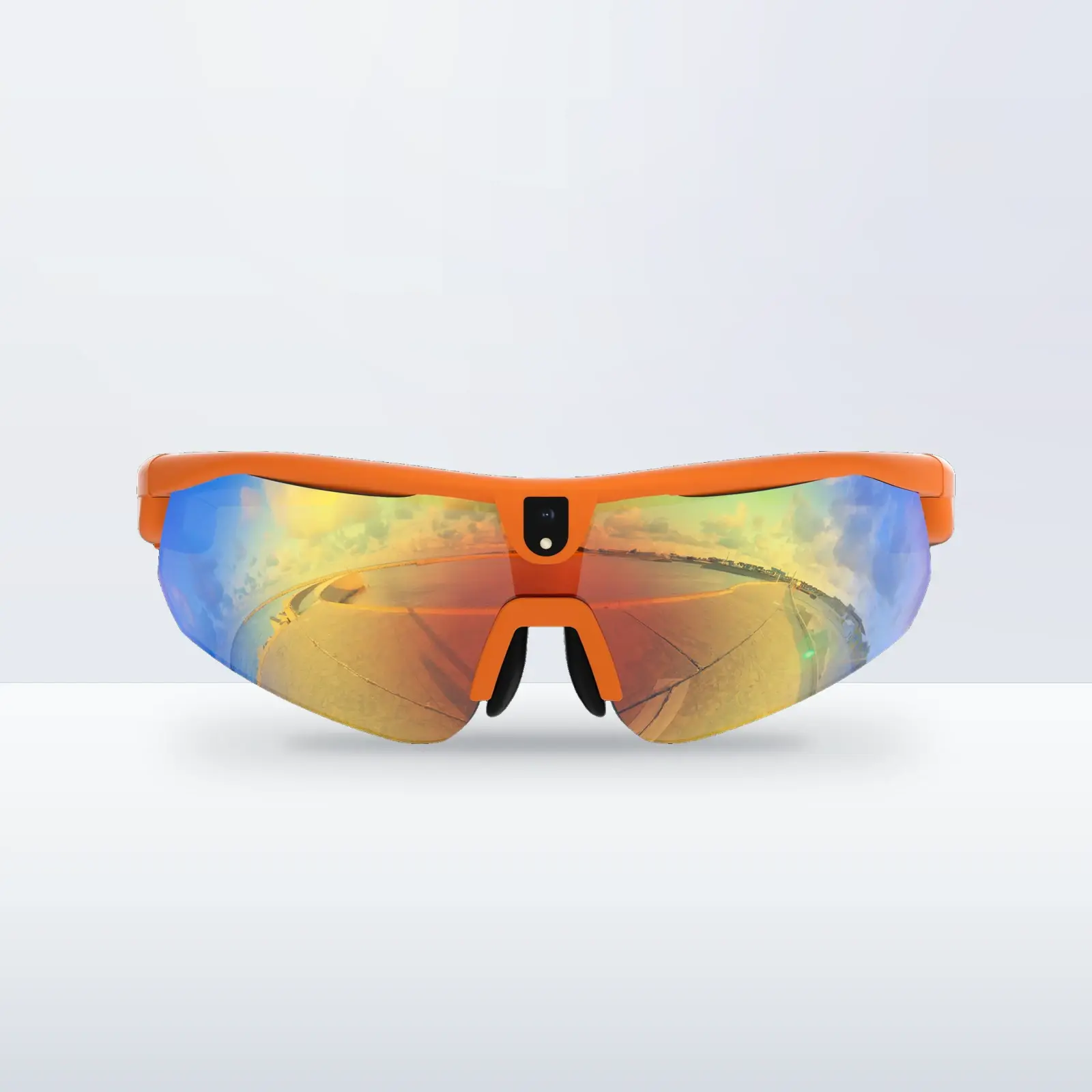
No camera is published for this model. There is no Camera row in its record, unlike the cluster's V03-PRO, which publishes an 8MP camera and a 220mAh cell to support it. PHOTOCHROMICSMARTGLASSES should be marketed as electrochromic smart glasses with Bluetooth audio, never as camera or AI-vision eyewear. If a programme requires imaging, the V03-PRO platform or an ODM configuration is the appropriate route, evaluated separately with its own MOQ and engineering scope.
What connectivity and battery capacity does the record publish?
Connectivity is published as Bluetooth 5.4 and Battery capacity as 100mAh. That mirrors the D11 audio column in the same table and contrasts with the 220mAh V03-PRO, whose camera pipeline needs the larger cell. Only the Bluetooth revision is stated; supported codecs, multipoint pairing, app integration, range and latency are absent, so those behaviours are confirmed on the configuration sheet rather than promised in marketing materials.
What are the published playback and charging figures?
Music playback time is published as ~7h, a reference figure under defined conditions, and charging time as ≤2h through the published Magnetic charging method. The tilde and the ceiling symbol both signal conditional values; volume, call use, temperature and charger capability affect real results. The record lists no separate talk time or standby duration, so the about-seven-hour music figure is the only endurance claim CYNRIN recommends for listings and packaging.
Which frame colours are available for PHOTOCHROMICSMARTGLASSES?
No Colours row is published for PHOTOCHROMICSMARTGLASSES, so frame colours are Not published. The Orange / Off-white / Black value exists solely on the V03-PRO record and cannot be transferred to this model. Available colourways, frame finishes and lens tints are selected according to quantity and destination market during Configure and documented on the configuration sheet, which keeps catalogues aligned with the exact SKU being produced.
How does PHOTOCHROMICSMARTGLASSES compare with V03-PRO and D11?
In the specialty photochromic table, PHOTOCHROMICSMARTGLASSES publishes Electrochromic (auto-tint), Bluetooth 5.4, 100mAh, magnetic charging, ≤2h and ~7h. V03-PRO is the camera column: 8MP, 220mAh, Type-C, 5–8h playback, a Photochromic lens, a Flexible temple and three published colours. D11 shares Bluetooth 5.4, 100mAh, ≤2h and ~7h but publishes Type-C charging and Surround sound. Every cell stays attached to its own column, so buyers see the real platform splits instead of blended averages.
What lens wording should our marketing team use, and which terms should we avoid?
Use the exact published wording, Electrochromic (auto-tint), for this SKU. V03-PRO publishes the single word Photochromic, which is a different column and a different lens description, and D11 publishes no lens option at all. CYNRIN recommends avoiding invented terms such as instant tint, multi-state or medical-grade optics, because none appears in the record. Copy can safely say the lens adapts tint to changing light, which restates the published parenthetical without adding unconfirmed performance.
What is the MOQ for a catalogue or branded PHOTOCHROMICSMARTGLASSES order?
Catalogue OEM entry begins at 500 units on the standard electrochromic platform with available trim and basic logo treatment. Branded OEM, including wider logo placement, custom packaging and fuller documentation, typically starts at 1,000 units. Changes to the electrochromic lens specification, electronics or frame structure fall under ODM and are typically evaluated in the 3,000-5,000 unit range once engineering has reviewed the brief and its optical requirements.
What customisation is available on the electrochromic platform?
OEM scope covers logo placement, colourway, frame trim, packaging, inserts, documentation and charging accessories on the published Bluetooth 5.4, 100mAh and auto-tint platform. Because colours, dimensions and lens parameters are not pre-published, the option matrix is built per project around the destination market. Altering lens performance, adding a camera or changing the charging interface crosses into ODM, with separate tooling, validation and MOQ implications quoted after the Define gate.
Which certifications and reports apply to PHOTOCHROMICSMARTGLASSES?
CE, FCC and RoHS are among CYNRIN's certification capabilities for this Bluetooth 5.4 model, and the applicable report scope is verified against each destination market and supplied on request. No specific market certification is claimed on the page itself, because reports follow the tested production configuration. Buyers should state their destination regions early so the correct radio, safety and material reports can be scheduled alongside sample approval and mass production planning.
How do we start a PHOTOCHROMICSMARTGLASSES RFQ with CYNRIN?
Send target quantity, destination market, sales channel, preferred colourway and packaging scope, and any lens performance expectations such as desired transition behaviour. Engineering maps the brief to the published electrochromic platform and replies with the configuration sheet, sample schedule, the applicable 500-unit catalogue or 1,000-unit branded MOQ tier and certification scope. Mass production typically runs 15-40 days after deposit once configuration and samples are approved.