
The training gap
Procedures are hard to teach from a third-person camera
Procedural skill is fundamentally positional. A suturing technique, a catheter placement, a device assembly or an equipment repair is defined by hand position, angle, depth and timing — details that an observer standing across a table simply cannot see. Traditional training leans on peering over a shoulder, then repeating until the gesture is internalized. It is effective, but it does not scale: one expert can physically lean over only so many trainees, and the perfect angle exists for only one person at a time.
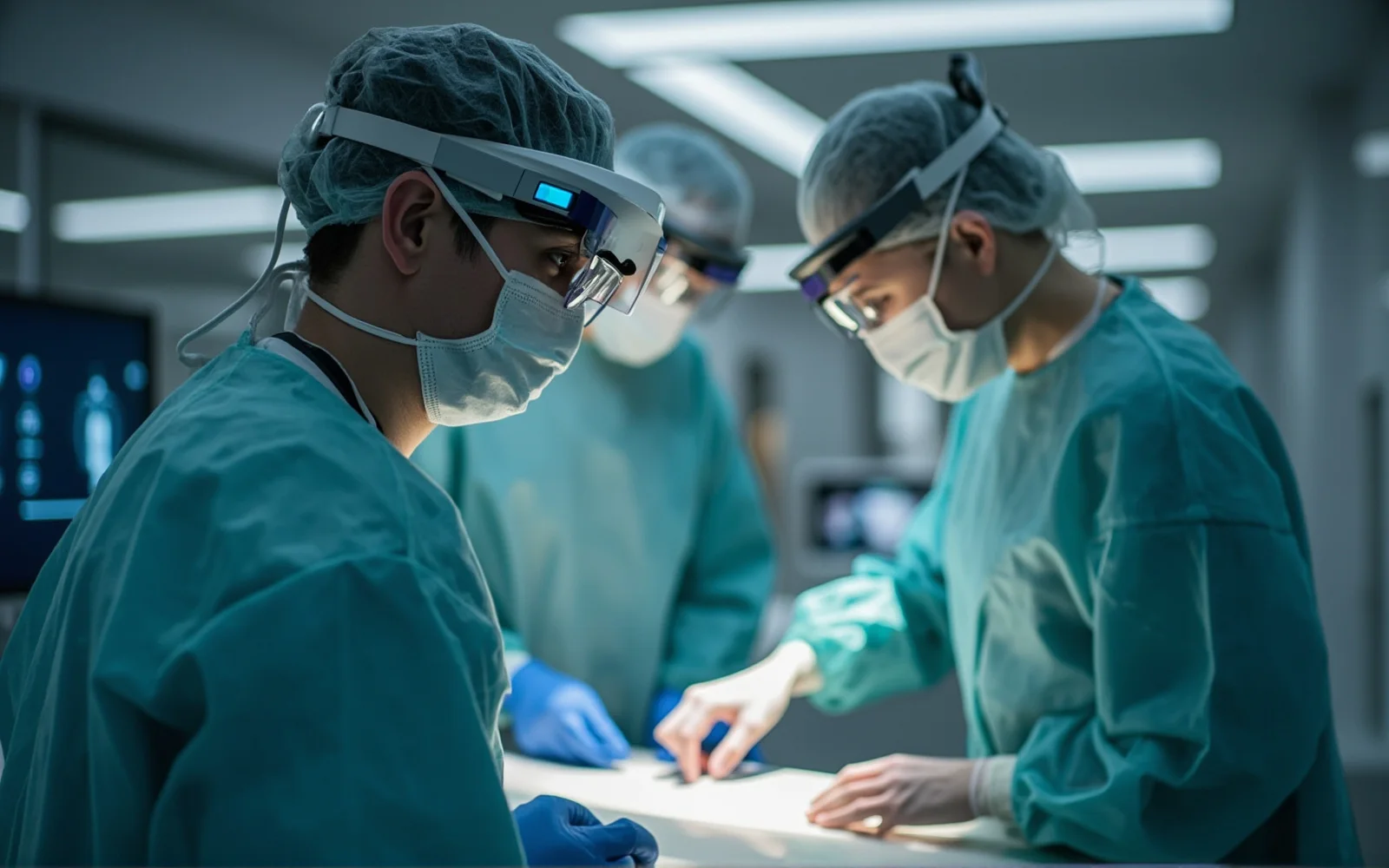
Third-person video solves reach but not perspective. A camera across the room records a scene; it does not record the operator’s view. Learners watch hands move but cannot reconstruct what those hands are looking at. Head-mounted point-of-view (POV) capture closes that gap. A small camera on ordinary-looking eyewear records the procedure exactly as the instructor sees it — line of sight, instrument orientation and working distance included — so a recording can teach the spatial judgment that a lecture cannot.
The same footage serves three distinct jobs. It builds an asynchronous training library students can pause, rewatch and revisit before a lab session; it enables remote mentoring, where a senior specialist watches a live first-person feed and coaches in real time; and it supports objective review, where an instructor and trainee watch the trainee’s own attempt together and debrief against the same perspective.
As always, the boundary is explicit. CYNRIN supplies the capture hardware and its configuration; the educational institution or medical-simulation vendor owns the curriculum, the procedures taught, patient/subject consent and any clinical or accreditation claims. POV eyewear is a teaching instrument, not a medical device and not a substitute for supervised practice.
Why POV works
What first-person video preserves that other cameras lose
The educational value of POV footage comes from fidelity to the operator’s actual reference frame. Several properties follow directly from that.
- Instrument alignment. The learner sees where the needle driver sits relative to the wound edges — the precise geometry a shoulder-mounted camera occludes.
- Working distance and depth. Because the lens is at head height and follows gaze, magnification and approach angle match what a competent operator actually experiences.
- Gaze and attention. Where an expert looks first — anatomy, monitor, instrument handoff — is visible in the framing itself, teaching situational priority.
- No camera operator. The instructor keeps both hands on the task and never breaks technique to frame a shot. The capture is a by-product of performing, which keeps demonstrations authentic.
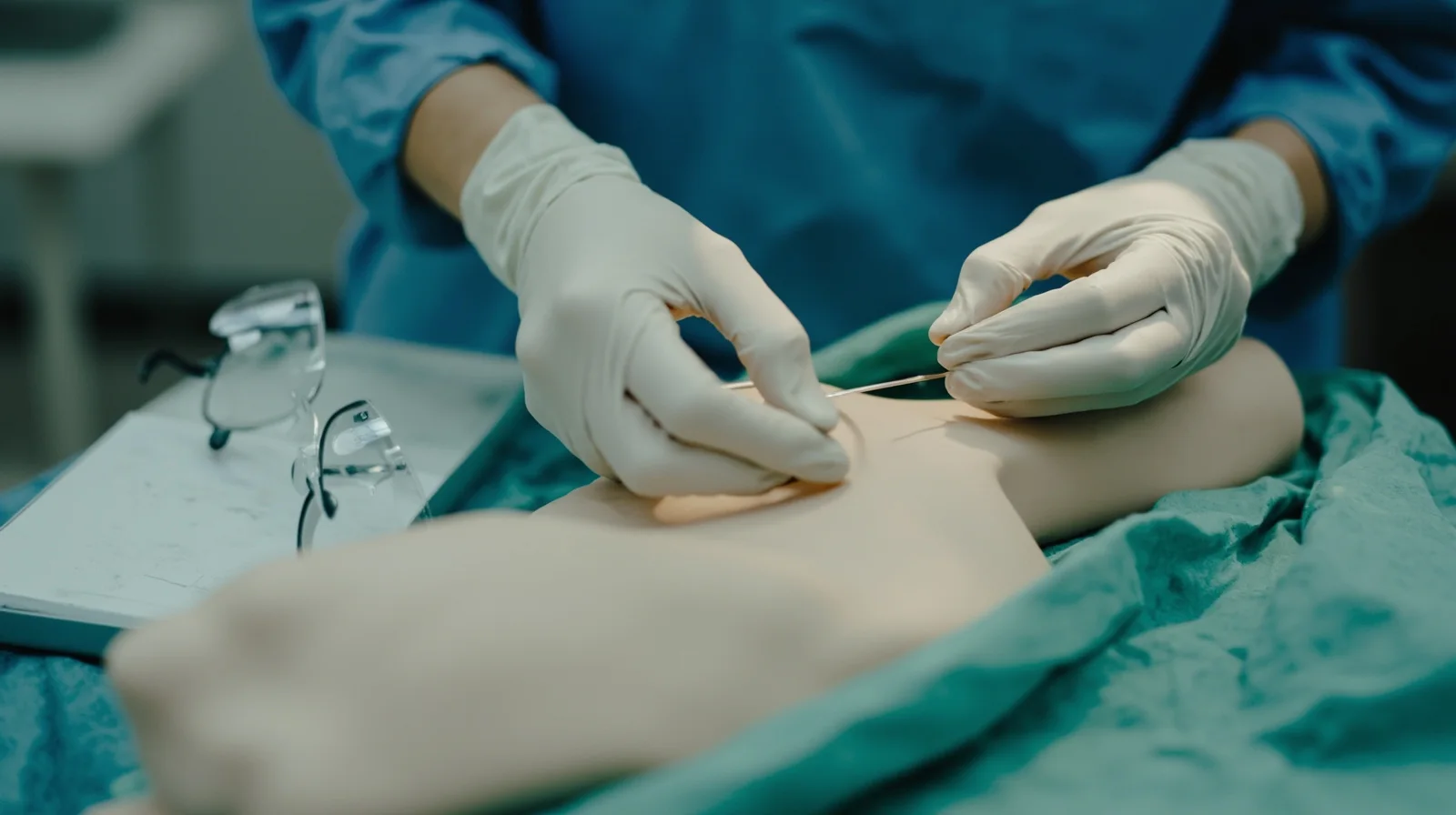
For non-surgical technical work the case is identical and often easier to deploy: biomedical equipment servicing, laboratory technique, field maintenance and industrial assembly all rely on the same hands-and-eyes knowledge. The digital work instructions guide covers the factory equivalent; here the footage feeds human coaching and simulation rather than an assembly station.
The training loop
From live demonstration to a reusable skills library
A mature POV program is a loop, not a one-off recording. Programs that get the most from the hardware tend to run the same four-step cycle.
- Demonstrate. An expert performs the procedure wearing the glasses; the capture starts and stops through a simple control that does not interrupt the technique.
- Curate. The educator reviews and tags clips into a structured library — by procedure, difficulty or common error — hosted on the institution’s or vendor’s learning platform.
- Rehearse. Learners watch the expert POV immediately before a skills-lab session, then perform on models, cadaveric labs or simulation equipment.
- Re-record and debrief. Trainees record their own first-person attempt; instructor and learner compare it against the reference, accelerating the feedback loop.
Remote mentoring slots into step one: when an in-person specialist is unavailable, they join the live feed, see exactly what the on-site operator sees and talk them through the procedure. This mirrors the telehealth remote-consultation model and shares its requirements — cleanable hardware, a clear active-state indicator, and a managed pairing model. See telehealth & remote consultation for the patient-facing counterpart.
Hardware requirements
Cameras, comfort and cleanability for the skills lab
Training capture makes different demands than quick photo documentation. Because a procedure can run long and the instructor moves their head continuously, weight, balance and thermal comfort matter; frames are tuned for extended wear, including over prescription eyewear and under magnification where the workflow requires it. The camera is selected for a stable, usable first-person view under the bright, even lighting of an operating or simulation environment rather than for spec-sheet megapixels.
Open-ear audio is useful in two ways: it lets the instructor narrate naturally for the recording while remaining aware of the room, and it carries a remote mentor’s coaching without an earpiece that breaks sterility practices or situational awareness.
Cleanability is a first-class requirement. Training devices are shared across cohorts and used near practice models and lab materials, so frame finishes and replaceable contact parts (nose pads, shields) are selected around the institution’s cleaning agents. Exact chemical compatibility is confirmed per program against the real protocol. Storage and charging for a multi-unit fleet — numbered cases, reset between users, controlled enrollment — are specified as part of the deployment rather than improvised after purchase.
Consent and governance
Recording people means designing for consent by default
POV capture in a health-adjacent environment records more than technique; it can capture colleagues, simulated patients and, in clinical settings, identifiable individuals and protected environments. Responsible programs treat recording governance as a design requirement.
- Obvious active state. A visible indicator shows bystanders and participants when capture is live; indicator behavior is configurable and cannot be casually disguised.
- Simulation-first deployment. Most programs begin in skills labs on models and manikins — where consent is straightforward — before any patient-area use is considered.
- Institution-owned storage. Where footage goes, who can view it and how long it is retained are governed by the education provider’s systems and policy, not by the glasses vendor.
- No clinical claims from the factory. CYNRIN makes no medical claim for the hardware; accreditation, educational outcomes and any patient-facing use are the program owner’s responsibility.
This disciplined split — capable, privacy-conscious hardware from CYNRIN; clinical and educational governance from the customer — is exactly the distinction serious institutions look for. It is the same boundary drawn across the whole healthcare application.
Building the program
A purchasing path for educators and simulation vendors
Customers for POV training hardware are typically medical schools and teaching hospitals, simulation-center operators, medical-device companies that train customers on equipment, and vocational educators. Their common need is a reliable, brandable fleet — not a one-off consumer gadget.
- Workflow scoping. Define the procedures, clip length, lighting and whether use stays in simulation rooms or extends toward clinical areas.
- Platform and optics. Choose a camera-first platform and specify lens, frame and open-ear audio options for the lab environment.
- Fleet and hygiene. Multi-unit cases, charging, reset between cohorts and cleaning-compatible contact parts are specified up front.
- Branding and integration. Device naming and companion identity carry the institution or vendor brand; deeper integration with a learning platform is scoped under ODM, branding and packaging via customization.
- Trial then scale. Reference samples support a pilot cohort before fleet commitment; volumes, lead time and destination-market documentation are confirmed per program.
The output is a defensible training tool: footage that genuinely transmits expert perspective, hardware that survives shared lab use, and a governance model the institution controls. That combination is what turns POV capture from a novelty into curriculum infrastructure.
Buying considerations
What a POV training program should specify
Procedures and lighting
Which techniques are recorded and the typical lab or operating-light environment.
Clip workflow
Live mentoring, on-demand library, or trainee self-recording — often all three.
Comfort under duration
Extended wear, prescription fit and compatibility with magnification.
Cleaning and sharing
Cleaning agents, replaceable contact parts and reset between cohorts.
Consent model
Active-state indicators plus the institution’s policy for who may be recorded and where.
Footage governance
Storage, access and retention owned by the education provider’s platform.
Browse the application
More healthcare guides
Keep exploring
Related reading
FAQ
Frequently asked questions
Can these glasses record an actual surgery for teaching?
Do the glasses work over prescription lenses or under loupes?
How is a shared training fleet kept hygienic?
Can footage go into our own LMS or training platform?
Can we evaluate units before equipping a skills lab?
Build this use case into a private-label program
Tell us the workflow, environment and volume. Engineering scopes the platform, optics, power and documentation per program.