
Why an eyewear endpoint
Telehealth still fights the handheld-camera problem
Most telehealth today runs on a phone, tablet or fixed laptop camera. That works for a talking-head appointment, but it breaks the moment care needs to be shown. A wound, a rash, a home medication setup or a piece of medical equipment has to be held up to a lens, usually with one hand, while the patient tries to frame, focus and listen at the same time. Clinicians describe the result as shaky video, poor angles and a consultation that spends its first minutes on camera positioning instead of care.
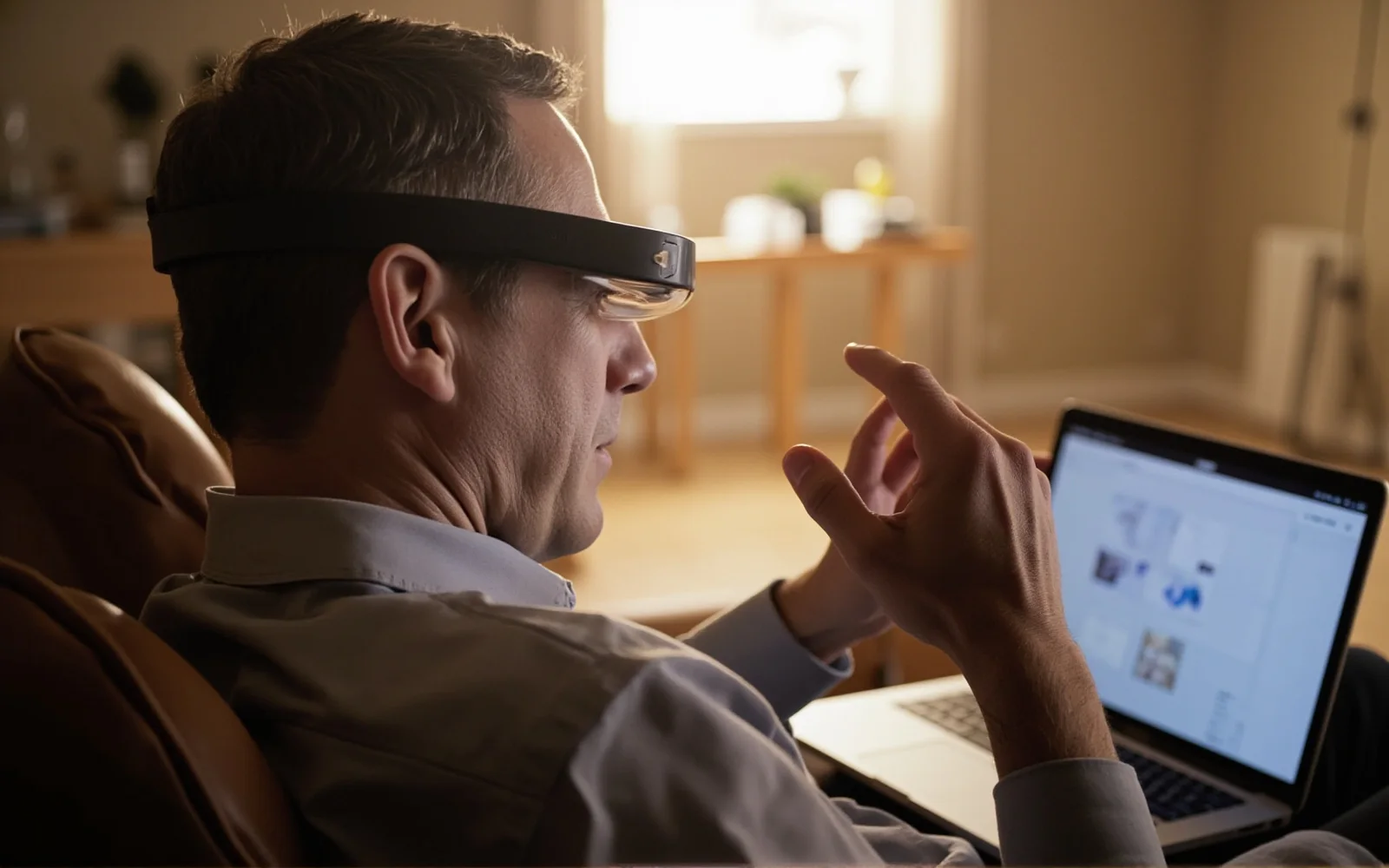
Head-worn capture removes that friction. Because the camera moves with the wearer’s gaze, a patient can point a first-person view at exactly what the clinician needs to see while keeping both hands free to demonstrate, gesture or follow instructions. The clinician, joining remotely, sees the situation rather than a description of it. On the clinical side, the same property lets a nurse or junior doctor share what they are looking at during rounds, a home visit or a bedside check without turning away from the person in front of them.
The second gain is social rather than technical. A phone held between two people is a barrier; glasses leave the face and hands open. Eye contact, posture and the normal rhythm of a consultation survive. For use cases where trust and observation matter — mental-health check-ins, rehabilitation coaching, aged-care visits — that is a meaningful difference, and it is the reason eyewear is evaluated as a care endpoint, not just another camera.
It is important to state the boundary clearly. CYNRIN designs and manufactures the connected-eyewear hardware platform. The telehealth platform, clinical workflows, data handling and any medical claims are owned and validated by the solution provider. A strong deployment is a partnership between credible care software and reliable, privacy-conscious hardware — not a glasses vendor improvising a medical service.
How it works in the visit
What a hands-free remote consultation actually looks like
A typical session starts like any video visit: the patient or clinician joins through the care provider’s application. The difference is the endpoint. With open-ear audio and a head-worn camera, the patient is not tethered to a screen. They can walk the clinician to the kitchen to show how medications are organized, demonstrate a transfer from a chair, or hold up the actual device they are struggling to use — narrating naturally while the picture follows their line of sight.
- Show, don’t describe. First-person video lets patients demonstrate tasks and environments instead of explaining them, which is especially valuable for low-dexterity, elderly or less technically confident users.
- Both hands stay free. Patients can perform the action being assessed — a dressing change, an injection prep, a mobility exercise — rather than operating a camera at the same time.
- Environmental awareness for clinicians. Home visits over glasses reveal fall risks, medication layout and real living conditions in a way a seated webcam call cannot.
- Open-ear audio. Sound reaches the wearer without sealing the ears, so patients stay aware of their surroundings and can still hear people and alarms nearby.
On a ward or in a clinic, a clinician can invite a remote specialist to join a review, see the same equipment or wound from the clinician’s point of view, and talk them through a step without anyone holding a device. In field biomedical service, an engineer servicing a hospital machine receives see-what-I-see guidance from a senior specialist — a workflow closely related to remote expert assistance in industry, just applied inside a healthcare environment.
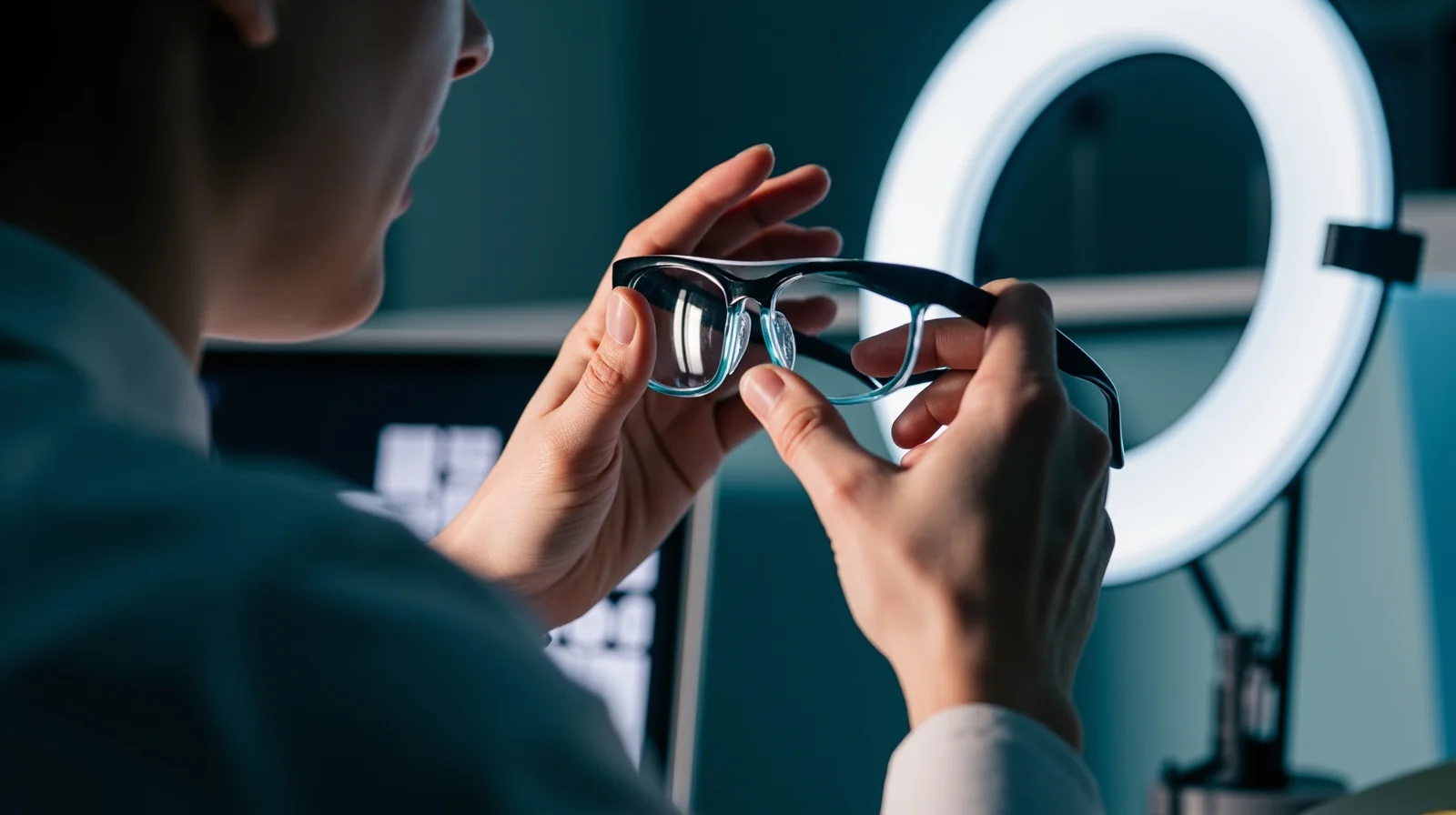
None of this assumes fully autonomous operation. Programs commonly define a managed flow: paired device, single approved application, indicators that make capture state obvious to everyone present, and simple reset between users. That discipline matters more in care settings than in almost any other vertical.
Where it is used
Four settings where eyewear endpoints earn their place
The use cases that justify a head-worn endpoint share one trait: the value comes from movement, hands or environment, not from a seated talking-head call.
Home health and chronic-care follow-up
Nurses and therapists guide wound care, physical-rehab exercises and medication routines by seeing the patient’s real setup. Older users benefit because there is no phone to aim; the device is worn like ordinary glasses.
Tele-mentoring and specialist access
A rural clinic or small hospital can bring a distant specialist into a bedside assessment through the on-site clinician’s point of view. The specialist sees, hears and instructs; the local clinician keeps hands and attention on the patient.
Biomedical and facilities support
Equipment vendors and biomedical teams guide hospital engineers through servicing and troubleshooting hands-free, reducing truck rolls. This is non-clinical work that nonetheless lives inside clinical buildings, which makes cleanability and discretion important.
Aged care and assisted living
Care staff can conduct remote family check-ins and guided assessments, and residents can use open-ear eyewear for hands-free calls. For accessibility-led deployments, see the dedicated assistive & accessibility guide.
Privacy and trust
Indicators, consent and cleanability are product features
In a care setting, the people around a camera are often patients, residents or family members who did not choose the device. That makes privacy part of the product rather than a policy footnote. Buyers evaluating eyewear for telehealth should treat three things as specification requirements, not afterthoughts.
- Unambiguous capture state. A visible indicator makes it clear to everyone nearby when the device is active. Indicator behavior and capture workflows are configurable per program so recording state cannot be mistaken.
- Cleanable, shared-device design. Where glasses move between staff or patients, frame finishes and replaceable contact parts (nose pads, shields) are selected around the customer’s cleaning protocol; chemical compatibility is confirmed per program rather than promised generically.
- Controlled pairing and reset. Device naming, enrollment and reset between users are defined for managed fleets so a shared pair does not carry the previous user’s session.
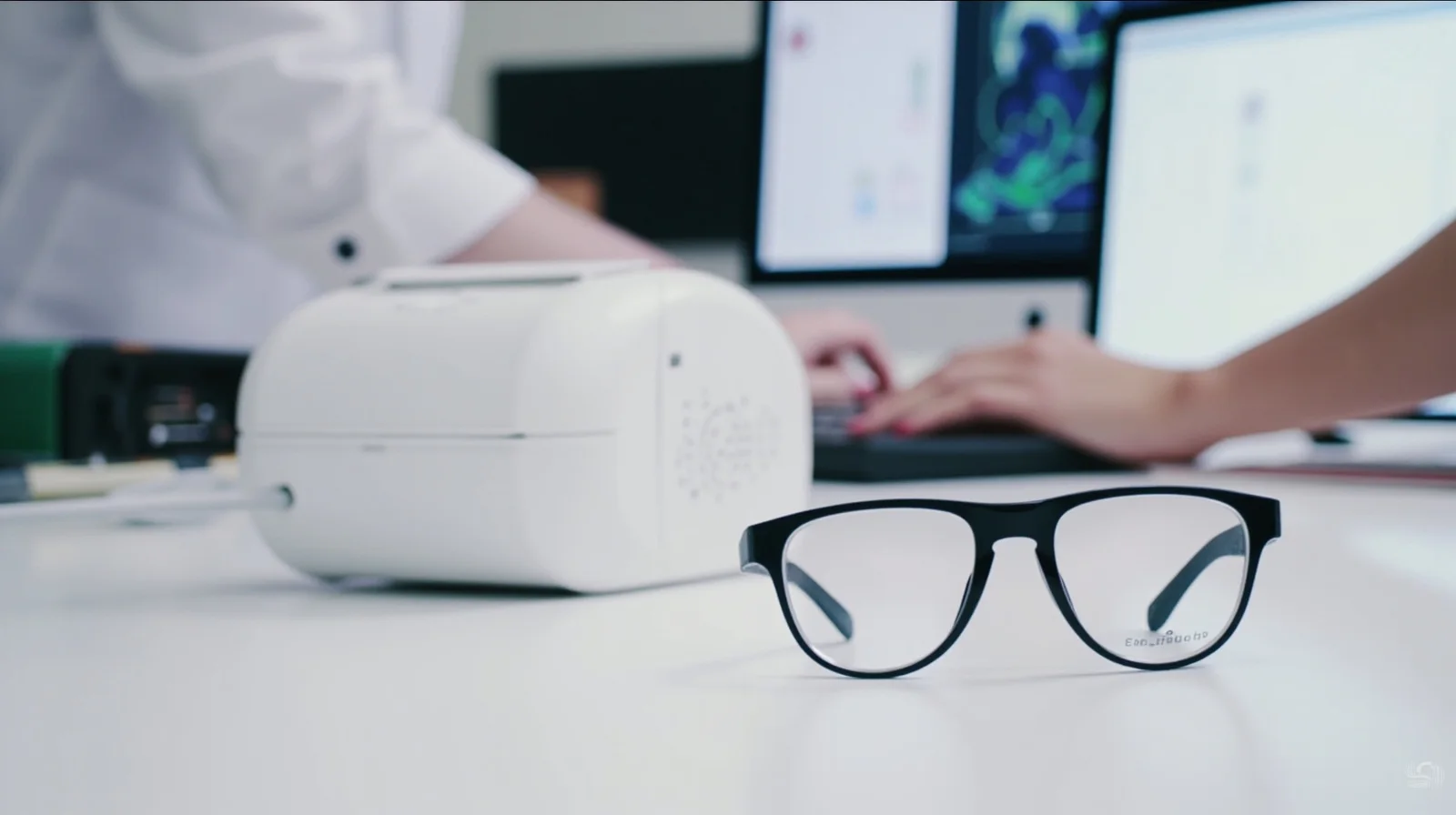
Data path, retention and consent screens belong to the care application and its deployment region; the hardware must support, not frustrate, those requirements. General electronics and wireless documentation is aligned to each destination market, while clinical validation and any regulated claims remain the solution owner’s responsibility. More on how we treat this boundary is on the healthcare pillar.
Specifying the hardware
Camera, audio and comfort for long conversations
A telehealth endpoint is judged on conversation quality first. The camera does not need cinema-grade resolution; it needs a usable first-person view of a wound, a room or a piece of equipment under ordinary indoor light. Audio is arguably more demanding: voices must remain intelligible at arm’s length and in rooms with hard surfaces, while the wearer still hears their environment through open-ear speakers.
Because a consultation can run far longer than a quick photo capture, weight and balance are adoption-critical. Frames are tuned for shift-long or session-long comfort, including wear over prescription eyewear where required, and lens options can be specified for indoor clinical lighting. Power budgets are matched to realistic call-and-capture profiles and stated on the program datasheet — we do not quote generic runtime figures in marketing copy.
For buyers comparing device categories, a camera-first platform is selected when visual consultation is the headline use; an audio-first platform suits voice-led check-ins and open-ear calls where first-person video is secondary. Both are available as private-label reference platforms, with custom frame geometry, temple profiles and accessory tooling possible through ODM programs. Branding, cases and quick-start material are handled through customization.
Building the program
How an OEM or private-label telehealth program comes together
Most customers in this space are solution providers, care groups or device brands that already own software and clinical relationships. They come to CYNRIN for the hardware platform and for a manufacturing partner that understands the vocabulary of evidence, documentation and fleet management.
- Intended-use scoping. We confirm the setting (home, ward, field service), the wearer (patient, clinician, engineer) and the boundary between general connected eyewear and any regulated claim.
- Platform selection. Camera-first or audio-first, lens and frame options, and the call-and-capture power profile are chosen against the real workflow.
- Privacy and cleaning configuration. Indicators, pairing/reset behavior and cleanable contact parts are specified before tooling.
- Branding and fleet packaging. Device naming, app identity, multi-unit cases and quick-start material carry the deploying brand.
- Evaluation and mass production. Reference-platform samples support trials before fleet commitment; volumes, lead time and certification packs are confirmed per program (see the samples process and MOQ guidance).
Throughout, the principle stays the same: honest hardware scoping, documentation aligned to the destination market, and clinical/regulatory ownership explicitly left with the solution provider. That is what makes a telehealth program defensible — and what lets a brand build on it with confidence.
Buying considerations
What to put in a telehealth eyewear brief
Wearer and setting
Patient at home, clinician on a ward, or field engineer; shared device or single user.
Camera profile
First-person consultation under indoor light; define whether stills, clips or live video drive the use case.
Audio requirements
Open-ear intelligibility at conversation distance, with environmental sound still audible.
Cleaning protocol
The exact cleaning agents and between-user routine; contact-part compatibility is confirmed against it.
Privacy behavior
Visible active-state indicator, pairing identity and reset between users.
Regulatory boundary
Who owns the care software, consent flow and any medical claim in each destination market.
Browse the application
More healthcare guides
Keep exploring
Related reading
FAQ
Frequently asked questions
Are these telehealth glasses a certified medical device?
Can patients use the glasses with the telehealth app we already run?
How is patient privacy handled during a video visit?
Can the glasses be disinfected between patients?
What is the minimum order for a branded telehealth program?
Build this use case into a private-label program
Tell us the workflow, environment and volume. Engineering scopes the platform, optics, power and documentation per program.