

Why eyewear fits road running
Runners already wear glasses; sealed earbuds are the weak link
Road runners buy gear by the gram and judge it over the full marathon distance, which makes eyewear a natural home for electronics. Most runners already wear glasses for sun, wind and road grit, so smart features add no new carry point, no armband and nothing to fumble at an aid station. The capability runners ask about first is not footage — it is hearing coaching and pace cues without sealing their ears.
Sealed earbuds, the default answer, work against the way runners actually train. They occlude traffic, training partners and race marshals; they work loose with sweat and stride impact; and a dead bud in the closing kilometers ends the pacing plan. Open-ear audio on eyewear presents cues, calls and music while leaving the environment audible, on a product the runner was putting on anyway.
For running-shoe, apparel and sport-electronics brands, this is a category extension their customers already understand rather than a speculative gadget. The brand-program logic is shared with the wider endurance and bike world on the sports and cycling brands solution page, and the category overview sits on the running and outdoor pillar.
The honesty boundary matters to a data-literate audience. CYNRIN manufactures the eyewear hardware platform. Pace, heart-rate and training analysis come from the runner’s own watch, sensors and companion application; the glasses make no medical-grade biometric claim, and there is no projected HUD or in-vision map — prompts are glanceable or spoken. Weight, power and protection figures are confirmed per program and stated on the program datasheet.
Fit under impact
The bounce, grip and sweat test decides whether they stay on
No audio feature survives a frame that bounces. Running subjects eyewear to thousands of impact cycles per hour, plus sweat, heat and frequent cap and visor changes. A running program is therefore specified around fit before it is specified around anything electronic.
- Weight distribution. A balanced, light frame avoids the front-heavy slip that forces constant pushes back up the nose; balance and pad geometry are reviewed in fit trials during sampling rather than asserted on packaging.
- Grip at nose and temples. Contact materials are chosen to hold when wet, gripping through sweat instead of clamping — pressure points behind the ears are the reason sport glasses get abandoned mid-run.
- Cap and visor compatibility. Slim temple profiles sit comfortably under a race cap or visor without lifting the frame or interfering with the hat band.
- Sweat management. Contact materials, sealing and port layouts are selected for sweaty, long-session use, with protection levels confirmed per program and stated on the datasheet.
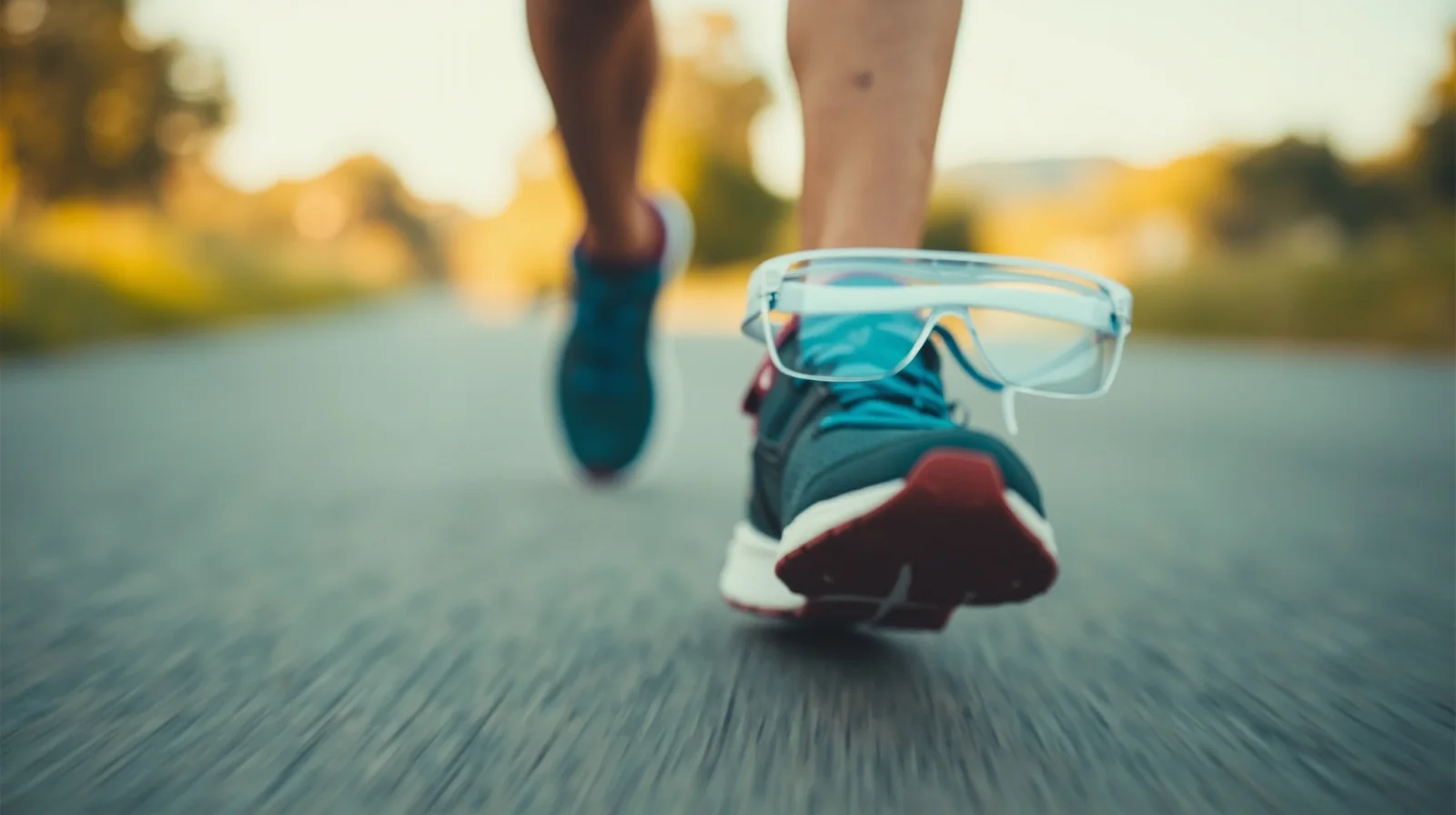
Runners who need vision correction are a serious segment in this demographic; prescription-lens or insert compatibility is confirmed per program during the design review, because a connected frame that excludes prescription runners shrinks its audience on launch day.
Training and race day
Where open-ear cues earn their place across a running week
The value shows up in the repeated moments of a training plan and a race morning, not in a single headline feature.
- Interval and threshold sessions. Spoken or glanceable cues from the coaching application deliver segment, pace or effort prompts without a head drop to a watch at track speed.
- Long runs. Music, podcasts and quiet coaching stay present while road noise, conversation and the approach of other path users remain audible for hours.
- Race day. Marshals’ instructions, aid-station calls and other runners stay perceptible — acoustic situational awareness that sealed isolation structurally removes on a closed road.
- Run crews and calls. Group runs stay conversational, and a logistics call is answered hands-free without stopping or digging for a phone.
- Post-run stories. On camera-equipped tiers, a short clip of the finish straight or the morning route is captured from the runner’s own eye line and handed to the companion application.
What the eyewear does not do is as important as what it does. Cues originate in the runner’s training software and existing sensors; the glasses do not replace a running watch or a chest strap, and any pace or biometric accuracy belongs to those devices. The companion application, not the hardware vendor, defines the metrics.
Optics and power
Road lenses, long-session power and the optional content tier
A road-running frame is worn in hard, flat light for hours, so the optics do the primary job and the electronics are added on top.
Road optics first
Asphalt glare, low winter sun and bright summer coast roads demand different lens behavior. Sport tints and lens finishes are defined per program with optical-quality requirements checked at inspection gates; distorting, cheap lenses fatigue the eyes on a long run and undermine the entire product. Photochromic or interchangeable options are program choices rather than universal promises.
Power matched to the session
A marathon-weekend profile — cues and music across a long run, standby through the expo, clips at the finish — is very different from continuous filming. The power budget is matched to a realistic audio-led profile, with runtime stated on the program datasheet instead of as a generic all-day claim. Camera capture is sold as deliberate short clips, not constant recording, which is also friendlier to battery and storage.
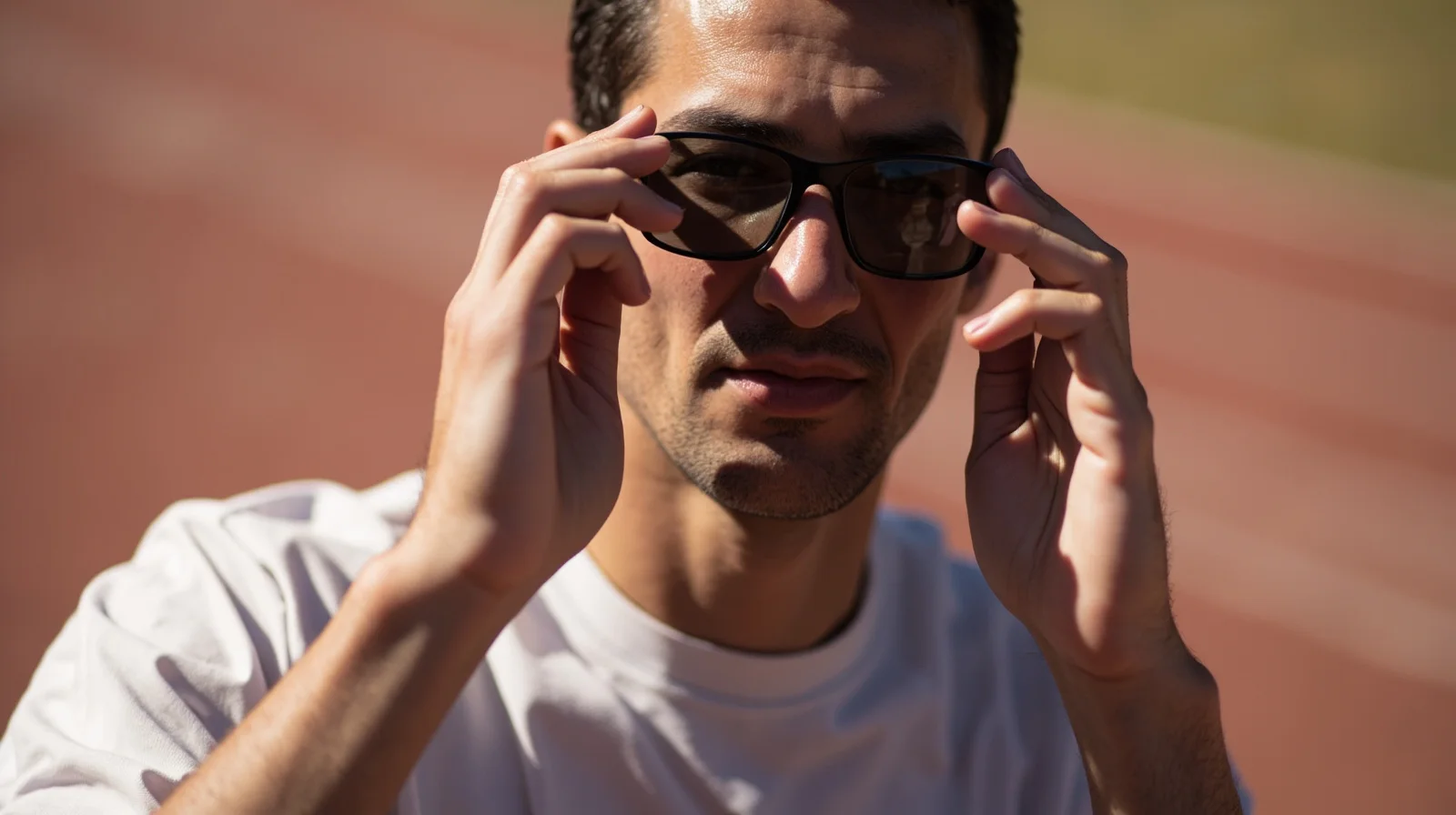
That post-run footage follows the same honest workflow as the wider category: authentic eye-line clips for the runner and the brand feed, transferred and edited in the companion application, with the general creator workflow covered in the creator POV content guide. Camera glasses complement a phone or action camera; they are not marketed as broadcast replacements.
For running brands
Audio core plus camera hero: planning a private-label running line
Running brands rarely succeed with one connected SKU. The market divides between content-led athletes — ambassadors, run creators, race-story makers — and the far larger audience that wants cues, calls and music and never thinks about footage. A tiered range answers both while presenting one visual identity.
The natural core is an audio-first platform: the E13 anchors a premium open-ear position, while the K01 carries the same capability into a value-oriented sport line with the brand’s logo, packaging and pairing-name identity. The V03-T5 camera platform tops the range as the content and event hero. The tier logic, and the trade-offs between capture and audio programs, are laid out on the platform comparison.
Shared frame language, weight-aware colorways, cases and companion experience make the tiers read as one family at the running store, expo and online. When a reference platform is not enough — a specific grip zone, lens shape or women’s-specific fit — custom geometry is developed through an ODM program following an EVT/DVT/PVT-style engineering cycle, with branding and race-channel packaging handled through customization.
The commercial audience for this extension is broad. Running-shoe and apparel brands plan it alongside heart-rate monitors and bike computers in the sport-electronics assortment, the case made jointly on the sports and cycling brands solution and the consumer-electronics brands solution. Certification and documentation are aligned to destination markets and confirmed per program during quotation.
Building the program
From evaluation samples to a race-ready branded line
The strongest running programs validate fit, audio and the long-session power profile on real roads before tooling decisions. The standard sequence with brand partners runs as follows.
- Scope the runner. Road, marathon or both; coaching cues, calls, music or capture as the lead story; typical session duration and climate.
- Select platforms. Audio-first E13 or K01 core, camera-first V03-T5 hero, or a two-tier range; sport tint and lens program chosen for the training environment.
- Fit and impact review. Weight distribution, grip under sweat, cap compatibility and insert needs evaluated on reference samples by actual runners.
- Validate the honest details. Runtime matched to the audio-led profile, protection validated under the brand’s quality process, destination-market documentation aligned.
- Brand and scale. Private-label identity and expo-ready packaging, or ODM tooling for dedicated geometry; volumes and lead time confirmed per program.
Start through the samples process so product and quality teams can judge bounce, acoustics and optics on their own training loops, review volume tiers on the MOQ page, and turn the brief into a configuration with request a quote. Runners get eyewear that does its ordinary job better and quietly adds cues and content; brands get a tiered, honest line that earns its place by the marathon distance.
Buying considerations
What to put in a road-running eyewear brief
Runner and sessions
Road, marathon or both; session durations, climate, and whether cues or capture lead the story.
Impact fit
Balanced light frames with sweat grip at nose and temples, validated in real run trials.
Cap compatibility
Slim temples that sit under race caps and visors without lifting or pressure points.
Optics
Sport tints and lens finishes for hard road light, with optical quality checked at inspection gates.
Power profile
An audio-led long-session profile with runtime stated on the program datasheet.
Range tiers
Audio-first core plus optional camera hero, sharing identity, packaging and app experience.
Browse the application
More running & outdoor guides
Keep exploring
Related reading
FAQ
Frequently asked questions
Do the glasses measure pace, distance or heart rate?
Will they bounce or slip during a marathon?
How long does the battery last on a long run?
Can runners capture race and finish-line footage?
What about MOQ, certification and weights?
Build this use case into a private-label program
Tell us the workflow, environment and volume. Engineering scopes the platform, optics, power and documentation per program.