
Trails change the brief
On the trail, hearing the environment is a survival feature
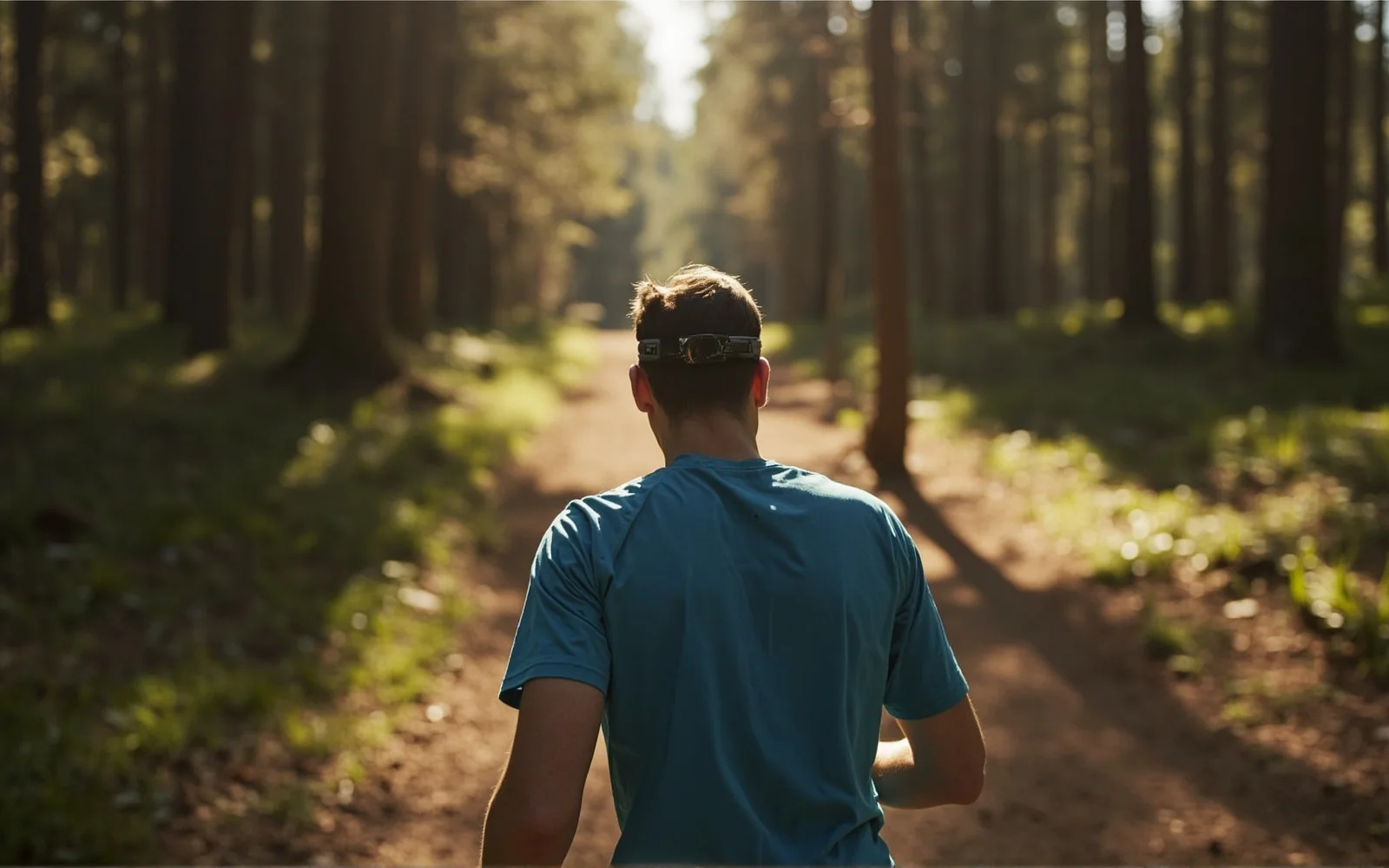
Trail running rewrites the priorities that apply on the road. Distances are long, surfaces are unforgiving, light changes by the minute under canopy, and the environment itself — mountain bikes on blind corners, stream crossings, wildlife, other runners — carries information a sealed ear cannot afford to lose. Trail runners consistently choose open ears for exactly this reason.
Eyewear is already mandatory kit for most of them: dust, gravel spray, branches and ultraviolet glare make glasses part of the sport rather than an accessory. Smart trail glasses add two capabilities to that protection. Open-ear speakers carry coaching cues, spoken route prompts and calls while leaving the mountain audible, and an optional camera captures descents and ridgelines from the runner’s actual line of sight.
The safety case is shared with the wider backcountry audience — hikers, fastpackers and mountain travelers — and is developed in the hiking and outdoor safety guide. The category overview sits on the running and outdoor pillar.
Here too the boundary is explicit. CYNRIN manufactures the eyewear platform. Route guidance, tracking and any SOS or emergency service belong to the companion application and the runner’s phone; there is no projected HUD or in-vision map — prompts are spoken or glanceable — and no medical-grade biometric claim. Ruggedness, protection and runtime are confirmed per program and stated on the program datasheet.
Built for dirt
Sweat, dust, rain and grip on technical terrain
A trail frame is punished in ways a road frame is not: grit thrown up by a descending shoe, rain followed by dust, hours of climbing sweat, and constant head movement as the runner reads the trail three steps ahead. Specification starts with surviving that.
- Wraparound coverage. Lens shape and frame wrap shield against side glare, wind and trail dust while preserving peripheral vision on technical foot placement.
- Grip when wet and muddy. Nose and temple contact materials hold through rain and sweat without clamping; grip behavior is reviewed in fit trials rather than promised in a render.
- Sealing and ports. Materials, sealing and port layouts are selected for wet, dusty sessions, with exact protection levels confirmed per program and stated on the datasheet rather than implied by a waterfall photo.
- Cap and pack compatibility. Slim temples work under a trail cap and survive repeated on-off transitions at aid stations and viewpoints.
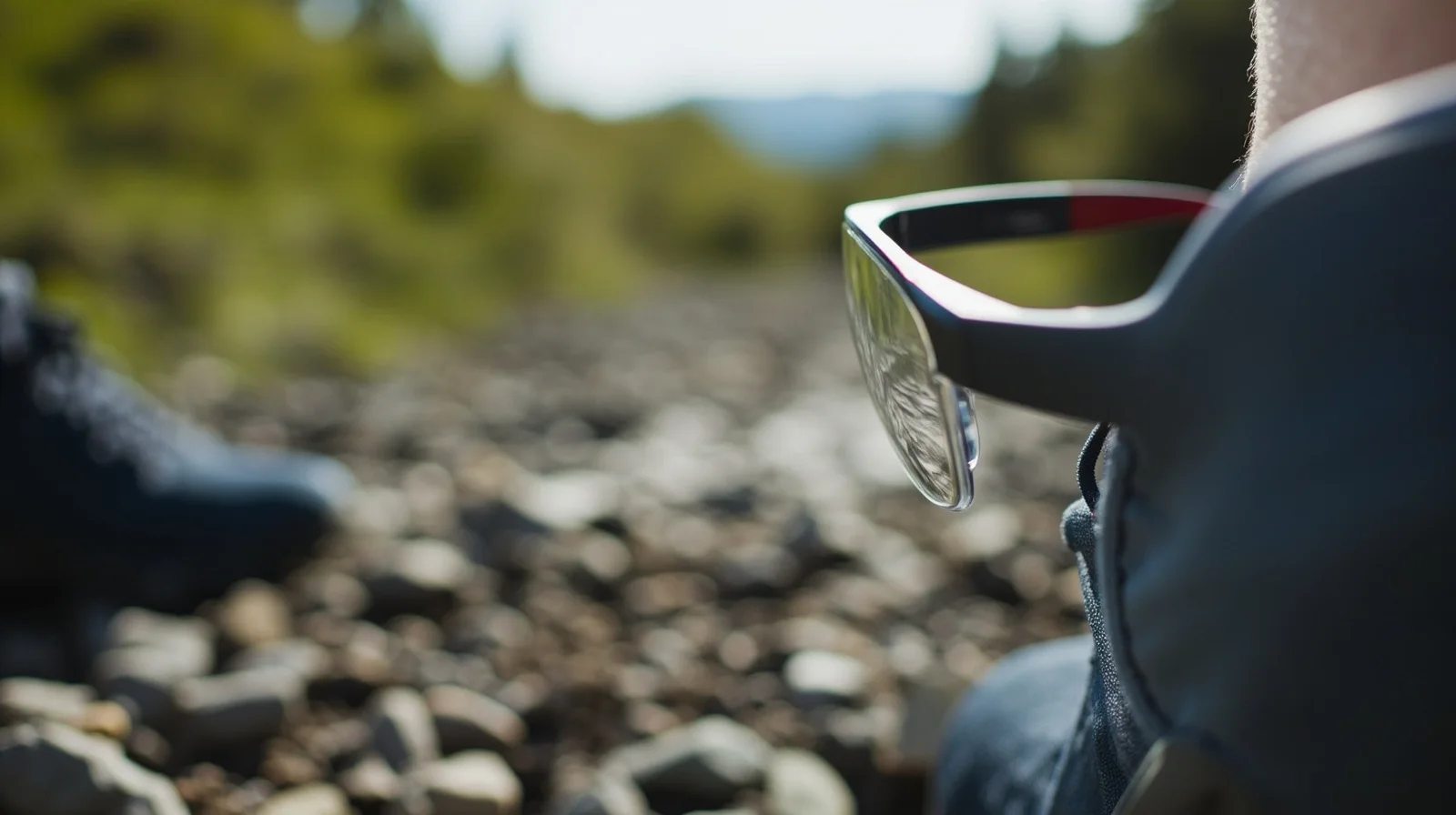
We do not market trail eyewear as dive-rated or impact-rated safety equipment. Where a brand sells into genuinely wet, cold or abrasive environments, the protection requirement is stated up front, validated under the brand’s quality process and reflected on the program datasheet — the same discipline described for road programs on the sports and cycling brands solution.
Natural light
Canopy, scree and summit glare: the lens does the primary job
No electronic feature matters if the optics fail on a descent. Trail light is the most variable in running: dark forest switchbacks give way to exposed scree in direct sun, and a long ridge can disappear into fog within minutes.
Tints for changing conditions
Sport tints, mirror finishes and contrast-enhancing lens options are defined per program for the terrain the brand serves — wooded, alpine or desert — with optical-quality requirements checked at inspection gates. Distortion at the lens edge is a tripping hazard on technical ground, which is why optical clarity is specified before any electronics are discussed. Interchangeable or photochromic lens strategies are program choices with honest transition expectations.
Eyes on the trail
Spoken cues support the way trail runners already move: reading the ground continuously. A pace or turn prompt arrives in the ear instead of requiring a stop to study a phone on a muddy switchback — the same eyes-up principle behind general coaching and performance eyewear programs.
What the lenses are not is a display. Nothing is projected into the runner’s field of view; route information is spoken or shown as a simple glanceable cue from the navigation application, and the eyewear never replaces a map, compass or dedicated GPS watch in remote terrain.
Routes and capture
Staying found, and recording the line worth keeping
Trail runners ask two connected questions: can I follow a route I do not know, and can I keep the moments worth remembering? Both are answered honestly at the application layer, with eyewear as the sensor and the screen-free interface.
- Spoken route prompts. The navigation application delivers turn and course prompts through open-ear audio, letting runners follow an event course or unfamiliar loop while keeping eyes on the terrain.
- Ambient sound preserved. Stream noise, approaching mountain bikes, whistles and running partners stay audible — a sealed bud removes exactly the cues that prevent collisions and crossings gone wrong.
- Calls at the trailhead. Logistics and check-in calls are answered hands-free, useful when hands are wet, muddy or full of poles.
- First-person capture. On camera tiers, a descent or summit view is recorded from the runner’s eye line with a simple control, both hands free for poles and scrambling.
The emergency question deserves a straight answer. Fall detection, SOS and live tracking are valuable in the backcountry, and companion applications may offer them — but they are app and phone services, not functions CYNRIN builds or certifies into the eyewear, and no program should market the glasses as a safety beacon. Runners still carry the navigation, communication and protection kit the environment demands, a point the outdoor safety guide makes in full.
For outdoor brands
Audio-first volume plus rugged camera hero
Outdoor brands serve two audiences with one brand promise. Most trail runners want protection, open-ear cues and calls on ordinary training loops; a smaller content-led group — ambassadors, mountain creators, race media teams — wants first-person descents and summit footage. A tiered range covers both without two unrelated products.
The volume tier is audio-first: the E13 for a premium outdoor position or the K01 for a value-oriented sport line, both carrying prompts and calls with full environmental awareness. The hero tier uses the camera-first V03-T5 for event and content programs. The trade-offs are shown side by side on the platform comparison.
Because trail runners overlap heavily with hiking, cycling and ski communities, the line extends naturally from an outdoor brand’s existing packs, poles and helmets assortment; the range-planning case appears on both the sports and cycling brands solution and the consumer-electronics brands solution. Dedicated wrap geometry, grip zones and lens shapes are developed through an ODM program with an EVT/DVT/PVT cycle, with branding through customization.
Destination-market documentation, protection validation and runtime figures are confirmed per program during quotation, and the capture workflow — deliberate clips, app-side editing, public-space etiquette — follows the principles in the filming and privacy guide.
Building the program
From muddy samples to a retail-ready trail line
Credible trail programs are validated on the terrain customers actually run, not only in a lab. The sequence with outdoor-brand partners follows five steps.
- Scope the environment. Wooded, alpine or desert trails; typical weather, session length and whether prompts or capture lead the story.
- Select platforms and optics. Audio-first E13/K01 core, V03-T5 camera hero or a two-tier range; wrap and tint programs chosen for the light conditions.
- Trail-fit review. Grip under rain and sweat, cap compatibility, wrap coverage and weight balance evaluated on real descents by real runners.
- Confirm honest claims. Protection levels, runtime and destination-market documentation confirmed per program; SOS and tracking responsibilities left clearly with the application partner.
- Brand and launch. Private-label identity and outdoor-channel packaging, or ODM tooling for dedicated geometry; volumes and lead time confirmed per program.
Begin with the samples process so your team can run the platforms wet, dusty and hard before commitment, review volume tiers on the MOQ page, and start the configuration with request a quote or a conversation through the contact page. The result is trail eyewear that protects and grips first, adds open-ear intelligence second, and never promises protection it cannot prove.
Buying considerations
What to put in a trail-running eyewear brief
Terrain and climate
Wooded, alpine or desert; rain, dust and temperature the frames must actually survive.
Wrap and optics
Side coverage plus tints and finishes for fast-changing natural light, checked at inspection gates.
Wet grip
Nose and temple contact materials that hold through rain and sweat on technical descents.
Open-ear audio
Spoken prompts and calls with bikes, water and partners still clearly audible.
App boundaries
Routing, tracking and any SOS feature scoped with the app partner; never claimed as eyewear hardware.
Range tiers
Audio-first volume tier plus rugged camera hero, sharing identity and outdoor packaging.
Browse the application
More running & outdoor guides
Keep exploring
Related reading
FAQ
Frequently asked questions
Do the glasses show a route map or arrows in the lenses?
Are they rugged and waterproof enough for muddy trails?
Can they detect a fall or send an SOS on a remote trail?
Which platform suits trail running, audio or camera?
How do outdoor brands private-label a trail line?
Build this use case into a private-label program
Tell us the workflow, environment and volume. Engineering scopes the platform, optics, power and documentation per program.