
The coaching gap
Technique is positional, and third-person video misses the position
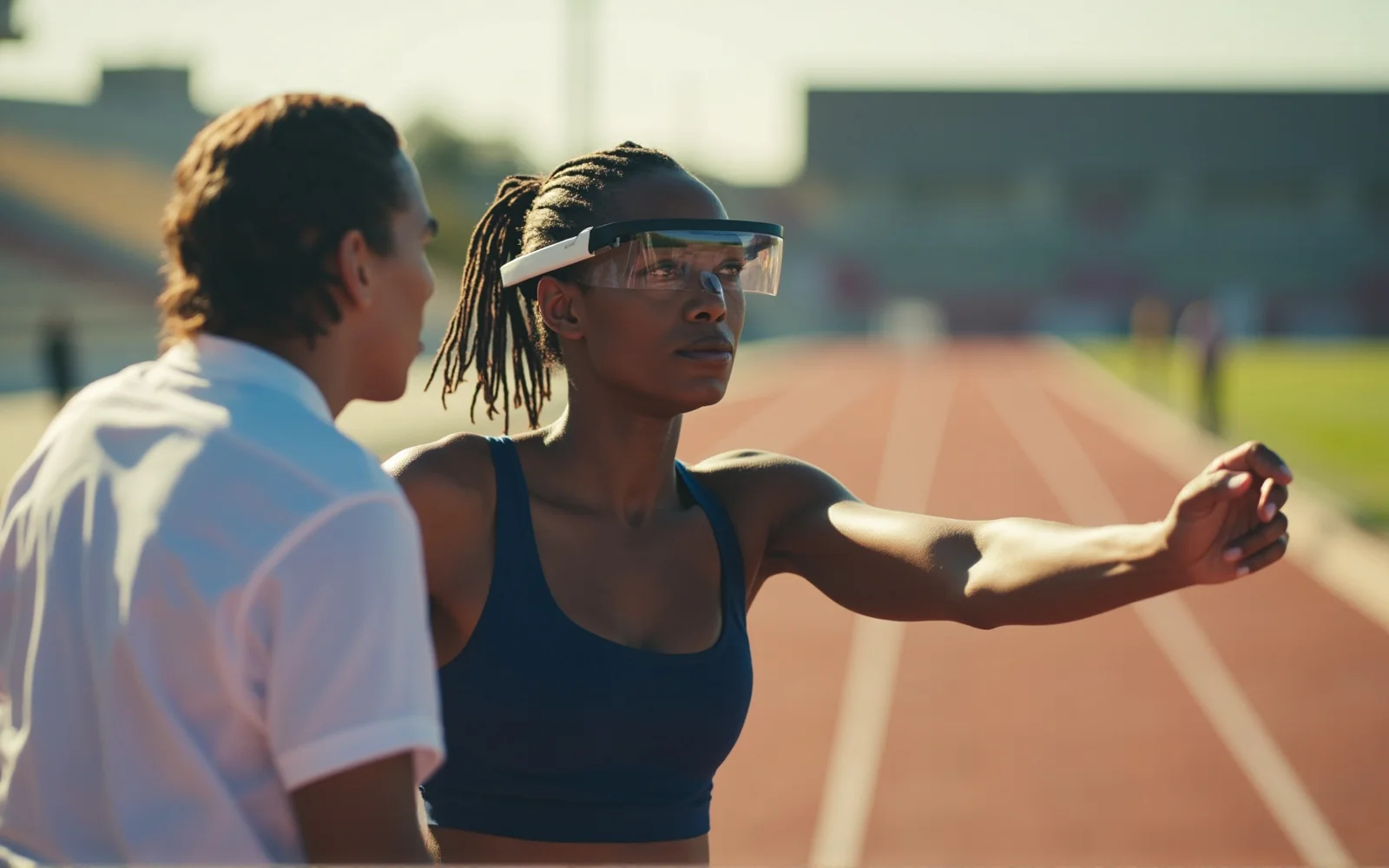
Most technical coaching is built on one scarce resource: the expert’s eye, standing in exactly the right place. A golf coach wants to see hand path and attack angle. A climbing coach wants to read sequence, body position and where the climber’s attention lands. Court and field coaches want passing lanes and decision timing. The angle that teaches all of this best is the athlete’s own — and it is the angle a coach physically cannot occupy while the athlete moves.
Third-person video helps, but it records a scene rather than a reference frame. A camera on a tripod across the range shows what the swing looks like; it does not show what the player sees, including where attention goes in the moments that define the skill. Athletes also perform differently when they are performing for a camera: posture stiffens, and the repetition is no longer the real repetition.
Head-worn point-of-view capture closes the gap. A small camera on sport eyewear records the drill from the athlete’s eye line, with both hands free and no camera to operate, aim or hold. The coach then reviews footage in which hand position, target selection and approach geometry match the lived attempt. When the same glasses deliver open-ear audio, coaching cues arrive without blocking the environmental sound the athlete must also hear.
Honesty about scope protects the buyer. CYNRIN supplies the capture and audio hardware. Biomechanical measurement, swing or stroke analytics, jump load and any accuracy or performance claims come from the specialist applications coaches already use; the glasses are a high-quality input and cueing endpoint for those tools, not a certified measurement instrument.
How the loop works
Capture the rep, review the reference, cue the next set
Mature use of POV in coaching is a tight feedback loop, and the hardware supports each step without changing how the session feels.
- Perform and capture. The athlete wears the glasses through normal reps. Recording starts and stops without interrupting the drill, so the repetition stays authentic.
- Review side by side. Coach and athlete watch the first-person attempt together — often immediately, on a phone — comparing it against a reference recording of the expert.
- Cue the change. One or two specific adjustments carry into the next set, delivered by voice in person or through open-ear audio during the activity.
- Re-record and compare. The next recorded attempt shows whether the cue landed, building a dated record of technique change over the season.
Two capture modes tend to matter. Expert reference clips record a coach or senior athlete performing the skill correctly, once, for a reusable library. Athlete attempts record the learner’s own first-person repetitions for review. The pedagogical pattern — reference, rehearse, re-record, debrief — is the same one used in procedural education, and the instructional-capture cousin of this use case is explored in the healthcare surgical training POV guide.
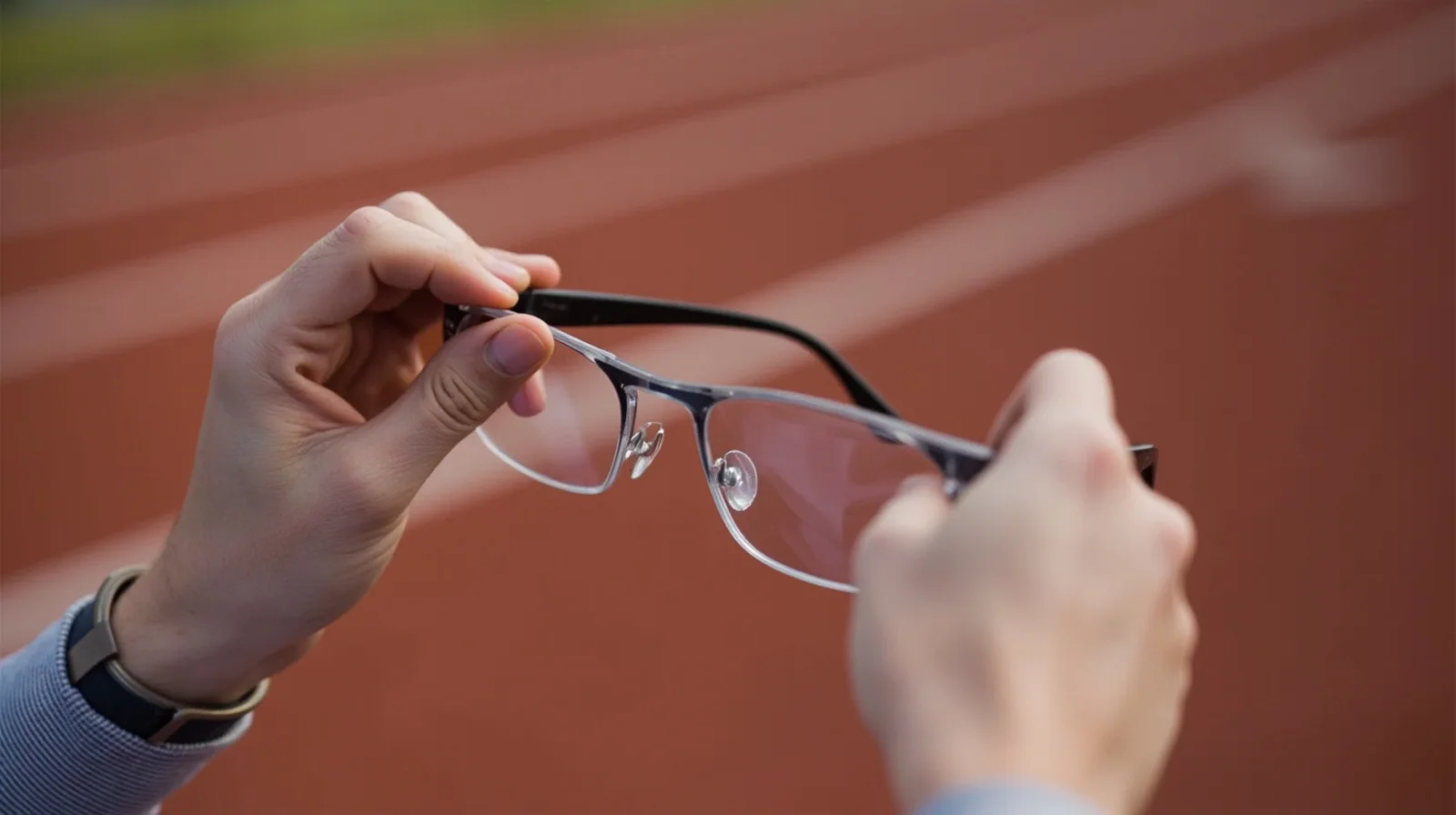
For remote coaching, the loop extends over distance. A remote specialist joins a live first-person feed or receives recorded clips, sees exactly what the on-site athlete sees, and returns voice or marked-up feedback. That is the same see-what-I-see model used for remote expert work, applied to sport.
Where it is used
Sports where eye-line capture changes the conversation
The strongest sports share a dependence on hands, gaze and body position — the details that third-person footage flattens.
Golf and racket sports
First-person capture preserves hand path, club or racket orientation and the visual sequence from address to target. Coaches build reference libraries of correct swings and compare them against dated athlete attempts, with open-ear cues usable during practice rounds where situational hearing still matters.
Climbing and action sports
On a wall or a rope, the climber’s footage reveals route reading, hold selection and rest positions that a ground-level camera cannot reconstruct. Hands stay completely free — essential where they are occupied by the sport itself — and open-ear audio keeps partner calls and environmental sound audible.
Court and field technique
Passing, catching, defensive positioning and decision-making under pressure are captured from the player’s view, showing where the eyes go before the move. Team programs link naturally to the wider content and ambassador workflows on team & event POV content.
Remote and academy coaching
A traveling athlete or a regional academy sends first-person reps to a specialist coach elsewhere. The footage carries more information than a written description, and the coach’s annotated feedback returns asynchronously or live.
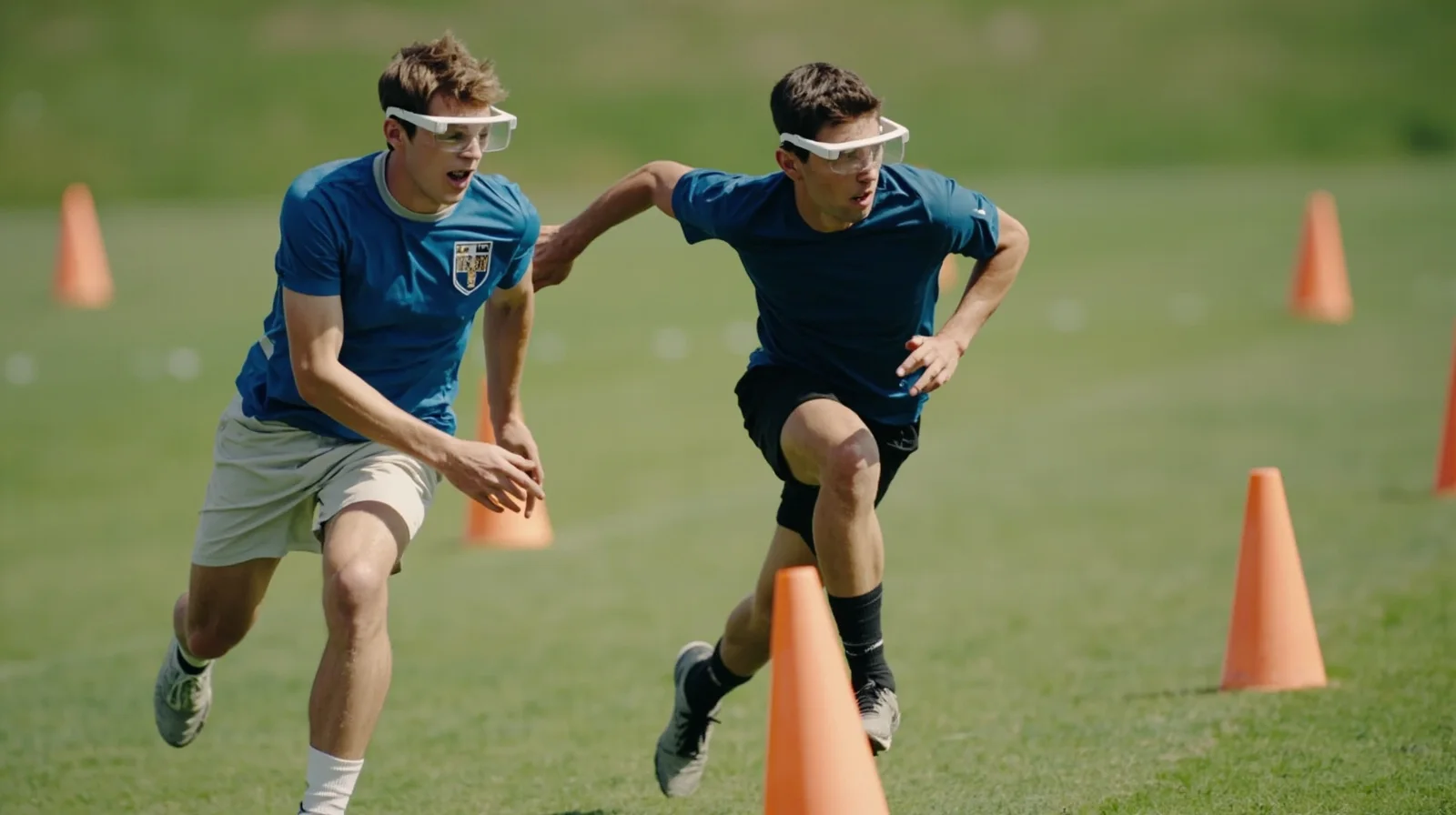
Endurance coaching has its own pillars: cadence, visibility and safety cues for running are covered in running safety & visibility, and on-bike positioning in road & gravel cycling. This guide stays with technique-led, hands-busy sports.
Open-ear cueing
Coaching audio without sealing off the field
The audio half of the platform deserves separate attention, because it changes how cues are delivered. Sealed earbuds isolate the athlete: coaching audio arrives at the cost of hearing teammates, instructions, traffic, weather and the ambient feedback that skilled sport depends on. Open-ear speakers present voice without blocking the ear canal, so a cue and the environment arrive together.
- In-session cues. A coach’s voice or a pre-set timing cue reaches the athlete during the drill while calls and surroundings stay audible.
- Group sessions. Several athletes on a court or wall can receive cues without anyone removing ear protection or handling a phone.
- Narration for the record. The athlete or coach can talk naturally while recording, and the explanation stays attached to the clip.
- Warm-up and recovery. Music and pacing audio outside the intense work interval, again without occlusion.
The acoustic principle is the same one behind everyday open-ear use; the consumer comparison is laid out in open-ear vs earbuds. For outdoor safety — hearing terrain, weather and other people — it becomes a core feature rather than a comfort one, which the hiking & outdoor safety guide develops.
What the audio does not do is measure performance. Tempo, force, heart-rate and motion analytics are the domain of the coach’s paired sensors and applications; the eyewear carries cues and captures perspective, and honest programs position it that way.
Hardware for sessions
Light, secure and built for sweat
A coaching device is judged in motion. Frames are kept light and balanced because a long technical session involves continuous head movement, and a pair that slips or presses stops being worn. Secure temple grip and nose-pad options are specified for the sport — rapid direction change, looking down at a ball, looking up at a hold — and fit over prescription eyewear can be reviewed where athletes need it.
The camera is selected for a stable, usable first-person view in the real lighting of the sport: the harsh contrast of an outdoor range, the flat light of an indoor court. Sport tints and optical-grade lenses do the everyday eyewear job first; the electronics are added on top, never instead, because distorted or fatiguing lenses undermine both performance and the product. Sweat and weather handling — temple materials, sealing and port placement — is scoped and validated per program under the brand’s quality process rather than asserted with generic ratings.
Power is matched to realistic session profiles — short, frequent capture with standby between sets rather than continuous filming — and stated on the program datasheet. Camera-first programs build on the V03-T5 platform; audio-first programs for cueing without capture use the E13 or value-tier K01. Academies running shared fleets can also specify the cleanable, resettable model described for shared training environments: numbered cases, reset between athletes and replaceable contact parts.
Custom frame geometry, sport temple profiles and accessory tooling are available through ODM programs, with branding, cases and quick-start material handled through customization. Destination-market documentation and inspection expectations follow the standard quality-control process.
Building the program
A purchasing path for coaches, academies and brands
Buyers in this space are typically sport brands extending an equipment or apparel range, coaching franchises and academies equipping their staff, and specialist training-app companies that need dependable eyewear to pair with their analytics. A responsible program follows a familiar sequence.
- Scope the sport and workflow. Define the skill, the typical session, who wears the device, and whether capture, cueing or both drive the purchase.
- Draw the analytics boundary. Confirm which measurements belong to the coach’s specialist apps so marketing never implies the eyewear itself certifies performance.
- Select and tune the platform. Camera-first or audio-first, sport optics, secure fit, sweat handling and the real session power profile.
- Define fleet and branding. Single-athlete retail units or academy-shared cases, with identity, packaging and reset behavior carrying the brand.
- Pilot then scale. Reference samples support a coaching trial before volume commitment; MOQ, lead times and certification packs are confirmed per program.
The result is a coaching tool that does a specific job extremely well — preserving the athlete’s perspective and delivering cues without isolation — while leaving measurement and claims to the specialists. Start through request a quote, review the samples process, or explore the broader sports-brand solution.
Buying considerations
What to specify in a coaching eyewear brief
Sport and skill
The technique being coached and its typical session length, lighting and head movement.
Capture versus cueing
First-person video review, open-ear audio cues, or both — drives the platform choice.
Analytics boundary
Which measurements belong to paired third-party apps, stated plainly to athletes and buyers.
Secure, light fit
Temple grip, nose-pad options and prescription compatibility for the specific sport.
Sweat and fleet use
Materials and sealing for sweat, plus reset and contact parts for shared academies.
Reference library
How expert clips are recorded, stored and reused by the coaching organization.
Browse the application
More sports & outdoor guides
Keep exploring
Related reading
FAQ
Frequently asked questions
Do the glasses measure swing speed, jump load or other performance metrics?
Can a remote coach watch and comment on a live session?
Will the glasses stay on during dynamic, hands-busy sport?
Can an academy share glasses between athletes?
Build this use case into a private-label program
Tell us the workflow, environment and volume. Engineering scopes the platform, optics, power and documentation per program.