
After sales support preventing returns has a conclusion that is slightly uncomfortable for a support team to publish: a return in this category is usually a broken expectation, and the expectation is set before the product arrives. The listing photograph, the description, the demonstration and one sentence from a salesperson in a shop all shape what the customer expects, and by the time the box is opened the outcome is largely determined. After-sales is where a broken expectation becomes a refund, and the cheaper place to fix it is upstream.
That is not an argument for soft claims. It is an argument for claims that match the product, because a claim that matches produces a customer who is satisfied, and a claim that overreaches produces a customer who is disappointed and says so publicly.
For a buyer, the practical version of this is a question to put to the supplier before the listing is written rather than after the first complaint: which of the claims you intend to make can this model actually support? The answer, for most of our catalogue, is narrower than a marketing team would like, and that narrowness is a gift rather than a constraint — a listing that says less returns less, and a listing that says less is easier to keep true as the product line evolves.

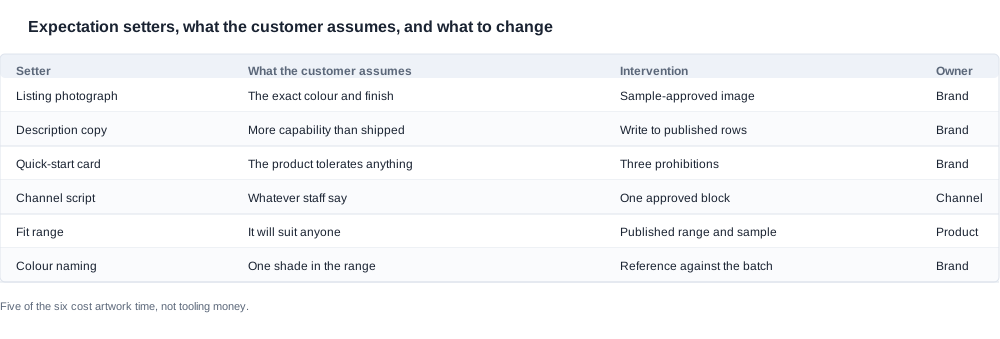
After sales support preventing returns: the six places the expectation is set
Each of the six is set before the unit is opened, and each can be changed without touching the product at all. That is the practical definition of prevention: an intervention that costs no tooling and no firmware work.
The product listing. The photograph shows a colour, a finish and a proportion the customer's unit may not match exactly. A physical sample approved for the listing, rather than a rendering or a photograph of a pre-production unit, removes most of this. A shade difference between the batch and the photography is one of the most common and most avoidable return reasons in this category, and it is entirely a sampling decision.
The claims in the copy. Where the wording implies more than the product does — a runtime quoted without its condition, an ingress rating paraphrased as waterproof, an AI feature described as if it ran on the device — the customer arrives with an expectation the product cannot meet. The prevention is unglamorous: write the copy to the published specification rows, not to the competitor's listing.
The instructions. A customer who charges a wet device, submerges the product or leaves it on a charger under bedding has used it outside the conditions its cells assume. Three lines in the quick-start card prevent most of these, and the cost of writing them is one page of artwork.
The channel description. Retail staff describe the product in their own words, and those words become the customer's expectation. One approved description used by every channel is worth more than a training pack nobody reads. This is the point at which most prevention programmes fail, because it is the only setter that lives outside the brand's control.
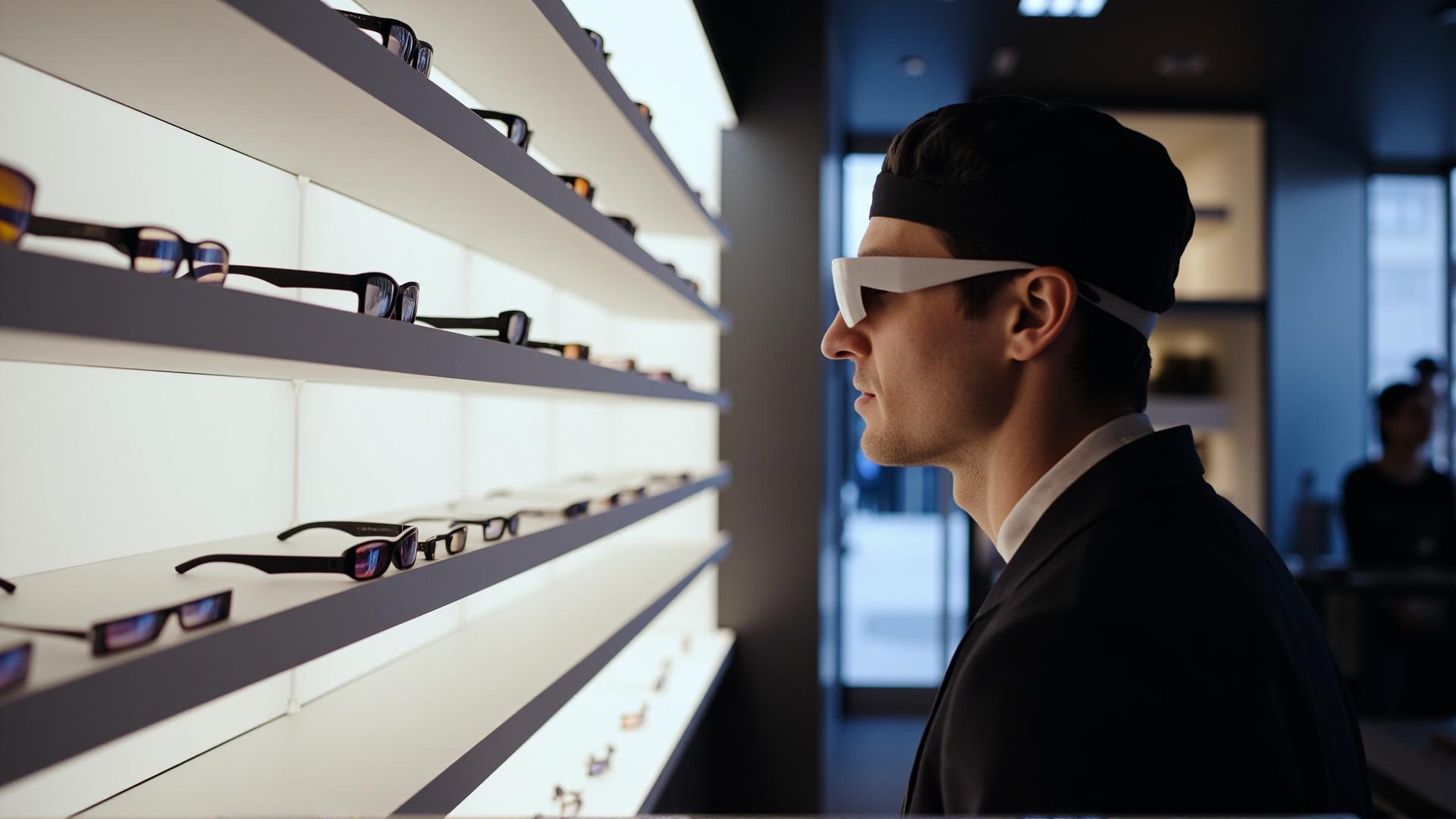
Suitability. This is the one buyers most often forget and in the eyewear and children's categories it is among the most common return reasons. A frame that does not suit the customer is returned whether or not the electronics work perfectly. A published size range, plus a trial on the physical sample before purchase, is the prevention.
The colour. Expectation rather than specification, and it sits in the same row as the photography for a reason: the physical sample and the approved colour reference are the same intervention.

Reason codes and the first-week read
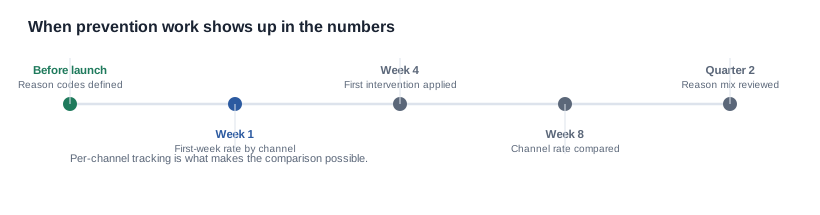
Prevention cannot be managed without a number, and a raw return rate is not a number that can be managed. Two things turn it into a diagnosis, and both have to exist before launch.
Reason codes, agreed before the first unit ships. So that "does not suit", "not as described", "different from the demonstration" and "stopped working" are four different categories rather than a single "return" line. The cost is one page of definition. The absence of that page is why most return data in this category is unreadable: everything lands in one bucket, the bucket is large, and nobody can act on it.
A first-week read by channel and by SKU. Because the channel that returns most is usually the channel whose description drifted, and the SKU that returns most is usually the SKU whose listing photograph was a pre-production unit. Both are diagnosable in week one if the codes exist, and both are undetectable in month six if they do not.
Two practical notes on reading the data. First, the first-week window is short enough that a single bad week can be noise and long enough that a systematic description problem is visible, so read it weekly and act on the trend rather than on any single week. Second, keep the codes stable once defined. Renaming a category because its volume was inconvenient makes every earlier week incomparable, and a programme that renames codes annually produces a chart nobody trusts and therefore no action.
A third note applies to multi-market programmes specifically. Where the same model sells through different markets, the reason codes should be shared and the categories translated rather than rewritten, because a market-specific category set produces two datasets that cannot be compared and therefore two conclusions. The owner assigned to a code also has to be the owner who can actually change the thing — which in practice means the market team for a description problem and the factory for a component problem.
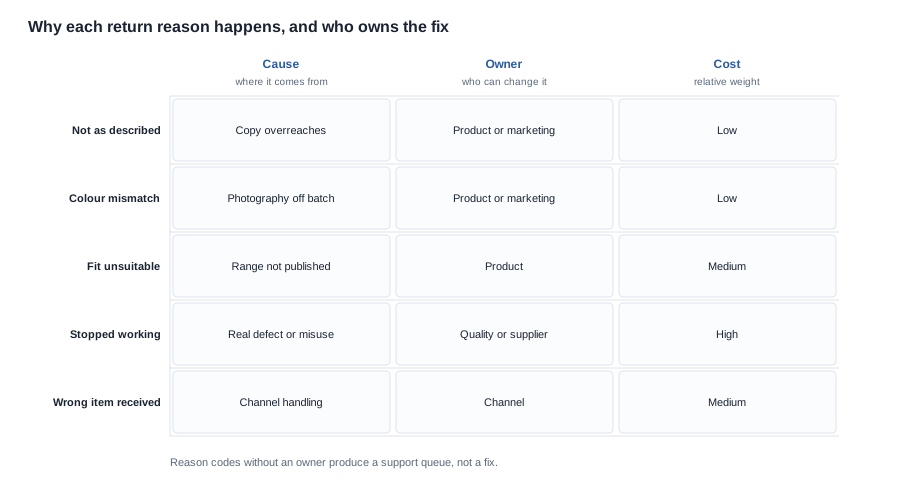
The ownership column matters more than the reason column. A reason whose owner is the product team cannot be fixed by the support team, and a support team that absorbs every reason will spend its budget on problems it cannot solve. Assigning each reason code to a single owner before launch is what keeps the prevention work with the people who can do it, and it is also what stops the same reason being investigated twice by two teams that each assume the other is handling it.
The denominator is the other thing worth settling before launch, and it is the one that decides whether any of this is comparable over time. A return rate is only meaningful against a stated base: units sold, units received by the customer, or units still in the return window. The three give different numbers, and programmes that switch between them look like they are improving when nothing has changed. Pick one, write it into the reason-code sheet, and keep it. Where a channel returns through a marketplace rather than through your own process, note that the marketplace's window and its reason categories are the ones being counted, and keep a separate line for units that never came back to you at all — in a category with a long decision cycle that number is not small, and ignoring it makes every rate optimistic.
What to change in the product description and the instructions
Three concrete changes do most of the work, and all three are cheap enough to approve in a single meeting.
Write every performance claim with its condition. A runtime figure without a stated screen brightness, a stated volume level or a stated network condition is not a claim, it is a comparison invitation. Where a figure is not published on your own specification sheet, it does not go in the copy — and in our catalogue most figures are Not published, so the copy for most models has to be written around what we can actually state. That constraint produces better listing copy than most agencies write when they are left to choose.
Replace absolute words with testable ones. "Waterproof" is untestable and produces a return. "Rated to a stated ingress level under a stated test" is testable and produces a support question at worst. The distinction costs a few characters and removes one of the most reliable return generators in this product category.
Put the three prohibitions on the first page. No charging while wet, no immersion beyond the stated rating, no use on a charger under bedding or in a closed space. Every one of these is a foreseeable misuse that ends as a return and is never a warranty claim, because no warranty covers it.
A fourth change is worth making even though it is less obviously about returns: state what is not included. A line saying the product is not a medical device, is not intended for continuous use, or does not include a specific function is more effective than a paragraph of exclusions elsewhere in the copy, because the exclusions that are read are the ones written as sentences. In this product category, a function that some models have and others do not is the most common source of a complaint that is really a mismatch — a customer who expected the camera function on a model that does not carry it. Declaring the model differences in the listing removes that whole category.
There is an ordering point worth respecting here. Copy changes should be applied in the order of reversibility: first the things that cost nothing and can be changed tomorrow, then the things that need a photograph to be retaken, then the things that need a new sample or a packaging print run. Programmes that attempt the third group first spend their credibility on a slow change and lose momentum before the cheap ones are banked. The reason codes will tell you which order is right for your product, but they will not tell you until they exist.

The channel question buyers forget
The channel is the setter nobody audits, and it is frequently the largest one. Three things make it manageable.
One approved description, used by every channel, including marketplaces, distributors and retail staff. Where a partner needs to write their own words, give them the approved sentences as a block rather than as a specification they have to interpret.
A physical sample in every location that sells the product. A staff member who has held the unit describes the weight, the proportion and the size in a way that no copy does. This is also the cheapest way to reduce the colour mismatch problem, because the staff member will describe the actual batch in front of them.
There is a variant of this worth considering for larger programmes: a small number of reference units, kept at the brand, that the channel can borrow for a photography session or a training morning. It removes the argument about who pays for sample units by making them a shared asset, and it gives the channel something better than a catalogue page to show. The cost is storage and a replacement rule, both of which are trivial next to the volume of expectation drift the arrangement removes.
A feedback route that reaches the brand. Staff know what customers ask before they buy. A one-line question at the counter, or a monthly note from the store, will surface expectation drift months before it shows up as a return rate.
The trade-off is honest: this costs channel management attention and sometimes a sample budget, and it is the part of a prevention programme that most often gets cut when the programme is under pressure. It is also the part with the shortest payback, because a channel correction applies to every unit that channel subsequently sells, with no rework and no firmware release.
The questions to ask a channel partner before you commit to this are practical rather than strategic. Ask how the unit is described at the counter and in the online listing, and whether both use the approved block. Ask where the physical sample lives and who replaces it when it is damaged. Ask how a customer comment reaches the brand — specifically whether it reaches the person who can change the copy, rather than arriving in a monthly sales report. And ask what the partner believes customers misunderstand most about the product, because that answer is usually more accurate than the brand's own assumption, and it is free. Two of those four questions have red flags when the answers are vague, and both of them are about feedback rather than about the product.

Criteria for judging whether prevention is working
Four criteria, all of them measurable inside a quarter, and none of them requiring a survey programme.
The first-week return rate falls after a specific change, rather than drifting. If a copy correction, a photograph replacement or a sample rollout is followed by a fall in that channel's first-week rate, the intervention worked. Without per-channel tracking you will never know which intervention did it.
The reason mix shifts, not just the total. A falling return rate with a stable reason mix usually means fewer customers bought, not fewer problems. What matters is the share of "not as described" shrinking relative to the rest, because that is the share prevention can actually move.
The same fault does not reappear on a new channel. If a description problem was fixed for one channel and then reappears on the next, the fix was applied to the copy rather than to the process. Prevention that is not written into a process is repeated work.
The cost of the intervention is measured against the returns it prevented. A photography reshoot, a sample rollout and a copy rewrite all have costs that can be stated. If the cost is small and the return rate in that channel fell, the next one is easy to approve. If nobody has ever made that calculation, prevention budgets get cut every year.
Before you commit to a prevention programme, the shortlist question for any supplier is worth asking: does your quotation include anything that helps the channel describe the product accurately, and does your process produce the data that tells you which channel is drifting? Both answers are usually available on request. Neither is usually volunteered.
One caution about all four criteria: they only work if the reason codes were defined before launch. A programme that invents its categories in month six, after looking at whatever came back, will produce a dataset organised around the conclusions it already had. That is the most common way a prevention programme produces confident numbers and no improvement, and it is why the checklist of four criteria above is only worth applying to data that was specified in advance.
The supplier's part in this is often misunderstood. A factory can change the product description only indirectly: by telling you which claims the specification supports, by supplying a sample that matches the batch, and by flagging the model differences that should appear in the listing. What it cannot do is control what a retail partner writes on a shelf. When a supplier offers to write your listing copy as part of a quotation, treat that as useful but check it against your own published specification rows — a copy written by someone who is not accountable for the specification is exactly the mechanism that creates the returns this article is about.
The metrics we publish, and the ones we do not
We should be direct about this, because a buyer evaluating a returns programme needs to know which numbers are measured and which are simply absent.
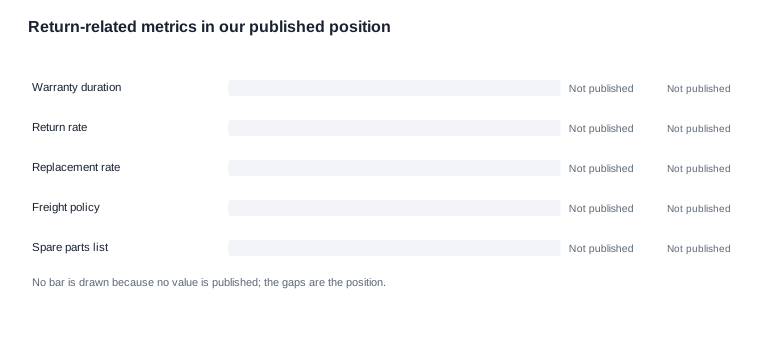
We have not published the return rate. We have not published the returns freight policy. We have not published the replacement rate. We have not published the warranty duration. Each of those is a hole in what we know rather than a stance we have taken, and we would rather say so than publish a rate whose denominator we cannot defend. Nor is our reason-code scheme published, which is the more important gap of the two: a reason-code scheme is only meaningful when it has been applied to real units, and we are not going to describe one before it exists.
Listing copy is bounded by the same gaps. Only one model carries a weight at all — the MT6 at 158 g — and every other weight is Not published. The microphone specification, the video specification, the sensor model and the field of view are Not published. We publish no ingress test report numbers at all. The catalogue text carries no CE, FCC or RoHS reference and no per-model certification row, so any certificate for a model has to be requested in writing; nothing regulatory has been published for the children's models. The designations in the catalogue are not entirely stable. One entry is written "L2 Utral" and carries a note that this is a typographical rendering of "Ultra". A second is written "Utral Pro Max" with nothing published about what it means. The light-responsive and the bone conduction entries carry no designation at all.
What that means for a listing is straightforward: most of the copy has to be written around what we can state, not around what the category usually states. That is a constraint, and it is also the reason our prevention advice leans on the physical sample, the size range and the approved description rather than on richer specification copy.
What we will do is work with you on the reason-code set before the first order, review the approved description against your published specification rows, and tell you which of the six setters we can change, which depend on the channel, and which we cannot evidence. If you want that as a written proposal rather than a conversation, ask for it against a named model and a named channel and we will produce it in the form you need for your own review. The commercial terms sit in standard OEM service scope, and the process that consumes whatever comes back is in returns and RMA.
Related reading
- The returns process that receives it — returns and RMA
- The evidence a claim needs — quality claims
- The parts position that limits it — spare parts
Send the models, the channels and the expected volumes and we will tell you which expectation setters we can change and which we cannot.


