Experienced buyers of consumer electronics eventually meet a strange situation: two factories quote what looks like the same bill of materials — the same applications processor family, the same camera sensor, the same Bluetooth system, the same cell capacity — and the two products behave nothing alike. One runs cool and survives a drop on a tile floor; the other gets warm on a ten-minute recording, creaks when folded, and ships firmware that drains the cell overnight. The BOM spreadsheet promised sameness. The difference is the platform, and platforms are the thing a first-time buyer cannot see on a quotation. This article explains what a smart glasses platform actually is, why it dominates BOM in determining outcomes, and how to evaluate one without access to the factory's engineering server.
The commercial frame for this discussion — where platform choice meets custom development cost and minimums — lives on the OEM & ODM overview and the ODM path; here we stay with engineering substance.
A Platform Is a Reusable Architecture, Not a Model
A product platform is a proven, reusable bundle of mechanical architecture, electronics placement, firmware lineage, validation history and supply relationships from which individual models are derived. A single platform can carry several SKUs — different trims, colors, lens packages — without redesigning the architecture underneath. That reuse is where maturity comes from: problems found and fixed in one model do not return in the next. A "model" is an expression of a platform; a platform is what survives the model.
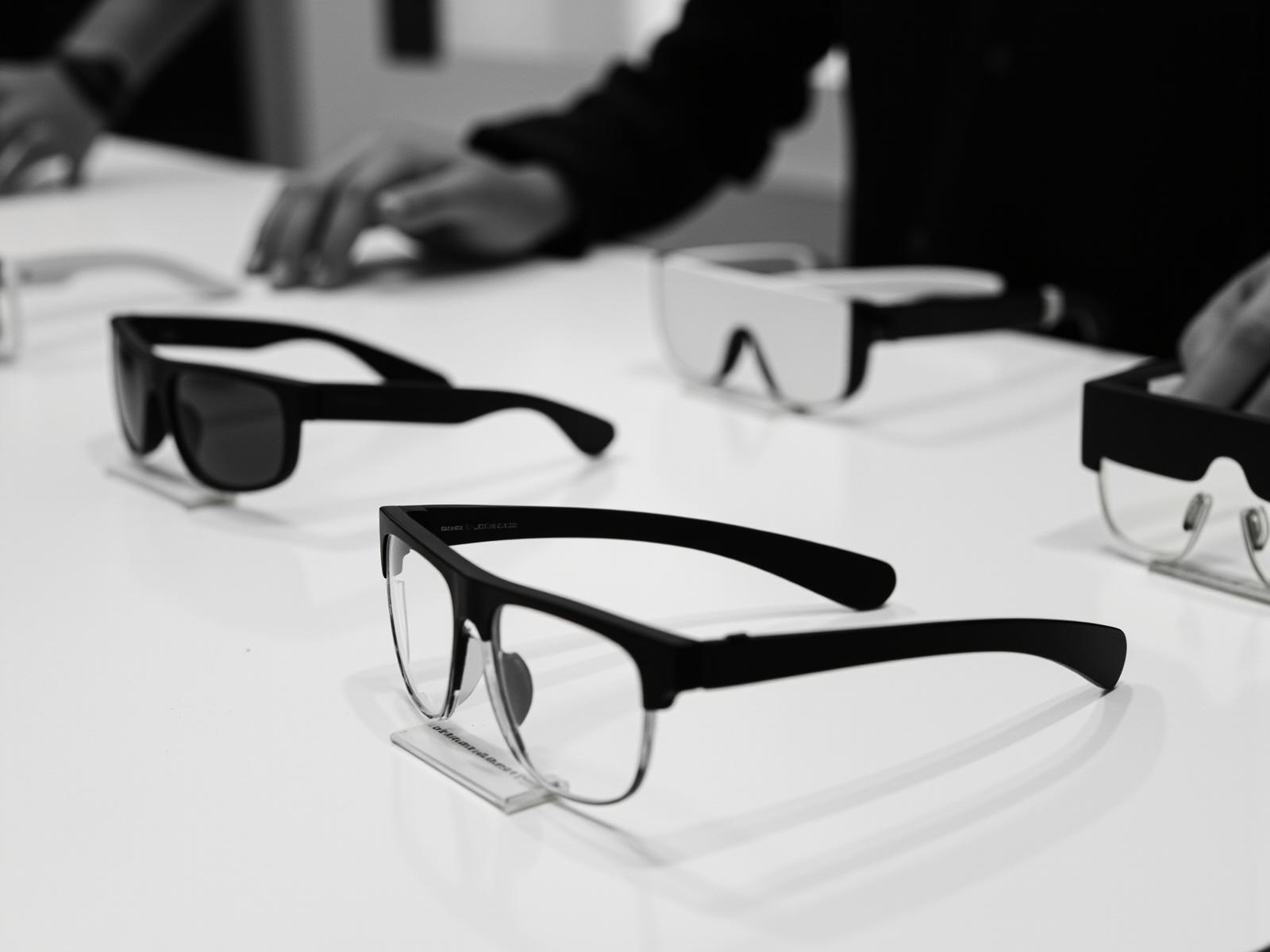
The Systems That Decide Product Fate
Mechanical architecture. Hinge design, temple flex behavior, weight distribution across the nose and ears, and how the electronics survive repeated opening are engineering choices validated over cycles, not line items. A frame that pinches after an hour is an architecture failure no sensor upgrade can fix — the same platform logic behind the fit discussion in the sport glasses checks.
Thermal design. Smart glasses concentrate a processor, radio, camera and charging in a temple with almost no surface area and no fan. Heat leaves through paths that must be designed in: conduction routes, component placement and power envelopes. Camera recording is a sustained workload, and the throttling it can trigger is the thermal story behind the megapixel discussion in 8MP versus 13MP.
Antenna and RF architecture. The human head is a lossy object next to the antenna. Body-worn RF performance depends on placement, tuning and coexistence work done during platform development — a bad antenna cannot be tuned out in production QC.
Acoustic and sealing systems. Speaker chamber geometry and port design set the ceiling on open-ear sound; seal architecture sets the ceiling on water and sweat performance, and it interacts with the acoustics. These systems trade against each other, which is why the IP guide treats sealing as a design-stage target rather than an inspection item.
Firmware lineage and power management. Mature firmware carries solved problems: pairing flows, sleep behavior, battery safety, OTA mechanics. A platform with generations of firmware field data ships fewer surprises than a fresh design with an identical chipset.
Why Platform Maturity Beats BOM Spreadsheets
The value of a mature platform is subtraction: unknowns removed. Validation history means environmental, mechanical and life tests have already failed once on earlier builds and the design was corrected — the test types are catalogued on the testing page. A settled supply chain means fewer substitution events, and substitution is exactly what silently changes a product's characteristics after approval; change control is one of the systems examined on the in-process quality page. A mature platform also concentrates engineering capacity on your differentiation instead of rediscovering first-generation problems, which is the core economic argument for the platform-based approach over a from-scratch build and a major reason custom programs follow the staged calendar on the development process page.
Tooling ownership belongs in the same conversation. When a program pays for custom molds or fixtures, the commercial agreement should say who owns them, who maintains them, and how the derived products are protected from being offered to direct competitors in identical configuration. Tooling is a platform asset precisely because it encodes the geometry the invisible systems depend on; treating it as a generic line item on a quotation misses what it actually protects.

How to Evaluate a Platform From the Buyer Side
Ask for the platform's model history — which shipped products derive from it and when; field and return data, even summarized, on what failed in earlier revisions; design margins on the critical systems (thermal envelope, hinge life, seal rating); the change-control rule for substituting components after golden sample; and the firmware roadmap, including whether your SKU shares maintained lineage or gets a frozen branch. Insist on evidence over assertions: the question script that separates factories with architecture from factories with a parts list is the supplier quality questions. A useful practical test is comparing three catalog families — camera, audio and kids-sport — and asking which platform each derives from and what architecture they share; the public starting point is the three-family comparison. Factories that can answer these questions crisply are describing a platform. Factories that can only recite components are selling a BOM with a frame attached.

Frequently Asked Questions
If the components are the same, why are the products different?
Because components are ingredients. Mechanical structure, thermal paths, antenna placement, acoustic chambers, sealing and firmware determine whether those ingredients perform, and each of those systems is a separate design effort with its own validation history.
How can I judge platform maturity without engineering staff?
Use the proxy questions: model history, earlier-revision failure data, design margins, component change control and the firmware maintenance path. Request summarized test evidence from the reliability catalog and compare how precisely answers arrive — vague reassurance is itself a finding.
Does choosing a mature platform mean the product cannot be differentiated?
No. Differentiation lives on top of the proven architecture: trim, finish, lens packages, accessories, packaging, software features within the platform's margins and, on larger programs, scoped engineering changes. The platform removes baseline risk so development budget buys visible differentiation rather than fixes.
What is the risk of commissioning a completely new platform?
Full tooling and architecture development, longer validation (discovering the thermal, hinge and antenna problems for the first time), higher NRE and a calendar measured in months with genuine uncertainty. It is justified only when the differentiation cannot live on any existing architecture — plan it with the 16-week process map in view.
Why do two BOM-identical quotes sometimes differ sharply in price?
The difference is often what is not on the BOM: validation work, test fixtures, firmware maintenance, quality staffing and margin reserved for engineering support. The cheapest architecture-free quote is usually the one where those costs reappear later as delays, failures or silent component substitutions — see the NRE and tooling guide.
If your program hinges on whether a target platform is genuinely mature — or whether your differentiation needs a new architecture — bring the feature list to request a quote and ask for the platform history and margins review before tooling decisions.