

It depends on the helmet, and the detail that decides it is the fit rather than the product. A pair of glasses under a cycling helmet is one situation; a pair of glasses inside a full-face motorcycle helmet is a completely different one, and the difference is not about the smart glasses at all — it is about whether the glasses have to coexist with a face shield, a brow pad and a retention strap. This page is written for the buyer putting a product into a helmet-wearing channel, and it sets out the four fit questions that decide it.
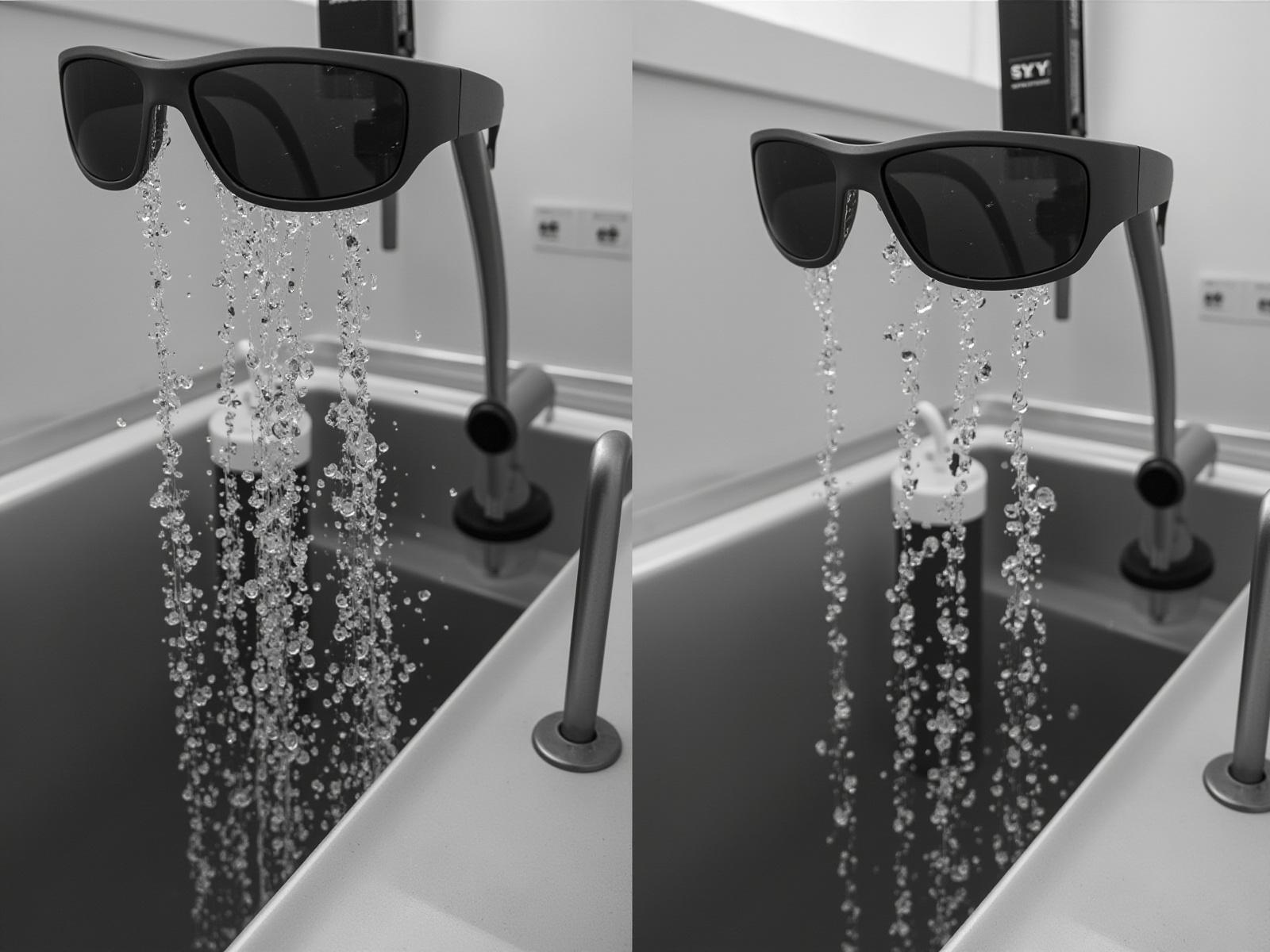
Our published position in the range is worth stating first, because the honest answer has a gap in it. The temple length and the temple curve are not published for any model. The frame weight is published for one model in the entire catalogue — 158 g for the MT6, glasses only, excluding its foldable case — and not published for the rest. The only ingress marking anywhere in the catalogue sits on the V06 and the S7, which are camera models, and it is a catalogue annotation for protection against splashing water from any direction rather than a published test report. And the catalogue carries no microphone specification for any model, no certification row for any model, and no helmet compatibility statement for any model.
So the answer to whether these can be used with a helmet is a fit answer, and the fit data is exactly the data that is not published. That is not a dead end. It means the buyer has to obtain four specific figures in writing, and it means the sample programme carries more weight in this channel than in almost any other channel we write about.
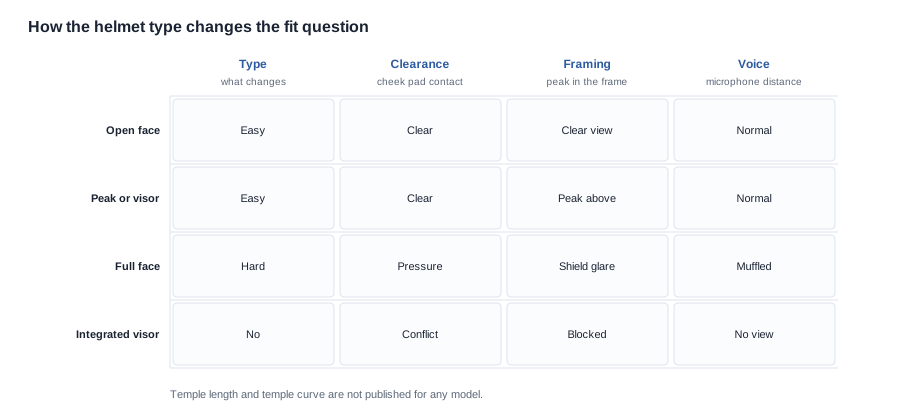
Can I use them with a helmet: the four things that decide it
The four things that decide whether this product goes into a helmet channel are, in order of how much damage they cause when they are wrong: the temple clearance against the helmet's internal padding, the frame weight and where that weight sits, the position of the charging interface relative to the retention strap, and whether the use case is a call, a camera, or both.
Temple clearance comes first because it is the one that produces returns. A temple that is too long presses against the cheek pad of a full-face helmet, and the wearer describes it as discomfort and returns it as a defect, and the retailer sees a quality complaint rather than a fit complaint. The temple length is not published for any model in our range, so the buyer cannot screen on this dimension before ordering a sample — it has to be requested.
Frame weight is second, and the reason it matters is duration rather than magnitude. A frame that is unremarkable in a shop becomes uncomfortable after ninety minutes under a helmet, because the contact area is small and fixed and the head is moving. The catalogue publishes a weight for exactly one model, and a buyer building a helmet channel should measure the weight on the sample rather than assume it, and should measure the configuration they will actually ship rather than a variant.
The charging interface is third, and it is the one that is easy to overlook because it is invisible in a specification table. The retention strap of a cycling helmet typically runs below and behind the ear, and the strap of a motorcycle helmet does something similar. A magnetic charging pad or a Type-C port located on the temple is therefore sitting in exactly the area where a strap passes. That creates three separate problems: a strap pressing on the contacts makes charging intermittent, a strap pressing on a port makes the cable awkward to insert in a moving vehicle, and a customer who cannot charge the product on a ride will describe it as a defective product.
The microphone is fourth, and only if the use case involves calls or voice capture. A temple microphone sits at the end of a wire, some distance from the mouth, and a full-face helmet changes that distance and adds the acoustic effect of a shell around the wearer's head. There is no published microphone specification for any model in the range, so this is a sample-test row rather than a catalogue row, and the test has to be run with the shield in the position the customer will actually use.
These four are the whole question. Everything else about helmet use — sweat, rain, wind, the temperature inside the shell — is either covered by the ingress marking or is a function of the helmet rather than of the product.
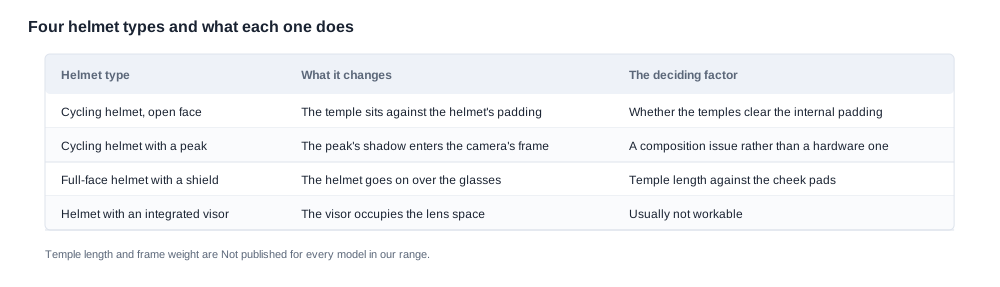
Which helmet types can I put them in, and what each one changes
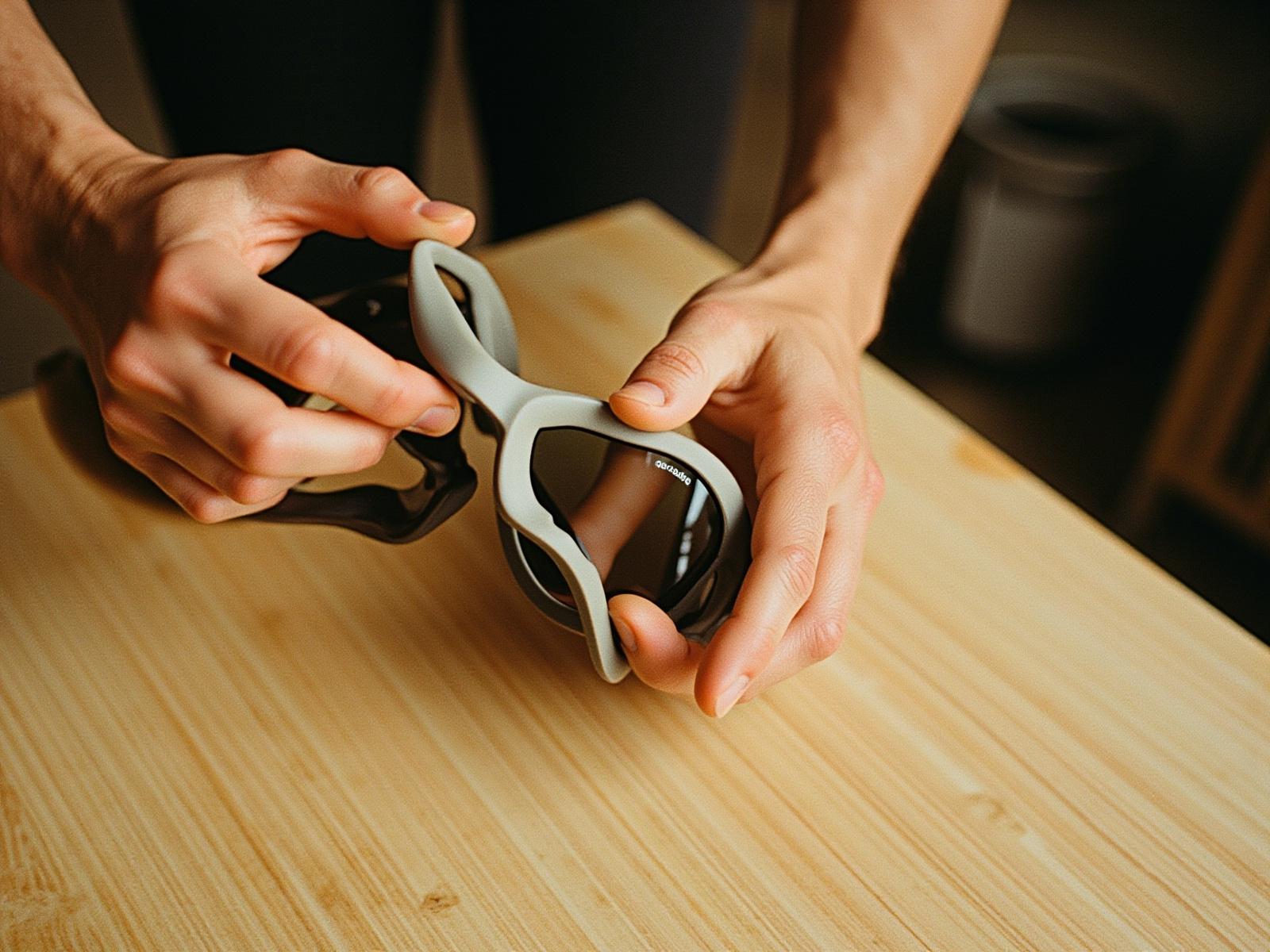
A cycling helmet with an open face is the practical case and the easiest one. The glasses go on normally and the helmet goes over them, and the question becomes whether the temples clear the helmet's internal side padding. They generally do, because a temple is thinner than the padding it sits against, but the position of the temple relative to the head changes when a helmet is on, which changes the pressure. The strap routing question becomes live at this level, because the strap runs below the ear on most open-face designs.
A cycling helmet with a peak or a visor adds nothing mechanical to the fit. What it does is change the light. The peak casts a shadow across the upper part of the field of view, and for a camera product that shadow is recorded, which is a composition problem rather than a hardware problem. A camera buyer who intends to shoot from the saddle has to see the peak in the frame before the product is listed, not after the first complaint about dark footage.
A full-face motorcycle helmet with a face shield is the hardest of the workable cases. The glasses go on first and the helmet goes over them, so the temples have to fit inside the cheek pads and the helmet's internal padding has to accommodate the frame as well as the wearer's head. Most people in most helmets manage this. The failures are specific and predictable: a temple that is too long presses against the cheek pad, and a frame that sits high enough to interfere with the brow pad becomes uncomfortable well inside twenty minutes.
A helmet with an integrated visor or a heads-up display is usually a no, and this is worth stating in the listing rather than discovering it in a return. The visor occupies the space the glasses' lenses would occupy, and the two optical systems interfere with each other. A camera module sitting in front of an active heads-up display has the same problem in a different form. There is no configuration of the product that solves it, because the conflict is in the helmet.
That four-way classification is also the structure your support material should take, because it lets you answer a fit complaint without an engineer. If the customer bought into the open-face case and the fit fails, the question is about fit. If the customer bought into the full-face case and the fit fails, the question is about a documented limitation. If the customer bought into the integrated-visor case, the listing should never have allowed it.
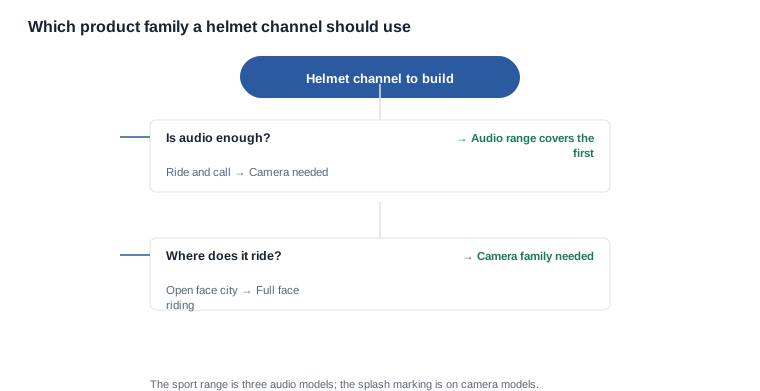
The endurance question behaves differently in the two families, and the catalogue publishes enough to plan around it. The three sport models are audio products: the YKC02 carries two 70 mAh cells, which is the most compact battery arrangement in the range and suits a light frame, and the D17 and the ZH12 are the only two models in the entire catalogue that publish a charge time of about one hour, against the two-hours-or-less ceiling that the other twenty-six models publish. For a rider who tops up between sessions, that difference is the difference between a ten-minute stop and a half-hour one. The camera models run on cells in the region of 220 to 290 mAh with a rated runtime of roughly five to eight hours and no test condition published, which is a larger cell on a heavier frame and a longer day on the headset. The charging method is magnetic on seventeen models and Type-C on seven, and it is not published for the L1 Pro and the CY05, and the MT6 and the CY03 — so if your channel standardises on a single cable type, those four are the models that need a question rather than an assumption.
One point about classification that is worth stating plainly: the sport range in our catalogue is three models — YKC02, D17 and ZH12 — and they are audio products. The models that carry the splash marking, the V06 and the S7, are camera models that are named for sport but sit in the eleven-model camera family. So a buyer who wants both a helmet-compatible form factor and a published ingress marking is looking at a camera model, and a buyer who wants the lighter audio form factor is looking at a model with no ingress marking at all. Which one is right depends on the channel, and it is a genuine trade-off rather than a ranking.
The fit data is not published, so can I get it in writing
Here is the request to send, and the reason each line is in it.
- Temple length in millimetres, per model. This is the number that decides the fit question. Ask for the measurement method as well — overall temple length including the bend is a different figure from a straight-line measurement, and mixing the two produces an argument later.
- Temple curve and the width at the bend. The curve is what decides whether the temple rides up the side of the head under a helmet, which changes both the comfort and the camera framing.
- Frame weight for the exact configuration ordered, and whether that figure includes any case, cable or packaging.
- The position of the charging interface or contacts on the temple, ideally with a drawing, plus the clearance the supplier recommends around it for a strap.
- The microphone position relative to the wearer's mouth, and any published guidance about use with a full-face helmet.
- Any published helmet compatibility guidance, including a limitation. A documented limitation is worth more than a blank space, because it can go in the listing and it protects the buyer.
The question to ask about each of these is deliberately narrow. "Do your glasses work with helmets" is a question that invites a yes, and a yes is worthless. "What is the temple length of the model, in millimetres, and where is the charging interface" is a question that invites an answer.
Three things to know about how these answers arrive. First, they are not published, so they will come as a supplier statement rather than as a document, and the statement should be copied into the specification annex of the purchase order rather than left in an email thread. Second, the useful version of the answer is model-specific; a general statement about the range is of no use to a buyer choosing between models. Third, some of these figures may exist internally without having been released, and a supplier who says "that is not available" has given you an answer that you can plan around: it means the fit cannot be screened on paper and the sample programme has to carry the entire risk.
There is a fourth question, the one that decides whether the whole channel is defensible, and it is worth asking in a single line: has this product been tested with a helmet, and is there a published specification for that test? A supplier who has tested it will answer with a method and a result. A supplier who has not will answer with an engineering opinion, and an engineering opinion is not evidence. If the answer is that no such test exists, then that fact belongs in your listing as a caution, and it belongs in your agreement as the absence of a guarantee.
The sample programme, and can I run it with a real helmet
In this channel the sample programme is not a preliminary step. It is the evaluation, because the rows that decide the channel are precisely the rows the catalogue does not carry.
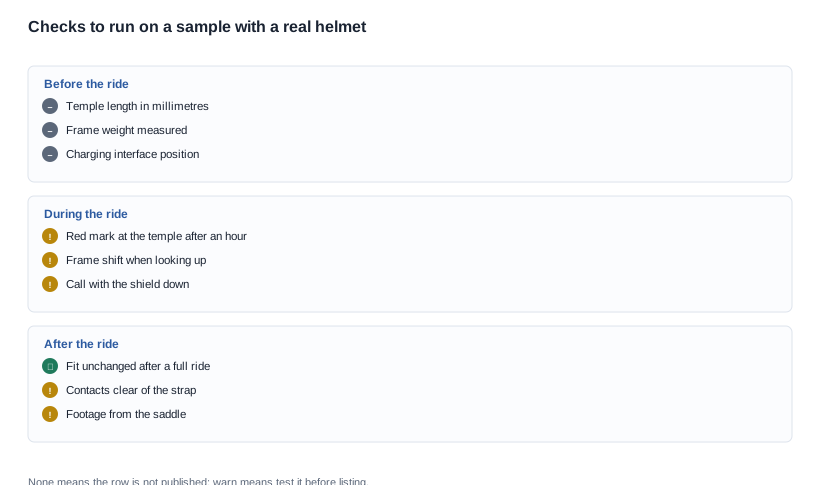
The sequence that works is short, and the timing is what makes the difference.
Wear it with the actual helmet for a real ride. The discomfort points appear at forty minutes, not at five, and a five-minute trial in a shop is the single most common reason a helmet channel returns. If the product is aimed at cycling, an hour of actual riding with the actual helmet is the minimum.
Move the head fully through its range. Look up at the trail, look down at the bars, turn hard through a corner, and shake the head. Note whether the frame shifts relative to the helmet's padding, and whether the temple position changes as the wearer moves. A frame that rides up under a helmet changes the camera framing and the microphone distance at the same time, so a shift that looks cosmetic in the fit discussion is a commercial problem in a camera or call channel.
Check the temple contact points after the ride, not during. A red mark at the temple after an hour is the fastest single indicator of a helmet fit failure, and the wearer will not always report it — they will just stop wearing the product.
Route the strap and then charge it. Put the helmet on, fit the strap the way a rider fits it, and then try to charge the unit. If the contacts are pressed, if the cable cannot be inserted, or if the wearer has to remove the helmet to charge, that is a design decision the buyer needs to know about before the product is listed, not a defect discovered in a forum thread.
Make a call with the shield down. For a full-face helmet this is the microphone test, and it is the row with no published specification behind it at all. Test it in the environment it will be used in, because a call made in a quiet office tells you nothing about a call made in traffic at speed.
Shoot from the saddle in the actual helmet. If the product is a camera model, the peak or the shield is going to be in the frame and the exposure is going to be affected by the shadow. Look at the footage before the listing is written.
Then do the same on a second unit. This is the step that catches the problem nobody expects: two units from the same production run that fit differently because of a moulding or assembly tolerance, which is entirely possible and entirely invisible until a customer with a narrow head or a wide head reports it. If the fit varies between units, the tolerance becomes part of your copy, because you will be asked about it.
The output of all this should be kept as the golden reference for incoming inspection, exactly as it should be in any channel where the acceptance criteria are physical. A rider-facing product is judged on how it feels after ninety minutes, and that is not a specification a factory can be given by a table of numbers.
The listing and the order, and can I negotiate the terms that matter
A helmet channel is a fit channel, and the fit rows are the ones that are not published. That makes the sample programme the decisive cost rather than the unit price, which means the scope of the sample programme is worth negotiating explicitly and the sample terms deserve to be written down before the samples are ordered.
The terms worth negotiating, in descending order of how much they protect you:
- Sample cost, refundability and the evaluation window. Whether the sample fee is credited against a first order, how long the unit is held, and what happens if the evaluation says no. These are not published, and a written statement that the fee is credited removes the main hesitation a cautious buyer has over spending on evaluation.
- Sample scope. Whether a helmet-fit sample of each shortlisted model can be evaluated in parallel, and whether a second unit of the same model can be supplied for a consistency check. Evaluating one model at a time is what turns a shortlist exercise into a slow one, and the consistency check is the step most programmes skip and later regret.
- Payment nodes against inspection. Inspecting against the golden sample before the balance falls due is a commercial term rather than an operational favour, and in a fit-driven channel it is the only inspection that would have caught the problem.
- Return terms. A rider returns a product because of a fit that a five-minute trial would not have revealed. A return window and a disposition process that assume this will cost less than the returns it prevents.
- The warranty period with a stated response time, and the treatment of a unit whose failure is a fit failure rather than an electrical one.
- Accessory minimum order quantities, including anything sold as helmet-compatible hardware, which in most channels is the piece that decides whether the product is a system or an accessory.
- Delivery splitting and the terms of a pilot order, with the price basis for the pilot stated separately from the repeat order so that the second order is not a surprise.
Two lines on a quotation are not the negotiator's to move, and the buyer should know which they are before the negotiation starts. Certification cost and its lead time follow the process and the testing body. Tooling is usually amortised across the first order while certification cost sits per product family, and the two are frequently bundled into a single figure that hides which is which — ask which one a quoted line represents.
The agreement should carry the published rows for the configuration ordered, plus the six items from the written request: the temple length and temple curve, the measured frame weight, the interface position and its clearance requirement, the microphone position relative to the mouth, the helmet compatibility guidance or the stated absence of it, and the warranty period with a response time and the return terms.
What should stay out of the copy and the agreement is more specific than a general list. Any claim that the product is helmet-safe or helmet-certified, because the catalogue carries no certification row for any model and the body of the catalogue does not mention CE, FCC, RoHS, RED or EN 18031 even once, so there is nothing to support such a claim with. Any weight or dimension that has not been measured on the actual unit. Any call-quality claim made in a helmet environment. And any statement that the product works with helmets as a general proposition, when what you have established is that it works with a specific set of helmet types under a specific set of fit conditions.
One more commercial point belongs here, because it is specific to this channel and it is cheap to get right. The riders who wear a product under a helmet for ninety minutes are a very different customer from the person who tries it in a shop. Their expectation of durability is high, their patience for a fit problem is low, and they will tell other riders about it. That makes the fit rows — temple length, weight, interface position — more than an engineering detail. They are the rows that determine whether a channel has a repeat rate or a complaint rate, and they are the rows you cannot buy from a catalogue.
The shipping terms belong in the same conversation for a channel with this profile, because a helmet channel usually ships in small quantities to a scattered customer base rather than in cartons to a warehouse, and the difference between a delivered-duty-paid and a freight-on-board quotation is a real line on the landed cost per unit. Ask for both, ask what the split is between the freight and the duty, and ask what happens to the unit cost if the order is split across two deliveries rather than one, because in this channel that is a realistic scenario rather than an edge case.
Send us the helmet types you intend to cover, the models you have shortlisted and the markets you intend to sell in, and we will tell you which rows are documented today, which ones we can put in writing, and which ones a sample has to close.
Related reading
- The engineering behind the durability claims — Sports and cycling durability engineering
- What the ingress marking establishes — IP ratings for smart glasses
- The fit variables a specification cannot carry — Comfort and fit considerations
- The models this channel would use — Sport smart glasses range
Send us the helmet types, the channel and the markets, and we will tell you which rows are documented and which need a sample.


