

Two of the twenty-eight models in this catalogue publish a charging time of roughly an hour, and one of them also publishes a remote shutter for photographs. That combination makes the D17 unusual to customise, because the decisions it raises are about behaviour and packing rather than about finish. The guide below is arranged the way a programme actually runs: what the catalogue states, which rows have to be closed before artwork is released, how the naming and inspection paperwork fits together, and what an evidence file has to contain by the time the first bulk order goes in. The reader here is the buyer, the channel partner and the seller who gets the call when a customer asks about a configuration nobody has physically held.
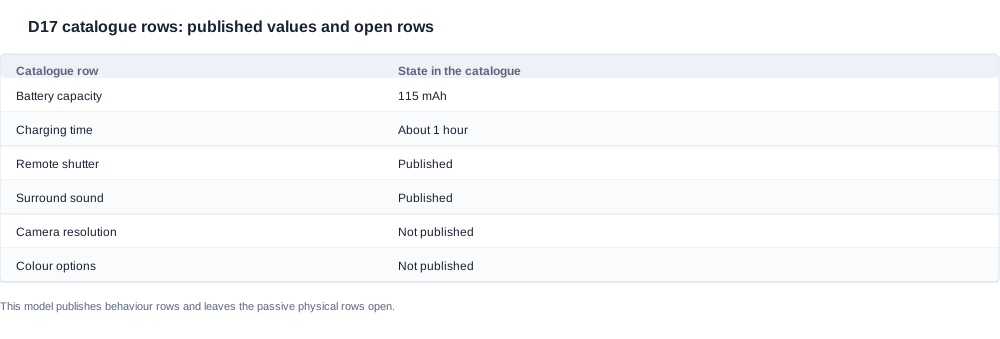
The D17 catalogue row set read from top to bottom
Read the published rows as a set rather than as a list of features, because for this model the set is unusual in a way that changes what a customisation programme can promise.
- The battery row is 115 mAh.
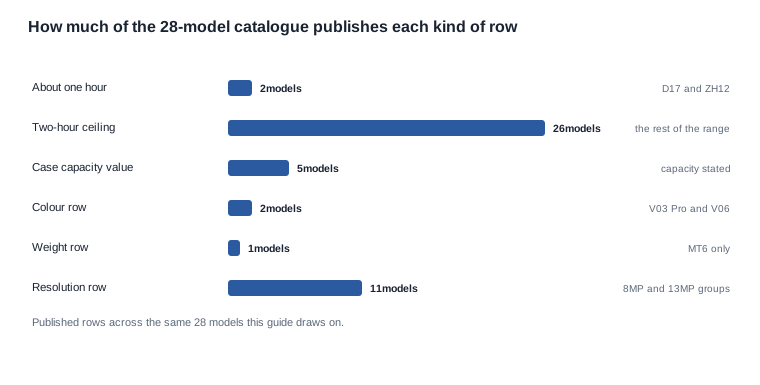
- The charging row is an approximately one-hour figure, one of only two such figures in the catalogue; the other twenty-six models in the range stop at a two-hour ceiling.
- A remote shutter for photographs is published as a row of its own.
- A surround-sound label is published, in the same family of wording that appears on the ZH12 and the YK12, while the D11 publishes surround in its own terms.
- A camera resolution row is not published for this model: eight models carry 8MP and three carry 13MP, and this one appears in neither group.
- A colour row is not published; the only models carrying one are the V03 Pro and the V06.
- A weight row is not published either, and the only weight anywhere in the catalogue is the 158 g belonging to the MT6.
- A radio version row is published for 14 of the 28 models, so ask for this model's row rather than inferring it from a neighbour.
Two more rows need the same treatment. The charging method is published for this model: the four entries whose method row is blank are the CY05 and the MT6, and the CY03 and the L1 Pro, and this one is not among them. And the charging case has to be asked about: 5 models quote a capacity, 2 name a case with no number, 3 carry no case line, 1 says outright that none is supplied, and 17 of the 28 models say nothing either way.
The pattern in that set is the finding that matters. This model publishes behaviour — a shutter, a surround-sound label, a fast charge — and leaves the passive physical rows unstated. For a private-label programme that means the customisation surface is functional and mechanical rather than cosmetic. You can build a story around what the device does, and you have to build the physical specification from written answers, because the catalogue will not supply the finish, the fit or the compatibility figures for you.
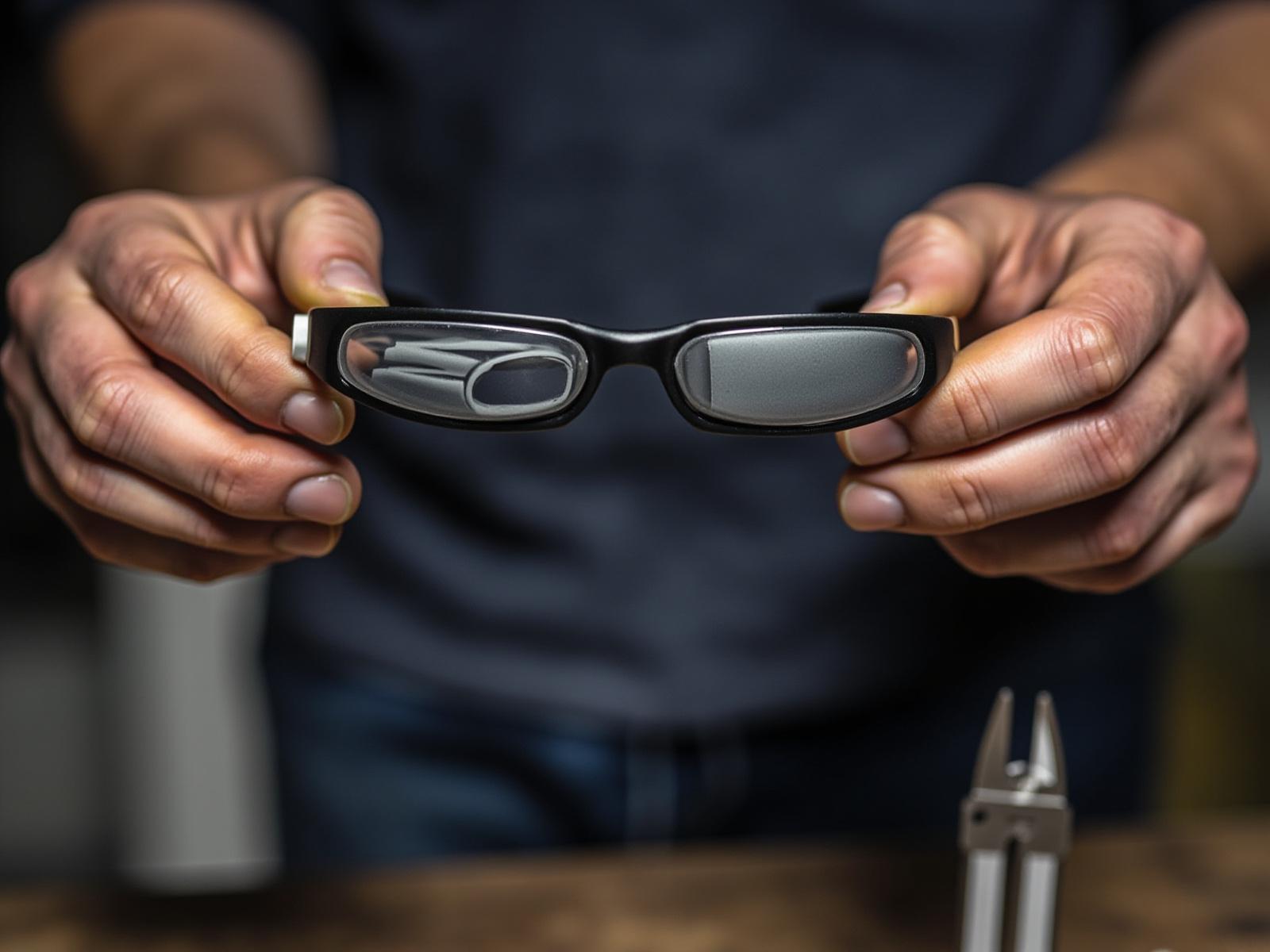
D17 smart glasses how to customize: the shutter, the sound and the order
The published shutter row is the one that changes the shape of the programme. A remote shutter is not a software feature; it is a second physical object that a customer handles, that may be paired, that may need its own power, and that has to be described on the carton and in the leaflet. The sound row is the second. Both need closing before the packaging is designed, because both of them end up on the outside of the box.
- The shutter row. Ask what the remote is: whether it ships in the box as standard or is a separate line on the order, what powers it and whether it draws from the glasses, how the pairing works, what the user sees when it is paired, and what the support answer is when one goes missing. Ask for the working range in which the shutter triggers, because that is what a specification sheet should carry and the catalogue does not state it.
- The sound row. Ask what the surround label means in implementation terms: how many channels, what processing is applied, whether the mode is user-selectable, whether it interacts with the phone application, and whether it changes the battery row.
- The electrical rows. The 115 mAh cell and the approximately one-hour charging figure, each with the measurement condition attached, and the charger and cable question answered in writing.
- The accessory set. Whether the remote is the only accessory, whether a charging case is included, and what happens to the box if the accessory is optional. This is the decision that determines whether the carton needs one compartment or two.
- The naming rule. One name, one spelling, one case style across the device, the remote, the paired application entry, the carton, the leaflet and the inspection sheet.
- The market documents. Requested by name, with reference numbers and dates, for the destination the programme ships into.

The order above is not arbitrary. Behaviour closes before packaging, and packaging closes before naming, because a name printed on a carton that was drawn for the wrong accessory set cannot be corrected without scrapping the print run. If time runs short and some rows stay open, work through them in the same sequence and be honest about which claims will therefore be missing from the listing copy. The shutter and the sound are the rows a customer touches in the first ten minutes, which makes them the two you cannot afford to leave as assumptions; the colour, the fit and the compatibility are the rows nobody can check in a photograph, so they are the ones that can wait for a written answer.
Why the D17 charging figure changes the sequencing of a programme
Almost every model in this range carries a two-hour ceiling on its charging row. This model and the ZH12 are the two that publish an approximately one-hour figure instead, which makes the timing row one of the genuine differentiators inside the catalogue — and also one of the easiest rows to overstate.
An approximation is not a specification. A row that says approximately one hour does not say the device charges in an hour, does not say it charges fully in an hour from any state, and says nothing at all about the ambient conditions, the power source or whether the figure covers the pair alone. Written into listing copy as "charges in about an hour", it becomes a promise; written into a specification sheet with the supplier's condition attached, it stays a fact with a boundary. The same discipline that buyers apply to the catalogue's ceiling figures applies here in reverse: a ceiling says "no more than", and an approximation says "roughly", and neither of them is a benchmark.
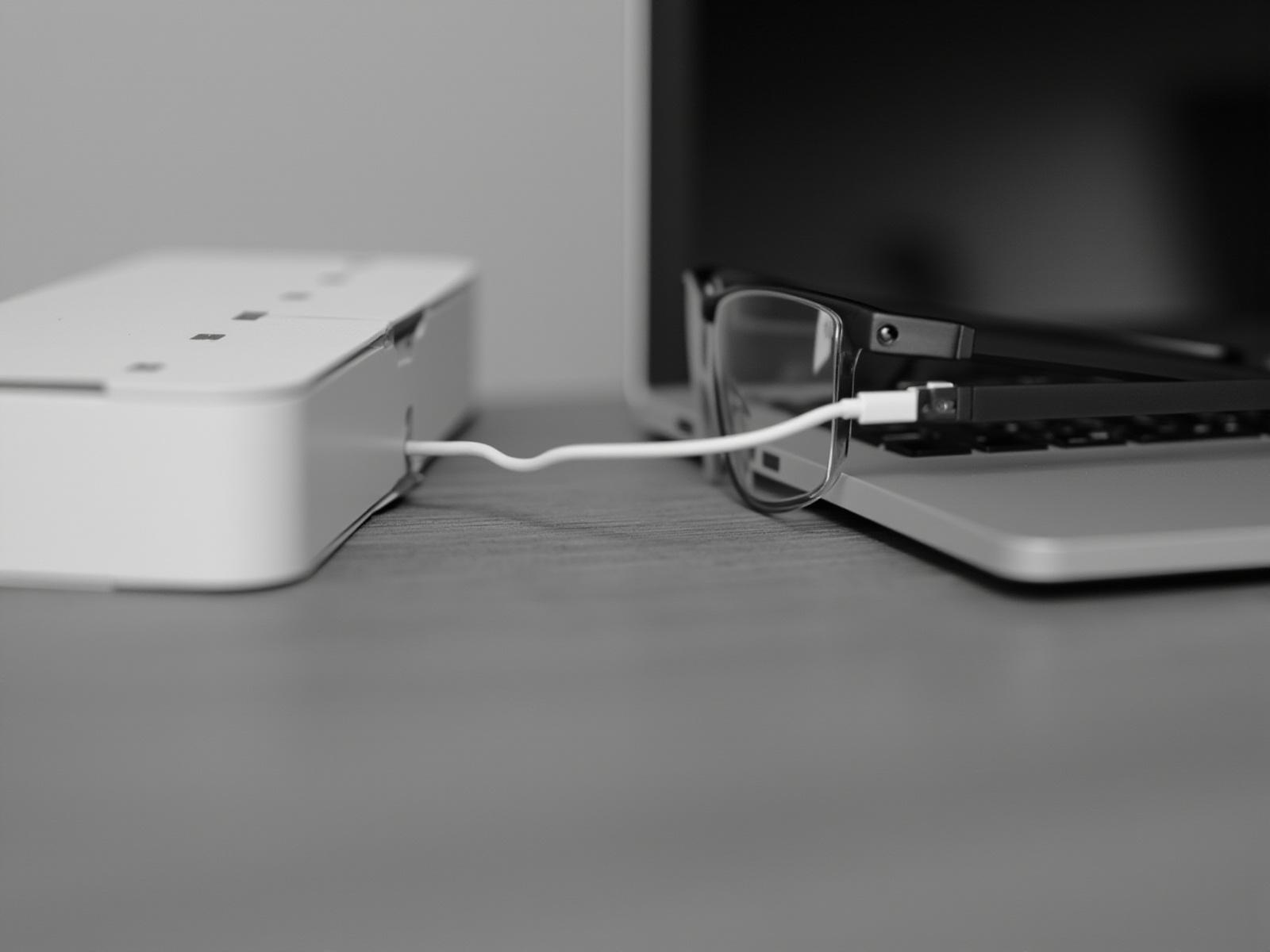
The reason the timing matters for sequencing is operational rather than promotional. On your own bench, the charge step is part of the cycle every sample unit passes through, and a shorter charge figure means that step stops dominating the cycle and the bottleneck moves to pairing, to the sound check and to inspecting the mark. That has a knock-on effect on how many units you can test in a day, and therefore on how much evidence a sample round can produce. If your programme depends on a large amount of observed behaviour — a shutter tested across its working range, a sound mode compared against an agreed reference, an indicator checked at each state — then the row that looks smallest in the catalogue may be the row that decides how much of that evidence you can collect before the schedule closes.
The second consequence is about the case, and it runs in the opposite direction to what buyers usually assume. A pair that reaches a usable state in around an hour needs a case far less than a pair that needs two hours does, because the case stops being the thing that makes the device usable between charges and becomes a convenience. That turns the case from a technical question into a design question, and it changes what you should ask for: not only how the case charges the pair, but whether the programme wants one at all, given that the catalogue's own timing row for this model is the strongest argument against it. Whichever way that decision goes, the answer belongs in the file before the carton is drawn, because a carton that was built around a case does not survive the removal of the case.
The condition has to be written into the line, not remembered by whoever reads it later. The questions that produce a usable condition are short: from what state does the charge start and to what state does it end, at what ambient temperature, from what kind of power source, and does the figure cover the glasses alone or the pair in its case. Each answer belongs next to the figure on the specification sheet, and the specification sheet is the document that reaches the packaging printer, the marketplace listing and the after-sales team. A condition that lives in one person's inbox is a condition that will be lost the first time that person is busy with another programme.
What a fast charging figure does not license is as important as what it does. It does not license the claim that the device is better, because that comparison would have to be made against a named alternative on a named row, and this catalogue publishes a two-hour ceiling for almost every other model rather than a measured figure that could be set side by side. It does not license a claim about battery life either, since the charging row and the endurance row are different rows and one does not imply the other. It does license a factual statement on a specification sheet and, with its condition attached, a factual statement in listing copy. Buyers who write beyond that boundary end up defending a comparison they never actually made.
The case decision, taken at the design stage, has three possible outcomes and they are worth setting out plainly. The programme includes a case while the catalogue carries no case row for this model, which means the case's own charging behaviour, capacity and packaging all have to come from written answers. The programme excludes the case, which is defensible on the strength of this model's charging row and simplifies the carton, the insert and the ship volume. Or the case is offered as an optional extra, which is the most complicated of the three because it turns one carton into two packing lists and one inspection sheet into two. Whichever is chosen, the decision belongs before the carton is drawn, and it should be recorded in the file with the reason attached.
The documents to request sit in the same place as the conditions. The catalogue's certification page is a picture of ten patents rather than a list of market declarations, so it cannot answer a compliance question by itself; what closes that row is a set of documents, each with a reference number and an issue date, requested for the market the programme actually ships into. A condition and a certificate are the same kind of object: a dated document that says one thing, about one model, for one destination.
Recording the D17 name across the purchase order and the carton
This model carries one more naming surface than a pair without a remote, and it is the surface most often forgotten: the shutter itself. If the remote is a branded object, it needs the brand on it; if it is a plain accessory that ships in the box, then it needs nothing, and the decision about which of those two it is has to be made before the artwork is finalised rather than after.
The internal designation and the customer-facing name remain separate things. The designation ties a unit to a catalogue row, an order line and an inspection record. The customer-facing name is what the buyer sees on the shell, on the remote, in the paired application and on the carton. Both have to appear, both have to be traceable to each other, and both have to be spelled identically wherever they appear — which sounds trivial until a programme with a two-letter brand meets a carton designed by someone who was never told about the remote.
The inspection sheet is where the naming becomes enforceable, and for this model it needs lines that a standard audio pair would not:
- The remote is present in the carton and the packing list matches the physical contents.
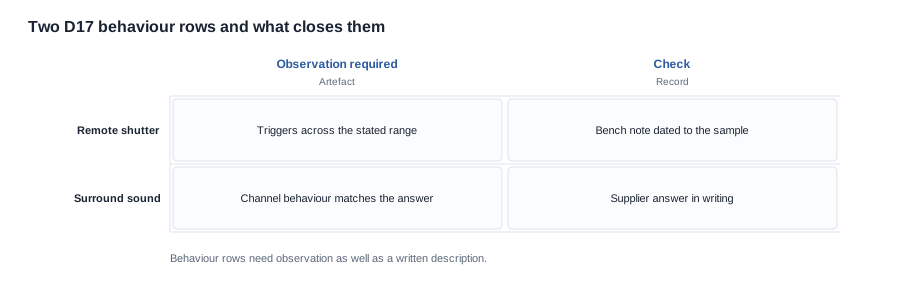
- The shutter triggers across the working range the supplier has confirmed.
- The pairing state is indicated in the way the supplier has described.
- The sound mode behaves as the confirmed row describes, and no listing claim describes more channels than the written answer supports.
- The mark on the shell and the mark on the remote are legible, correctly placed and consistent with the approved proof.
- The carton artwork, including anything printed about the accessory, matches the approved version.
Two red flags are worth naming because both have cost real programmes money. The first is a carton artwork that shows the remote while the packing list does not include it, which turns into a warehouse picking error on the first customer order. The second is a leaflet that describes a pairing step the supplier has never confirmed, written because the remote exists and a step seemed obvious. The decision this section leaves you with is whether the remote ships assembled and ready, and whether the leaflet is allowed to describe the pairing before the pairing has been observed on a unit.
Assembling the D17 evidence file before the first bulk order
The evidence file for this model has to do something the file for a simpler pair does not: behaviour claims need observation, not only description. A written answer can tell you that a remote exists and what powers it; it cannot tell you how the shutter behaves in the hand. So the evidence has to be assembled in a different order from the one used for a passive product, with the observed material placed where the written material would normally sit.
- A dated catalogue extract, with the reference for each row, kept as the baseline that every later answer is measured against.
- The supplier's written answers on the shutter, the sound, the electrical rows and the accessory set, each one naming the model and carrying its own date.
- A bench note covering the pairing sequence, the observed working range of the shutter, the charge behaviour from a stated start state, and the state of the indicator at each point. One unit, observed properly and written up the same day, settles more questions than three units described from memory.
- The artwork proof set, including the carton artwork that depicts the accessory, with the approval date and the name of the approver recorded against each version.
- The market documents for the destination, filed with the reference numbers and issue dates the supplier quoted.
- The signed inspection sheet for the first shipment, kept with the shipment record so that a later question is a comparison of two documents rather than before the artwork proofs, which are produced as part of production itself and will exist whenever the programme reaches that stage.
When the schedule will not allow all six, the order of value is not the order of the list. The written answers come first, because they are the only element that decays with time and with staff turnover. The bench note comes second, because it is the part that cannot be reconstructed later and because it is what turns the shutter row from a description into evidence. The catalogue extract is cheap to keep and cheap to rebuild, so it takes third place, ahead of the artwork proofs, which are produced as part of production itself and will exist whenever the programme reaches that stage.
The rule that keeps this file useful is the same one that applies to any customisation programme, and it is worth stating exactly because behaviour models break it more often: until a dated document names the model and sets out the answer in wording a specification sheet can carry, the row stays open. Everything else in the file is a note. Notes are useful, notes are not evidence, and a listing claim that rests on a note will eventually be challenged by a customer who is right to challenge it.
What CYNRIN can and cannot confirm on the D17 today
What CYNRIN can and cannot confirm on the D17 today. We can send the published rows exactly as they stand — the 115 mAh cell, the approximately one-hour charging row, the remote shutter row and the surround-sound label — dated and versioned, and we will answer the specification questions in writing so that your file and ours describe the same configuration. We do not publish a resolution, a colour, a weight or a case figure for this model, because the catalogue does not carry them for it, and we will not complete one of those rows from a neighbouring model in the range.
That leaves a screening decision rather than a verdict, and it is worth setting out the three conditions a programme can arrive with. A brief built around the shutter and the sound mode is well served by this model's published set, because those are the rows it states, and the work is then about closing the accessory, pairing and packaging questions. A brief that needs a resolution figure in its copy is not served by the published rows at all, since resolution is not published for this model, and the honest path is to ask for a written answer or to screen for a model whose rows carry it. A brief that needs a charging case needs the same treatment as any other case question in this range: five models publish a case capacity, two publish a case without one, and the rest of the catalogue is silent or explicit, so the case has to be asked about rather than inferred.
The one-hour row deserves one final word, because it is the row buyers notice first. It is genuinely among the strongest published figures in this catalogue, and that is precisely why it should travel with its condition.
A shortlist decision on a model like this one is rarely made on the specification alone; it is made on which questions can be answered before the launch window closes, and this model asks fewer of them than most because its behaviour rows are published. The due diligence is a checklist rather than a negotiation, and the trade-offs are visible: a shutter and a surround-sound label that you can describe, against a fit, a finish and a compatibility claim that you cannot. Before you commit to a configuration, the questions to ask are the ones listed in the closure sequence, and the red flags are the ones named in the inspection section. Knowing which to weigh is the point. The model line this one is presented under is on the sport smart glasses range if you want to see where it sits in the wider set, the charging options article sets out how the charging rows differ across the audio models, and the camera model shortlist is useful if your brief is camera-led and you need a wider screen than this model offers.
Close the two behaviour rows first. They are the ones a customer touches in the first ten minutes, and they are the two a written answer alone will not settle.


