

IP rating: nine mistakes, one document each
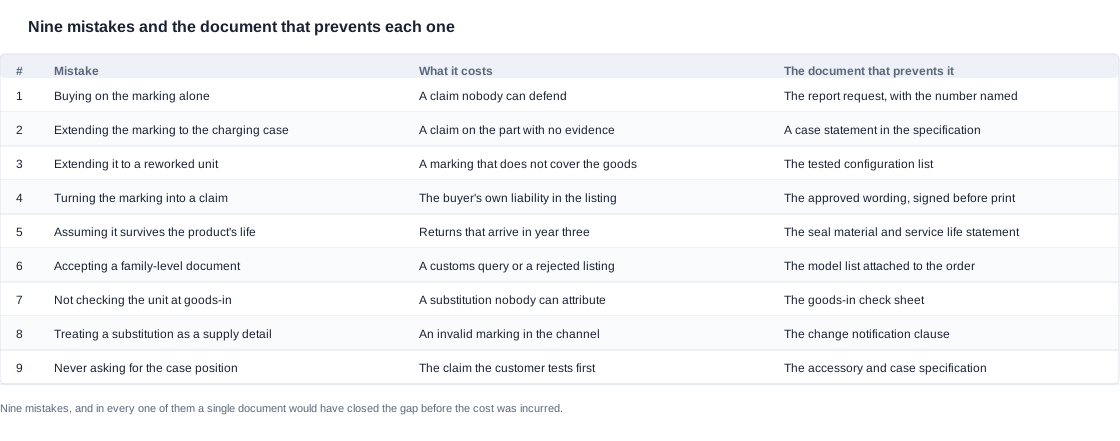
Ingress protection mistakes in this category are made in two places — the specification and the listing copy — and they are made by people who are not being careless. They are working from a marking that genuinely looks like a specification and genuinely does not behave like one. The pattern is consistent: the marking is treated as a property of the product when it is a summary of a test, and it is then extended to parts of the product it was never applied to.
So ip rating smart glasses buying mistakes to avoid is a list of nine errors, and for each one the single document that would have closed the gap before the money was spent. That second half matters more than the first. A list of mistakes is only useful if each entry ends in an action, and an action that produces a document survives a change of personnel, a change of supplier and a change of channel.
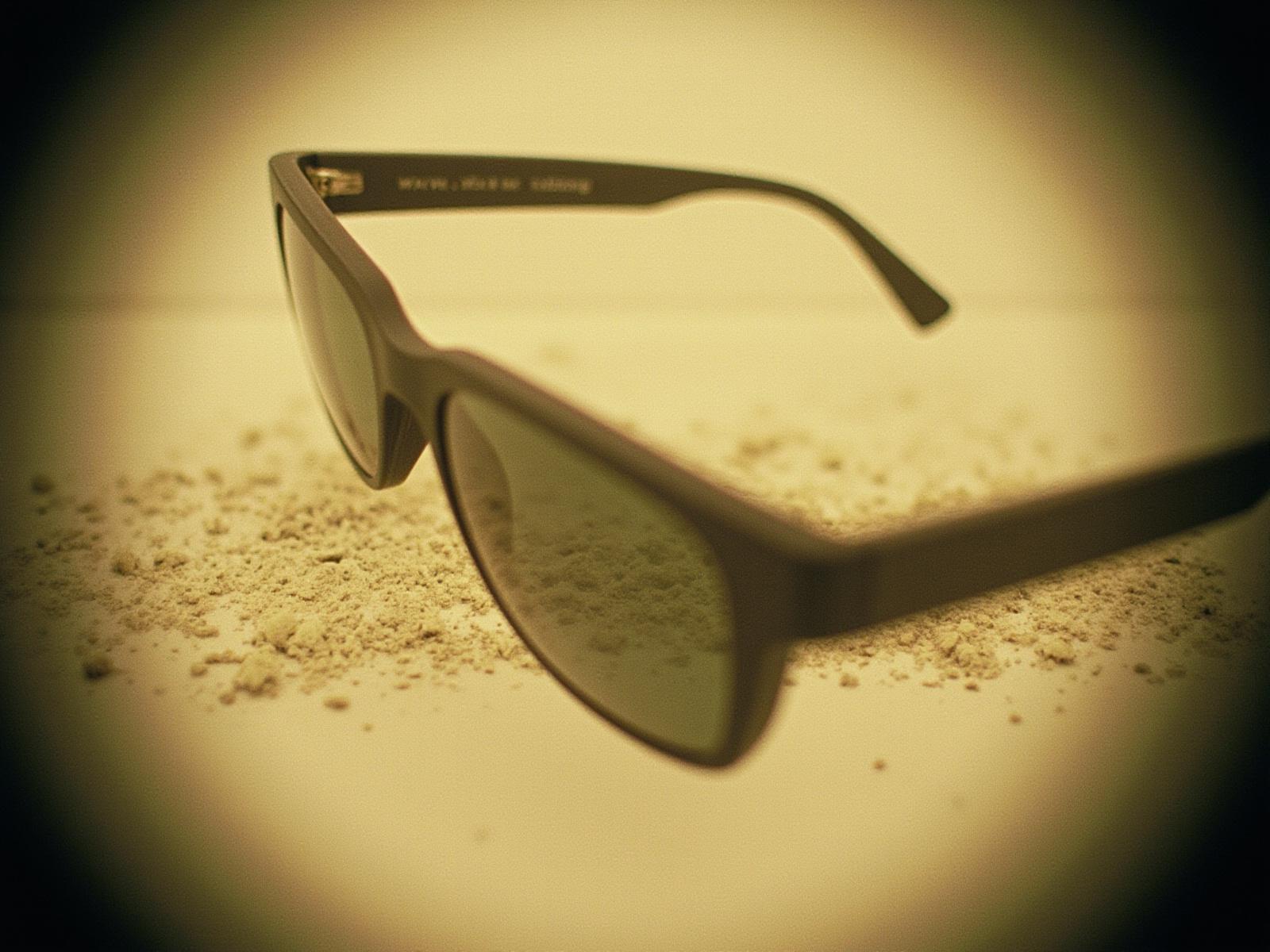
Our published position in this area is worth stating precisely, because it is unusually clear about the boundary. Exactly two of the twenty-eight entries in our catalogue carry an ingress marking — the V06 and the S7, both annotated IP54 — with no third-party test report number published behind either of them. Every other model in the range publishes no ingress marking at all, and no charging case in the range carries one either.
Why ingress mistakes are made by careful people
There is a reason this category attracts avoidable errors, and it is not that buyers are careless. It is that an ingress marking is the rare specification that looks complete on the page. Every other line on a spec sheet has something under it — a test method, a tolerance, a unit, a document reference. The ingress marking has two characters and, frequently, nothing else, and two characters invite a decision to be made from the spec sheet alone.
That decision is then hard to unwind, because the marking propagates. It moves from the spec sheet into the purchase order, from the purchase order into the packaging artwork, from the artwork into the listing, from the listing into the customer's expectation. Each hop adds a little confidence and removes a little evidence, and by the fourth hop the claim is being made in a sentence that nobody traced back to anything at all.
The practical consequence is that the prevention cannot live in the spec sheet. It has to live in a document that travels with the order, and the document has to be produced before the artwork, not after it. Every one of the nine mistakes below ends with the document that would have caught it, and most of those documents cost nothing to produce and are produced once.
The specification mistakes, and the clause that stops each one
1. Buying on the marking. The marking tells you that a test was performed and what it covered. It does not tell you the standard, the model list, the sample, the configuration or the seal's life. Prevented by: asking for the test report before the quotation, and reading the model list rather than the family name. The document is the report request, and it costs one email.
2. Extending the marking to the charging case. A case is a separate enclosure with its own openings, materials and conditions, and no case in our range carries a published marking. Prevented by: treating the case as a product in its own right, with its own specification and its own claims. The document is a case statement in the accessory specification, saying explicitly that the case carries no marking.
3. Extending the marking to a reworked unit. A rating applies to a specific enclosure, and a unit with a different port, contact or interface is a different enclosure. Prevented by: checking the tested configuration against the configuration that will ship, and by putting a notice obligation on any change of seal, port, contact or interface. The document is the configuration list, attached to the purchase order.
4. Converting the marking into a claim. "Waterproof" is not what an IP54 describes, and a claim in a retail listing is the buyer's liability, not the manufacturer's. Prevented by: writing the boundary into the listing rather than the adjective, and agreeing the wording before the artwork is approved. The document is the approved claim wording, signed by both parties and attached to the order.
5. Assuming the marking survives the product's life. A rating describes a seal on a day, and the seal material and its service life are not published for any model in our range. Prevented by: asking about the seal, and making a replaceable seal a design requirement where the channel allows it. The document is the seal material statement with its expected service life, or an explicit statement that neither is published.
The clause wording for the first four is available at contract terms, and the certification document set that sits alongside these is at certification checklist. The coding system behind the marking is set out under IP ratings.
The supply-chain mistakes, and the check that catches them
6. Accepting a family-level document. A report covering a family is not coverage of a specific model. Our own catalogue contains one entry listed as "L2 Utral" with a note about the spelling, and a further "Utral Pro Max" designation whose meaning is not published, which is a naming problem before it is a documentation problem. Prevented by: making the exact model designation a condition of the purchase order and comparing it against the units on receipt. The document is the model list, with the designation on each line.
7. Not checking the unit against the document on receipt. The marking is printed on the unit, and the mismatch is invisible unless somebody compares it. Goods-in staff are not being negligent when they do not compare; they are following a process that does not ask them to. Prevented by: a goods-in check sheet that includes the marking, the configuration and the seal line as named steps. The document is that check sheet, signed at the point of receipt.
8. Treating a substitution as a supply detail. A change to the enclosure is a change to the rating, and a change to the seal material can move the material declarations with it. The supplier's view is often reasonable: the part is equivalent, the drawing is unchanged, nothing has broken. Prevented by: a change notification clause that makes the buyer a party to the decision rather than a recipient of a notification. The document is the change control procedure, with the re-assessment trigger named.
9. Not checking the case. It is the part with the least published information and the part most likely to be presented to a customer as protected, because it is the part that looks like a sealed box. Prevented by: the accessory specification that names the case, its capacity where it is published, and its position on the ingress question. The document is the accessory and case specification.
The copy mistakes, and the sentence that replaces them
The three copy errors below are separated out here because they are the three that a supplier cannot fix for you. They are the buyer's own work product, and they are the only mistakes in this list that nobody else is going to catch.
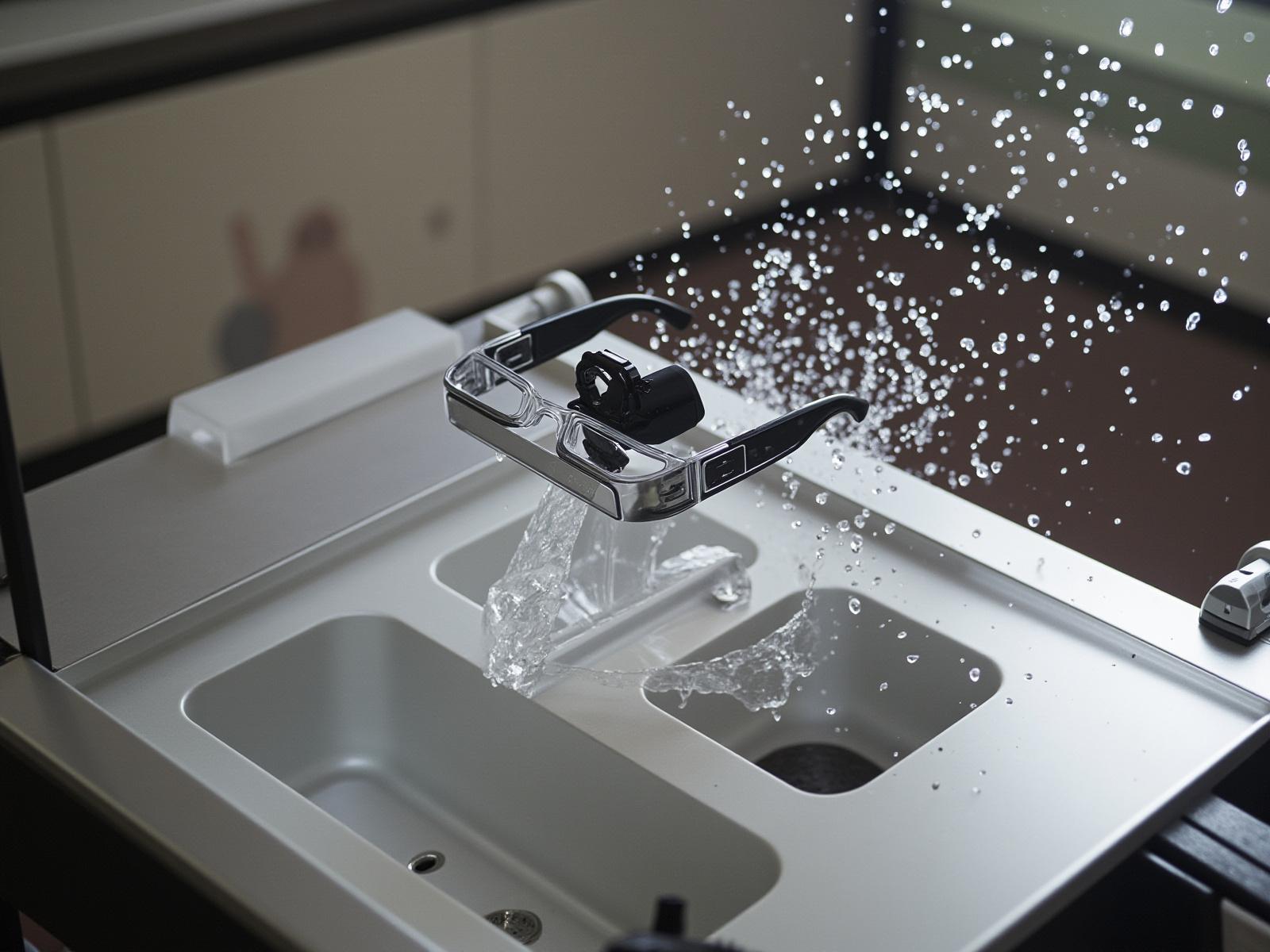
Writing an adjective where a code belongs. "Waterproof", "water-resistant", "splash-proof" and "beach-ready" all appear in product copy across this category, and the second digit of a 4 supports none of them. The sentence that replaces it: state the code and describe it in the same sentence — "IP54, protected against splashing water from any direction" — so the reader gets the boundary without having to look it up.
Extending the claim to a part that has no claim. "The case is also protected" is the most common of the three, and it is the most expensive, because the case is the part the customer puts their phone in and the part they keep in a bag. The sentence that replaces it: say that the case is a separate enclosure and does not carry an ingress marking, and print it next to the claim rather than leaving it to be inferred.
Inheriting a claim from another product page. If the marking appears on a competitor's listing or on a sibling model and not on yours, it is not your claim, and repeating it is a false statement rather than an approximation. The sentence that replaces it: state the absence — "no ingress marking is published for this model" — and pair it with the care instruction that makes the absence manageable.
The wider treatment of wording, including a line-by-line library of phrases that cannot be defended, is in IP rating common mistakes. The procedure that stops the same errors appearing in a procurement file is in IP rating procurement checklist.

The order in which these mistakes become expensive
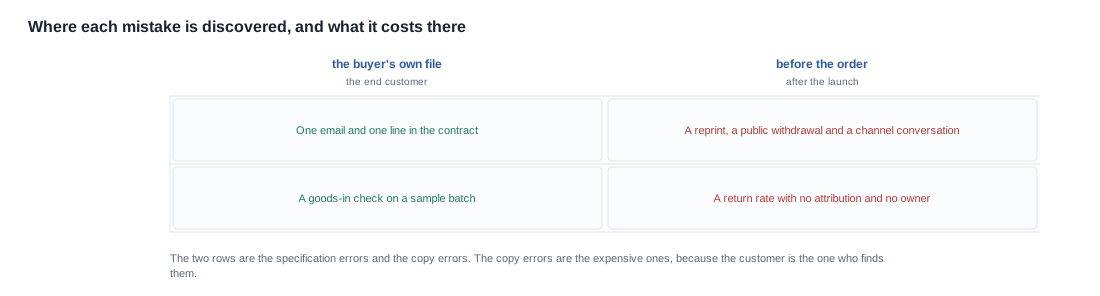
The nine mistakes do not all cost the same, and they do not all surface at the same moment. Four of them are cheap to fix while the specification is open and expensive to fix after the purchase order is signed. Three are essentially free to prevent and expensive to detect, because nobody is looking for them. Two are the classic late failures — the withdrawn claim and the slow return drift — and they are the two that damage the programme rather than the shipment.
The four that turn on timing are the ones worth naming, because the buyer usually believes all nine are equally serious and spends attention accordingly.
The withdrawn claim. A claim in a retail listing that turns out to be unsupported is a public event, and the retailer manages it. The direct costs are the packaging reprint, the listing update, the corrected manual and the support script, in every market the product shipped into.
The returns drift. A frame whose seal ages, or whose charging interface corrodes in salt water, produces a slow return-rate change with no obvious cause, because nobody wrote down what the product should withstand and nobody can attribute the failures to a batch. It is the hardest failure in this list to diagnose and the easiest to prevent, and the prevention is a recorded acceptance criterion.
The configuration mismatch. A unit whose charging contact was exposed on the shipped build but capped on the tested sample will generate a claim, a return and a photograph, and the photograph is the part that propagates. This is why the configuration list goes into the order rather than into an email.
The batch inconsistency. If two units from one batch behave differently and nothing was recorded at goods-in, the buyer has no evidence to take to the supplier, and the conversation becomes an argument about generalities rather than a conversation about two units.
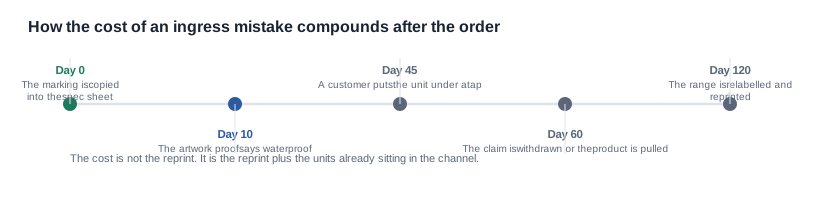
The order of the errors also determines where the prevention has to sit. The specification errors are prevented by what you ask for. The supply-chain errors are prevented by what you write into the order. The copy errors are prevented by what you sign off before the artwork. Three different places, three different owners, and if any one of them is left unowned the mistake at that point tends to happen.
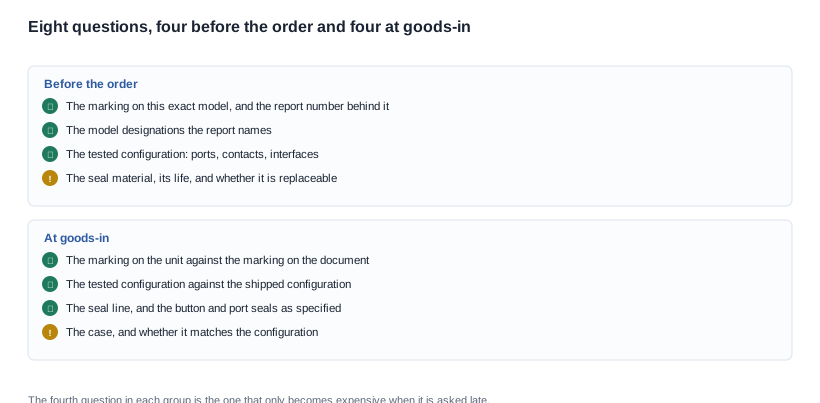
Four answers that should stop the order before it is placed
Most suppliers are not trying to mislead anybody, and most mistakes in this category are made by people working from incomplete information. That makes the failure mode overwhelmingly a question of what was not said, which means the four answers below are the ones worth screening for. Each of them is a red flag in the supplier's own language, and each of them is cheaper to act on now than after the artwork is printed.
- "The marking applies to the whole range." A family statement is not coverage. The pass line is a model designation list on a document, and a supplier who cannot produce one is describing a product line rather than a tested product. Ask which designations are named, and compare them with the designation on your purchase order.
- "The report is with the factory, we will get it later." A document that has not been seen is not evidence, and the value of it decays as the artwork date approaches. Ask for the report number and check the number yourself. If the number exists and resolves, the document can be filed immediately and the delay is only in the paperwork.
- "The configuration is the same as the standard one." The standard configuration is a statement about the factory's default build, which is not necessarily the build you are buying. Ask which ports, contacts and interfaces were fitted on the tested sample, and compare that list against the unit in your hand. This is the answer that catches a substitution.
- "We do not publish the seal material or its life." Sometimes that is genuinely the answer, and it is a legitimate one. It is a red flag only when it arrives together with a strong sealing claim, because the combination usually means the sealing is real and the evidence is missing. Record it as an open item on the file and set the warranty against a measured failure criterion rather than against a calendar assumption.
Two of these four can be checked in a single afternoon, and the third is checked by looking at the unit. Only the fourth requires a negotiation, and the negotiation is about how the uncertainty is handled in the warranty rather than about whether it exists.
What the commercial terms allow and what they do not
The negotiation surface in this category is narrow, and it is narrow in a specific place: the number of configurations, the artwork rounds, the market scope and the re-validation trigger move, while the certification cost, the certification lead time and the enclosure design do not.
On the movable side, the number of configurations you commit to is the largest lever, because each configuration is a separate cost under a per-configuration model and the cost compounds with the range rather than with the order. The artwork round count is the second, and it matters most in exactly the case this article is about, because a claim change after approval is a reprint in every market. The per-market label scope is the third, since each market is a separate label set and a separate review. The re-validation trigger and its cost are worth settling before the first variant is ordered rather than after the first variant ships, because that is the point at which it stops being a negotiation and becomes a change request.
On the fixed side, certification cost and certification lead time belong to the test laboratory and its review queue, and pressing on either of them does not make the product arrive faster. Tooling is a one-off cost, normally amortised across the first order, so a buyer has two things to ask: the volume it is spread over, and where the tooling and the sealing tooling would end up if the programme were discontinued. And the enclosure design itself is not a commercial variable at all: a supplier who will not change the seal material, the seal geometry or the port design is telling you the ingress performance is fixed, and the programme should be built around that fact rather than against it.
Documents to request before the deposit. The report number with the issuing body, the standard and the edition. The model list the report names. The configuration behind the report, with the port layout, the contact arrangement and the interfaces listed. The sample identity, with the batch, the build and the number of units. The seal material, whether it is replaceable, and the expected service life. The certificate numbers for the rest of the conformity file.
Clauses to write into the purchase order. The report number and the exact model designation attached to the order. A clause requiring notice before any change of seal, port, contact or interface, since each of those invalidates the configuration. A clause requiring per-variant confirmation that a changed variant remains within the covered configuration list. A clause on who bears the cost when a lot fails the acceptance criteria. And the agreed claim wording, attached, so that the artwork cannot outrun the file.
What we publish, and the boundary we hold
Concretely, we publish the marking exactly as the catalogue states it — an IP54 annotation on the V06 and on the S7, with no third-party test report number published — and we will not convert it into a conclusion like "waterproof" or "suitable for outdoor use".
We will also be direct about the absence. For every other model in our range, and for every case, no ingress claim is published. That is the absence of a claim rather than a negative statement about the product, and it is the honest position to take to a customer. A marking without a report number is a statement rather than a document, and the difference matters the first time somebody asks — a broker, a marketplace, a retailer's technical team or a customs inspection.
We publish no seal material and no seal service life for any model, and we will not estimate either. We will not apply the marking from one model to a sibling that does not carry it, and we will not present a marking as a lifetime guarantee. The models that carry it are at sport smart glasses.
The four questions to send us before you order
Which models in the range carry a published ingress marking. Two of twenty-eight entries do, and neither has a report number published behind it. We will tell you the exact two rather than describing them as the sport tier.
What each of those two allows you to claim. Send the environment and the sentence you have in mind, and we will tell you where the sentence is broader than the marking supports.
Which parts of the configuration the marking does not reach. The charging interface, the exposed contacts and the charging case are the three that decide whether the claim survives a customer, and none of them is covered by the annotation.
What would have to come from the testing programme before a claim could be described as tested. We will name the document set, the configuration the sample has to be, and where the decision sits in the schedule.
Send us the models and the environments, and we will say which carry a published marking and what evidence you need to request for each.


