
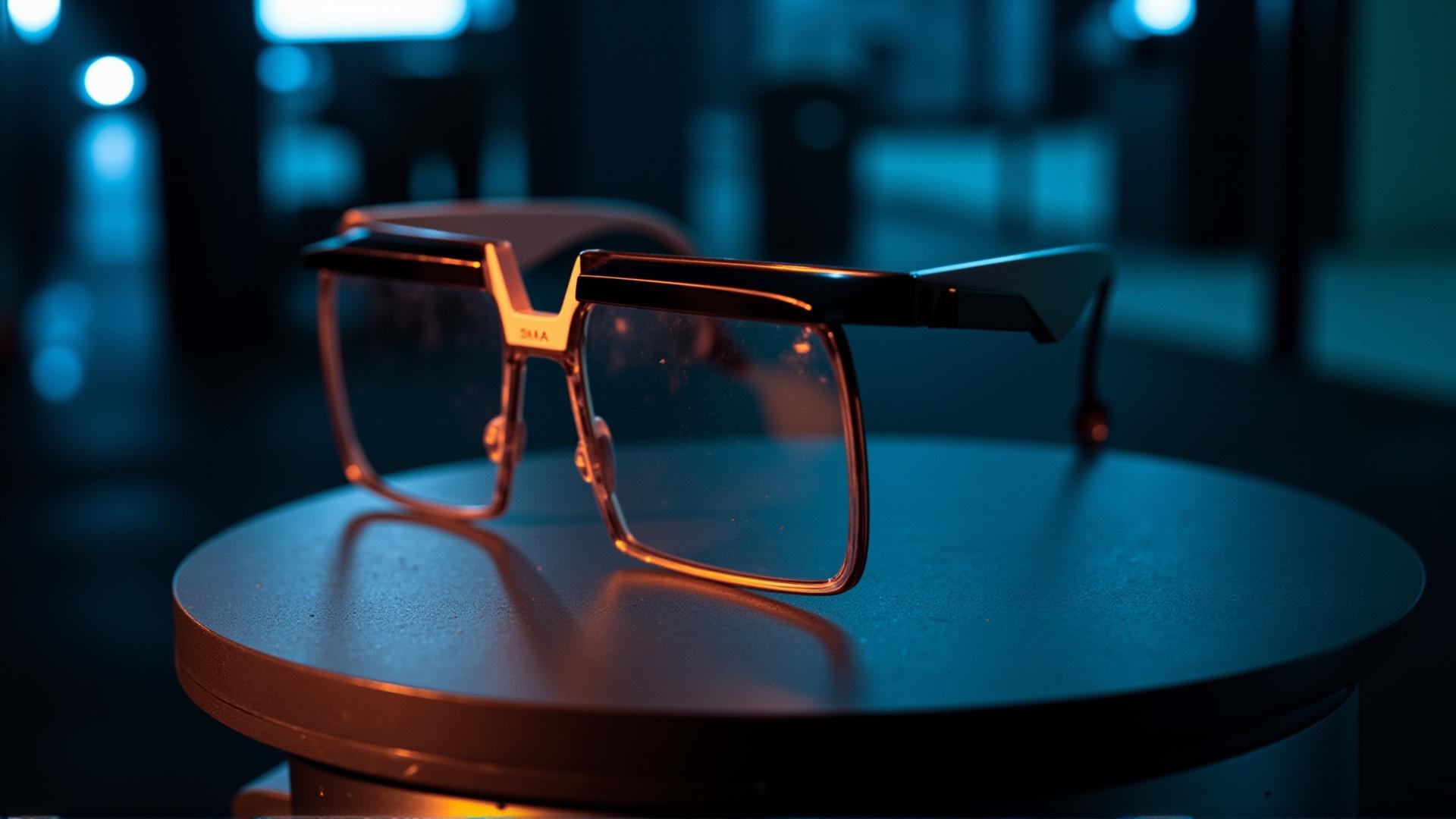
A smart glasses contract is not a long document. It is a short list of things that a quotation leaves open, written down in a form both sides can be held to. The decision a buyer is actually making when the agreement arrives is not which product is better. It is whether the configuration that was quoted is the configuration that will be built, documented and shipped, and whether there is a route to put right anything that arrives different from what was agreed. If those two things are settled, the rest of the contract is routine. If they are not, the cheapest moment to fix them is before signature, and the most expensive moment to fix them is after the first shipment has already been paid for.
This is the working set of seven questions that come up most often, in the order they produce the most useful answers. They are written for brand-side procurement managers, channel buyers and importers who already have one or two quotations in front of them and need to know which of the two is actually complete.
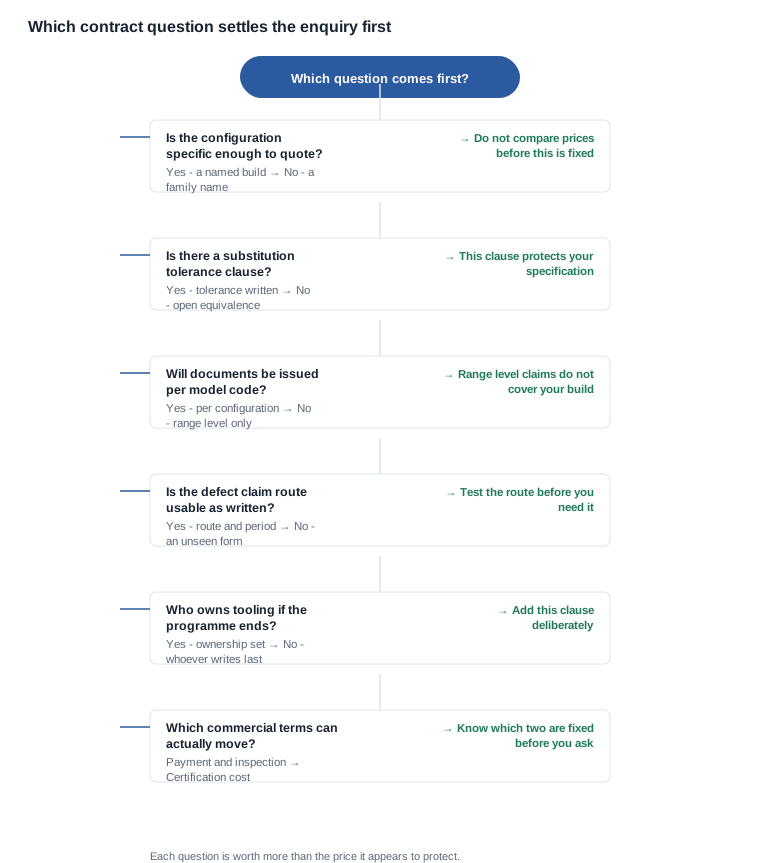
The seven smart glasses contract questions, and the order to ask them
What the contract acceptance decision really is
Strip away the legal vocabulary and a smart glasses contract does four jobs. It binds the configuration, so that both sides are talking about the same build. It sets the tolerance, so that everyone knows what may change without asking and what may not. It names the documentation that travels with the goods, so that a customs broker or a channel partner is not left to guess. And it defines the remedy, so that a unit which does not match produces a defined process rather than an argument.
Those four jobs are not a framework imposed on the negotiation. They are what the negotiation was for. A quotation is a set of assumptions stated politely; an agreement is the same set of assumptions with consequences attached. A buyer who treats the two as equivalent is negotiating with itself.
The anxiety that sits underneath most contract enquiries is rarely about price. It is that the delivery will arrive different from the approved sample, that the documentation route will stop the goods at a border, or that the first shipment will become a returns problem nobody priced. All three are contract-shaped problems, and all three are cheaper to address in the agreement than in the field.
The sequence that works, and why it starts with configuration
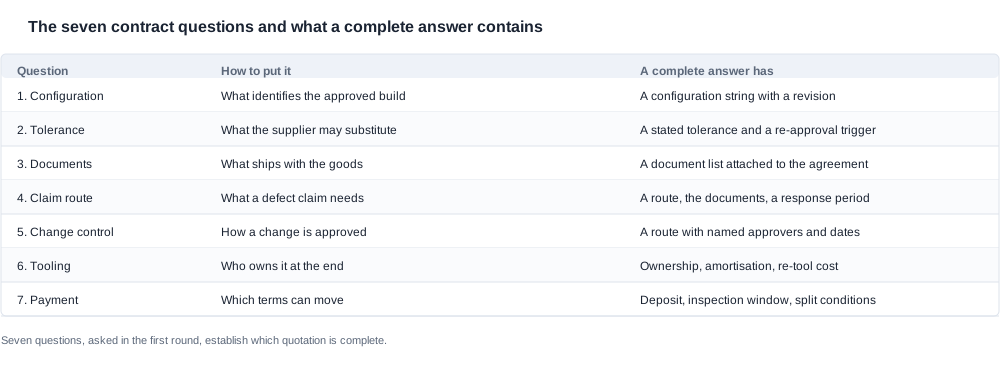
The order of the seven questions matters more than the number of them. Configuration comes first because a price quoted against a family name cannot be compared with another price quoted against a different family name, and no amount of careful reading fixes that. Tolerance comes second, because it determines whether the specification you agreed can quietly change between signature and despatch. Documentation comes third, because the documents decide whether the goods can move. The claim route comes fourth, because it is the only mechanism that produces a remedy. Change control comes fifth, because it is what happens when week three arrives and something is different. Tooling comes sixth, because it only matters at the end of a programme and is therefore easy to forget. Payment and inspection terms come seventh, because they are negotiable but they are also the least consequential of the seven if the first six are right.
There is a practical reason to put configuration first that is not about logic. Asking a supplier to name a configuration string is cheap for them and expensive for a buyer who has not done it, because the answer forces the specification to become explicit. If the answer is slow, that is information. Every question further down the list depends on the answer being explicit rather than approximate.
Configuration before price in a smart glasses contract
What a configuration string has to contain
A configuration string for a smart glasses order needs to identify the model code, the camera configuration or its absence, the cell and case arrangement, the charging method, the colour, the packaging, and the destination market. That list sounds obvious until you see a quotation that contains none of it.
The failure mode is specific and common. A quotation arrives naming a product family, a unit price, and a lead time. The family name carries a photograph, a headline battery figure and a headline camera resolution. None of those belong to a single build. The unit price is therefore a price for a range, and the lead time is the fastest time in that range, which usually means the fastest configuration in the range, which is rarely the one you want.
The question to put in the enquiry is simple and it is worth putting in the first round: what identifies the approved build, and where is that identifier recorded with a revision number. An answer that is a catalogue page reference is not an answer. An answer that is a string, or a reference to an approved sample with a revision, is.
Why a family name produces an unquotable order
Two quotations built on family names cannot be compared, and the comparison is usually the reason the enquiry was sent. This is not a supplier failing to be thorough. A family name is how products are marketed; a configuration string is how products are built, and most catalogues contain far more combinations than any factory holds at one time.
The practical consequence shows up later. The buyer orders, the factory builds the default configuration of that family, and the units arrive with a different case arrangement, a different charging method, or a different cell count than the buyer assumed. Nothing in the paperwork was violated, because the paperwork named a family. The cost lands in the channel as a returns problem, and it lands in the relationship as a dispute that is difficult to win because the buyer's own order did not specify.
The rows in our catalogue that make a configuration specific
Our own published catalogue shows why this matters. For the eleven camera models we publish the resolution tier, the cell capacity, the charging time, the rated endurance, the charging case capacity where one exists, and the charging method where that row is present. Four camera models do not carry a charging method row at all — MT6 and CY03, and CY05 and L1 Pro — so for those four the charging method is an open row that has to be confirmed in writing at order placement rather than read off a catalogue. The charging cases are equally specific: 1400 mAh for CY05 and CY03, and L1 Pro, 900 mAh or 1400 mAh for L2 Utral, and a 1200 mAh folding case for MT6.
Those are the rows that make a camera configuration quotable. Where a row is missing in the catalogue, it is missing in the contract too, and the only safe handling is to name it as an open item with an owner and a date. A contract that lists an open row honestly is more useful than one that quietly fills it with a plausible number.
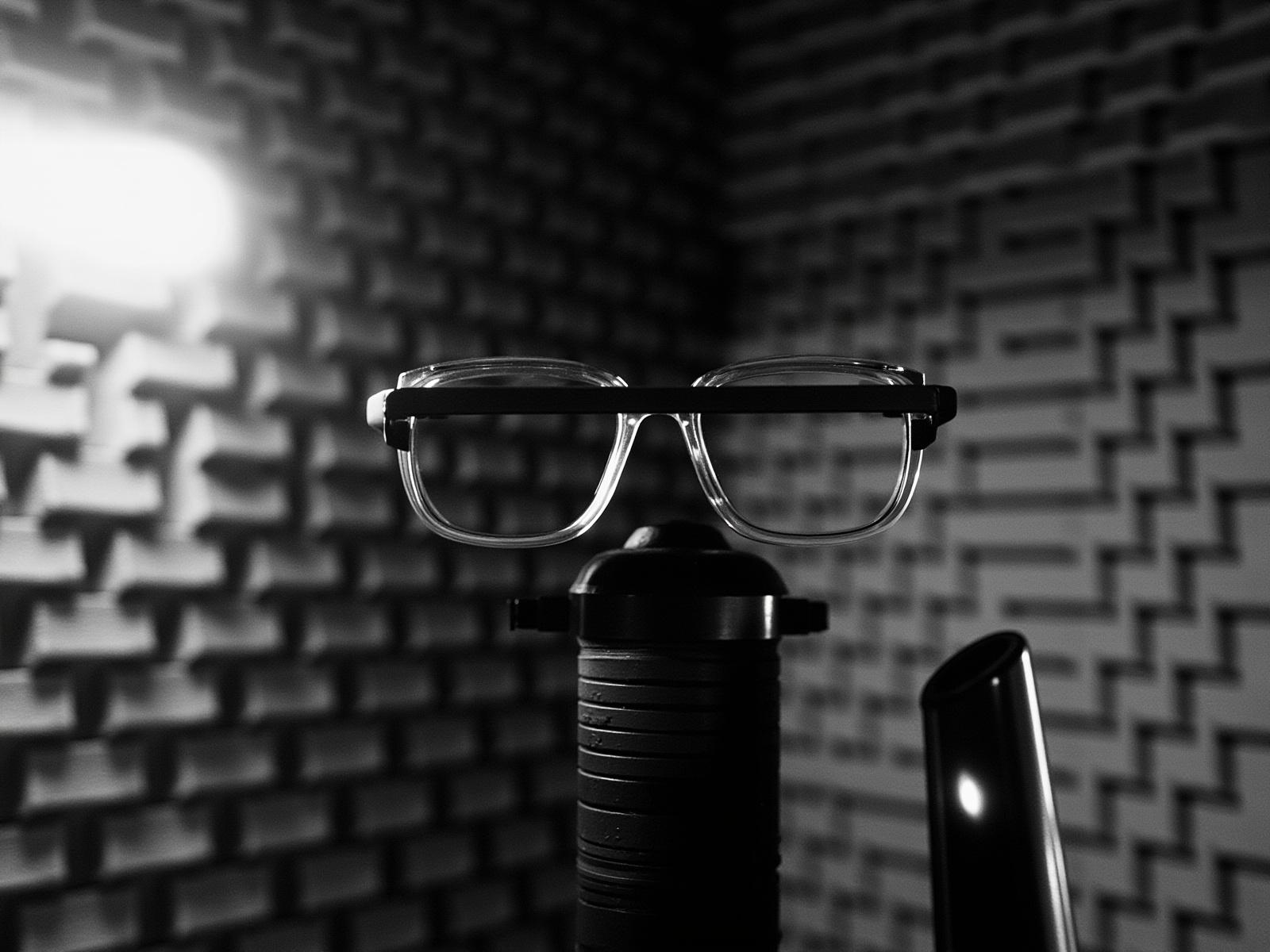
The documentation question a smart glasses contract must answer
Which documents travel with the goods
The documentation question is where most first shipments stop. The commercial expectation is that the supplier delivers the paperwork that the destination market requires, and the assumption behind that is that "the paperwork" is one thing. It is not. There is a document set that travels with the consignment, a document set that the importer has to hold on file, and a document set that only matters if the goods are challenged after they have entered the market.
Which of these belongs to the supplier depends on the market and on the product, which is why the contract has to name the list rather than refer to compliance generally. A clause that says the supplier will provide the documentation required for the destination market is a clause that transfers a problem without solving it, because nobody at either end knows which list that means until the shipment is on a vessel.
The useful clause lists the documents by name, states which ones accompany the goods, states which ones are held on file and for how long, and states who bears the cost of producing a corrected version if a document turns out to be wrong.
What is published and what is not
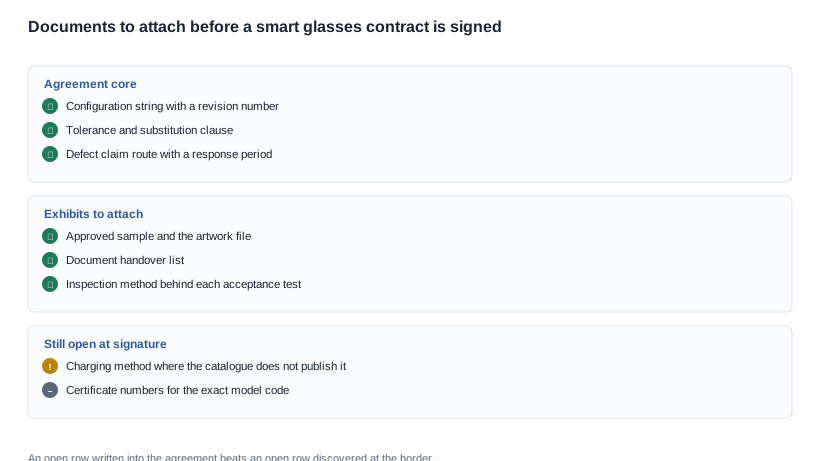
The honest position in this category has to be stated carefully, because the gap is wide. Certification is held at company level in our documentation. We do not publish certificate numbers, issuing bodies, validity dates, or a list of covered model codes. Where a document exists for a configuration we will provide it for that configuration and that market. For the children's models in the range, certification status is not provided at all.
The same pattern runs through the technical data. The weight of the unit is published for one model only: the MT6 glasses body at 158 g, which includes its 265 mAh cell and its camera and excludes the 1200 mAh folding charging case, whose own weight is not published. Camera field of view, video specification, stabilisation and low-light performance are not published for any camera model. Acoustic measurements are not published across the range. Ingress test report numbers are not published, and the IP54 marking appears on two models only — the V06 and the S7.
None of these gaps is unusual for a factory that has not chosen to publish its certification index. What matters for a contract is that both sides know which rows are open on the day the agreement is signed, rather than discovering them when a buyer asks for a number that was never going to exist.
Reading a smart glasses contract against the quotation line by line
Four read-back steps that catch most problems
Verification is where a supplier who has done the work is separated from a supplier who has described it, and every step below works with documents and a sample rather than with a visit.
The first step is to read the agreement against the quotation rather than on its own. Every number, date and configuration string in the quotation should appear in the agreement. Anything that appears in only one of the two is a term the supplier has kept, and the list of those items is the most useful output of the exercise.
The second is to ask for the tolerance clause to be read back against a specific case. Take one component the supplier might reasonably substitute — a cell, a case, a camera module — and ask what happens if a different one arrives. A supplier who answers clearly has a real tolerance rule. One who answers vaguely has not written one, and the agreement will not create one by being signed.
The third is to attach the approval documents rather than reference them. The approved sample, the artwork file, the configuration sheet and the documentation list should be exhibits with revision numbers. The practical benefit is that a later disagreement is about an exhibit rather than about what two people remember.
The fourth is to test the claim route before you need it. Ask exactly what a buyer must send to make a defect claim, to whom it goes, and how long the supplier has to respond. A claim route that requires a form nobody has seen is a claim route that will be used once, and it will be used badly.

Running the checks against the document you intend to sign
The timing is the part that gets skipped. These four steps are worth nothing after the goods have shipped, and they are worth very little against a draft that is not the version you are going to sign. Run them against the final document, with the final quotation alongside it, and with the approved sample physically present so that the exhibit reference can be checked against the object rather than against the description of the object.
The questions to ask in the first round
If the enquiry only has room for a short list, these are the ones that change the most per question asked: how is the approved configuration identified and revision controlled; what may the supplier vary without re-approval and what triggers a re-approval; which documents are delivered with the goods and which are held on file; what must a buyer send to make a defect claim and within what period; who owns the tooling and artwork if the programme ends early.

Which smart glasses contract terms move, and which are fixed
The terms worth spending negotiating time on
Negotiating time is finite, so it is worth being clear about where it returns the most. In our experience of how these programmes are run, four areas reward the effort: the payment structure, the inspection window before despatch, the conditions under which a shipment may be split, and the period within which a claim must be raised.
The inspection window is the one buyers most often leave unset and most often need. A stated window, with a named inspection method and a named consequence if the window is missed, converts a dispute about quality into a dispute about timing, which is far easier to settle. A split-shipment condition matters more than its place in the agreement suggests, because it determines whether a single failing unit holds back the whole programme or only part of it.
The remedy period is the second area worth time, and the reason is simple: a remedy period is only meaningful if the claim route is usable, and the two clauses are much easier to agree together than separately.
The terms that are set by someone else
Two things in a smart glasses contract look negotiable and are not. The cost of certification and the compliance period are set by a third party — a laboratory, a notified body, a registry — and a supplier who moves them is either absorbing a cost they will recover later or making a promise they cannot keep. The certification cost for a given model and market is a fixed consequence of the regulation; the supplier's margin on it is negotiable, the cost itself is not, and the period attached to it belongs to the laboratory.
The second is the physical and regulatory constraint behind a specification. A charging method, a cell configuration and an ingress marking are either what the product is or they are not. A clause that negotiates them away produces an agreement about a product that cannot be built, which is a worse outcome than an agreement about a real one.
The clause that is routinely missing, and is worth adding deliberately, is what happens to the tooling and the artwork if the programme ends early or changes direction. Tooling ownership, the amortisation period and the cost of a re-tool caused by a change in the buyer's own requirements are commercial terms, and they are the ones most often settled by whichever side writes the stronger letter last.
The questions that belong in the enquiry
Because these change either the price or the schedule, they belong in the first round of questions rather than in a negotiation after a quotation has been accepted: how the approved configuration is identified and revision controlled, what may be varied without re-approval and what triggers a re-approval, which documents are delivered with the goods and which are held on file, what a buyer must send to make a defect claim and within what period, and who owns the tooling if the programme ends.
A buyer who asks all five in the first round is not being difficult. They are establishing which quotation is complete, and a comparison between two quotations only works once both have answered the same questions.
What we settle in writing before a smart glasses contract is signed
The boundary of our published data
Concretely, the published material on a smart glasses contract is the part of the specification we can stand behind, and everything else is a question for the supplier's own file. We publish what our documentation states, we mark the rows that are open, and we will not fill an open row with a typical figure drawn from general market data. A buyer who builds a claim on an estimated figure finds the error in the field rather than in the quotation, and the correction costs more than the question would have.
The rows our published data does not settle are these:
- Unit prices, production lead times and minimum order quantities are not published. They are confirmed per enquiry rather than stated as fixed numbers, and a contract that leans on an assumed figure cannot be verified by either side.
- Certificate numbers, issuing bodies and validity dates are not published, and certification is held at company level rather than per model code.
- Unit weights are not published for any model except the MT6 glasses body, and the charging case weight is not published for any model including the MT6.
What we will not do is quote a configuration from a photograph, or fill a specification gap with a number that cannot be traced to a document. What we will do is take a use case, a configuration and a market, and tell you which parts are settled, which are open, and which have to come from a sub-supplier before the file is complete.
The scope a contract enquiry needs
Send the model codes, the quantities and the target markets, and we will tell you which configurations exist, which of them are open on the published data, and what the contract position is for each one. If a row is open, we will say so and name what would close it. For the clause-by-clause reading side, reading a contract goes through the document line by line, and the omissions that cost money most often are covered in eight mistakes that cost money and in the repeat-stage mistakes that reappear in the second contract rather than the first.
The contract terms section holds the wider framework for how these clauses are structured, and it is the place to start if the question is which clause to write rather than how to ask for one.


