

Open ear audio glasses: leakage before measurement
Open-ear audio does not hide what it plays. That single fact decides more about an audio glasses programme than any published row does, and it is why the first thing a buyer should settle is not the driver unit or the codec but the sentence the listing will say about sound. A catalogue page that implies private listening in a shared space is a return generator, and it is generated before any hardware is involved.
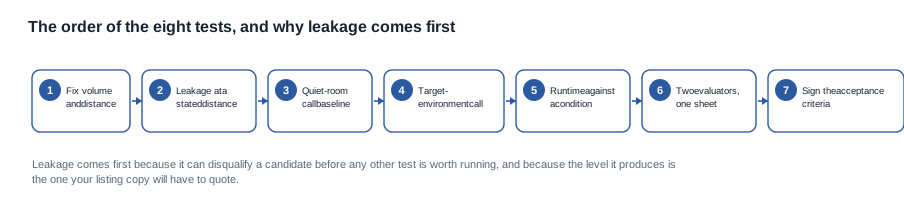
The decision, in three sentences. If your channel is a street, a vehicle or a shared office, evaluate candidates on three things in this order: the leakage level at a stated distance, the intelligibility of a call in your actual noise environment, and the runtime measured against the workload the customer will run. Weight the second of those highest, because a device that cannot be heard on a call is not an audio product in that environment no matter how it sounds at your desk. If two candidates reach the same score, choose on documentation completeness rather than on a difference you could not hear.
Who is running the evaluation, and what the evaluation has to produce. The reader is a brand-side buyer, a channel buyer or an e-commerce product owner, and the work is usually one sample order away from a production volume in a category where the published specification is thin. The specific problem the buyer is solving is that pre-order evaluations are usually done by one person, on one unit, in one room, and then reported as an opinion in a meeting. The evaluation has to produce a number, on a shared document, that two different evaluators would reach the same conclusion on, and that can be attached to the purchase order as acceptance criteria.
What our audio family publishes, and what the range looks like. The Bluetooth version, the cell configuration, the charge time, the rated runtime, the charging interface and the structural features. That is six rows per model: Bluetooth V5.3 on the K01 and the K02, V5.4 on the G07 and the D11, the D12 and the LC-105-1, and the YK12 and the LC-105-2. The sport models publish the same six rows on Bluetooth V5.4 — the YKC02, the D17 and the ZH12 — and the A07 publishes a 70 mAh single cell and a rated runtime of about twenty hours. Cells from 55 mAh per side on the LC-105, the G07 and the YK12, through 90 mAh per side on the K01 and the K02, to 115 mAh on the D17. Charge times of two hours or less on most models, about one hour on the D17 and the ZH12. Runtimes of roughly six to eight hours across the audio tier. Magnetic charging on most of the range and Type-C on the D11, the D12, the D17 and the ZH12. Structurally: no published touch row on any model, surround sound on the D11, a surround sound slim temple on the YK12, and ultra-thin plus detachable temple options on the G07.
None of those six rows is a substitute for running the tests. A cell capacity is not an acoustic result, a charge time is not a runtime, and a Bluetooth generation says nothing about what a call sounds like in traffic.
Where the money sits in an open-ear audio programme. The cost of an audio glasses line is dominated by four things, and the unit price is the smallest of them: the acoustic architecture and the tooling it implies, the number of colour and temple combinations, the per-market packaging and documentation, and the first-article work. Two quotations can differ by a third on unit price and be the same programme, or differ by fifteen per cent on unit price and be completely different programmes, depending on whether the acoustic chamber tooling is included, whether the sample round is charged, and how many combinations each quotation commits to.
The buyer's leverage therefore sits in the combination count, the number of artwork rounds, the market list and the payment structure rather than in the per-unit figure, because those are the numbers a factory actually controls.
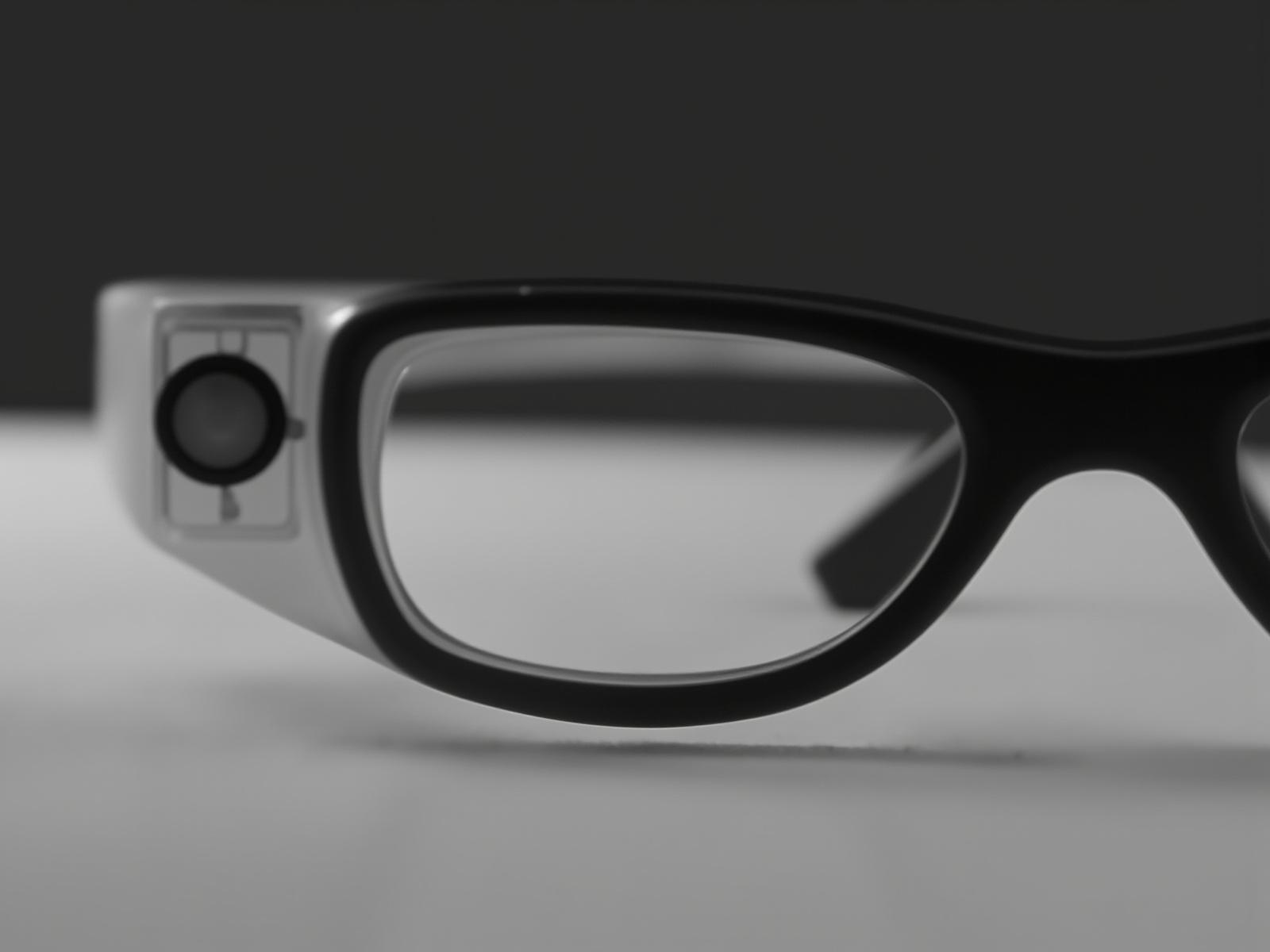
The eight tests, the pass line for each, and the weights that decide the shortlist
| # | Test | How it is run | Pass line |
|---|---|---|---|
| 1 | Leakage | Fixed audio, stated volume, stated distance | A level you can state and hold across candidates |
| 2 | Call in a quiet room | One fixed phrase, one metre | The far end repeats the phrase on the first attempt |
| 3 | Call in the target environment | The same phrase, with a defined background level | The far end repeats the phrase on the first attempt at that level |
| 4 | Runtime against a stated condition | Continuous playback at a stated volume, phone state recorded | A figure that supports the use case, with the condition written down |
| 5 | Charging behaviour | From the shipped interface, to full | Reaches full within the published charge time, using the interface in the box |
| 6 | Pairing and reconnection | Cold start, then power cycle | Reconnects without re-pairing |
| 7 | Frame and temple | Temple retention and hinge play against the drawing | No permanent set, no lateral play beyond the drawing tolerance |
| 8 | Fit across the size range | Three wearers of different head shapes | Each wearer reaches a stable position without adjustment |
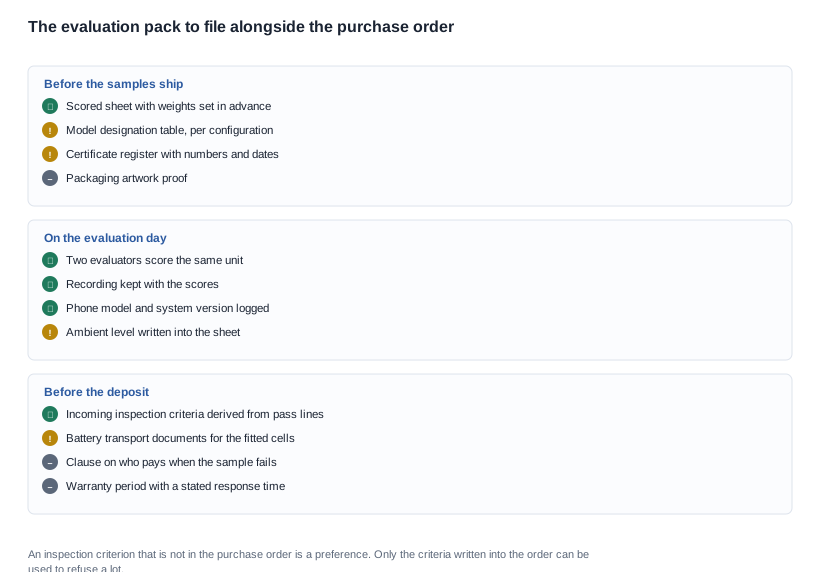
Every variable in the third column is written into the sheet before the first run: the volume, the distance, the background level, the phrase, the number of attempts and the time of day. A protocol adjusted after the results are known is a description of what happened, and it cannot be used to refuse a lot.
The thresholds, and what a supplier who has not measured sounds like
A leakage figure without a distance is not a figure. The number a listing needs is a level at a stated distance, because a level at the ear says nothing about a level at a desk. Ask for the distance, the source material and the volume setting, and treat "we are not that loud" as a non-answer. The pass line for the buyer is not a threshold the supplier meets; it is a threshold the buyer writes, because the acceptable leakage at a table in a café is different from the acceptable leakage in a quiet office.
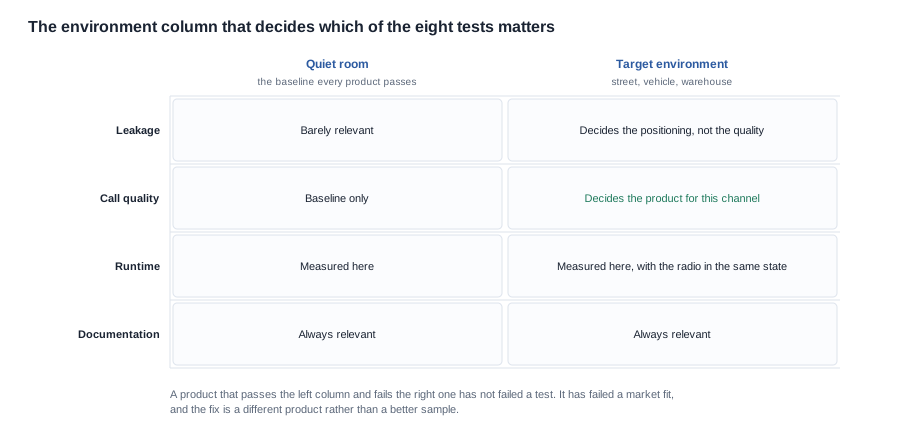
The call test in the target environment is the one that decides the product. Every microphone works in a quiet room, so the quiet-room result is a baseline and not a comparison. The comparison is the same fixed phrase, in the noise the customer will be in, judged by the far end rather than by the person wearing the device. Where the supplier publishes no microphone specification at all, this test carries the entire weight of the decision, which is why it has to be run on the sample and not inferred from a category average.
The runtime figure has to be produced against a condition, because the condition is the product. The catalogue publishes about six to eight hours across the audio tier and no test condition for any model. Two suppliers quoting eight hours have almost certainly measured different things. The defensible buyer position is to specify the condition needed — continuous playback at a stated volume, with the phone state recorded — and to treat the catalogue figure as a screening number until a sample confirms it.
The charging test has to use the interface that ships in the box. A magnetic model and a Type-C model fail differently: one fails on contact alignment and the other on the cable and the adapter. The pass line is the published charge time, reached using what the customer receives, because the alternative is a listing that promises a charge time the customer's own charger cannot deliver.
The frame and temple test decides the returns rate, not the audio. Temple retention and hinge play are read against the drawing, and a lateral play beyond the drawing tolerance is a defect regardless of how the unit sounds. The same test catches the substitution, because a unit with a different temple profile fails it.
The fit test is what a channel buyer is really buying. A range of three head shapes is the minimum, and it has to be three different shapes, because two similar heads prove nothing about a size range.
The weights, set before the results are known
A sheet with a number in each cell beats a meeting with three opinions in it, provided the weights are written before the first run.
| Test | Weight | Score (0–5) | Weighted |
|---|---|---|---|
| Leakage at the stated distance | 15% | ||
| Call intelligibility in the target environment | 20% | ||
| Runtime under the stated condition | 15% | ||
| Charging behaviour and interface | 10% | ||
| Pairing and reconnection | 10% | ||
| Frame and temple durability | 10% | ||
| Fit across the size range | 10% | ||
| Documentation and traceability | 10% |
The documentation row carries a veto rather than a score, because a product with no traceable model designation cannot have a defect rate attributed to a batch — and a defect rate that cannot be attributed to a batch is a warranty problem the buyer carries alone.
Two evaluators, one sheet, and the environment bands that decide which test matters
The protocol is only comparable if every candidate is run the same way, and it is only repeatable if two evaluators run it. Both requirements are cheap to meet and expensive to retrofit.
Fix the environment bands before the samples arrive, and write them as bands rather than as places. A quiet room is the baseline band. A street at normal traffic, a running vehicle, an open-plan office and a warehouse aisle are four working bands, and they are not interchangeable: a voice in the second band is a steady noise, a voice in the third is a crowd, and a voice in the fourth is intermittent machinery. The pass line for a call test is therefore always written as a band with a level, never as a location, because "in a café" means something different to every evaluator.
Run every candidate on the same day, in the same order, in the same room. Order effects in an acoustic evaluation are real: the first unit tested is judged against nothing and the last against a remembered impression. Interleave the candidates if the day is long, and record the order in the sheet.
Score with two evaluators and compare them. The gap between the two scores on each row is a measurement of how subjective that row is. Where two evaluators differ by two points or more, the pass line for that row was not sharp enough, and it has to be rewritten before it can be used to choose between candidates. This is the cheapest correction in the whole evaluation, and it is available only because two people were in the room.
Keep the recordings, not just the scores. A recording made on the evaluation day becomes the reference against which a later delivery is compared, which matters because acoustic behaviour drifts between production lots more often than a specification sheet suggests.
Run the protocol twice, on different days, before the order. A large difference between the two runs is a finding about the product rather than noise about the day, and a finding of that kind is far cheaper to establish before a volume commitment than after one.
What to record with every result. The model designation and configuration, the unit serial or batch, the host handset and its system version, the paired device identity, the app and firmware versions, the ambient and background level, the distance, the position and movement of the wearer, the volume setting, the tester, and the time. A result missing the host handset is a result about an unidentified device, and audio behaviour varies enough by host that the sheet is incomplete without it.
What these eight tests cannot establish. They do not establish behaviour across a fleet, they do not establish behaviour over the product's life as firmware and apps change, they do not establish the compliance position in any market, and they do not establish that the published rows match the sample. The last of those is a check rather than a test, and it is worth doing: a mismatch between the published Bluetooth version and the version reported by the unit is a substitution finding.

Where an open-ear programme breaks, and the early warning for each
The candidate that wins the desk evaluation and fails in the street. The symptom is a return cluster from one channel with a description that never mentions sound quality. The root cause is that only one environment band was tested, and the quiet band is the easiest one to win. The prevention is to build the target band into the protocol before the samples arrive and to repeat the evaluation in it.
The louder candidate wins, and the louder candidate is not the better one. The symptom is a shortlist that changes when two evaluators compare notes. The root cause is that output level was not matched before the listening comparison, so a product that is simply louder sounds clearer. The prevention is to match the output level rather than the volume setting, because a volume setting means nothing across two different products.
The listing promises a private listening experience the architecture cannot deliver. The symptom is a complaint that arrives with a description of the environment where the product was used. The root cause is that the copy was written from the category expectation rather than from the mechanism. The prevention is to write the copy from the test result, with the distance in the sentence.
The product passes on one unit and behaves differently on the second. The symptom is an inconsistency the buyer discovers in the field rather than on the bench. The root cause is that one sample per product was tested. The prevention is two units of each candidate, recorded in the same sitting, with the difference between two units of the same product treated as data about the supplier's consistency rather than as an anomaly to be discarded.
The runtime claim is written from a rating and the customer's duty cycle is shorter. The symptom is a battery complaint from heavy users, clustered in one segment. The root cause is a continuous figure compared against an intermittent workload. The prevention is to measure the duty cycle on the sample and to publish the figure with its condition attached.
The programme slips because a model designation was requested last. The symptom is a launch date that moves while the factory reports the units are ready. The root cause is that the artwork, the technical file and the customs description all waited on an identifier that could have been in the first email. The prevention is to ask for the designation in the first message and to treat the date as derived from it.
The room in the quotation and the room in the contract
The combination count is the negotiation with the most leverage in an audio line. The YK12 and the YKC02, the G07 and the K01, and the D11 each carry their own temple profile, and a colourway on each of them is a separate minimum, a separate artwork and a separate stock line. Committing to a combination count rather than a unit count is worth more than a unit price reduction, and it is the one conversation a factory actually wants to have.
Sharing one purchase order across two candidate models is worth more than a price cut for a channel buyer. A distributor who can take the K01 and the D12 in one order avoids two incoming inspections, two sets of artwork and two separate minimums, and the supplier will usually concede more on the order structure than on the price.
The structural features are configuration choices, not features to be admired. The detachable temple options on the G07 and the slim temple on the YK12 each change the bill of materials, the packaging and the fit story in the listing, and because the catalogue publishes no touch row for any model, the temple control surface is a specification question for the supplier rather than a configuration you can order. The negotiation worth having is the price of the configuration at volume, and the number of configurations you are committed to take.
Whether the supplier funds a second sample round is worth asking in a category this thin. Our own position is that a microphone comparison is worth doing only once, only with a script, and only with the variables held constant — so a supplier who funds a properly specified second round is showing that they understand what the data is for.
Splitting a first run into two deliveries against a staged payment protects the buyer on the failure that costs most, which is a production lot that arrives behaving differently from the approved sample. The retention is better held against the documentation package than against the unit price.
What is fixed and should be treated as a schedule input rather than a negotiating position: the acoustic architecture itself and the leakage ceiling it implies, the cell configuration and the runtime ceiling it implies, the certification cost and lead time, and the acoustic tooling, which is usually a one-off amortised across the first order. The useful question on the tooling is over what volume it is amortised and what happens to it if the programme is discontinued.
The documents to request before the deposit. The scored sheets for both candidates, with the protocol attached. The model designation table. The certificate register with numbers and the issuing body. The packaging artwork proof, with the market labels. The incoming inspection criteria derived from the pass lines above. The battery transport documentation for the lithium cells moving by air, set out at battery transport. The clause language is at contract terms, and the commercial structure of a first order is at pricing.
A worked comparison: two candidates in a call-heavy channel
What follows is a worked example rather than a client project, and it is here to set out the sequence a buyer would follow rather than to describe a result.
Assume a businesswear brand that sells into a corporate channel and to a retail customer, with a line of two audio models: one built around the D12 and one around the YK12, the first on Type-C at about seven hours and the second on magnetic charging at about six hours with a slim temple. The brand's channel has told them the deciding use case is a hands-free call on a street and in a taxi, and the brand has no published leakage or microphone data from any supplier.
The first decision is the environment band, and it is a commercial decision. The brand writes the band as "a street at normal traffic and a running vehicle", with a background level recorded rather than a location named. That single line converts a vague brief into a pass condition, and it also tells the factory what the product is for.
The second decision is the weights, and it goes in before the samples are evaluated. Call intelligibility in the target band at 20%, leakage at 15%, runtime at 15%, and the remaining 50% split across charging, reconnection, durability, fit and documentation. The brand adds a rule that any candidate failing the documentation row is eliminated regardless of its score, because a defect rate that cannot be attributed to a batch is a warranty exposure the brand would carry alone.
The third step is the run itself. Both candidates are tested in the same session, on the same handsets, with the volume set identically and the phrase fixed. The D12 produces a slightly quieter result at the desk and a clearer far-end result in the target band; the YK12 leaks a little more at the stated distance but holds the call through the transition from street to vehicle. The scoring sheet records both, and the two evaluators agree within one point on every row, which tells the brand the pass lines are sharp enough to be used.
The fourth step is the runtime, on the duty cycle rather than the rating. Neither supplier will state the workload behind its published figure, so the brand runs its own: intermittent calls across a working day with the phone state recorded. Both units come in below the catalogue rating, and the brand publishes its measured figure with the condition attached rather than the catalogue number.
The fifth step is the commercial structure. The brand asks whether the two models can share one purchase order, whether the YK12's slim temple can be offered in two colourways rather than three, and whether the balance of the order can be split against an approved first article. It holds a retention against the documentation package, and it writes an acceptance clause referencing the eight tests and the pass lines from the sheet.
The outcome is a shortlist decided by the target band rather than by the desk, a runtime claim it can defend, and a purchase order that contains the criteria rather than a description of them. Nothing in the sequence required a specification that the suppliers had not published.
Where our audio family records stop and the bench takes over
The short answer: we publish the rows we hold and we publish the empty rows next to them with the same prominence. For the Bluetooth audio family we publish the cell configuration, the charge time, the Bluetooth version, the rated runtime, the charging interface and the structural features for every model, and we publish the absence of third-party acoustic measurement and of any runtime test condition just as prominently. That is a thin record by design, and it is the reason the eight tests above exist rather than being a fallback for when the documentation runs out.
We will not publish a leakage figure, a microphone specification, a measured range or a runtime test condition that nobody measured, and we will not convert a rated runtime into a usable one by applying a typical efficiency figure. We will also be direct that our range contains a bone-conduction platform, published at 200 mAh with Type-C charging and a rated runtime of about seven hours, and that it is a different acoustic route rather than an open-ear speaker — the pick-up behaviour in a call differs entirely, and we make no claim of any kind that relates any of our products to hearing health or medical use.
Three things to settle before the audio shortlist is closed
Write the environment band down in one sentence and send it to every candidate. The band decides which of the eight tests matters, and it is the same sentence for everyone, which is what makes the scores comparable.
Send the eight questions as a list, with the pass lines attached. A supplier who answers all eight has a measurement habit; one who answers three is telling you something you need to know before the deposit.
Send us the two candidate models, the environment band and the channel, and we will tell you which test decides the project for that combination. We will mark which of the eight tests our documentation can already support, which must be run on a sample, and which need a written confirmation from the factory. The published rows are under open-ear audio, the range is at Bluetooth audio glasses, the call use case is detailed in audio glasses for calls, and the order of work is at sample evaluation.
Related reading
- The call use case in detail — audio glasses for calls
- The product range covered — Bluetooth audio glasses
- The order of work — sample evaluation
- The published data rows — open-ear audio
Tell us the models, the environment and the channel, and we will say which of the eight tests decides the project.


