
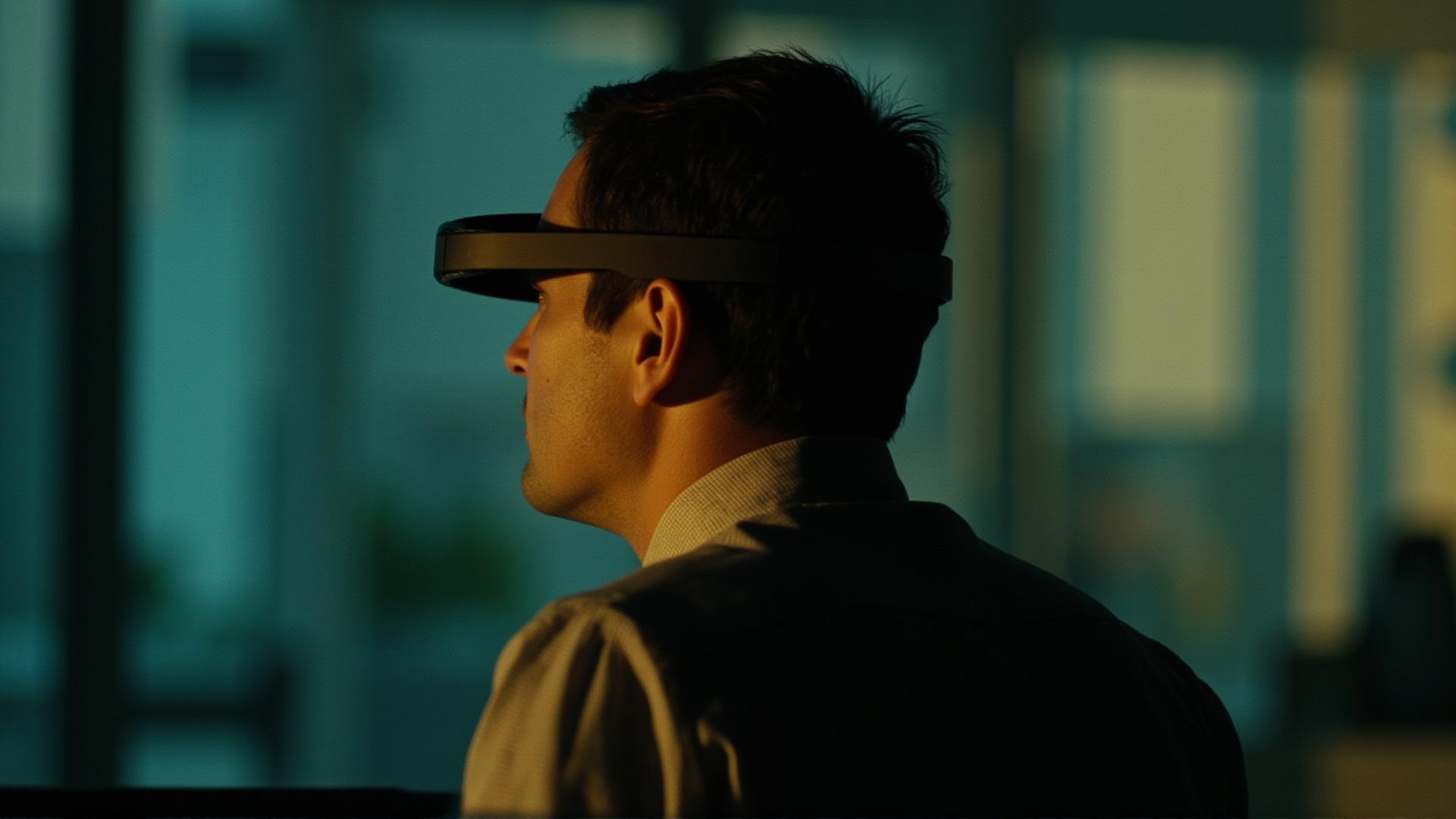
The most common question about open-ear audio glasses is not technical at all: "If I wear these in the office, will the person next to me hear my meeting?" It is the right question, because open-ear audio's defining feature — sound delivered without blocking the ear canal — comes with a trade-off the marketing never volunteers. Some sound leaves the frame for the room. How much, in which scenes, and at what volume, is the real boundary of the product category in daily life. This guide leaves the acoustic theory to the open-ear versus bone conduction comparison and answers the lifestyle question: where do open-ear glasses genuinely work in a working day, where do they need discipline, and how should a brand set expectations so the product arrives as promised?
The Open Office: Where Expectation Management Begins
In a quiet open-plan room, every open-ear transducer is audible at close range at high volume, because the physics that directs sound toward your ear also spills some of it past it. Well-designed frames control leakage through driver aiming, chamber geometry and output limits, and at conversational call volume the spill typically drops below the room's ambient level within a short distance — but "turn it up to hear clearly over the air conditioning" is exactly the behavior that projects a meeting across the desk. The honest guidance for an office user is simple: open-ear glasses are an excellent background-media and short-call device at disciplined volume; they are not a private speaker replacement for confidential calls in a silent room. Brands that say this plainly in listings have fewer returns than brands implying total privacy. The audio engineering behind the control is described in the speakers and microphones guide.
Commuting and the Street: The Strength Scene
This is where the design earns its case. Keeping the ear canal open means environmental awareness — traffic, station announcements, colleagues speaking to you — while media and calls continue underneath. For cycling and running commuters that awareness is the whole value proposition (the sport-specific framing is in the sport glasses checks and cycling applications). On trains and in stations the trade-off reverses: a loud carriage means users raise volume to compensate, which raises leakage and reduces call quality for the other party, and in truly noisy transport sealed earbuds still win outright. Position open-ear glasses as the device that moves with you through mixed environments, not the one that dominates every one of them.

Cafés, Coworking and Calls in Public
Open-ear call quality in a café is decided by the microphone system, not the speaker: beamforming placement and wind handling determine whether the caller hears the room or your voice. Eyewear placement actually gives microphones a stable, repeatable position near the mouth line, which beats holding a phone awkwardly, but wind across the temple remains the classic failure condition. Practical expectation: good in still and indoor-moderate environments, acceptable in light outdoor movement, and a test-before-committing item for customers who primarily take walking calls. The business-use context is mapped in audio calls applications.
The Daily-Life Question Is Eyewear First
Unlike earbuds, these devices replace an object many people already wear all day, so the audio feature lives or dies on eyewear fundamentals: weight on the nose, temple pressure after hours, compatibility with the wearer's existing glasses or prescription needs, and tint behavior indoors. A perfectly tuned open-ear system on a frame that gets removed at lunch is a failed product; a comfortable frame with competent audio is worn for ten hours and becomes a habit. This is why the catalog frames in the audio glasses category are evaluated as eyewear with audio inside, rather than as audio products that happen to have temples.

Retail Reality: the Returns That Come From Mis-set Scenes
Returns data in the audio-glasses category clusters around a small set of expectation failures, most of them scene-related rather than defective: "everyone could hear my music," "not loud enough on the train," "didn't work for confidential calls." None of those is a product failure when the scenes are honestly described; all become returns when listings promise private, immersive audio everywhere. Retail partners and resellers benefit from scene-explicit merchandising — office, commute, walking, café — and from training staff to position open-ear as an awareness-first design with a deliberate volume discipline, rather than an earbud equivalent. The brands with the quietest support inboxes are the ones who set the boundary at the point of sale, supported by the partner-facing material in the distributor and retailer program.
How Buyers Should Evaluate the Real-World Boundary
Since leakage is physical and measurable but the exact numbers are configuration-specific, evaluate behavior rather than trusting adjectives: sit a colleague one meter away in a quiet room at your customers' typical call volume; take a walking call in light wind; wear the frame a full working day and note temple pressure and the moment they come off; test pairing and call handoff between phone and laptop; and run the same test across two head sizes. That procedure is worth more than any spec sheet, and it is the sampling discipline behind the samples policy. For brand merchandising, the strongest packaging tells the truth about scenes — awareness and comfort across the day, volume discipline in quiet shared spaces — which keeps reviews aligned with reality and claims inside the limits on the claims policy page.
Frequently Asked Questions
Can I take private calls on open-ear glasses in a quiet office?
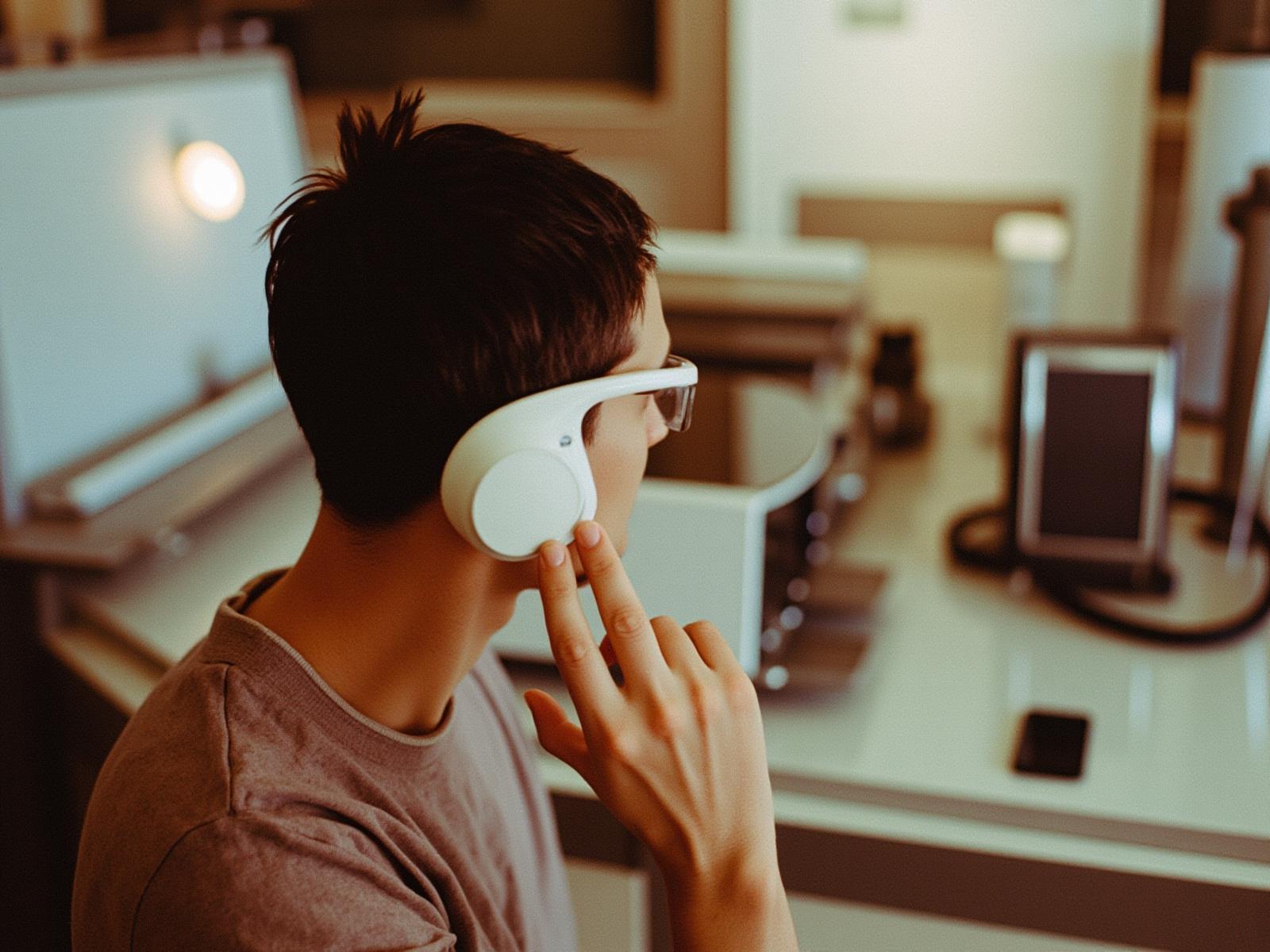
At disciplined volume in a normal ambient room, spill at neighbor distance is typically low, but open-ear designs are not private transducers: in a silent room at high volume, nearby people will hear something. For confidential calls, lower the volume or use a private space — set this expectation explicitly with customers.
Are they better than earbuds for commuting?
Different tools. Open-ear glasses win on awareness and all-day comfort in mixed environments; sealed earbuds win on isolation in loud trains and on privacy. Many users end up wearing glasses across the day and reaching for earbuds when the environment demands isolation.
How do calls sound outdoors in wind?
Wind across temple microphones is the classic weak point; performance varies by mic placement and wind-noise processing. Test walking calls in your actual environment before merchandising call quality prominently — do not judge calls from an indoor demo.
Can they be worn over or with prescription lenses?
Platforms differ: some support prescription-compatible lens packages or clip-in options, others are sunglasses-first. Confirm the option for the specific platform rather than assuming it transfers across families, and evaluate it during the sample round.
Why do listings rarely publish a leakage number?
Leakage depends on volume, distance, room acoustics and fit, so a single figure would mislead; serious evaluation uses a controlled real-world listening test at your customers' typical volume rather than a decibel claim. Asking how the supplier controls leakage (driver aiming, chamber design, output limits) is the more informative question.
To evaluate open-ear frames against your own daily scenes — office, commute, walking calls and all-day fit — request evaluation units and the platform's microphone and leakage-control summary through request a quote, with your target channels described.


