

Open-ear speakers and bone conduction transducers both appear in audio smart glasses, and buyers often treat them as two quality tiers of the same thing. They are not. They are two different transduction paths with different wearing experiences, different best-fit environments and different engineering constraints — choosing between them is a use-case decision, not a premium-versus-budget decision. This guide explains how each path actually works, what it does well, where it struggles, and how to match the technology to the customers you actually sell to. It stays strictly on the acoustic side of a regulatory line that matters: neither technology in consumer eyewear should be marketed as a hearing device.
The hardware anatomy of open-ear glasses — speaker placement, microphone architecture and leakage control — is covered in the speakers and microphone guide; the commercial case for the category is in the audio glasses B2B brief. This piece is the technology comparison.
How Open-Ear Audio Works on Glasses
Open-ear designs mount small directional speakers in the temples, aimed at the ear canal entrance without sealing or inserting anything. Sound travels through the air as it does from any speaker — a short, carefully aimed air path — while the ear remains completely open. Two engineering consequences follow. Because nothing occludes the ear, ambient sound enters naturally: traffic, conversation, office sounds mix with program audio, which is the core safety and awareness feature. And because the ear is open, audio can also escape the other way; controlling sound leakage through driver aiming, chamber design and output discipline is the main engineering battle, which is why open-ear frames are judged on call privacy at arm's length rather than raw volume.
Microphone quality matters disproportionately. Open-ear listening happens in the same noisy world the user's voice must be extracted from, so multi-mic placement and wind handling — often routed along the temple — determine whether outdoor calls are usable. These are exactly the checks in the functional test coverage described on the quality process page.
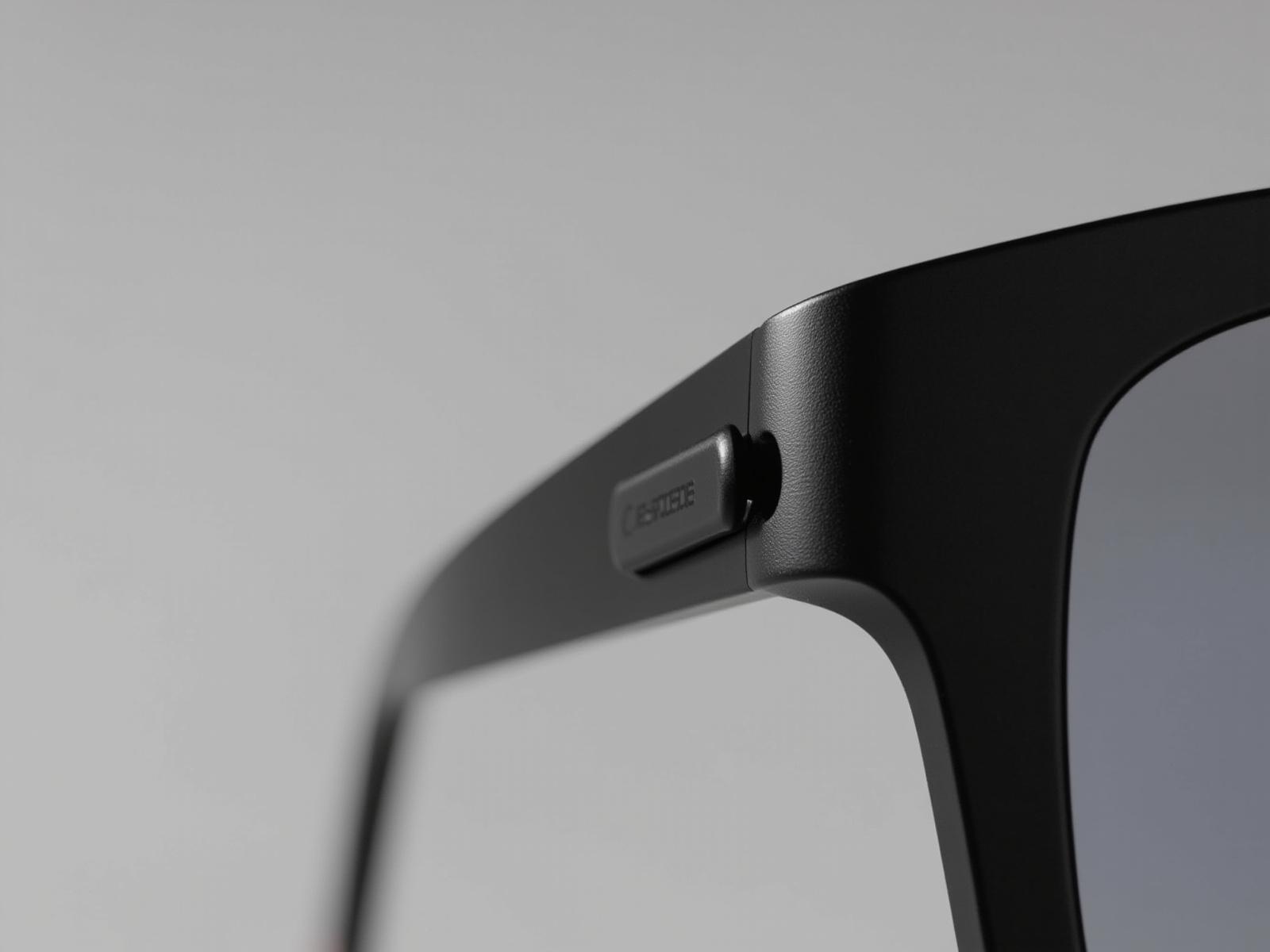
How Bone Conduction Works
Bone conduction transducers do not move air for the first stage of the journey. They vibrate the bones of the skull — typically positioned against the mastoid area via the temple — and those vibrations reach the cochlea directly, bypassing the outer and middle ear. The ear canal stays fully open, so the awareness benefit is shared with open-ear designs; in fact the canal is even more unobstructed because no speaker fires toward it.
The trade-offs come from physics rather than implementation quality. To transmit vibration efficiently the transducer must maintain consistent contact pressure against the side of the head, which makes fit and head-size tolerance central to both comfort and performance — a loose contact attenuates dramatically. Low frequencies are physically harder to deliver through bone, so perceived bass response is leaner than air-conduction designs at comparable size and power. And because transducer energy enters through the frame structure, vibration management in the temple (avoiding buzz, rattle and transfer to lenses) is a real engineering item on the bill of materials.
Where Each Technology Actually Wins
Open-ear is the default for everyday, all-context frames — commuting, office calls, media, shopping, travel — because it delivers the fuller frequency balance users associate with music, works with ordinary glasses fit tolerances, and integrates naturally with the temple geometry used across the Bluetooth audio glasses family. Its weakness set — leakage at high volume, weaker isolation in extreme ambient noise — is manageable through output discipline and mic engineering.
Bone conduction is chosen for specific wearing contexts where its properties are features rather than compromises: users who strongly prefer zero acoustic pressure at the ear, situations where wearing earplugs or hearing protection is combined with audio, and activity designs where maximum canal openness is valued. Buyers merchandising these frames should browse the bone conduction category with the honest understanding that this is a context-specific family, not a universal upgrade.
Neither path is water. Sports positioning for either family still depends on a real tested seal rating for sweat and rain — decode the marks in the IP ratings guide rather than assuming the transducer type implies water resistance.
Two practical wearing factors also belong in the comparison. Prescription compatibility: both transducer types must coexist with corrective lenses, clip-in inserts or optical frames without changing contact geometry — verify the option on the specific platform rather than assuming accessory compatibility carries across families. Glasses-wearer ergonomics: temple thickness and weight distribution are noticed after hours, not minutes, because unlike earbuds these devices replace an object many people already wear all day; a slightly heavier temple that pinches behind the ear is the most common reason a genuinely good audio product ends up in a drawer. Audition both families for a full working day before merchandising either.
The Line Nobody Should Cross in Marketing
Both technologies are frequently drawn into "helps you hear" language, and that is where consumer electronics ends and medical-device regulation begins. Consumer audio glasses are entertainment and communications devices; claims that they treat hearing loss, substitute for hearing aids, or provide therapeutic benefit move the product into a regulated category with entirely different conformity requirements in both the United States and the European Union. The boundary — including how wellness-adjacent wording is assessed — is mapped in detail on the medical device boundary page, and listing language should pass the evidence review described in the claims policy before publication.
Safe, honest framing is easy: "open-ear awareness of your surroundings," "audio without blocking the ear canal," "calls and media while staying present in the environment." Unsafe framing promises clinical outcomes the product is neither designed nor certified to deliver.
How Buyers Should Evaluate Either Design
Audition the frame the way your customer will wear it: outdoors with wind, in an office beside a colleague testing leakage, on a call in a moving environment, and over a full day for weight and temple pressure. For bone conduction models specifically, test on multiple head sizes and hair styles — contact consistency is the single biggest reported variable. Ask what acoustic and RF verification the configuration undergoes in production, and request the functional coverage rather than accepting "tested" as an answer; the question set belongs in the supplier quality questions. Finally, check the endurance profile under the same mixed-use realism the battery guide advocates — transducer drive profiles affect run time, and an inflated maximum becomes a review problem.

Frequently Asked Questions
Is bone conduction better than open-ear audio?
No — they are different transduction paths. Open-ear air conduction generally offers a fuller musical balance and easier fit across wearers; bone conduction offers zero pressure at the ear and suits specific awareness-first contexts. Match the technology to the wearing scenario rather than treating one as premium.
Can I market these glasses as hearing assistance?
Not as a medical or hearing-loss product. Consumer audio glasses must avoid hearing-aid, treatment or therapeutic claims, which trigger medical-device regulation; the exact wording boundary is set out on the medical device boundary page. Awareness and convenience language is the defensible zone.
Are open-ear glasses safer than earbuds when cycling or running?
They preserve environmental awareness by keeping the ear canal open, which many users prefer in traffic, but "safer" is a claim that needs care. Market the awareness benefit factually, keep music volume guidance sensible, and treat water and sweat performance as a separate, rated question per the IP ratings guide.
Should a product range include both types?
A first-season range usually anchors on open-ear frames for the broadest audience — the assortment logic is in the portfolio guide — and adds a bone conduction model only when a specific channel (awareness-first sports, professional contexts) actually asks for it. Shelf duplication without distinct use cases just fragments reorder volume.
Do open-ear glasses leak sound?
All open-ear designs can leak at high output; well-engineered frames control it through driver aiming, chamber design and sensible output limits, so call privacy at conversational volume in shared spaces is realistic. Judge it in person at the volume your customers actually use rather than from spec sheets.
To compare available platforms with your merchandising scenario in mind — or to discuss a private-label program on either acoustic path — start at request a quote with the target channels and wearing contexts.
Further reading
- Open Ear Vs Bone Conduction: Which One To Choose And Why
- Bone Conduction Glasses: Open Ear Versus Open Ear Audio


