
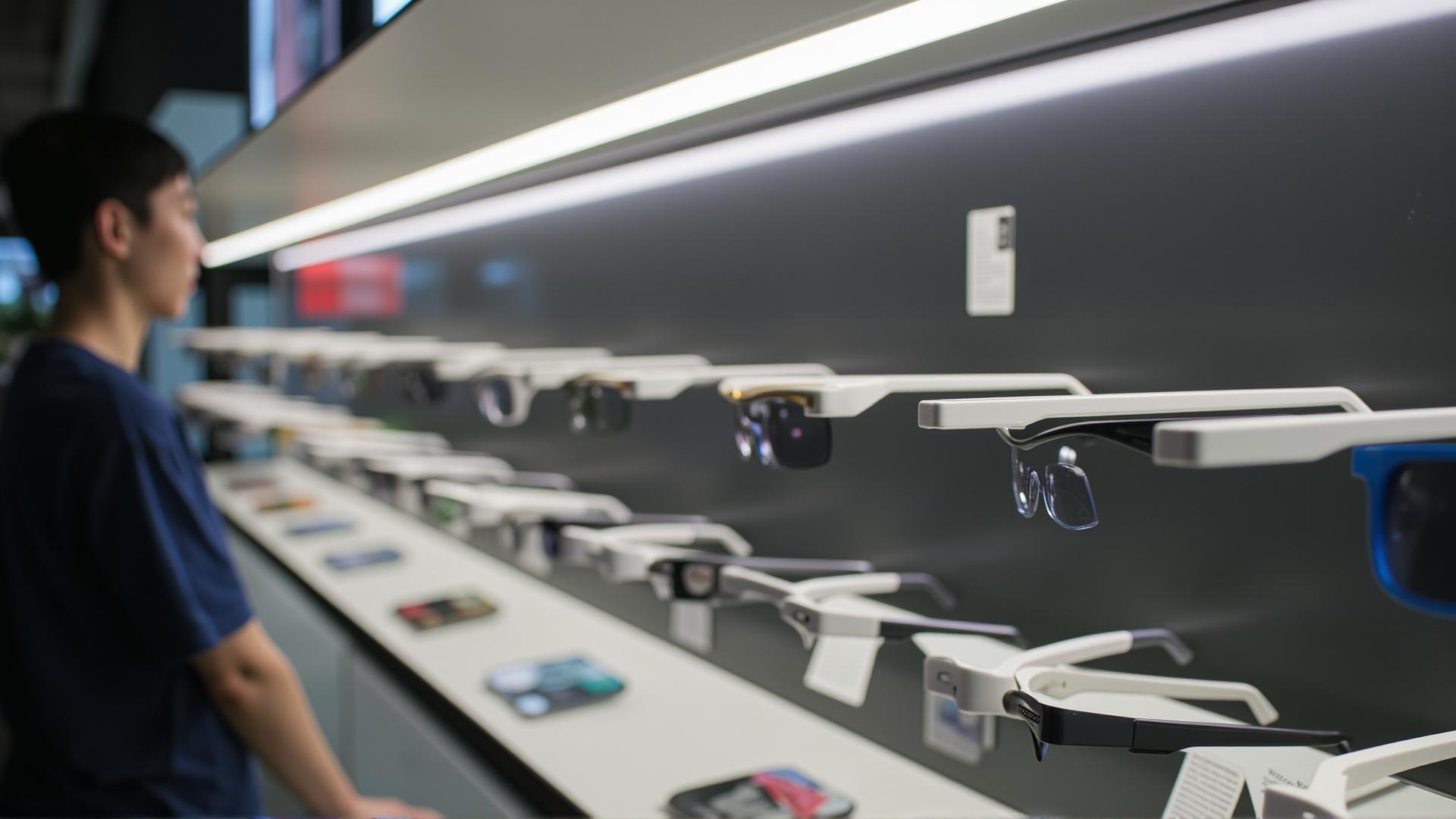
Most comparisons in this category list the gains and treat the costs as caveats to be discovered later. Both columns are real, and a buyer planning a content range should budget for the second one before the order rather than discovering it in post-production. This page is written for the buyer evaluating whether a head-mounted camera belongs in a channel at all, which is a different question from which model to buy, and it is deliberately structured so that the answer can be reached with one test afternoon and one honest number.
The short answer. The format is excellent at first-person, hands-free, informal production and poor at controlled production, and the published specification for our camera range settles the endurance and the interface while leaving the framing and the file behaviour open. Whether the format suits a channel is therefore a workflow question, not a specification question, and it should be answered before a model is shortlisted.
Smart glasses for content creation: the question that stays invisible in a quotation
A head-mounted camera is a different production format, not a smaller version of a camera on a stick. It moves the camera to a fixed position relative to the head, which means the framing follows the body rather than the operator's intent, the sound source is always roughly a metre from the microphone, and the operator's hands are free throughout. Those three consequences generate the gains and the costs together, and separating them is what makes the comparison honest.
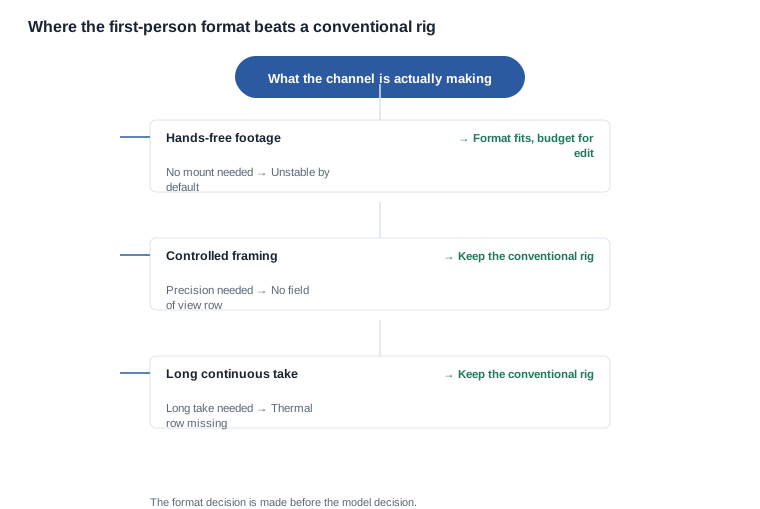
The gains and the costs are not weighted equally, and the weight depends on the channel. For a channel producing first-person walkthroughs, a hands-free capture that never interrupts the demonstration is worth a great deal, and the post-production burden is a familiar editing problem. For a channel producing controlled studio segments, the same device produces footage that cannot be framed, cannot be repeated and cannot be stabilised to broadcast standard, and no amount of discount changes that.
The commercially important point is that the cost side is mostly invisible in a quotation. A buyer comparing two camera products compares unit price, specification and lead time. The format question — how much editing time does ten minutes of usable footage require, and who pays for it — appears nowhere in that comparison, and it is usually the larger number. This is why the total cost of a content channel has to be built with the edit time included, and why a channel that has never counted it will consistently misjudge a head-mounted camera against a conventional rig.
Who this page is written for. A brand manager defining a content range needs to know whether the format itself is defensible before the accessory chain and the packaging artwork are paid for. A channel buyer comparing a supplier's camera against a conventional rig needs a test that produces a number rather than an opinion. A procurement manager needs to know what the format's weaknesses mean for the return rate and for the wording of the listing, because the weaknesses are what the returns will be about.

The gains no conventional rig reproduces
Hands-free capture is the first and the largest. A camera that is already on the operator's head changes what is possible, because a take no longer stops every time a hand is needed. For demonstration content, for walkthroughs and for any format where the subject is doing the work rather than performing for a camera, this is not an incremental improvement — it is the difference between a take that works and a take that has to be staged around a tripod. The cost of that gain is framing, and the gain is usually worth more than the cost.
Single-device capture removes an entire class of production problem. A unit that records picture and sound together removes the audio-to-picture synchronisation step entirely. Synchronisation problems are notoriously more expensive to fix in post than to prevent, and in a channel that produces narration with a visual, the saving is not merely a convenience — it is a whole class of defect that cannot occur. The counterpart is that the microphone specification is not published for any model in the range, so the sound quality is a measurement rather than a claim, and a buyer has to make that measurement rather than assume it.
Low profile changes subject behaviour. In documentary and lifestyle work, a visible camera changes what people do in front of it, and the effect is largest exactly where the content is most valuable. A camera that is barely visible in the frame produces more natural material. This gain is difficult to quantify and impossible to argue against in practice, and it is one of the reasons a head-mounted camera keeps appearing in work where a conventional rig would look wrong.
The camera is always ready. There is no setup time, no mount, no focus and no framing decision between the decision to record and the recording itself. For a channel that produces many short pieces a day, that removal of friction is a throughput argument, and throughput is a cost argument once the staff time is priced.
Throughput is worth pricing explicitly, because it is the gain that survives a sceptical edit. A conventional production of the same short piece consumes setup, framing, focus and operator attention before a single usable frame exists. A head-mounted unit consumes none of that, and the saving is not theoretical: it is the difference between two pieces and five pieces from the same person in the same afternoon. The published endurance rows are what make that arithmetic possible, because the five to eight hour band and the published case capacities of 900, 1200 and 1400 mAh are the figures that let a buyer schedule a long session without exceeding the published limit. A buyer calculating whether the format pays for itself should start with this number rather than with the image quality, because the image quality is not the thing the format is selling.
The costs that arrive after the shoot rather than before it
Stabilisation is the first cost and the most predictable. Without a mount, first-person footage shakes at a frequency that is difficult to stabilise in post, and the result often reads as unusable rather than as raw. The key commercial point is that this cost lands on the editing team, not on the shoot, so it does not appear in the procurement budget until someone counts the hours. A channel that has never measured it will discover it as a growing editing backlog rather than as a cost.
Thermal and storage limits come next. Continuous recording in a warm environment finds a limit that has nothing to do with the published battery figure, and the published runtime bands of five to eight hours are not a guide to continuous recording behaviour. Storage is the same problem in a different form: the capacity and the behaviour when storage fills are not published for any model in our range, and a creator who fills the storage mid-session will describe the product as broken. The fix is a sentence on the listing that marks the row as unspecified, plus a rule in the guide about checking before the take rather than during it.
The framing row is the one buyers discover last. The field of view is not published for any model, and it determines whether a shot captures what the eye sees or a crop of it. A buyer who has selected on the resolution tier alone is making a framing decision without a framing figure, and the footage will be technically correct and compositionally wrong.
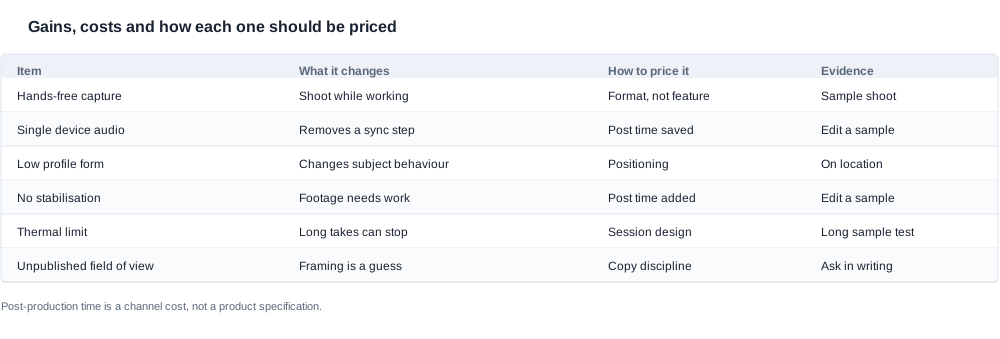
| Item | What it changes | How it should be priced | What settles it |
|---|---|---|---|
| Hands-free capture | The take never stops | Format value, not a feature | A shoot in real conditions |
| Single device sound | No sync step | Editing time avoided | A recording in the room |
| Low profile form | Subject behaves naturally | Positioning | On location |
| No stabilisation | Footage needs work | Editing time added | Edit a sample and time it |
| Thermal limit | Long takes can stop | Session design | A long sample test |
| Unpublished framing | Composition is a guess | Copy discipline | Ask the supplier in writing |
Post-production time is the cost buyers forget to count at all. Footage that needs stabilisation, cropping and audio repair takes meaningfully longer to edit than footage shot on a conventional rig, and on a tight schedule that is frequently the cost that decides the question rather than the picture quality. This is the single number a buyer should measure, and it is the number most often assumed rather than counted.
The way this cost arrives at the ledger is through returns, and that is worth understanding before it happens. A channel that sells on a first-person proposition receives, over a quarter, a set of complaints that are not hardware complaints: the image is soft, the sound is unusable, the file will not open, the session ended early. Each of those is a return request, each return request is a refund plus a freight cost plus a replacement unit, and each one consumes a support contact that the channel pays for in staff time. The published rows that prevent this class of return are the runtime band and the case capacity, both of which are quotable, and the row that causes most of it is the framing row, which is not published at all. So the commercial treatment of this cost is straightforward: publish the band with its caveat, mark the framing row as unspecified, and make the acceptance criteria a written document so that a dispute is resolved against a standard rather than an opinion. The content creation section covers the channel, and the checklist is the pre-purchase list.
The productions this format should not be sold for
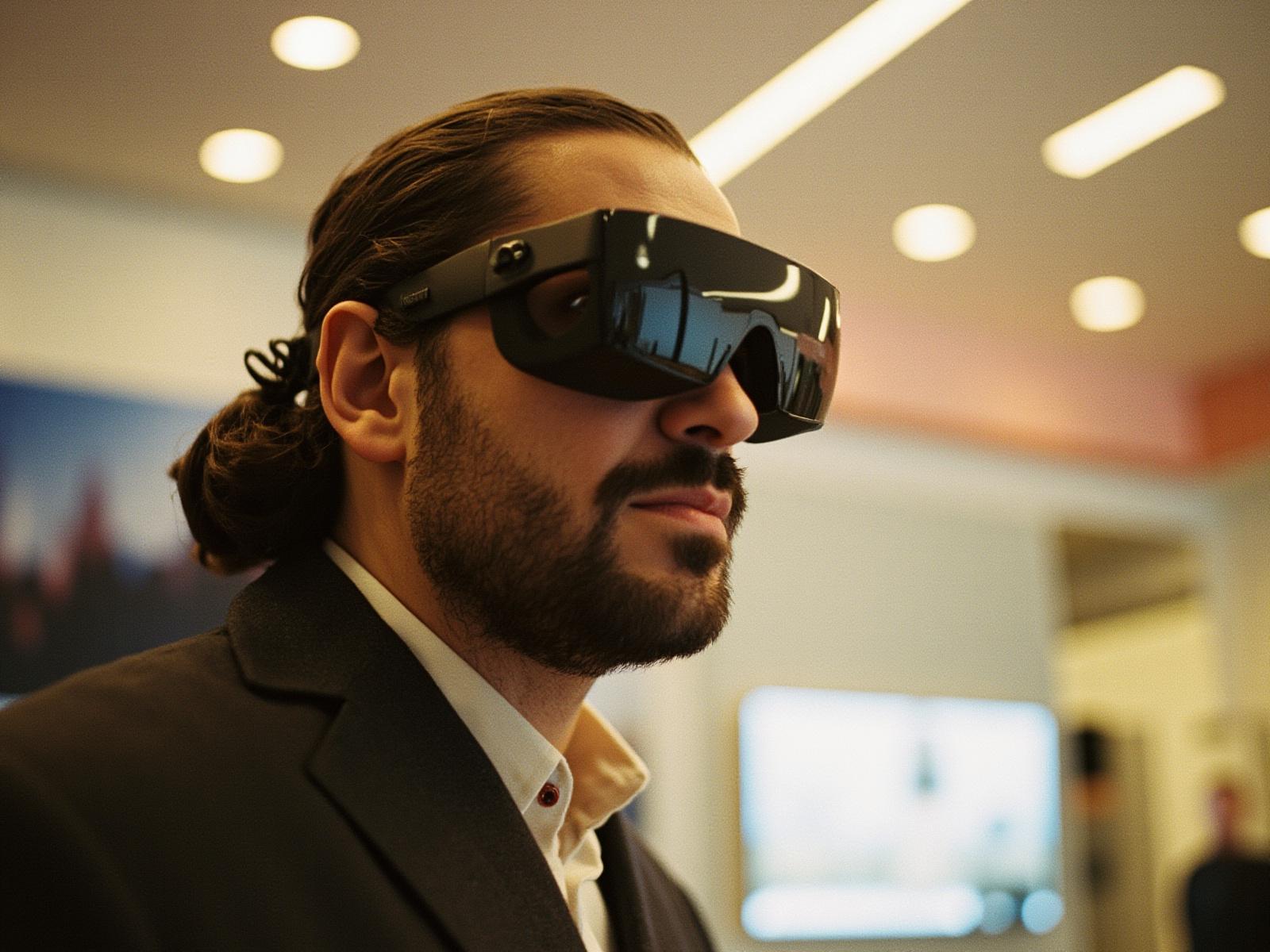
Some content does not suit this category at all, and a range that includes it will generate returns that no amount of product support can resolve.
- Anything requiring precise framing. A controlled studio segment, a product hero shot or a tutorial where the subject must be framed precisely cannot use a head-mounted camera, because the operator cannot adjust the frame while recording.
- Long continuous takes in a warm environment. A multi-hour take depends on thermal behaviour that is not published, and the failure appears in the worst possible place — at the end of the longest take of the day.
- Narration recorded outdoors. Wind and ambient noise are handled by microphone characteristics that are not published for any model in the range, and the only way to establish whether the unit is usable in an outdoor narration is to record one.
- Any production where a repeated take is required. A head-mounted camera is efficient when the take happens once. It is a poor instrument when the shoot depends on capturing the same moment again with a different result.
A buyer who expects a head-mounted camera to replace a small production setup is the buyer most likely to be disappointed, and the disappointment arrives after the order rather than during the quotation. That is the specific reason this page exists.
There is a fourth answer, and it is usually the commercially correct one. Rather than choosing between the format and a conventional rig, many channels buy both and assign the work: the head-mounted unit takes the first-person material that a conventional rig would have to be re-staged for, and the conventional rig takes the controlled segments that need framing and repeatability. That answer doubles the kit cost, and it is still cheaper than the alternative of one device that is used for work it cannot do and returned for work it cannot do. The supplier conversation that follows from it is specific: ask which models in the range suit the first-person material, ask for the published endurance and case rows that support a long session, and ask what the accessories cost per creator so that the kit budget can be built rather than guessed. A procurement manager who can answer the question of which content goes to which device is ready to order; one who cannot will buy twice.
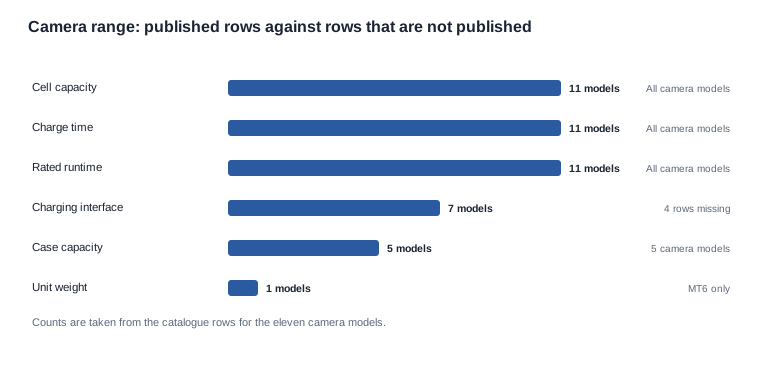
The catalogue picture behind this is worth holding in view. For the eleven camera models, cell capacity, charge time and rated use are published for every model, and the charging interface is published for seven of them. Case capacity is published for five, and the unit weight is published for exactly one model, the MT6 at 158 g for the glasses body including the battery and the camera, with the foldable charging case excluded and its weight not published. Everything a buyer needs to reason about endurance and power is available. Everything a buyer needs to reason about the picture and the file is not, which is why the format question and the model question have to be kept apart.
One afternoon that settles the format question
The way to weigh this is to run one real test before committing, and to produce a number rather than an impression.

- Shoot ten minutes of real work in the light you actually use. Not a walk around the office and not a demonstration. The how to test article sets out the acceptance test before ordering.
- Put the file through the same edit you use every week. The channel's real editing chain, the real deliverable format, the real deadline.
- Time the stabilisation, crop and audio repair the file needs. This is the number that decides the question. Write it down next to the cost of an hour of editing time.
- Compare it with the equivalent conventional take. The same content, shot conventionally, edited the same way. The difference in hours is the real price of the format.
- Write the answer as a go or a no-go, with the number attached, so that it survives a change of personnel.
An hour of that work is worth more than any comparison chart, because it produces a number from your own workflow rather than from somebody else's. If the answer comes back favourable, a buyer has bought a format. If it does not, a buyer has avoided an order, a returns reserve and a channel proposition that would not have worked — which in this category is the more valuable of the two outcomes.
What to write down when the test is finished. Three items, and all three belong in the purchase file rather than in a notebook. The edit time per usable minute, because it is the number that scales with the channel. The conditions in which the test was run, because a result without conditions cannot be repeated or defended. And the acceptance criteria the sample met, phrased as a numeric band, because the same band is what converts a later return discussion into a decision against a standard. A buyer who carries those three items into the supplier conversation is negotiating from evidence rather than from a demonstration, and that is the difference between a price comparison and a procurement.
Two conditions make the test worth running. The sample has to be the production configuration, including the case and the charging interface, because the case changes the session structure. And the test has to be run by whoever will do the editing, because the edit time is the thing being measured.
What we will recommend, and what we will decline
For this category, we will tell a buyer which configuration we would actually recommend for a given production, and we will decline to supply one for a shoot the format does not suit. A refused order is a cheaper outcome for both parties than a range that returns.
What we publish. Charge time, cell capacity, rated runtime, charging method and camera specification, per model, together with the structural features, the colour lists and the case capacities where the catalogue publishes them.
What we will not publish, and will not estimate. Field of view, storage capacity, continuous-use duration, video format and frame rate, the microphone count and pickup distance, the transfer path, and the runtime test condition. Each of these is a legitimate question to put to us before ordering, and we will answer them or say plainly that we do not hold the figure.
What we will not do. We will not quote a recording time above the published rated use band for a production context, because a number that cannot be met on a warm shoot day is a return rather than a selling point. We will not present the resolution tier as a substitute for the framing row. And we will not describe the published IP54 catalogue marking on the V06 and the S7 as a test result, because no third-party test report is published behind it.
The content creation section covers the workflow, the checklist is the pre-purchase list, and the livestreaming checklist is the version for live rather than recorded output.
What we will do with a request. Send us the production, the shooting conditions, the editing workflow, the volume and the target markets, and we will tell you three things: which format suits the work, which configurations exist for it, and which published rows apply to each of them. Where the format is wrong for the production, we will say so before the order rather than after the returns. Where the documentation cannot support a claim, we will say that too, because a listing that outruns the technical file becomes a support cost before it becomes a sale.
Send us the production, the shooting conditions and the editing workflow, and we will tell you whether this format suits it, which published rows apply to the model, and which questions have to be settled in writing before an order.


