

There is a category of smart glasses specification where a buyer's options are: ask for a number, ask for a method, or accept that you will have to measure it yourself. Microphone performance is entirely that category. Our catalogue publishes nothing — no microphone count, no pickup distance, no frequency response, no noise suppression description, no codec specification.
So smart glasses microphone quality smart glasses key specifications is best answered as a request form rather than as a list of numbers, because the thing a buyer actually needs is not a figure but a structured answer that can be compared against a second supplier and re-checked on a second production lot.
Smart glasses microphone quality: the request is a form, not a question
Most sourcing conversations in this category fail in the same way. The buyer sends a paragraph describing a product, the supplier replies with a paragraph describing a product, and both parties leave the exchange believing the microphone question has been settled. What has actually happened is that a description has been exchanged, and a description is not a specification. Six months later, when two candidate models are being compared line by line, there is nothing on the table to compare.
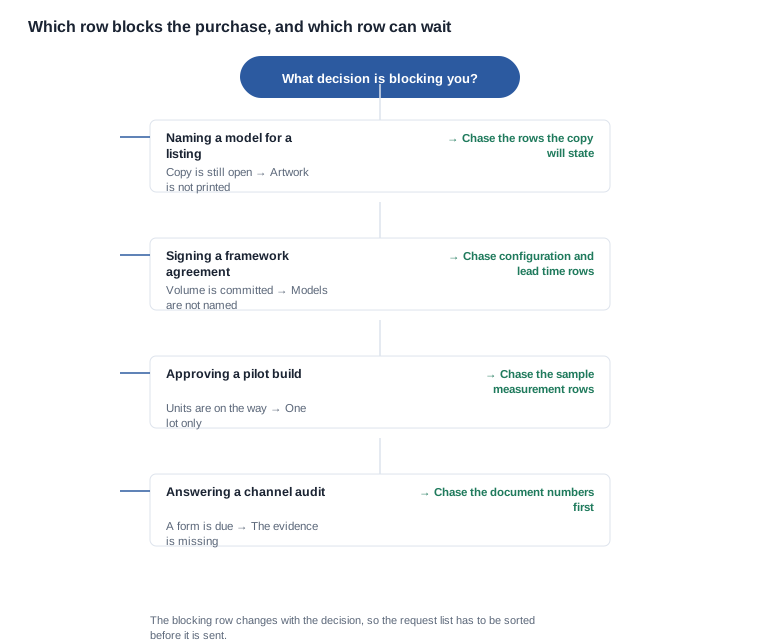
The three options a buyer really has. Ask for a number, which is fast and almost always unusable without its conditions. Ask for a method, which is slower and gives the buyer the ability to produce the number themselves on a sample. Or accept that the row will be measured on the buyer's own units, which is the correct answer for most of the rows that decide whether the customer is satisfied. The third option is the one that is usually skipped, and skipping it is what produces a project with no acceptance criteria.
What makes the difference is the form of the request. A request that names the row, the unit, the condition, the environment, the method, whether a production or an engineering unit is acceptable, the format of the answer and the date by which it is needed is a form. A form can be answered in one pass, by several suppliers, and compared across them. A paragraph cannot. The form costs the buyer an hour to write and saves a quarter.
The rows a buyer should expect a supplier to be able to answer from its own records are the documentary rows: hardware configuration, published electrical rows, and a description of the processing chain. The rows a buyer should expect to have to produce are the behavioural ones. Most requests in this category are written as though the whole list sits in the first group, and the supplier's answer to a mixed request is a mixed answer, in which the few documentary rows are answered precisely and the rest is answered with a marketing sentence. Separating the two groups before the request is sent is the single highest-value edit a buyer can make to it.
Why the request has to travel with the commercial terms. A microphone request is usually sent as a technical enquiry, and a technical enquiry invites a technical answer. When the same request carries the sample order quantity, the quantity bands, the price tier at each band, the lead time and the payment structure, the answer becomes a quotation, and a quotation has a cost attached to it. That is the point: the acoustic answer and the commercial answer should arrive in the same document, because the acoustic answer is what tells the buyer which commercial terms are worth negotiating.
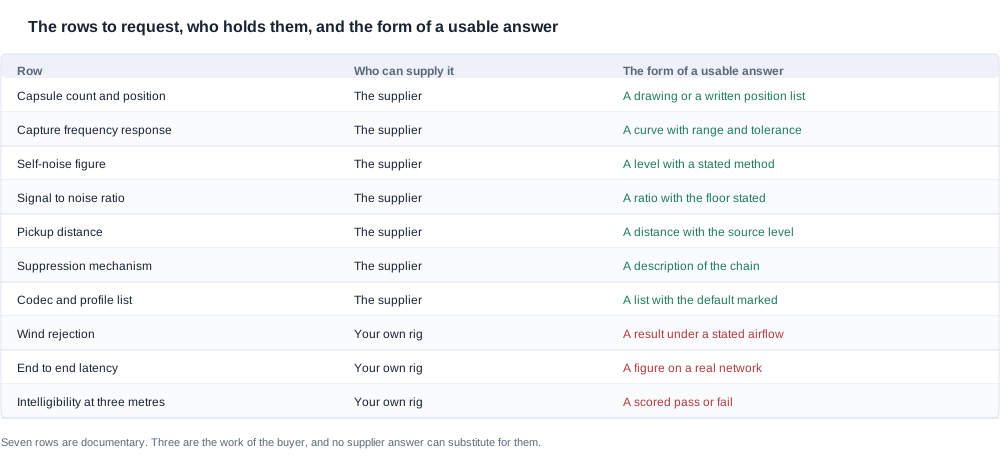
The seven rows a supplier can answer from its own records
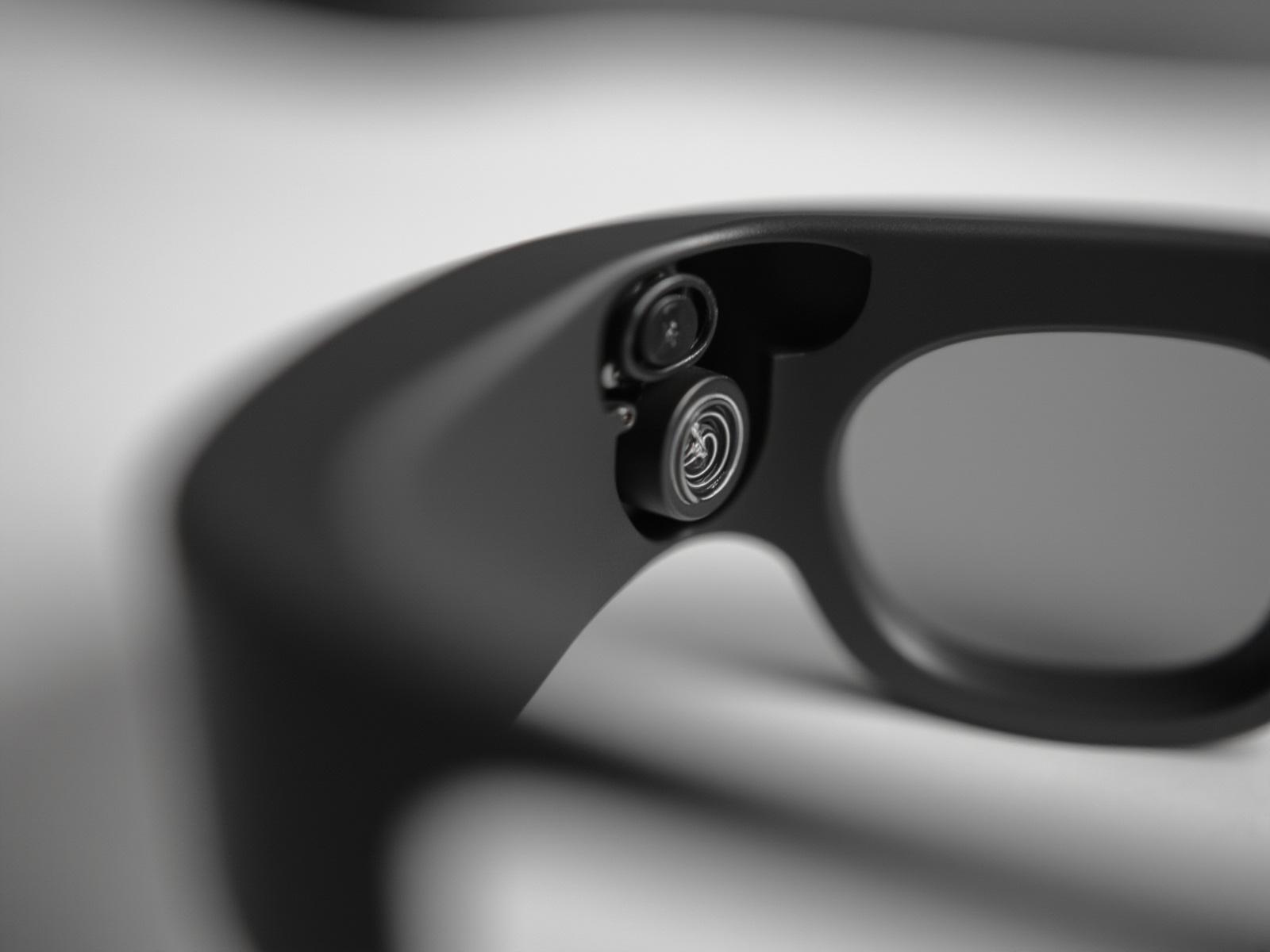
Microphone count and location. The first row, because it tells you the design intent. A single microphone at the temple is a call-focused design. Two in a defined geometry suggests beamforming, which favours one direction over another. This is answerable from a supplier without any measurement, and a supplier who cannot state it has not examined the product.
Pickup distance. The most quoted and least useful number in this category. Without an input reference level — how loud the source was, and where — the figure has no meaning. Ask for the level. A supplier who has genuinely measured will supply it; one who has copied a number from a competitor's listing will not.
Frequency response. Measurable, comparable, and almost never published. This is the row that determines whether speech is captured cleanly, and it is the one a buyer in a noisy-work environment most needs.
Sensitivity and signal-to-noise ratio. Two related but distinct figures. Sensitivity describes how much signal a microphone produces for a given input; signal-to-noise describes how that signal sits against the noise floor. Suppliers frequently quote the second when asked for the first.
Noise suppression type. "AI noise reduction" is not a specification. Beamforming is a hardware approach with specific geometry requirements; single-microphone processing is software and has inherent limits. The distinction determines whether improvement is achievable at all.
Wind rejection. A temple-mounted microphone sits directly in airflow. Wind noise is low-frequency, which is the range basic filters handle worst. Software reduces it; it cannot remove it, because the acoustic information is contaminated before the microphone receives it.
Codec, sample rate, bit depth, latency. All measurable, all relevant to call quality and to recorded file quality. None published by us. Latency in particular determines lip-sync in video, which is invisible in a specification and immediately obvious to a viewer.
The eighth row, which is the one buyers add last and need first. The leakage figure — how much the speaker is audible to a person nearby, and at what distance. It appears on no sheet in this category, it is one of the strongest predictors of a return rate for an open-ear product sold for calls, and it is a distance-and-level measurement that many suppliers will have taken at some point without recording it as a specification.
The rows we do publish, which a request should ask for by name. The Bluetooth version for each model, the cell configuration, the charge time, the runtime and the charging method. These are the rows a supplier can always answer, and a request that includes them alongside the microphone rows produces a complete answer rather than a partial one, because the supplier does not have to decide what the request is about.
The three rows only your own bench can produce
A supplier who has genuinely characterised their own product can supply rows one, two with a method, three, four, five and seven. Rows six and eight — wind rejection and end-to-end latency — usually require your own measurement environment.
The rows you will almost always have to produce yourself are the behavioural ones: intelligibility at conversational distance in a real environment, wind performance with air across the front of the glasses, and long-session comfort. These are properties of the product in use rather than of the microphone component in isolation.
Why these three sit with the buyer. Wind rejection depends on the airflow condition and the geometry of the test, both of which are properties of the environment rather than of the device. Latency depends on the codec, the radio and the network, and a loopback rig does not contain a network. Intelligibility in a real environment depends on the far end, the room and the person speaking, and the only version of it that predicts anything is the version run where the product will actually be used. A supplier can report a figure for each of these; what the supplier cannot do is report a figure for the buyer's environment, and that is precisely why the buyer has to define the environment.
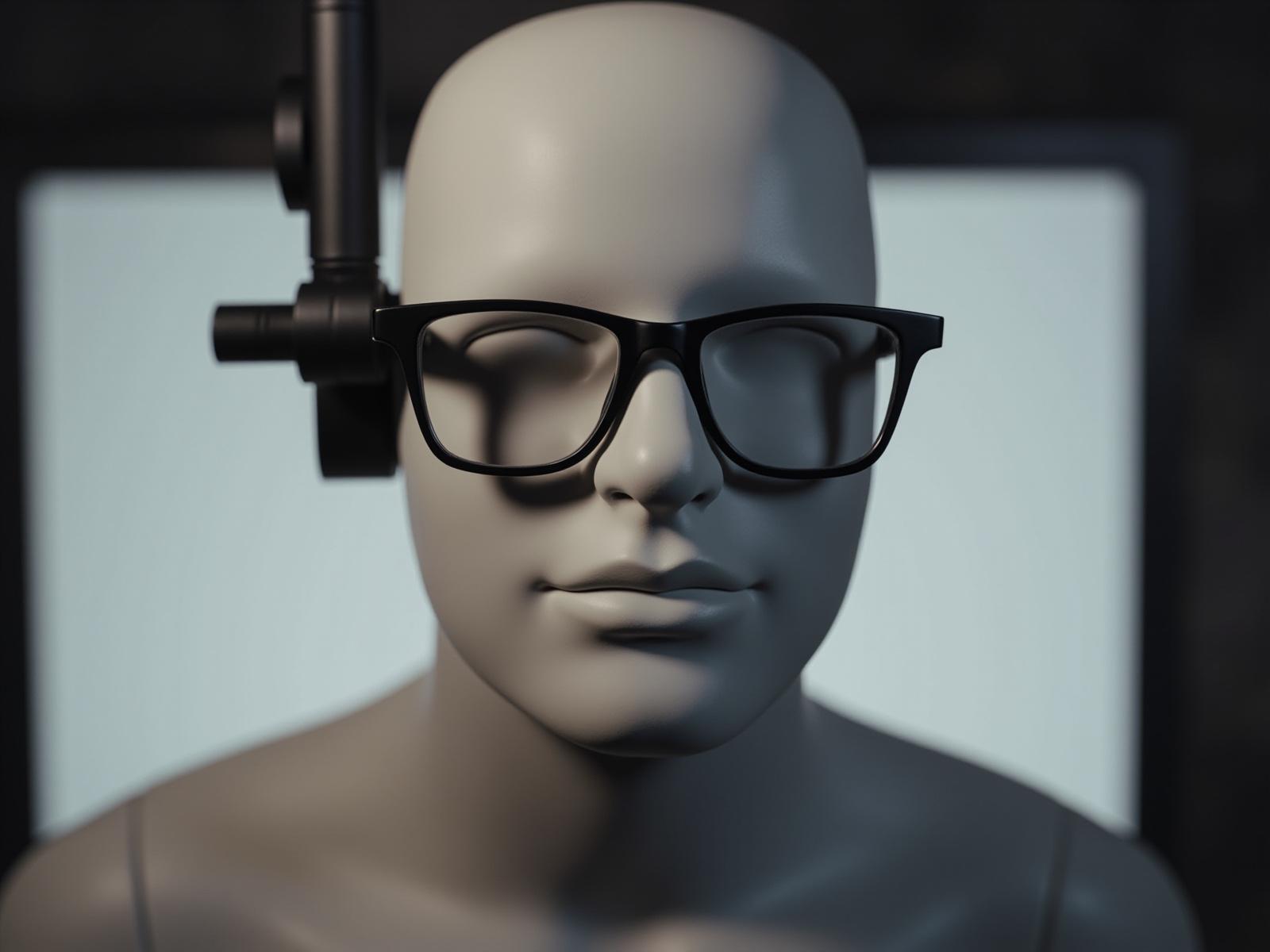
The cost of producing them. Not a laboratory. An office, a calibrated playback source for the background, a fixed phrase, a fixed position, a fixed receiving device and a scorer who applies the same rule each time. The setup cost is the time to write the protocol down, which is the same work as writing the request in the previous section, and the running cost is an afternoon per sample round. Buyers who assume this requires an external test house are usually paying a price tier and a schedule for something that does not need one.
What the buyer gains by producing them. The measurements become the buyer's own property, which means they can be used to compare a second supplier without a translation step, they can be repeated on every production lot to detect drift, and they can be cited in the purchase order as an acceptance criterion rather than as a request. A supplier that is willing to run the protocol against the buyer's units, and to supply the raw recordings, is offering more than a measurement; it is offering a shared reference.
How to phrase a row so the answer arrives usable
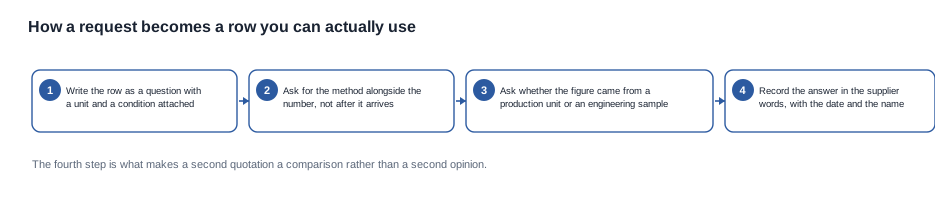
Six rules govern the phrasing, and each of them exists because the alternative produces an answer that cannot be used.
Name the unit. A sensitivity without mV/Pa, a ratio without decibels, a distance without centimetres or millimetres, a time without seconds. A figure without a unit is a magnitude, and magnitudes from different tests are not comparable.
Name the condition. The input reference level for a pickup distance, the room and the noise source for an intelligibility figure, the airflow condition for a wind figure, the playback level for a leakage figure. The condition is what turns a number into a specification, and it is the part that a supplier can supply in a sentence.
Name the method, or ask for it. A response curve measured with a stated weighting and a stated tolerance, a ratio measured against a stated floor, a distance measured from a stated talker position. Where the supplier holds a measurement, the method is the deliverable, and asking for it costs nothing and settles whether the number is real.
Ask whether the figure came from a production unit or an engineering sample. This is the question that most often separates a supplier who has measured from one who has read a competitor's listing, and it is the one that is most often skipped because it sounds pedantic. A figure from an engineering sample describes a device that will not be built.
Ask for the date and the person. A measurement without a date cannot be compared with a later one, and a measurement without a method cannot be repeated. Both fields are trivial for the supplier to supply and both are decisive when a lot fails.
Say what an unmeasured row should say. A request that says "if this figure is not held, write not measured" gets a much more useful answer than one that expects a value, because a supplier who cannot produce a figure will otherwise quote the nearest thing available. The empty answer is the honest one, and it tells the buyer which rows will have to be produced rather than merely stated.
Recording the answers so the second order is a comparison
A request that produces a good answer and then loses it is a waste of both sides' time. The record has to be structured so that the second quotation, the second sample and the second production lot are all comparable with the first.
One row set per model, per supplier, per configuration. The model designation matters more than the model name, because a family name covers several configurations and the microphone position is a configuration question. If a supplier quotes two models with the same marketing name, the record should show which capsule arrangement each one has, or the comparison against the second model will be empty.
Keep the answer, the method and the conditions in the same record. A number separated from its conditions is worse than no number, because it looks like data. A record that holds the figure, the method, the conditions, the unit, the date, the source of the unit and the person who answered is the only form in which the second supplier's answer can be laid next to it.
Log the changes. A specification is not a fixed document. The capsule arrangement may change, the firmware version may change, and the port treatment may change between a sample and a production lot, and each of those invalidates part of the record. A change log with a date against each row is what makes it possible to say later that the result in the third lot is not comparable with the first, rather than discovering it through a return rate.
Re-confirm on the production lot, not on the sample. A common failure is to verify everything on the sample order and then accept the production lot on the strength of the sample. The production lot is the thing that reaches a customer, and the re-confirmation is a single line in the incoming inspection criteria, which is a document the buyer controls and can therefore vary.
What the record has to feed. The shortlist between two candidate models, the technical argument with a supplier about a failing lot, the incoming inspection criteria, and the listing wording. Each of those is easier to produce from a structured record than from a folder of replies, and the listing wording in particular is a direct output: the claim a buyer can defend is the claim that matches a row in the record.
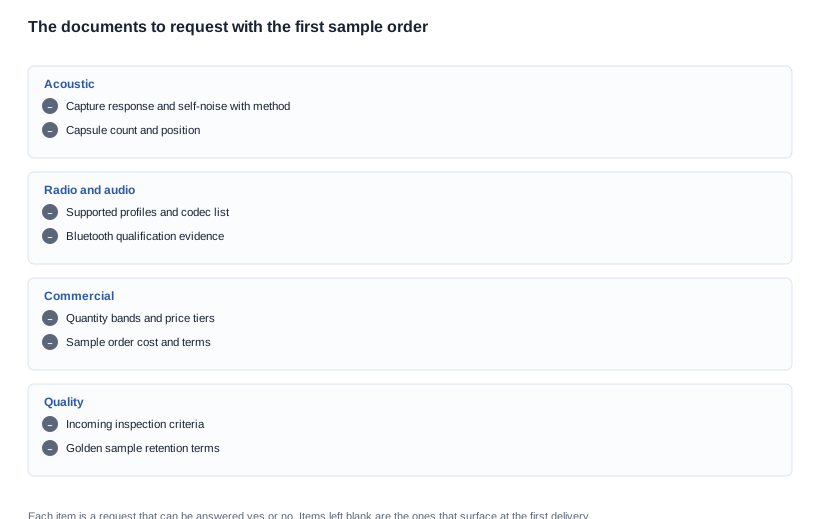
The commercial terms that belong with the request. A specification request is also a negotiation, and the terms worth settling in the same exchange are the ones that change the cost of the answer. Whether the sample order cost is credited against the first production order, or waived above a quantity band, is a straightforward term and it is usually available. Whether the supplier runs the protocol on production units as part of the incoming inspection rather than as a separate charge is a term that is worth more than it looks, because it moves the verification from a one-off event into a routine one. The number of units required to run the protocol is a term, and it is worth asking for the minimum rather than accepting a number that suits the factory's batch size. And the cost of a re-confirmation after a configuration change is a term that belongs here rather than in the quality file, because it is a consequence of the range growing. Each of these is negotiable; the measurement conditions themselves are not.
What a decline tells you. A supplier that declines one row has told you something specific about that row. A decline on the method request usually means the figure was not measured. A decline on the production-unit question means the figure came from somewhere else. A decline on the environmental condition means the figure was produced in a laboratory condition and would not survive the customer's environment. None of these is fatal, but each one has to be resolved before the figure enters the record, because a record that carries a number without its condition is exactly the artifact this whole procedure exists to prevent.
The boundary of what the catalogue will put in a specification row
The boundary we hold: we will not publish a microphone figure we do not hold. Every row above is Not published for every model in our range, and an invented sensitivity or frequency response would be a fabricated specification rather than a helpful one.
What to do when a supplier does publish them. Take the method rather than the number. Ask what the input level was, what weighting was applied, what the environment was, and whether the figure came from a production unit or a reference sample. Those answers differ enormously between suppliers and most of the difference is rigour rather than product quality.
Then verify the one row that matters commercially on a physical sample — three-metre intelligibility — because that is the figure your customer will experience and it is the one no datasheet reliably predicts.
The rows we do publish, and which a request should name. The audio family names are open-ear acoustic structure, directional audio and intelligent noise reduction. The electrical rows are published for every model and are verifiable: Bluetooth 5.3 on the K01 and the K02 and 5.4 on the D12 and the LC-105-1, LC-105-2 and the YK12, and the G07 and the D11; cell configurations of 55 mAh by two, 90 mAh by two and 100 mAh; charge times of two hours or less across the group; runtimes of roughly six to eight hours; and magnetic or Type-C charging depending on the model. The sport models publish the same rows on Bluetooth 5.4, with 70 mAh by two on the YKC02, 115 mAh on the D17 and 100 mAh on the ZH12, and the D17 and the ZH12 at roughly one hour to charge. The bone conduction entry publishes a 200 mAh cell, a roughly seven-hour runtime, Type-C charging and an amplification gain of 35 dB, and that last figure is an output-stage parameter with a compliance tail rather than a microphone row. None of this is a capture measurement, and a request that names these rows explicitly will get them answered explicitly instead of being bundled into a paragraph about acoustics.
On the specification question specifically, our line is narrow and deliberate: we hold no microphone performance figure for any model in this range, so we publish none. That is a different statement from the one a buyer usually receives. A supplier quoting a pickup distance has quoted a number under conditions they chose, and unless the conditions travel with it — talker distance, speech level, noise type, scoring method, number of samples — the number cannot be compared with anyone else's, including with ours. Treat it as a marketing artefact until a protocol arrives attached to it, and a protocol is something you can run yourself on a sample in an afternoon.
If you send samples we will run the protocol with you and report what we hear, including where it is worse than you expected. Send us the models, the quantity bands and the target market and we will tell you which rows are documentary, which are your own work, and which will decide the programme. See noise control and microphone pickup for the design questions, how to measure microphone quality for the protocol, and microphone procurement checklist for the rows to request.
Related reading
Ask us for the microphone rows and we will say which we hold and which are not published.


