

A limitation is only useful if it is classified, because the things you can change, the things you can only document, and the things you cannot change at all call for different responses. The YK12 has one of each, and once they are separated the model is much easier to plan around. This page is written for the buyer who has to plan around them.
The published row is: Bluetooth V5.4, 55 mAh × 2, magnetic charging in up to two hours, a rated runtime of approximately six hours, and a configuration entry recording surround sound on a slim temple.
The buying task behind the limitation list
Who is reading this and what they are deciding
A brand owner is deciding whether this model can carry a retail proposition, and two of the three classes below decide it.
A procurement manager is planning a range and needs to know which limitations are questions and which are facts to plan around.
A channel buyer is writing the listing, and needs to know which claims can be published today, because one of the three classes closes a claim for good.
The three classes, and why the classification is the useful part
Things you cannot change. A cell configuration, a platform, or the absence of an accessory in the whole product line. These are strategic constraints and they are answered by changing the plan, not by asking a question.
Things you can only document. A figure without a condition, a spec row that is absent, a certificate that does not exist. These are answered by a request, and they can be closed before the order.
Things that are not really limitations. A configuration entry that reads as an absence when it is actually a differentiator. These are answered by reading the row properly.
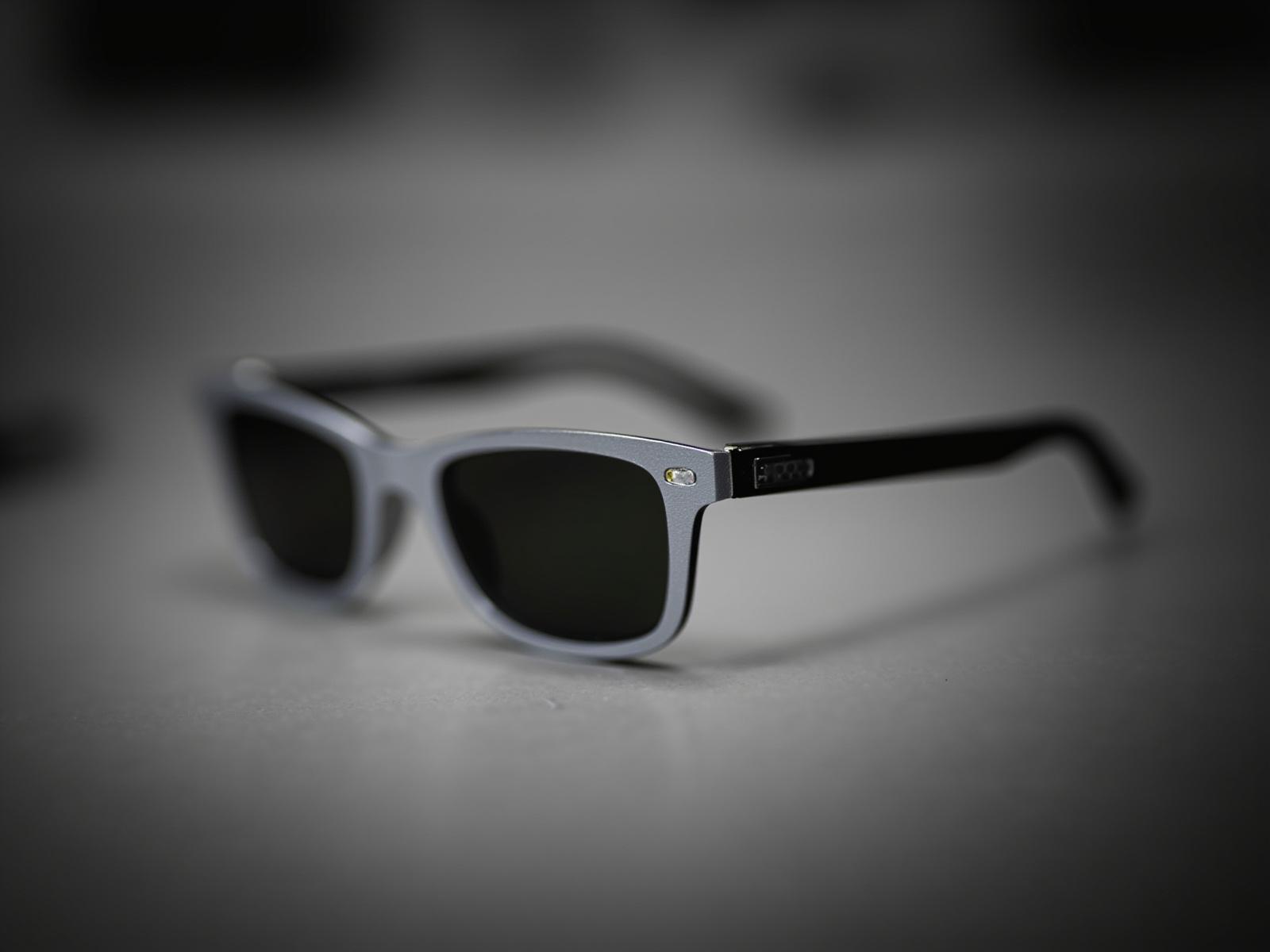
The limitation list, and the response each one calls for
| Limitation | Class | What it actually is | The response | The threshold or the question |
|---|---|---|---|---|
| The runtime is at the bottom of the range | Cannot change | Approximately six hours is the shortest published runtime in the Bluetooth audio range, shared with the G07, which publishes the same figure on the same cells. The K01 and K02 publish approximately eight on 90 mAh × 2, the D11 and D12 approximately seven on a single 100 mAh, and the LC-105 pair approximately eight on 55 mAh × 2 | A question, not a decision | The LC-105-1 publishes eight hours on exactly the cells the YK12 uses. The same 110 mAh in total, a two-hour difference in the published figure. That gap is a difference in platform tuning or in test method, not in the battery. Ask how the six hours was produced, whether it was the same method as the eight-hour figure on the same cells, and what was active during the measurement. Our battery specification guidance has the full list |
| There is no charging case | Cannot change — a product fact | No model in the Bluetooth audio range publishes a charging case. Most camera platforms do — the CY03 and the L1 Pro, and the CY05 — each at 1400 mAh, the L2 Utral with a 900 or 1400 mAh option, the MT6 at 1200 mAh — and no audio platform does | Plan around it rather than chase it | If your customer needs more than a shift, either the LC-105-1 or the LC-105-2 is the same platform with a longer published figure, or the K01 and K02 are the same platform with a larger cell. Ask whether a case is available for the YK12 at your quantity, and get the answer in writing — but plan the range as though the answer is no |
| The surround sound claim cannot be quantified | Document only | Surround sound is published for this model, and it is the only audio feature it carries. It is also the feature with no numbers behind it: no leakage figure, no driver size, no frequency response, no microphone count, no pickup distance | Describe it in terms of what the customer hears | This matters more for the YK12 than for a model without a sound claim, because the claim is the reason to choose it. Do not add a decibel figure, a driver size or a comparison against another brand. Our open-ear audio guidance covers the trade-offs the missing numbers would have covered |
| Frame weight, temple length, lens dimensions, head-size range | Document only, closable with a sample | The same gap every model in the audio range carries, and the one that decides your return rate | Weigh and measure | A sample and a set of calipers, and the materials and ergonomics guidance on what to measure |
| The control method is not published | Document only | Nothing says how this model is operated. A product with no documented control has no documented user experience | Request it | The control behaviour, in writing, before the instruction leaflet is written |
| Ingress protection is not published | Document only, and a blocker where water is involved | Nothing published for this model | Request it, or treat it as absent | The ingress position for the configuration, and the report if one exists |
| Certificate numbers, issuing bodies, validity periods, covered model schedules | Document only | Not published, and the compliance work sits inside your landed cost | Request per configuration and per market | The certificate coverage naming the exact designations |
| Charge input, voltage and indicator behaviour | Document only | Not published for this model | Request it | The three rows, before any listing describes the charging behaviour |
| Minimum order quantity, lead time, price | Document only | Not published, and our internal documentation currently holds three conflicting minimum order quantity figures that have not been arbitrated | Request it | We will not put any of them in an article, and a cost model built on a figure we cannot stand behind is worse than no cost model at all |
| The slim temple | Not really a limitation | Recorded in our catalogue as an available configuration rather than as part of the main specification row, and not published as a measurement. It is easy to read the absence of a temple dimension as a lack of design. It is not | Read the row properly | The slim temple is the reason this model exists in the range, and the G07 on the same platform is the one that publishes detachable temples instead. A buyer who wants a detachable temple is choosing a different model, not a better version of this one |
Reading the table without inheriting its categories
The table above is a working device, not a product statement, and it is worth saying what it is for. The three classes exist so that a buyer can route each row to the right response: a request, a measurement, or a change of plan. They are not a claim that a limitation is permanent, and a row that sits in the "document only" column today can move into the "cannot change" column once the answer comes back and turns out to be the way the product is built.
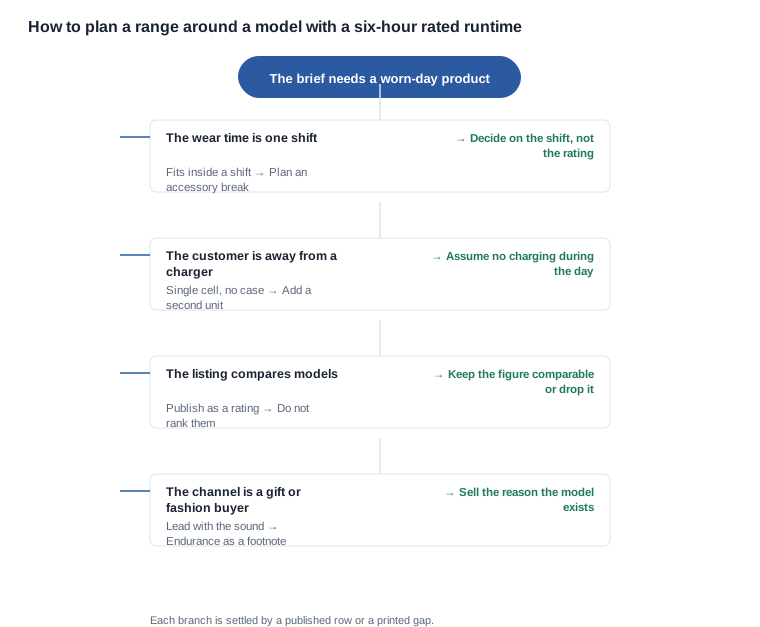
The rows that usually decide the brief are not the ones a buyer expects. For a channel selling to people who wear glasses for a full shift, the runtime row decides the brief, because a six-hour rated figure inside a shift is a proposition and a five-hour one is a return. For a channel with a gift-led or fashion-led proposition, the temple configuration and the sound claim decide it, and the endurance row is a specification-sheet entry rather than an objection.
Use the table to sort the requests, not to set expectations. Every row in the "document only" column belongs in one request with one deadline, because a request sent in pieces produces answers in pieces, and a buyer who has three answers from three emails still does not know whether the product fits. Every row in the "cannot change" column belongs in the range plan rather than in a question list, because a plan that depends on an answer to a question about a product fact will fail at the artwork stage.
Closing the open rows before you plan around it
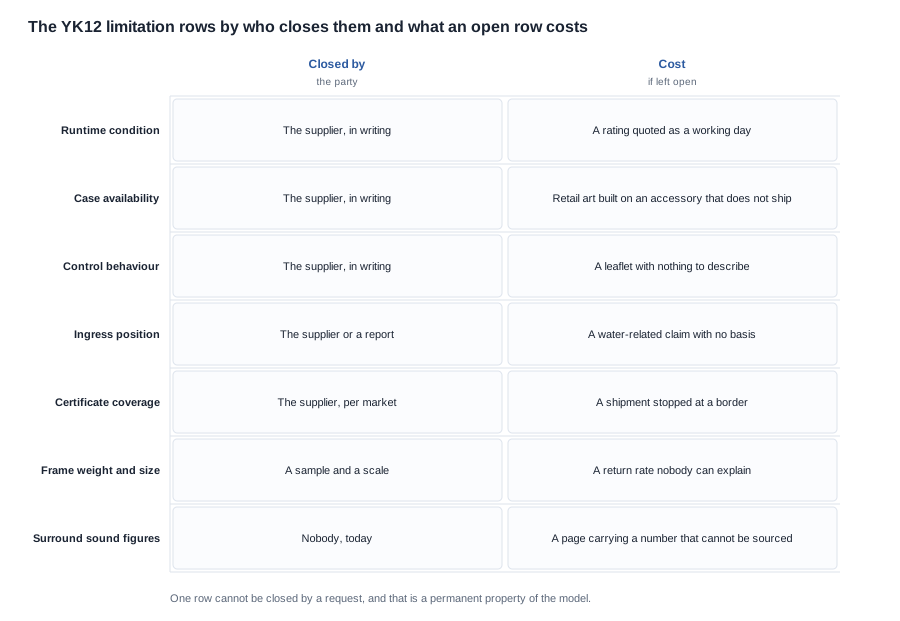
Send the document-closable rows in one request. The runtime condition and method, the control behaviour, the ingress position, the certificate coverage per configuration and per market, the storage rows, and the commercial rows.
Hold a sample, weigh it and measure it. The gap that decides the return rate, and it is closable in an afternoon.
Ask the case question in writing, and plan the range as though the answer is no. The absence of a case across the whole audio platform is a fact, and a range plan that assumes otherwise is a range plan that fails at the artwork stage.
Test the sound at the temple seating your customer will use. The slim temple is the reason the model exists, and the seating is what makes the claim feel true or not.
Set the listing boundary before the copy exists. Seven rows are published for this configuration: what the radio is, how many cells there are and how large, how long a charge is allowed to take, the rated use, how the frame is charged, the surround-sound entry and the slim temple. Everything else — the weight, the dimensions, the control behaviour, the ingress position, the charge input, the certificate coverage and the runtime condition — is not published, and stays off the page until a document says otherwise.
One request, one reply, one register
The rows that close with a document close together, and the cheapest way to close them is a single written request with a single named deadline. The order inside the request is not arbitrary: the model designation and the destination market come first, because the certificate coverage for a configuration and a market is what every other answer is scoped against, and a request that arrives without them comes back with documents for a different product.

The reply is read in the same order. Which documents exist for this designation and which are issued at range level. What the runtime condition and measurement method were, and whether the same method produced the eight-hour figure published for the twin-cell model on the same cells. What the control behaviour is, in the words a leaflet could use. What the ingress position is for the configuration. And then the commercial rows, which need no sample and no laboratory, only a date on them.
The register is the output that pays for itself. One line per item: the question, the answer as received, the date, the owner, and whether the item is now closed. It is a short document, and it is the thing that makes a second order faster than the first, because the open items on the second order are the ones the first register never resolved. A buyer who keeps it will find that what stays open tends to be the entries nobody replied to at all, which tells you something about the supplier well before the volume grows.

Six ways these limitations get handled badly
The six hours was published as a working day. Symptom: a customer in a mixed-use pattern is disappointed. Root cause: a rating with no condition was treated as a guarantee. Prevention: quote it as a rating, and publish the mixed-use reality once you have the method.
The six hours was compared against the eight hours on the same cells. Symptom: the wrong model is chosen for an endurance brief, on a comparison the data cannot support. Root cause: two different measurement methods were charted together. Prevention: set the row aside until both methods are explained.
A case was assumed to exist. Symptom: the retail story depends on a reserve battery that does not ship. Root cause: a camera-platform accessory was carried across. Prevention: ask, and plan as though the answer is no.
The surround sound was quantified. Symptom: a customer expects a measurement that does not exist for this model, or a rival's published figure makes the gap look like an error on our side. Root cause: a feature name was turned into a number. Prevention: describe the behaviour in words.
The slim temple was read as a lack of specification. Symptom: the model is passed over for a competitor with more published rows. Root cause: the configuration entry was not read. Prevention: read the row, and check what the model actually publishes.
An unpublished row was filled with a typical value. Symptom: the purchase order contains a number the supplier never committed to. Root cause: a gap was treated as a placeholder. Prevention: mark it unpublished, and ask.
What the six failure modes have in common
Each of the six is a specific mistake, but they share one mechanism: a gap in the published rows is filled with something plausible, and the plausible thing then behaves like a fact. The six hours becomes a working day. The eight hours on the same cells becomes evidence that the six hours is wrong. A camera-platform case becomes an accessory in the box. A feature name becomes an acoustic figure. A configuration entry becomes a missing specification. An unpublished row becomes a number in a purchase order.
The mechanism is invisible from inside the document that contains it. That is the reason these mistakes survive: each one is written in a paragraph that reads correctly, is supported by something the catalogue does say, and would be hard to challenge in a review because the reader has to know which row is missing to see the problem. A listing that says "charges in two hours" is wrong in a way that only a catalogue comparison reveals. A case in the box art is wrong in a way that only the packaging review reveals.
The prevention is the same in every case: name the row as unpublished, and ask for it. It is a less satisfying sentence than a number, and it is also the only sentence that survives a customer complaint, a competitor comparison and an internal review. A page that says what is not published is defensible; a page that guesses is not, because the guess is the part that has to be withdrawn.
The commercial read of the YK12 position
The absence of a case is a commercial fact with three consequences: a lighter parcel, a lower freight class, and a customer whose day has to fit inside a shift. Those three are worth real money at volume, and they are the reason an endurance-led range can be built on this model at all.
Negotiable and worth asking. Price at volume, the accessory set and the quantity that carries it, the packaging specification, delivery splitting, payment released against inspection, a warranty period with a stated response, and a return window that names who pays the freight back. Negotiating is where the time goes, and the accessory and return terms are the two trade-offs that follow directly from the class the limitation falls into.
Fixed by process rather than by negotiation. What the certification route costs, and how long it takes, follow the process and the testing body. Tooling is usually amortised across a first order while the certification cost sits with the product family — ask which of the two a quoted line is actually carrying, because the two are often bundled together and the bundle hides which is which. What belongs in the written agreement. The rows as published for the configuration being bought; the runtime together with its condition and method; the control behaviour; the ingress position; the certificate coverage per market; the frame weight and dimensions once measured; plus the warranty period carrying a stated response.
**What to leave out.**Any runtime claim without its condition, any acoustic figure not published, any case that is not published, and any commercial figure we cannot stand behind.
The three things the commercial position actually rests on
The commercial case for this model is usually argued with numbers that nobody has published, so it is worth setting out the three things it does rest on, and each of them is a structural fact rather than a figure.
The parcel is lighter because the accessory is absent. A case in the box is a second item in the carton, a second cell in the battery documentation chain, and a different freight class. None of the audio models in this range publishes one, so the parcel argument is available to every buyer who chooses an audio platform and unavailable to a buyer who expects a reserve battery in the box.
The wear day has to fit inside a shift. A rated figure of approximately six hours is a proposition for a working day, an eight-hour shift with a break, or a customer who charges at midday. That is a design constraint on the retail proposition and on the instructions, and it is usually worth more to the channel than the difference between two model names.
The accessory line is empty, which is also an opportunity. A model with no case has no case to stock, no case to lose, and no case to replace, and a channel that has already decided its range carries no audio accessory has one fewer line in the cost model and one fewer failure to handle.
Where CYNRIN stands on the YK12
The YK12 is a good fit for a fashion-led or call-led channel where the slim temple and the sound claim are the reason a customer chooses it, and a poor fit where the customer is out for a long session or expects a case in the box. We will not quote a runtime that we cannot explain, we will not add numbers to a sound claim, and we will not describe a case that is not published.
What we will do is tell you which model in the family publishes the longest runtime, which one publishes a case, and which of the missing rows above we can close for you on request. Tell us the channel, the volume and the target market, and we will answer with the rows we hold and the rows we do not. The family is on the Bluetooth audio glasses range page, and the published rows behind this model are in YK12 specifications.
What can be closed for you, and what cannot
It helps to separate the open rows into those that a request can close, those that a sample can close, and the one that nobody can close today.
A request closes the documentary rows. The runtime condition and its method, the control behaviour, the ingress position, the certificate coverage per configuration and per market, the charge input, and the commercial rows. Every one of them is a question with an owner and a date, and every one of them is a question the supplier can answer in writing.
A sample settles what a scale can settle. The frame weight, the temple length, the lens dimension, the balance of a frame whose mass sits in one temple, and the condition of the hinges and the temples on the unit that will actually ship. These are an afternoon with a scale and a set of calipers, and they are the rows that decide the return rate.
One row cannot be closed today by anybody. The acoustic figures behind the surround-sound line are not published for this model or for any other, and no document request will produce them, because the document does not exist. What can be done is to keep the claim qualitative, to describe the behaviour in the terms a customer will recognise, and to accept that the model is chosen for a reason that is demonstrated rather than documented.
That split is the reason this page is worth reading before a purchase order rather than after it. Two thirds of the open rows cost an email and an afternoon, and the third one is a permanent property of the model that a good listing can accommodate.
What to do next.
- Sort the limitations into the three classes, and act on each class differently.
- Send the document-closable rows in one request.
- Hold a sample, weigh it, measure it, and test the sound at the seating your customer will use.
- Ask the case question in writing, and plan the range as though the answer is no.
- Fix the listing boundary before the copy is written, and record the pass lines in the agreement.
Related reading
- This model's place across the range — YK12 best for
- What sits behind this model in the catalogue — YK12 specifications
- What an open-ear frame actually gives up — open-ear audio
Send the channel, the volume and the target market, and we will answer with what is published and what is not.


