
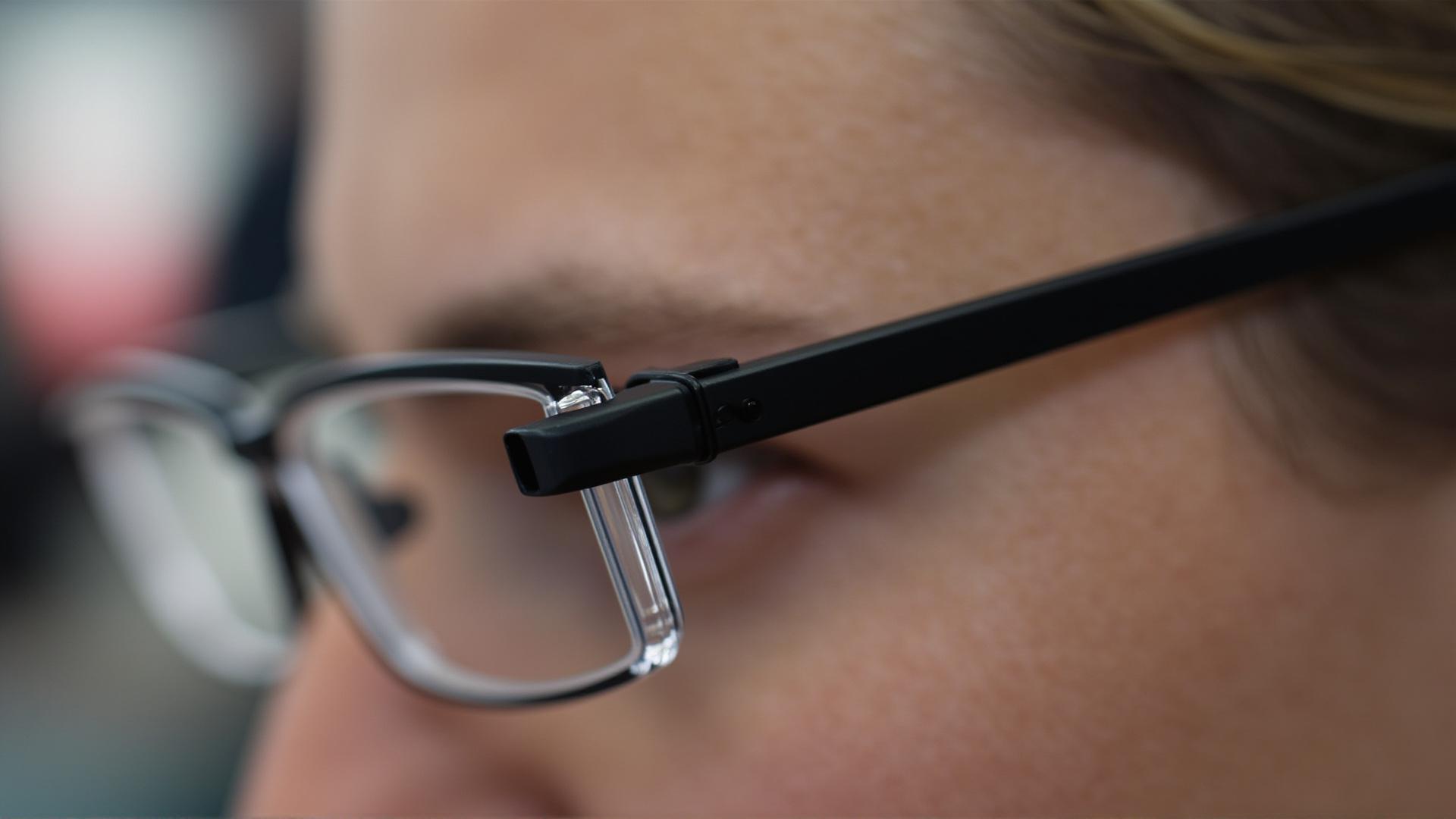
Children's products turn the usual smart glasses buying logic upside down. In adult categories, the feature list carries the pitch; in a children's product, the feature list is the risk surface, and the questions that determine whether a range is safe to sell are about materials, evidence, age appropriateness and the exact wording of every claim. Buyers who treat kids smart glasses as a smaller, cuter version of the adult catalog are the ones who discover in a compliance review that the documentation set, the label obligations and the permissible language are entirely different. This guide is a verification methodology for brands, retailers and optical channels stocking connected eyewear for children. It makes no therapeutic claims and none should appear on your listing; the boundary between consumer features and regulated medical language is mapped on the medical device boundary page.
The product family under evaluation is the kids smart glasses category, including the usage-reminder feature described in the distance protection technology note.
Verification One: Materials and Mechanical Safety
A child's device spends its life in smaller hands, mouths (for the youngest age bands), school bags and crashes. Verify the frame material and its safety documentation for the intended age group; lens safety standards applicable to the market (impact-resistant requirements for eyewear, and sunglass filter standards where the lenses are tinted); small-part and sharp-edge assessment for the youngest bands; cable and accessory safety on the charging items; and battery containment evidence. Every one of these should be evidenced on the shipped configuration by a named standard and a test document you can file, not asserted in an email — the discipline of reading such documents is the same as the four-cornerstone method in the test report reading guide. A certificate for an adult frame or an earlier prototype does not transfer.
Verification Two: The Mandatory Rule Set for the Destination
Children's products carry the heaviest general-product-safety obligations in both major markets, and the specifics must be confirmed against the exact destination rather than assumed from adult eyewear experience. In the European Union, the General Product Safety Regulation applies to all consumer products including children's connected eyewear, with traceability and economic-operator duties summarized on the GPSR page; products that present play characteristics can additionally fall under toy safety requirements, and radio functions bring the RED conformity set on the RED directive page. In the United States, products designed or intended primarily for children sit under children's product safety rules, including third-party testing and tracking-label obligations, inside the broader U.S. conformity picture on the U.S. compliance page. The operational point: ask the supplier for the exact compliance file for the exact SKU in each market, and have it checked by the party that places the product on that market — a platform being compliant for adults says nothing about the children's classification.
Verification Three: the Claims Boundary
This is where children's eyewear listings most often fail. Usage-distance and screen-time reminder functions are exactly what they say: reminders, driven by sensor behavior the parent configures. They are not medical devices, they do not treat or prevent myopia, and language about protecting eyesight, curing strain or therapeutic benefit crosses into regulated territory in every major market. The red line is drawn on the medical boundary page, and the marketing wording review belongs to the claims policy. Defensible language describes the function ("reminds the wearer when viewing distance or time thresholds are exceeded") and leaves health outcomes to qualified professionals. Retailers and optical channels in particular should treat this as a hard gate: professional adjacency makes over-claiming more dangerous, not more acceptable.

Verification Four: Age Grading, Privacy and Instructions
The declared age range should match both the product and its documentation — a younger age grade triggers stricter requirements, so the grade is a compliance decision, not a marketing one. Any connected function involving a child's data or a companion app raises children's privacy obligations that vary sharply by market (and by whether the account belongs to the child or a parent); confirm what data the device and app collect, where parental consent mechanics sit, and whether the destination imposes specific children's privacy regimes. Instructions must be in the languages of the market, written for the actual purchaser (the parent), and contain the usage, charging and supervision guidance plainly. Packaging and labels carry the same traceability identity obligations as other private-label goods, covered in the white label versus private label guide.
The File a Supplier Should Hand Over
For a children's SKU, expect the complete evidence set before deposit: material declarations, eyewear lens and frame safety evidence, battery and charging safety documents, the market-specific conformity file with test reports identifying this configuration, age-grading justification, the exact list of functions with their behavior and limits (so no sales copy invents more than the function does), and documentation language availability. Run the same identity check used for any evidence dossier — real laboratory, accreditation scope covering the standard, sample matching the shipped build. A factory that can produce only adult-category certificates and verbal reassurance about the children's version is not ready for that market; the broader audit script is in the supplier quality questions.
Frequently Asked Questions
Can kids smart glasses be marketed as preventing or treating myopia?
No. That is a medical or therapeutic claim that moves the product into regulated-device territory, and consumer smart glasses with usage-reminder functions carry no such certification. Describe the reminder function factually and leave vision-health outcomes to eye-care professionals — the line is defined on the medical boundary page.
Why does a children's version need different certification from the adult frame?
Because children's products face specific safety, testing, labeling and (depending on market and play characteristics) toy-safety obligations that adult eyewear does not, and certificates are configuration-specific. Require a file for the exact children's SKU; adult-frame evidence does not cover it.
Does the distance reminder mean the glasses monitor my child's health?
No. It is a configurable usage reminder based on sensor behavior around viewing distance or time thresholds — a behavioral nudge for the parent and child to manage, not a measurement or diagnosis of eye health. State it that way in listing and instructions.
Who decides the age grade — the factory or the brand?
The age grade must match the product characteristics and the market's rules, and it carries compliance consequences, so it should be confirmed against the safety evidence and legal requirements for the destination rather than chosen for marketing appeal. The party placing the product on the market owns that decision.
Are optical and optometry channels lower risk for these products?
They are higher-scrutiny channels, not lower-risk ones: professional adjacency raises expectations for evidence and for conservative wording. Optical buyers typically run the strictest materials and claims review, which is why a complete dossier matters most in exactly that channel.
If you are evaluating a kids smart glasses SKU for a specific market or optical channel and want the evidence checklist applied to the exact configuration, send the destination markets and intended age grade through request a quote for a file-gap review before any deposit.


