
Five problems account for most of what goes wrong with smart glasses bought for running, and every one of them has a documented cause you can check before you order. They cluster around three things: motion, sweat and water, and battery. None of them is solved by buying a more expensive model — they are solved by matching the configuration to the runner and by not claiming more than the published documentation supports.
The published rows are narrower than the marketing language around them. The sport band is three models: the YKC02 publishes Bluetooth 5.4, a 70 mAh cell in each temple, a charge time of two hours or less, about eight hours of rated use and magnetic charging, with surround sound and long battery life among its features. The D17 publishes Bluetooth 5.4, a 115 mAh cell, a charge time of about one hour, about seven hours of rated use, Type-C charging and remote-control photo capture. The ZH12 publishes Bluetooth 5.4, a 100 mAh cell, a charge time of about one hour, about eight hours of rated use and Type-C charging with remote photo capture. Exactly two models in the whole catalogue publish an IP54 marking, and both of them are camera models: the V06 at 8 MP and the S7 at 13 MP, both on a 260 mAh cell with a five-to-eight-hour rated band, magnetic charging, an ergonomic frame design and a removable inner frame.
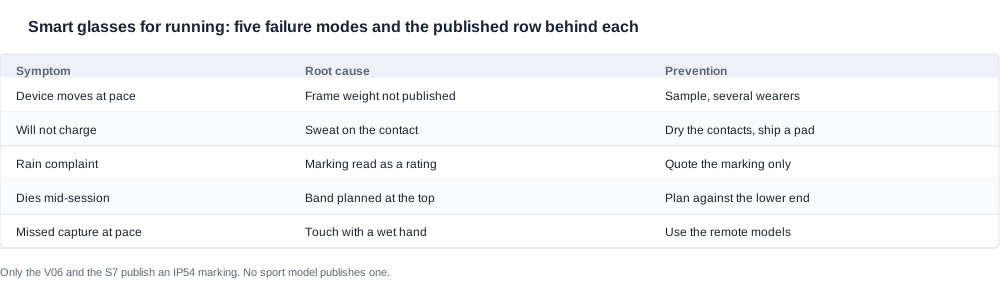
Smart glasses for running: five failure modes and what to drop
The table below is the working version of this article. Each row names the symptom, the root cause and the prevention, and each one points at a row the catalogue publishes or at a row the catalogue does not publish — which is itself the most important thing on the sheet.
| Symptom | Root cause | Prevention |
|---|---|---|
| Device moves at pace | Frame weight not published | Sample across several wearers |
| Will not charge after a run | Sweat on the charging contact | Dry the contacts, ship a consumable |
| Rain complaint after a downpour | Marking read as waterproof | Quote the marking, not a rating |
| Dies mid-session | Band planned at the top | Plan against the lower end |
| Missed capture at pace | A control surface, where the build carries one, used with a wet hand | Use the remote models |
Every row above is a configuration or wording decision, and none of them is a price decision. That is the finding of this article, and it is the reason the rest of it is organised by failure mode rather than by model.
Bounce and the frame that moves at pace
Running produces a vertical oscillation that is invisible while standing and obvious by the third kilometre. It shakes the camera, it moves the temple against the head, and it is the reason a running device becomes a mechanical problem rather than an ergonomics preference.
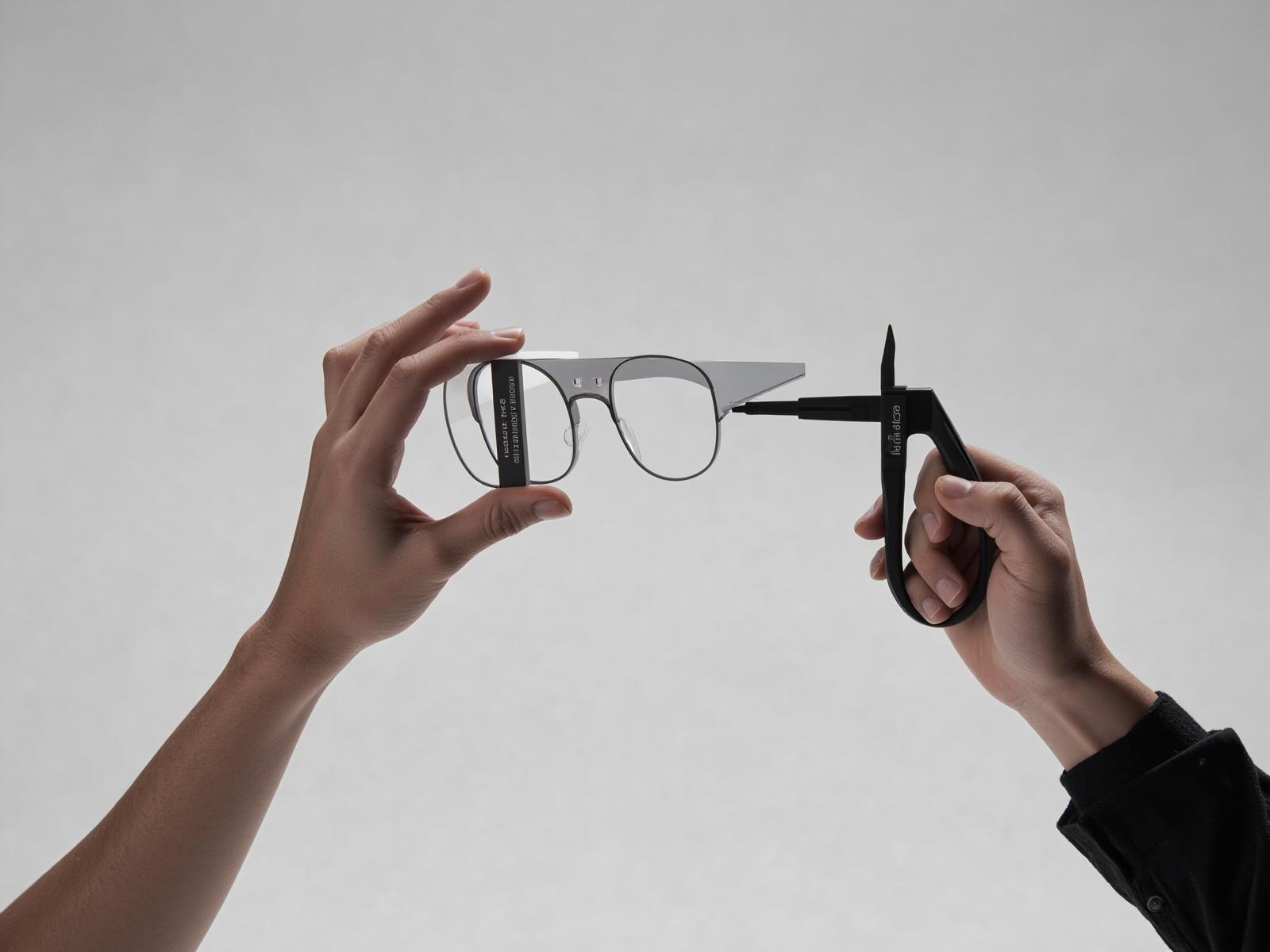
Two published sport features address this directly, and both are camera models. An ergonomic frame design is published on the V06 and on the S7, and a removable inner frame is published on those same two models. The inner frame is the more interesting one, because it lets the frame be adjusted to a head shape rather than the head adapting to the frame — and on a channel with a wide size range, that converts a broken product into a replaced part as well as improving how the frame sits during motion.
What is not published is the per-model unit weight for any sport model, and weight is the variable most correlated with bounce. There is one published unit weight in the entire catalogue, and it belongs to a model that is not in this range: 158 g for the MT6, which is the MT6 glasses body, including its 265 mAh battery and camera and excluding the foldable charging case, whose own weight is not published. The MT6 is a camera model with a foldable case rather than a running model, and the figure cannot be borrowed as a running weight or restated as a frame weight. The full weight position is on the battery life page and in the fall-off answer.
So the prevention for bounce is a measurement, not a specification. Take several units of the candidate configuration, run at the pace the channel's customers actually run, and count the adjustments in the first kilometre. That count is the cheapest indicator available and it predicts the month-two behaviour better than any published row, because no published row describes what happens to the frame during a stride.
The one published structural feature that helps most is the one a buyer is most likely to overlook. A detachable inner frame and a detachable temple are different things with different commercial consequences. The V06 and the S7 publish the removable inner frame; the G07 publishes ultra-slim detachable temples and the YK12 publishes slim detachable temples. A detachable temple is a part that can be replaced in the field, which changes both the accessory line and the stock-holding decision. A detachable inner frame changes the size range a single outer frame has to serve.
Sweat, the charging contact and the ingress misreading
This is the failure that costs the most, because it is the one where a well-specified product becomes an unreliable one, and because it is the one where the claim on the listing is often the real cause.
Sweat on a charging contact produces an intermittent charge that arrives at a returns desk as a dead battery. The symptom is a device that charges intermittently, that appears flat on arrival, and that fails again in the customer's hands. Nothing in the hardware is broken. The prevention is procedural and almost free: dry the contacts before the device goes back on charge, and put a small consumable in the insert so the routine has an object attached to it. The cost per unit is a fraction of a cent and it adds nothing to freight weight.
The ingress position is where the catalogue is precise and the marketplace is not. Exactly two models in this catalogue publish an IP54 marking, and they are the V06 and the S7. No sport model publishes an ingress marking, and neither does any of the eight audio models. Read the marking precisely where it does apply: the first digit covers a dust protection level and the second covers protection against splashing water. That is not immersion, not a shower rating and not a guarantee in sustained rain, and no third-party test report number is published behind it.
The failure is rarely the product. It is a listing that says "waterproof", a customer who runs in heavy rain expecting that, and a return that costs both sides money. A runner's sweat exposure is genuinely close to what the marking addresses; a downpour is not. Write the listing to the marking and most of this problem disappears. The IP ratings advanced considerations is the wording that does not overstate it, and the IP rating discussion covers what the second digit means.
A related question deserves an answer before the order goes out. The removable inner frame is a mechanical junction that a customer can operate. Ask whether the ingress marking extends to the frame with the inner frame removed and refitted, because a marking obtained on the fully assembled product may not extend to a configuration the customer changes. That is a question about the test method rather than about the device, and it is cheap to ask and awkward to discover later.
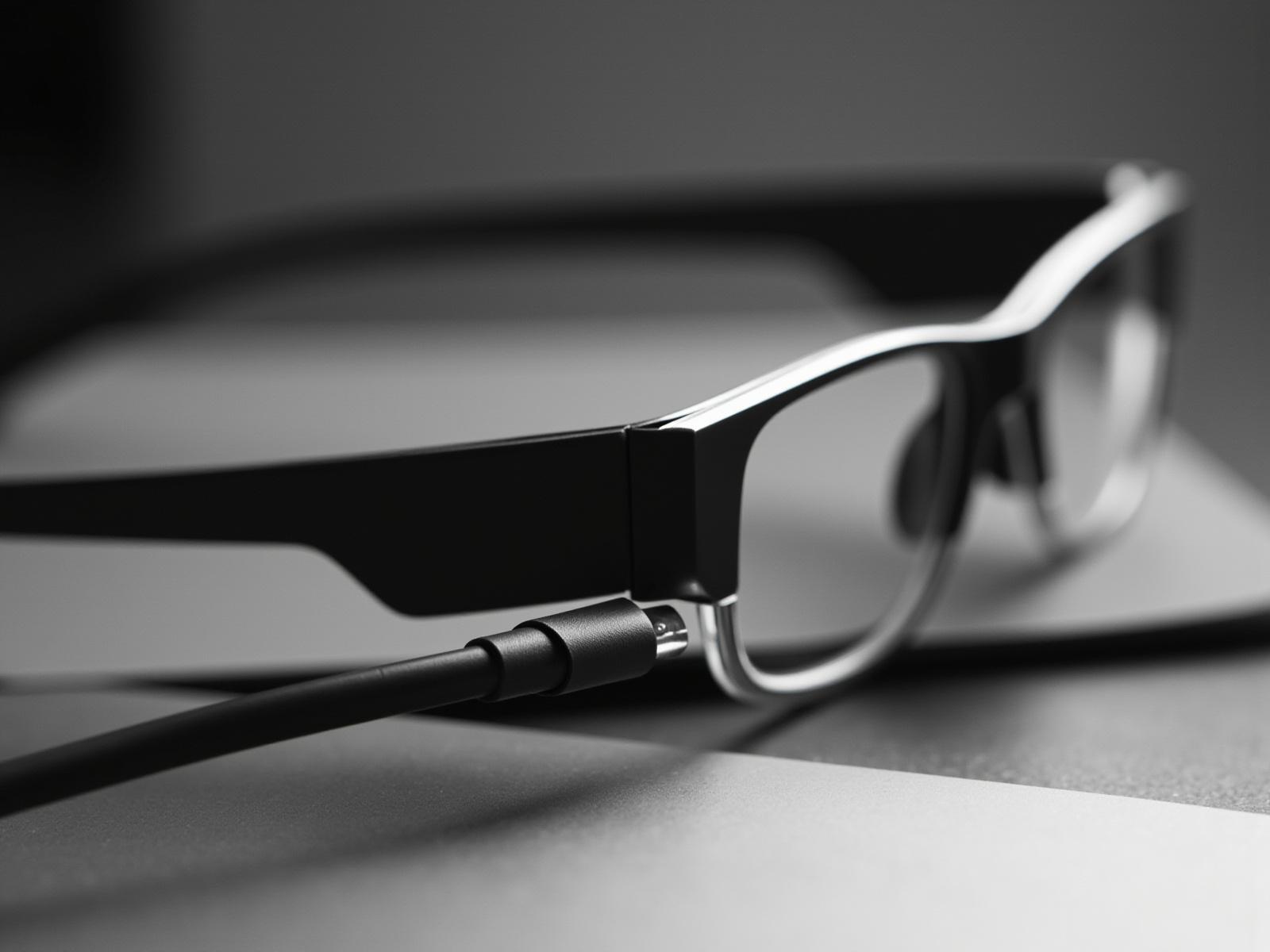
A second charging failure mode is architectural rather than dirty. A magnetic interface needs the case to be present and correctly seated. If the case is a separate accessory — which is the arrangement for a configuration with no published charging-case row, such as the V06 or the S7 — then "the device did not charge" is frequently a case problem rather than a device problem. The charging case question is about the mass side of that decision.
Runtime planning on a band with no test condition
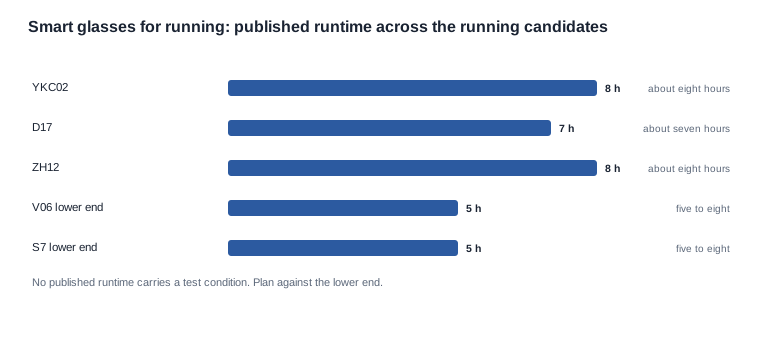
Published sport runtimes are approximately eight hours on the YKC02, which publishes a 70 mAh cell in each temple, approximately seven hours on the D17 at 115 mAh and approximately eight hours on the ZH12 at 100 mAh. The two sport camera models publish a five-to-eight-hour band on a 260 mAh cell rather than a single figure.
None of these states a test condition, which matters more for running than for most uses. A runner recording continuously with a camera active is at the top of the load, and the lower end of a published range is the honest planning figure. The battery life page covers how to read the published endurance rows, and the running measurement programme is the twelve-week protocol that replaces a published band with a number from your own units.
The cell configuration is a better planning input than the runtime figure. A model with a doubled cell and a model with a single cell can publish the same rated hours and behave completely differently across a working day. The YKC02's published row is a two-cell configuration; the D17, the ZH12 and the two sport camera models are single-cell. The interface tells you which is which, and it also tells you how the device will be recharged between sessions.
The mitigating factor is real: nobody runs for eight hours. A long ultra is the exception, and for that case the two sport models that publish a charge time of about one hour are the relevant choice. Those two are the only entries in the entire catalogue that publish about one hour; every other entry, including twenty-five models, publishes two hours or less as a ceiling. The difference matters commercially, because "two hours or less" allows a charge time of exactly two hours while a claim of under two hours does not.
Whether a case holds its charge overnight is a separate question, and it is not published. The standby draw is not published for any model in the range, so a buyer planning an overnight reserve is working from an assumption rather than from a row. The five camera models that publish a case capacity — 1400 mAh on the L1 Pro and the CY05, and the CY03, 900 or 1400 mAh as a configuration choice on the L2 Utral, and 1200 mAh in the foldable case on the MT6 — give the numbers for the case itself without giving the drain rate that decides whether the case is still charged in the morning.
Control at pace and the capture that gets missed
A capacitive touch control on a temple, which no model in our range publishes, is close to unusable at running pace with sweat on your fingers, and the failure mode is a lost moment rather than a broken device.
The D17 and the ZH12 publish remote photo capture, and that is the feature that solves capture control at pace. It removes the need to reach for the frame mid-stride, which is the movement that both ruins the framing and destabilises the frame position. If capture matters to a channel, confirm which models carry it and what the remote actually controls, because the published material names remote photo capture without describing the full function set.
Capacitive touch does not appear in this range, and that is easy to over-attribute in the other direction. The K01 publishes Bluetooth 5.3, a 90 mAh cell in each temple, a charge time of two hours or less, about eight hours of rated use and magnetic charging, and no capacitive touch row. The K02 publishes the same rows and no capacitive touch row either. The same is true across the sport band: no sport model publishes capacitive touch. An unpublished capability is also not the same thing as an absent one, so a build that carries a touch surface is not automatically a build that can be operated mid-stride — the surface has to be confirmed with the supplier and then tested at the step rate of a run.
If a channel needs a capture control, it has to be said which model carries it. The sport camera models are not in that group — the V06 publishes the ergonomic frame design, the removable inner frame and the IP54 marking, and the S7 publishes those three plus 13 MP, and neither publishes a capture control. Remote photo capture is published on the D17 and the ZH12, both of which are sport models without a camera. That is the whole published capture-control position in this range, and it is the reason a channel that needs remote capture is choosing a different product from a channel that needs a camera.
The second published capture-control distinction is between the sport band and the audio tier. The sport band publishes a remote capture control and no touch row at all, and the audio tier publishes a touch row on no model — the K01 publishes Bluetooth 5.3, a 90 mAh cell in each temple, a charge time of two hours or less, about eight hours of rated use and magnetic charging, with no touch row, and the K02 publishes the same rows and no touch row either. A buyer whose channel proposition rests on touch control therefore has no published model to choose from in either band, and that is a specification question for the supplier rather than a selection decision between two audio models.
A sample test settles the question faster than an argument. Put the device on, run at pace, and try to operate the control with the hand in the state it is in after a kilometre. That takes two minutes and it settles a question that no published row in this catalogue can.
The prevention set, and where the catalogue stops
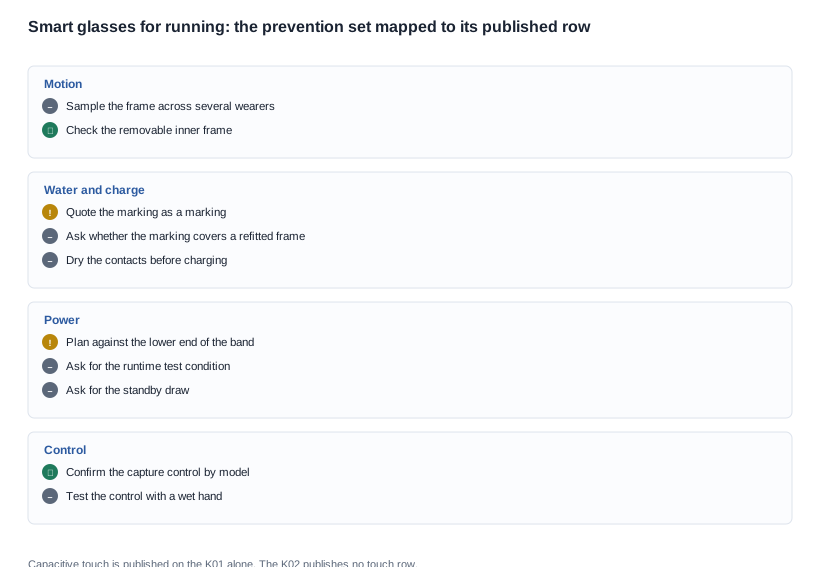
The five prevention measures below are the ones that cost almost nothing and settle most of the failures described above.
- Measure the frame on a sample across several wearers, because per-model frame weight is not published for any sport model and the single catalogue weight figure belongs to a camera model that is not in this range.
- Confirm the frame system — whether an ergonomic frame design and a removable inner frame are published for the models being quoted, since those two features exist on the V06 and the S7 and on no sport model.
- Verify the ingress position — a published marking on two models only, written into the listing as a marking, with no third-party report number claimed.
- Plan against the lower end of any published runtime range, and treat the two models with a charge time of about one hour as the only fast-charge options in the catalogue.
- Confirm the capture control on the models where capture matters, and treat capacitive touch as published on no model in the range, so the surface has to be confirmed with the supplier.
Two further items belong on the order rather than on the checklist. The runtime with its test condition, per model, because a band without a condition cannot be planned against; and the standby draw, because a running device spends most of its day idle in a bag and the drain between sessions is what decides whether one charge covers a day of two runs.
The procurement clauses that make these five failures cheap instead of expensive
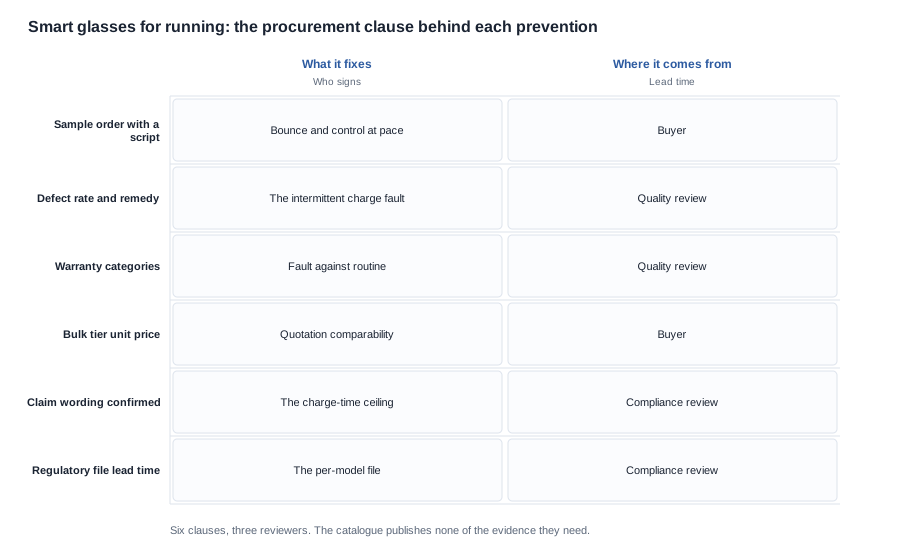
The prevention list above is a technical list. Turning it into a commercial one takes six clauses, and each clause has a procurement reason rather than a technical one.
- A sample order before the bulk order, with the sample script attached to the purchase request. The script is what makes the sample useful. A sample requested as "a running unit to evaluate" returns an impression; a sample requested against four observations returns measurements, and the measurements are what the buyer can put in front of a quality reviewer.
- A defect rate and a remedy in the agreement, per configuration. The causes in this article are known in advance, which means the supplier can be asked to confirm a rate for each and to accept a remedy for each. Agreeing a rate for an intermittent charge after the first bulk shipment is a negotiation conducted from a weak position; agreeing it in the first agreement is a negotiation conducted from a specification.
- A warranty term that distinguishes a manufacturing fault from a consumable issue. Sweat on a charging contact is not a manufacturing fault, and a clause that treats it as one transfers a routine to the returns desk. Naming the two categories separately in the agreement is cheaper than arbitrating them one return at a time.
- A bulk order tier with the unit price written against the tier. No unit price, minimum order quantity, lead time or production capacity figure is published for any model in this catalogue, and all four are confirmed per enquiry. A quotation that does not name the tier it belongs to cannot be compared with a second supplier's quotation, and a quotation compared at the wrong tier is worse than no quotation at all.
- A written confirmation of the charge-time wording on the product page. This is a small clause with an outsized effect, because the artwork and the listing are often written by different parties and nobody else is checking the two against the catalogue row.
- An agreed lead time on the per-model regulatory file, and a written statement of what the supplier will provide. The catalogue text contains no CE, FCC, RoHS, REACH or UN38.3 mention and no per-model certification row, so this file is a request rather than an inherited document, and a request with no lead time is a request that arrives after the packaging is printed.
The cost of these clauses is an afternoon of contract drafting; the cost of omitting them is a returns rate that compounds. Every cause in this article reaches the buyer as a return, and every return is a unit price, a freight cost and a customer relationship. A programme that has written the six clauses above is not claiming the failures will not happen — it has priced them, which is the only thing a margin can be planned around.
How to verify the clauses are real before you order. The questions to ask are the same five in every case, and a supplier who answers all five in writing is a supplier whose evidence set will hold. Which models carry the removable inner frame, and whether a spare is available as a part. Which models carry remote photo capture, and what the remote controls. Which two models publish the ingress marking, and whether a test report number can be given for it. What runtime figure is published for the configuration being ordered, and what condition it was measured under. And what unit price, minimum order quantity and lead time apply to the volume actually intended, since none of the three is published and all three are confirmed per enquiry.
The red flags are worth naming. A supplier who quotes a runtime with a condition the catalogue does not publish has a number the buyer cannot reproduce. A supplier who describes the ingress marking as a tested rating has a document that does not exist in the catalogue. A supplier who quotes a unit price without naming the order tier has given a number that cannot be compared. A supplier who cannot say which models carry the remote photo capture has not read the published feature lists. Each of these is a signal to slow the due diligence down before you order rather than a reason to stop — but they are signals, and the questions to ask above are what turn a signal into a fact.

It is worth being precise: most of these five problems are caused by specification claims rather than by products, and we would rather supply you with the published figures and their limits than a description that will not survive a wet run. The IP54 marking on two camera models, rated runtimes without conditions, and a single published unit weight in the whole catalogue are the honest starting points.
Frame weight for any sport model, third-party ingress test reports, partial-charge behaviour and every acoustic metric are not published for this range. Unit prices, minimum order quantities, lead times and production capacity are confirmed per enquiry rather than published as fixed numbers. The catalogue also carries a company-level export certification page whose content is images rather than text — ten patent certificates, eight appearance-design patents and two utility-model patents — and no per-model certification row, so the per-model regulatory file is a request to the supplier with a lead time of its own.
For the sport category, the sport smart glasses range lists the published configurations. For the protection detail, IP ratings and their limits covers what a designation does and does not support, and the selection guide covers the models. The scenario entry point is smart glasses for running.
Related reading
- Sport smart glasses range — published sport configurations
- IP ratings advanced considerations — reading the designation properly
- Battery life specifications — planning against the lower end
Tell us the runner profile and the routes you sell into, and we will tell you which published configurations fit and which figures we cannot evidence.


