

Smart glasses for cycling: a cost decision, not a packing decision
A cycling rider carries a phone, a key and a card, and everything else competes with those three for the same pocket. That constraint turns "what should a rider bring" into a question a buyer answers long before the order: which of the four possible kit items earns its place, and what does that answer do to the unit cost, the case configuration and the price point? It is a cost decision wearing the clothes of a packing decision, and getting it wrong shows up three ways — as a per-unit cost nobody costed, as a second lithium cell that nobody declared for transport, and as a return rate built on scratches that a supplied cloth would have prevented.
Who this is for. The reader is a sourcing manager at the brand, a channel buyer or a product manager who has already decided the model and now has to decide what goes in the box, what goes in the rider's pocket, and what the rider is told to do with both. The task in front of them is not a product evaluation; it is a bill-of-materials decision with a compliance tail, because a charging case is a second lithium cell and the documentation for it is a shipping gate rather than a preference. The fear behind it is specific and quiet: a product that works on the sample, gets scratched in a jersey pocket in week two, and comes back as a review that says the image was soft.
Why two kits for the same product can cost very different amounts. The published configuration rows in our range are close together on the electrical side, and the differences that matter commercially are structural. The sport family publishes a cell capacity, a rated runtime, a resolution class, a charge time, a charging interface and a colour count, with the sport camera models carrying an IP54 marking for which no third-party test report is published. The audio family publishes the same kind of rows, with a doubled cell on several models and a single 100 mAh cell on the D11 and the D12. None of these rows decides what is in the box. The interface does: a Type-C model needs one cable that a rider already owns, and a magnetic model needs either a dock or the case to be carried, which turns the case from a protection accessory into part of the charging architecture. That single decision changes the bill of materials, the declared shipping weight, the transit paperwork and the price ladder — which is why the kit question has to be answered after the interface question and never before it.
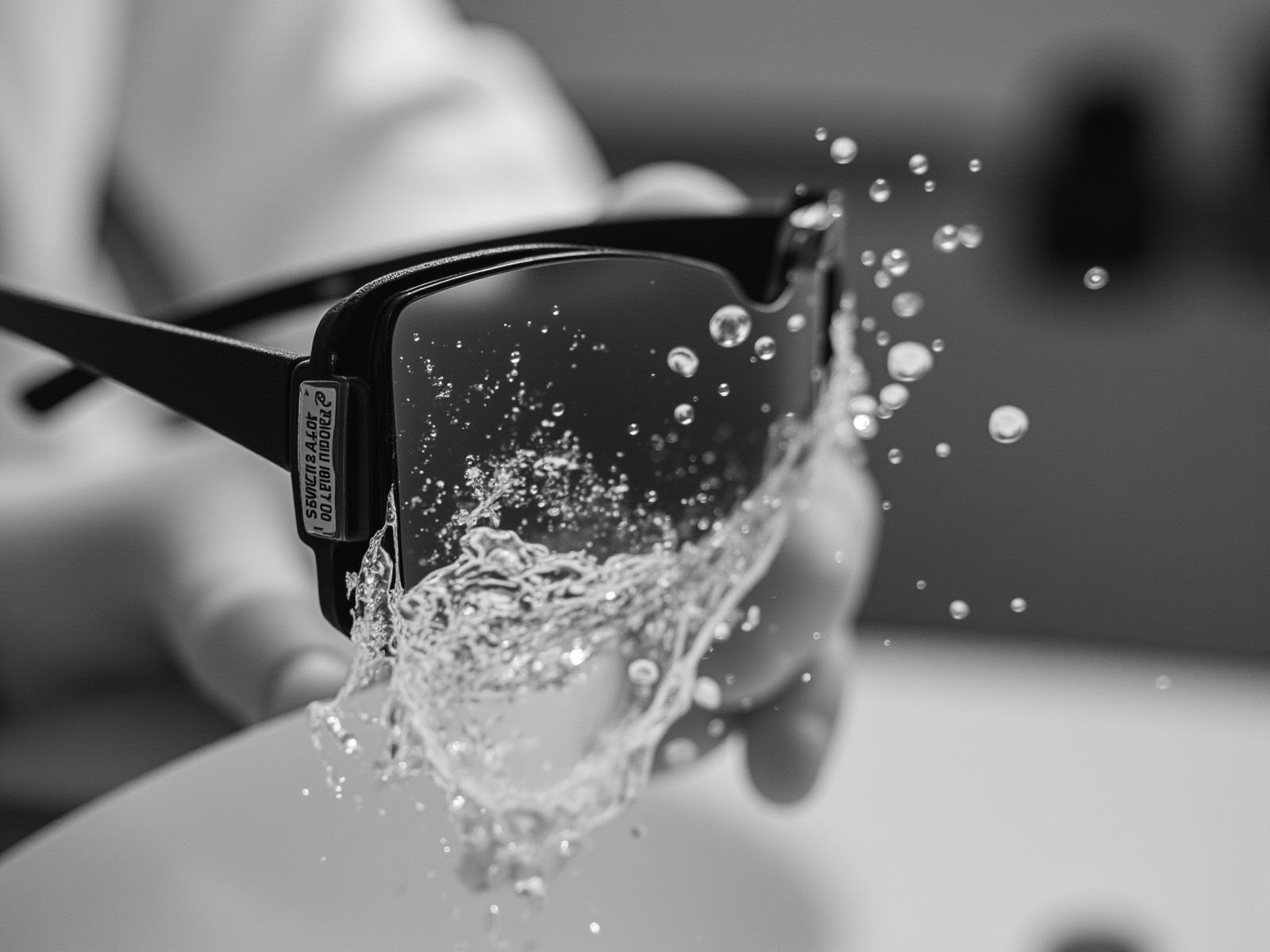
What the kit has to be able to survive. Three exposures act on a cycling product at once: sweat, which is salt and is corrosive over time on a surface nobody has characterised; road film and dust, which are abrasive; and a wipe-down habit that people satisfy with whatever is in their pocket. The third is the one that costs money, because the reflex wipe with a sleeve is what turns a dirty lens into a scratched one, and the damage is invisible at the moment it happens and permanent afterwards. Nothing in the published documentation tells a buyer which surfaces tolerate that, so the answer has to come from a cleaning item that is supplied and instructed, not from a warning in the listing copy.
Four items, four different cost treatments
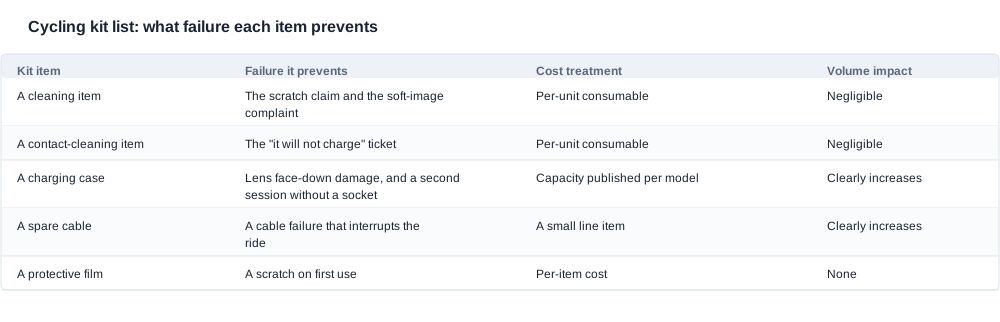
The four candidates behave differently enough that they cannot be treated as one line item, and separating them is the whole of the kit decision.
| Candidate | Failure it prevents | Volume in a pocket | Cost treatment | Where it sits in the spec |
|---|---|---|---|---|
| A cleaning item | The scratch claim, and the soft-image complaint that follows it | Negligible | Per-unit consumable | The cheapest return reduction available in this category |
| A contact-cleaning item | The "it will not charge" ticket after a sweaty ride | Negligible | Per-unit consumable | Cheapest evidence-quality fix in this category |
| A case | Lens face-down damage, and a second session without a socket | Material | Configuration, with a declared second cell | The main price-ladder lever, and a transport obligation |
| A spare cable or dock | The cable that fails at the start of a long ride | Material | Consumable or installed asset | Only relevant where the interface is proprietary |
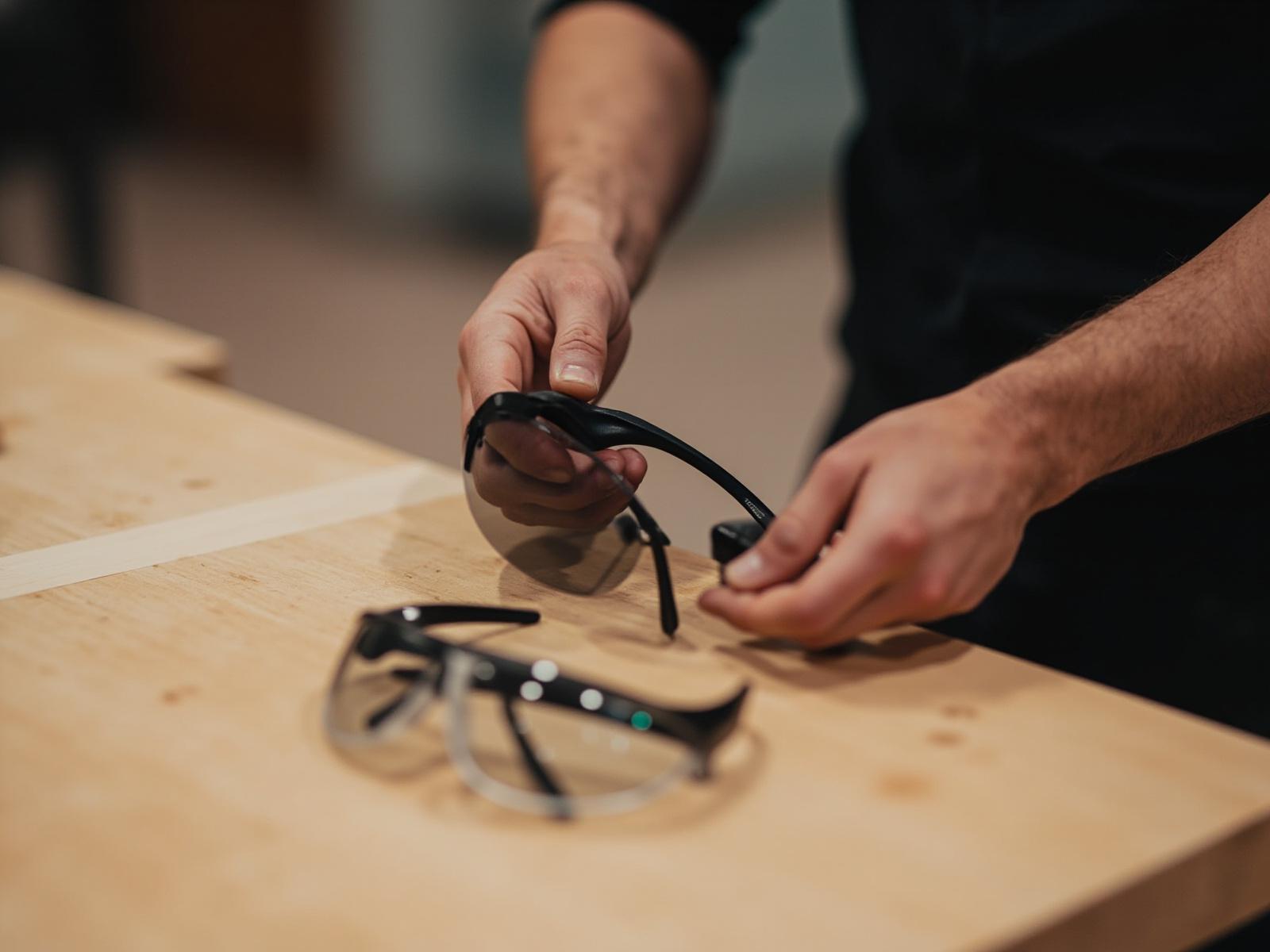
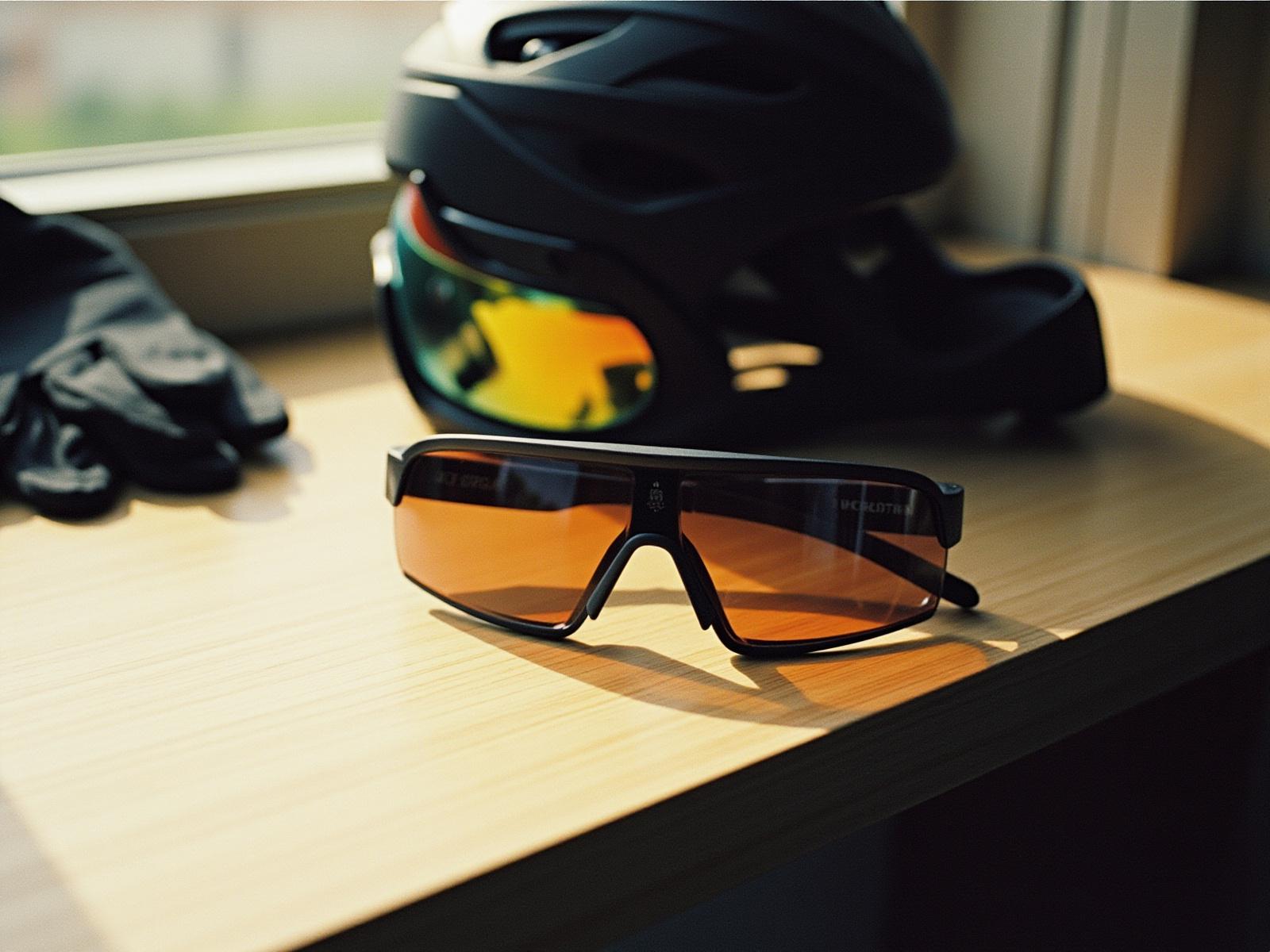
The two consumables are in the box on volume grounds alone, and the case is a separate decision. A cloth and a contact wipe are not a second object in a pocket; they are printed on an insert and live in the packaging. That is why they can be included in a consumer configuration without changing what the rider carries, and it is why they are the highest-return per-unit decision available to a buyer in this category. The published case capacities, by contrast, are substantial — 1400 mAh on the L1 Pro and the CY05, and the CY03, 900 or 1400 mAh as a configuration choice on the L2 Utral, and 1200 mAh on the MT6's foldable case — and a case is a second lithium cell that has to be declared. The KY06 and the MT5 ship with a case whose capacity is not published, and the V03 and the V03 Pro are the camera models published without a case at all, so "the case" is not one row in the catalogue but four different answers.
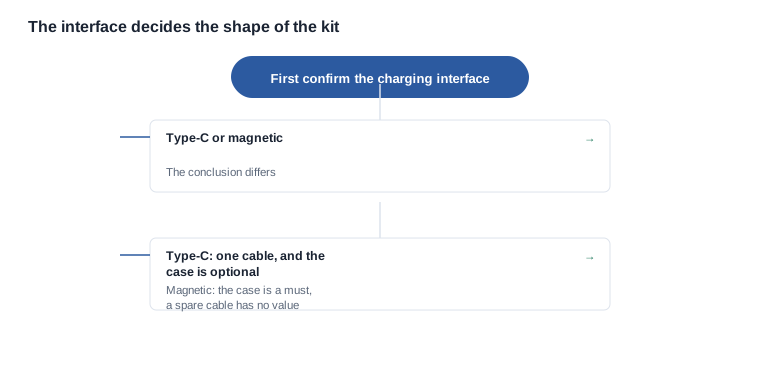
What the interface does to the whole list. A Type-C model recharges from a cable the rider already owns, and the range publishes Type-C on the D12 and the D17, the D11 and the L2 Utral, and the V03 Pro and the ZH12 — with the D17 and the ZH12 publishing roughly one hour of charging against a ceiling of two hours or less everywhere else, which is a post-ride window that fits between a shower and a change of clothes. A magnetic model needs the case carried, and once the case is mandatory the spare cable stops being worth anything. The published runtimes for the sport range cluster between five and eight hours, which covers a ride with room to spare, so the runtime is not the constraint and the recharge between rides is.
The frame detail that changes the fit rather than the kit. The V06 and the S7 publish a removable inner frame, the G07 publishes ultra-slim detachable temples, and the YK12 publishes slim detachable temples. A detachable temple is a fitting system rather than a cosmetic feature — it lets one outer frame serve different nose shapes — and in a channel with a wide size range that is a return-rate lever before it is a comfort feature. It also changes the kit slightly: a detachable temple is a part that can be replaced rather than a whole frame written off, and a buyer who has not asked whether spare temples are available has quietly decided to replace devices instead.
What is not published and therefore cannot be used to select anything. The lens material, the coating, the surface treatment, the hinge specification, the per-model frame weight, the field of view, the video specification, the operating temperature range, the cycle life rating and the runtime test condition are all unpublished for this range. The single weight figure in the whole catalogue is 158 g for the MT6, a foldable-case camera model that is not a cycling model, and it belongs to no candidate in this comparison. A kit decision that depends on any of these rows is a decision with no data behind it, and a buyer who has to make one anyway should write down that fact rather than substitute a typical value.
Getting the numbers behind the kit
The verification question here is unusually simple, because the kit is made of things a buyer can hold and count. The hard part is not measuring; it is establishing which of the two consumables actually belongs in the configuration, and that comes from the returns data rather than from the factory.
- Ask for the bill of materials per configuration, in writing. A "what's in the box" answer given verbally is not a bill of materials, and it is the document the packing station, the freight forwarder and the returns desk all need.
- Ask for the case's own charge time and input, and for the case's capacity in the exact configuration being ordered. For a configuration where the case is included, the case is a second product with its own specification, and the two published case capacities for the L2 Utral — 900 mAh and 1400 mAh — are a configuration choice rather than a feature, which means the artwork, the freight weight and the transit file all change with it.
- Ask for the battery transport documentation for the configuration, including the case. This is the step that catches a second lithium cell before it catches a shipment. The requirements are set out at battery transport, and the question to the supplier is narrow: does the file cover the configuration I am ordering, with the case in it.
- Ask for the ingress position in writing. The IP54 marking on the sport camera models is a catalogue attribute for which no third-party test report is published. The second digit covers splashing water and the first is a dust protection level, and the marking does not cover immersion or a sustained downpour. A kit insert that says "waterproof" makes a claim the documentation cannot carry, and the rider in a downpour is the customer who tests it. The digit reading is at IP ratings.
- Ask for the lens material and the coating. They are not published for any model, which means the cleaning instruction in the insert has to be restricted rather than permissive, and it means the buyer cannot call a coating durable or scratch-resistant in the listing without a specification behind it.
- Ask for the runtime with its test condition, per model. No runtime in this range carries one, and a kit that is sold on an endurance claim has to be defensible against the customer's own test, which will be at their volume, their volume level and their signal conditions.
- Confirm the model designation on the unit against the paperwork, and look up every certificate number in the issuing body's public register. The register procedure is at certification checklist. A kit that contains a case, a wipe and a cable has three more things to go wrong in transit than a bare device does, and the designation is what makes a loss traceable.
- Run the returns check on the first shipment rather than waiting for the second. The question is specific: of the units that came back, how many were returned for a scratch or a smudge, and how many of those had a cleaning item in the box. That ratio is the cheapest measurement in the category and it is the one that decides whether the consumables stay in the bill of materials for the second year.
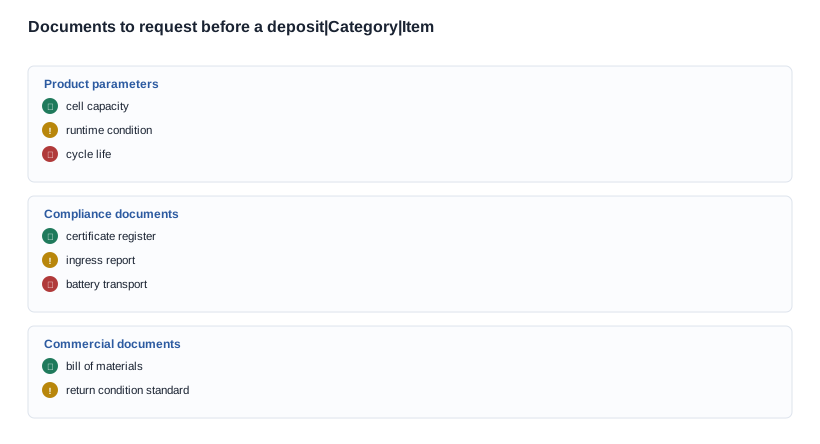
Documents to request before a deposit. The bill of materials per configuration, with the case specification, the battery transport file for that configuration, the lens material and coating statement, the kit instruction artwork, the ingress position in writing, the per-model weight, the runtime figures with their conditions, the model designation table, the certificate register, and the agreed incoming inspection criteria. The clause wording is published at contract terms, and the commercial structure of a first order is published at pricing.
Where a kit goes wrong in the field
The failure patterns in this category are few and repeatable, and every one of them is cheaper to prevent than to pay for.
A kit inherited from a competitor's bill of materials. Every inherited line is a per-unit cost that was never justified by this configuration, and the competitor's case is justified by their interface, not yours. The symptom is a bill of materials a buyer cannot explain line by line, which is also a bill of materials the factory cannot quote cleanly.
A case included where the interface does not need it. A Type-C configuration with a case in the box converts a one-session product into a two-session product at the same price point, and it adds a second lithium cell to declare and a second object to lose. The rider who does two sessions is the one who will buy the case separately, at a price that suits both parties.
A permissive cleaning instruction. A sleeve, a buff and a T-shirt are the three things a rider has on them, and all three are abrasive on a coating whose specification is unpublished. The permissive version of this instruction is the single most common cause of a scratch claim in this category, and the scratch claim arrives as a soft-image complaint, which then gets attributed to the camera rather than to the wipe.
A second lithium cell with no transport file. The requirement is asked for at the border rather than in the quotation, which is the worst possible time to discover it, and the consequence falls on the buyer rather than on the factory.
A waterproof claim on the insert. The marking is published; the report is not. A rider in a downpour is the customer who tests the claim, and the review that follows names the brand.
A kit with no instruction. Consumables that are not used are a per-unit cost with no return, and a rider who is handed a cloth and told nothing will not use it, because nobody has told them why they should.
A kit that is correct and a routine that is missing. The consumables only work if they are attached to a moment the rider already has — the end of the ride, the moment the device goes back in the bag. Instructions on an insert are read once; a routine attached to the end of a ride is followed.
No count of what went out. For a team, a dealer network or a rental, a device that does not come back is a device that is bought again — which reads as a repeat sale in the accounts and is a loss in reality. Without a count, the loss rate is invisible and the first sign of it is a budget that does not reconcile.
Smart glasses for cycling: which parts of the kit are negotiable
Fixed, and not a negotiation target. The cell configuration and the charging interface, and therefore the charge time, the runtime ceiling and the case architecture. The lens material and the coating. The certification cost and lead time. The battery transport documentation. Tooling, amortised across the first order and quoted as a separate line rather than folded into the unit price.
Negotiable, and worth the time. The first four of these matter more than the unit price:
- Whether the case is in the box or sold as a separate accessory. This is the biggest single lever in the kit, because it is the difference between one price point and two, and it changes the artwork, the freight weight and the transit file together.
- The consumable quantities and their per-unit cost. A few cents each, and the highest-return line in the category. The quantity to negotiate is the quantity per device and the restock interval, not whether they are included.
- Whether a lens film comes with the unit, and whether the factory fits it. On a product where a scratch is a return, a factory-applied film is usually the cheapest reduction in the return rate available anywhere in the bill of materials.
- Whether the supplier supplies and reviews the kit instruction artwork. The instruction is what makes the consumables work, and a supplier who has not read it is a supplier who has not tested it.
Minimum order quantity tiers, and whether two models can share a purchase order, are also negotiable. Colour and logo are cheap to change between runs and expensive to change after the artwork is printed. Opening an order in two releases, with the money moving on inspection rather than on shipment, works for a channel that is being built in stages. The quantity held at pilot tier is where the widest price gap sits, because it is the exposure the factory carries.
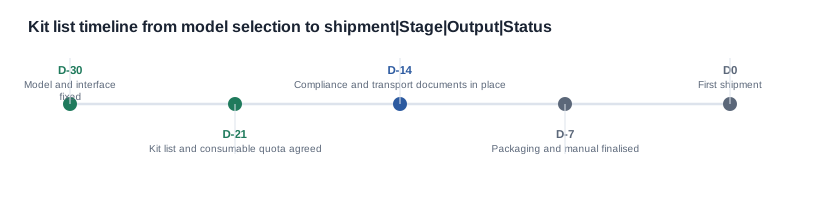
A worked example. Take a European cycling retailer that has decided to list two models under one brand: an audio model and a camera model, at two price points, for a channel that sells through its own store. The first decision is the interface, because it settles the kit. Taking the Type-C route — the range publishes it on the V03 Pro and the D17, the D12 and the D11, and the L2 Utral and the ZH12 — the case becomes optional rather than mandatory, so the camera model is configured with the 1400 mAh case sold as a separate accessory and the audio model ships without one. The kit for both is then a cleaning item and a contact-cleaning item in the insert, which costs a few cents per unit and does not change the freight weight. The second decision is the claim set: the listing says the IP54 marking covers splashing water and a dust protection level, it does not say waterproof, and the ingress position is stated as a catalogue attribute with no third-party test report published behind it. The third decision is the documentation, and the transit file is the item that has to be settled before the order rather than after it, because it covers the case configuration. The outcome is two price points from one platform, a kit whose per-unit cost is visible and small, and a return rate that the first shipment can measure.
What we publish, and what we will not claim
The boundary we hold: we publish the rows a buyer can order from and we will not fill the gaps with industry averages. For the cycling range that means the resolution class, the cell capacities from 40 mAh to 290 mAh, the charge times of two hours or less and roughly one hour on the D17 and the ZH12, the rated runtimes between five and eight hours, the charging interface per model, the structural features that are published — the removable inner frame on the V06 and the S7, the ultra-slim detachable temples on the G07, the slim detachable temples on the YK12, the remote capture control on the D17 and the ZH12 — the colour counts, and the case capacities where they are published.
What we do not publish, and will not estimate: the frame material, the lens material, the coating, the hinge specification, the per-model unit weight beyond the single 158 g whole-unit figure for the MT6, the field of view, the video specification, the runtime test condition, the standby draw, the cycle life rating and the operating temperature range. We will also not state that any product in our range is tested to IP54, because no test report is published behind that marking, and we will not extend the marking to the camera or audio families, where no rating is published at all.
What we will do: take the interface, the model and the target price band, and tell you which configurations exist, what the kit should contain for each, which published rows apply, and which questions have to be settled in writing before a purchase order. The product families are at sport smart glasses and Bluetooth audio glasses, the charging decisions are at charging solutions, and the scenario entry point is smart glasses for cycling.
What to send us next. Send the interface you have decided on, the models you are comparing, the target price band, the volume and the markets, and we will return the bill of materials each configuration should carry, the published rows that cover it, the documentation that has to be settled before the order, and the claims the listing can make without overreaching. The selection logic that sits upstream of the kit is at how to choose smart glasses for cycling, the charging plan is at charging for cycling, and the fit and sweat questions are at can I use them with a helmet and how do they handle sweat.
Related reading
- The scenario's opening — smart glasses for cycling
- The families on offer — sport smart glasses and Bluetooth audio glasses
- The published entries — battery life
- The way charging is handled — charging for cycling
Tell us the interface, the models and the price band, and we will return the bill of materials each configuration should carry.


