
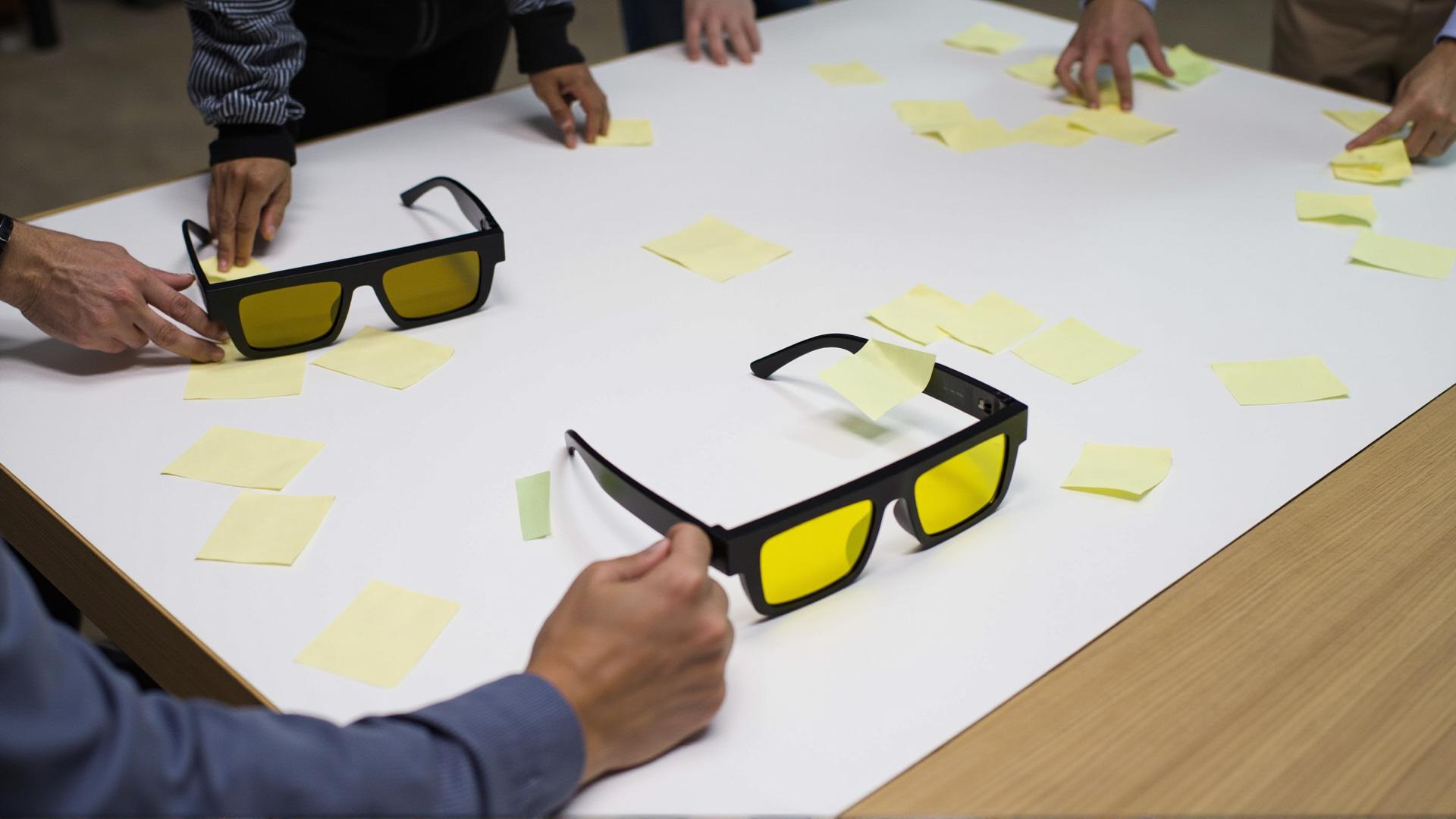
The category decision is the first one a smart glasses brand makes, and for many buyers it is also the most expensive place to be wrong. It happens before logo design, before packaging artwork, before any of the reversible choices: should the first product line be AI camera glasses or Bluetooth audio glasses? The two categories share an enclosure and a factory, but they are different businesses — different customers, different price bands, different after-sales loads, different content engines, different return reasons. This guide compares the commercial realities rather than the feature lists, and ends with a decision rule. It deliberately does not repeat engineering comparisons already covered elsewhere; imaging selection lives in 8MP versus 13MP and acoustic selection in open-ear versus bone conduction.
Customer, Price and Ticket Size
Camera glasses sell to creators, makers and people buying a capture tool. The buying motivation is specific — first-person video without a head strap — and customers will pay for imaging quality, stabilization and storage, which puts the category's credible products in substantially higher price bands than everyday audio frames. That ticket size is a benefit (margin headroom, room for accessories and bundles) and a discipline: expectations at a premium price include premium packaging, premium support and zero tolerance for footage that fails to match the listing.
Audio glasses sell on a broader and softer motivation — calls, media, awareness, everyday eyewear that happens to be connected. Entry-level frames compete at consumer-electronics impulse-adjacent prices where gifting and reordering channels work naturally. The category's strength is width: many more wearers have an everyday use for open-ear audio than have a weekly use for first-person capture, which is the core argument in the audio glasses opportunity analysis.
Returns, Support and the After-Sales Load
The two categories fail differently. Camera complaints concentrate in expectation gaps that are expensive to fix — footage not matching creator expectations, low-light performance, thermal limits during long recordings, storage confusion — and the support conversation requires diagnosing encoded files, not just re-pairing a phone. Audio complaints are usually simpler — pairing, leakage, fit, charging — and faster to close. The operational consequence is real: a camera launch needs deeper first-line technical support and more disciplined claims language (what the camera does under what conditions), while an audio launch needs volume-efficient, repeatable handling. Both categories ultimately run through the same framework on the after-sales page, but the staffing weight differs, and the evidence discipline behind imaging claims is the subject of the claims policy.
The Marketing Engine the Category Demands
Camera glasses are sold with footage. The category requires an ongoing content engine — sample footage in the conditions customers actually shoot, creator comparisons, clips that survive compression on social platforms — and the product produces exactly that raw material, which is why the category rewards brands that are already fluent in short-form video. The audience and use cases are mapped in photo and video applications. Audio glasses are sold through demonstration of a feeling — comfort, awareness, call quality in life scenes — and convert well through lifestyle merchandising, gifting seasons and eyewear channels where the frames-first logic in audio and calls does the explaining. A brand without video capability should think carefully before launching camera; a brand without eyewear merchandising should think carefully before launching audio.
Supply Complexity and Certification Weight
Camera platforms concentrate more cost and more engineering in the temple — sensor, optics, encoding, storage and the thermal envelope described in the platform article — and they are more sensitive to component supply and per-unit inventory cost. Certification is where the categories unexpectedly converge: both are radio devices carrying the same market-access load (CE-RED, FCC and equivalents, mapped in the compliance center), but camera products add privacy-relevant positioning (a visible recording device in public environments), which affects packaging, instructions and marketplace acceptance in some regions. Audio products add less at the perimeter but compete more on certifications that establish basic trust in crowded listings, per the certifications overview.
The Decision Rule
Launch camera first when the brand already speaks to creators, can produce footage-driven marketing, has the support depth for imaging questions, and wants premium positioning with fewer, higher-value orders. Launch audio first when the goal is broad-channel distribution, reordering volume, gifting and eyewear adjacency, and the strength is merchandising rather than content production. For a first season with no strong signal either way, audio is the lower-risk anchor — larger everyday audience, simpler support, wider channel fit — with a camera SKU added in season two once the brand voice and support are in place. The reasoning for sequencing families inside one range, rather than betting everything on one product, is the portfolio guide, and brand-channel fit can be checked against the consumer electronics brand program. Starting points are the two category families: AI camera glasses and Bluetooth audio glasses.
Frequently Asked Questions
Which category is the bigger market opportunity?
Audio glasses address a broader everyday wearing context and support wider, reordering channels; camera glasses address a narrower but higher-value creator audience with premium pricing. The opportunity is channel-fit, not category size — and published market figures need their scope checked, as the market data guide explains.
Do camera glasses carry higher margins?
Premium camera platforms carry more unit cost and more margin headroom, but also higher support load, marketing cost and return risk when footage expectations miss. Net margin depends on execution; the price band alone does not make camera more profitable.
Should we launch both categories in the first season?
Usually not with equal weight: two categories split inventory, certification attention, support training and marketing focus. The common successful pattern anchors one category, then adds the second as a planned season-two expansion — the sequencing logic is in the portfolio guide.
Do camera glasses face extra privacy restrictions?
Recording devices face recording-notice norms and some marketplace or venue restrictions that audio products do not; requirements vary by market and should be checked in the destination file alongside radio conformity, starting from the compliance center. Clear product documentation about recording behavior is the practical baseline everywhere.
Which category performs better in gifting and seasonal retail?
Audio frames generally fit gifting and seasonal windows better — lower decision friction, everyday use, broad size/color appeal — while camera products sell hardest around content-creation moments. Match the category to your actual campaign calendar and channel buyers.
If you want the category decision mapped against your channels — audience, price band, support capacity and season calendar — bring those four inputs to request a quote and get a platform and sequencing recommendation rather than a generic catalog.


