

Six questions account for most of the correspondence this model receives: can it be called waterproof, can a video specification be published, how long does it run, what sizes does the detachable inner frame cover, is a charging case in the box, and how much does it weigh. They are sensible questions and four of them are aimed at the wrong object.
The published record for the S7 is short. It carries a 260 mAh cell; the charge time is two hours or less; charging is magnetic; and the published runtime is five to eight hours, alongside a 13-megapixel camera and a feature line that gives an IP54 marking and a detachable inner frame among its four phrases. There is no colour row, no charging-case row, no weight, no dimension, no Bluetooth version and no camera specification on the model page, no independent product page, one product image on that page and no demonstration video.
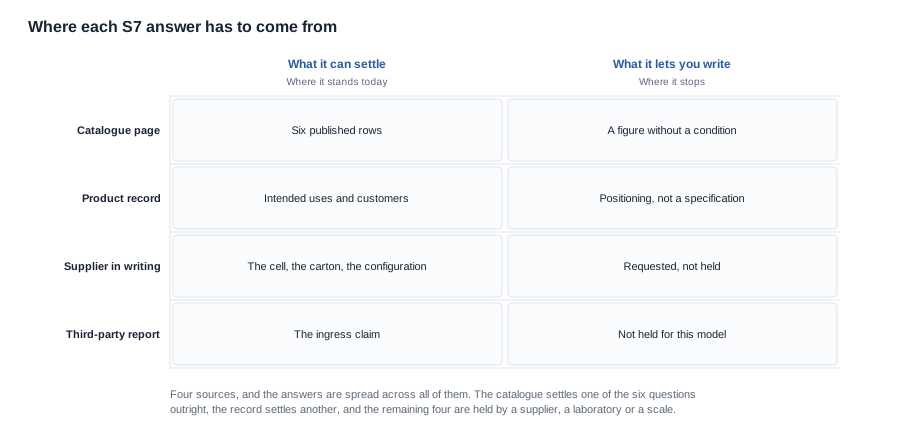
Every one of the six questions has a document that can answer it — and in four cases it is not the document the question is aimed at. That is the useful part of this page: not the answers themselves, but where each answer actually lives, what it has to arrive with, and what a buyer can write down today without borrowing anything from another model.
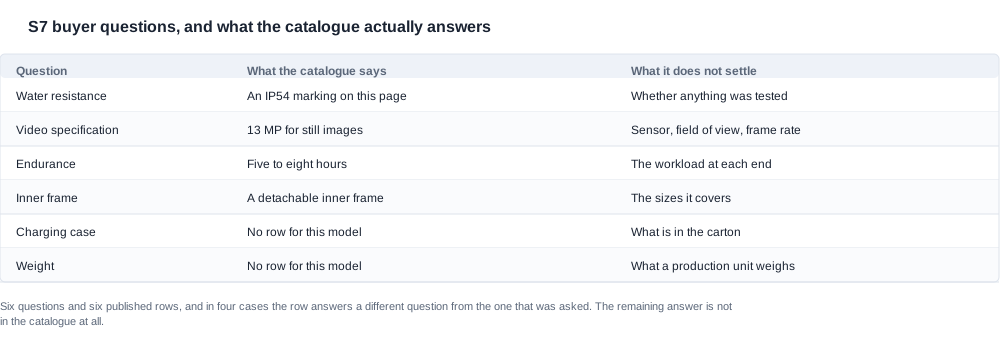
Why four of the six common S7 questions are aimed at the wrong target
A question has a subject, and the subject sits somewhere. "Is it waterproof" points at a marking on the model page. "How long does it run" points at a published range. "Which sizes are available" points at a feature line. The buyer expects the document the subject sits on to settle the matter, and where the subject is a number or a phrase rather than a measurement, the document cannot.
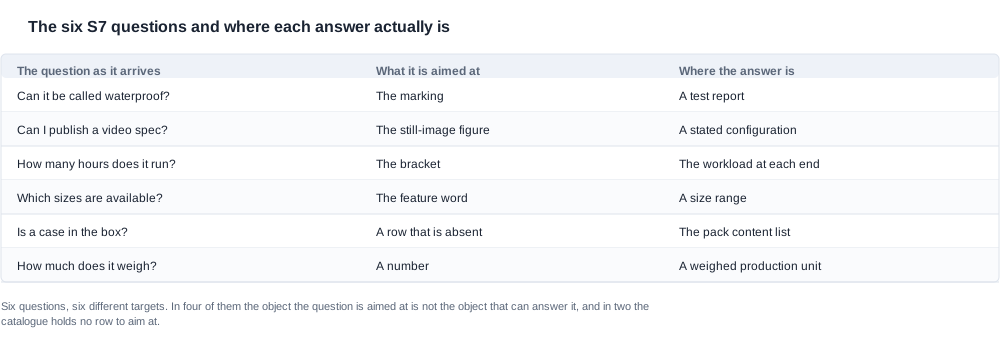
Two of the six are aimed correctly and still cannot be answered from the catalogue. The charging-case question points at a row that does not exist on this model's page at all, and the weight question points at a figure the catalogue publishes for a different model. In both cases the honest answer is not "no" — it is that the catalogue holds nothing on the question, and the answer has to come from a packing list and a scale.
The remaining four are mis-aimed rather than unanswerable. The ingress question is aimed at a catalogue annotation when the answer sits in a test report. The video question is aimed at a still-image resolution when the answer sits in a configuration. The endurance question is aimed at a range when the answer sits in the two workloads behind its ends. The inner-frame question is aimed at four characters when the answer sits in a size range.
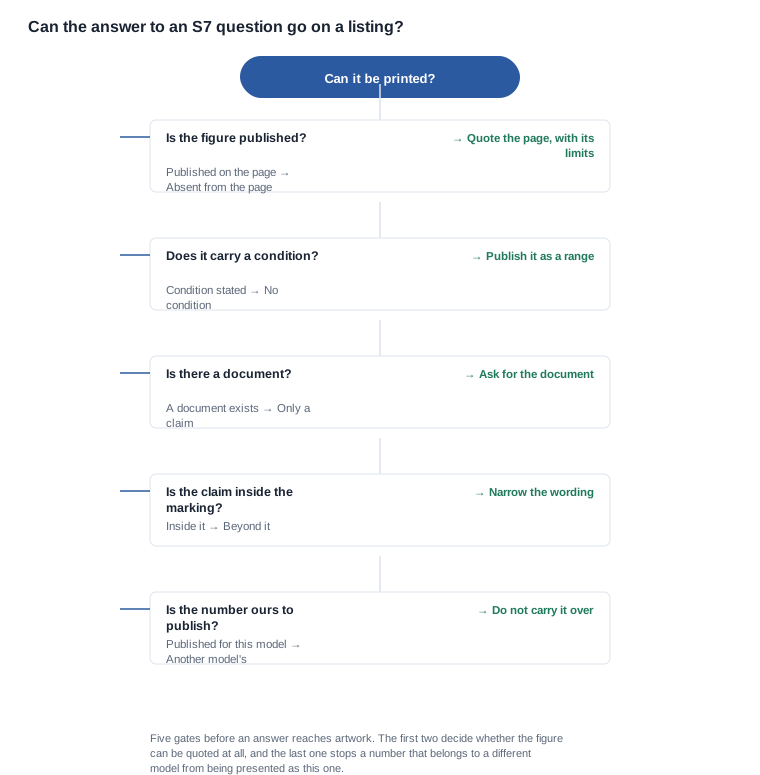
That distinction matters commercially, because the two situations need different answers from a supplier. A mis-aimed question is closed by asking a different question, and it closes in a week. An unanswerable-from-the-catalogue question is closed by a document, a measurement or a laboratory, and it has to be planned for before the packaging is designed. Both need the same discipline, though: no answer that arrives without a condition, a configuration or a reference is allowed onto a listing.
What can be written today, with nothing borrowed. The tier this model occupies, the positioning the company states for it, the cell and charge rows as published, the two feature phrases the catalogue prints, and the list of rows that do not exist for it. That is a complete and defensible description of the product for a catalogue page, a specification sheet and a quote, and it is enough to let a buyer start work while the documents are still being collected. What it is not enough for is any sentence that promises an outcome: a battery that lasts a day, a camera that records in a particular way, protection that holds in weather, or a frame that suits a range of customers. Each of those needs a row the record does not carry, and each of them is a question rather than a gap to be closed by emphasis.
The ingress marking and the video specification, and what each one really settles
Is it waterproof, and can the claim go on the box?
The model page carries an IP54 marking, and the product record states that no third-party test report number sits behind this marking and that it is a catalogue marking rather than a tested result. The record goes further and draws the line itself: no ingress rating reaches a customer page until a detection report stands behind it. That is the company's own position on its own page, and it is the answer to the question rather than a refusal to answer it.
The two digits carry two separate meanings, and they are worth reading in order. The first one covers solid foreign objects, where 5 permits a limited quantity of dust ingress and stops short of a dust-tight rating. The second one covers water, where 4 means splashing water from any direction — it does not cover immersion, a shower, or a water jet. A claim written to sit inside those two digits is defensible; a claim written past them is not, whatever the intention.
One scope note belongs here, and it comes from the catalogue rather than from the record. The marking is printed on two model pages of the whole catalogue, and those two models are this one and its sibling in the same family. The marking is therefore a gap the two of them share rather than a feature that separates them, and a listing built on it is a listing whose evidence burden sits with the buyer.
What to ask, in one line: the standard, the laboratory and the sample batch behind the marking, plus the model string the report is issued against. The IP rating testing notes set out that request in the form a testing body will answer, and the IP rating guidance page carries the standard itself.
What resolution does it record, and can I publish a video specification?
The published figure is 13 MP. What is not published is everything that turns a still-image figure into a video specification: the video mode, the frame rate, the sensor, the low-light behaviour, the field of view and the storage arrangement are all absent from it.
Two consequences follow, and a buyer needs both of them. The first is that a video specification cannot be assembled from this page. A video claim is a configuration, and the configuration has to arrive with the figure rather than beside it. The second is that 13 MP is a tier with three members in this catalogue, so it is a segment label and not a separator — the interesting comparison for a channel is almost always between models on the same tier, and on that tier the resolution row says nothing about any of them.
What to ask: the video resolution and frame rate, the camera sensor and the field of view, the low-light behaviour, and the place the footage ends up. The camera imaging notes cover what the sensor and the field of view decide for the picture, and the published S7 specification list is the baseline for everything the model page does state.
And what a listing can say in the meantime. A channel that cannot publish a video specification is not left with nothing. It can publish the still-image figure in the catalogue's own terms, and it can publish a configuration once the supplier has answered. The failure mode is not silence; it is a video claim that arrives without the configuration behind it — a figure on a listing that nobody can match against the product, and that a customer will test on the first unit. A page that stays at the published tier is a narrower page, but it is a page that survives; a page carrying an unmatchable video figure is not.
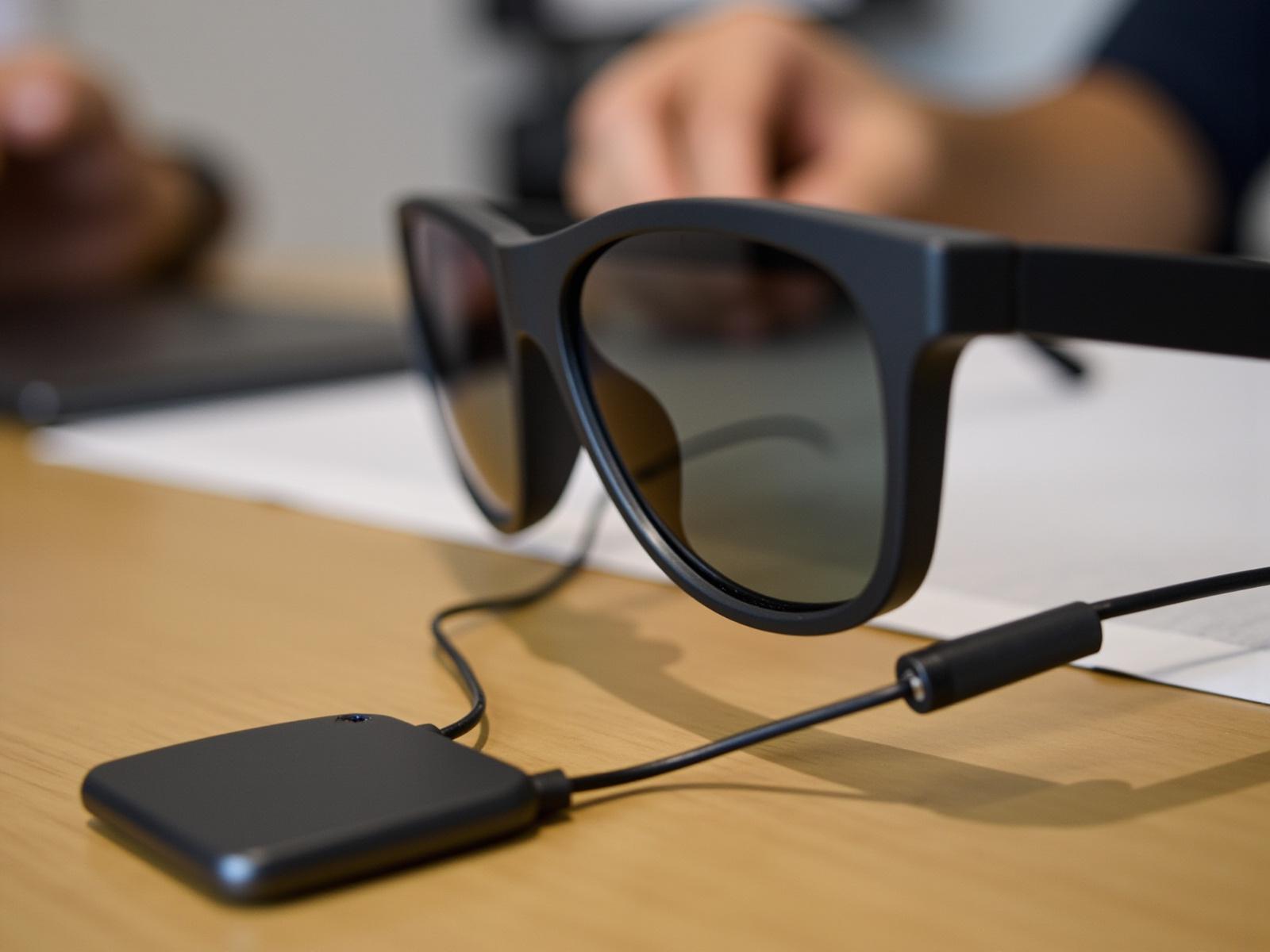
The endurance bracket and the detachable inner frame, read as questions
How long does it run, and what is the five-to-eight-hour range?
The page publishes a 260 mAh cell; the charge time is two hours or less; charging is magnetic; and the runtime is published as five to eight hours. It publishes no condition of any kind for that runtime, and neither does any other model in the catalogue: there is no laboratory, no workload, no ambient condition, no method and no unit count anywhere in the record. A bracket of three hours' width with two unlabelled ends is therefore a range without a workload attached to either end.
That is why the two answers buyers reach for are both wrong. "Plan the product on five hours" reads the lower end as the working case, which is an inference nobody has published. "It depends on how much you use the camera" names the variable, which is also an inference, and it is the more dangerous of the two because it sounds like a published condition. The honest answer is narrower than either: the range is published, the workloads behind the two ends are not, and the two ends have to be named before the figure can be written down.
There is a second reason the number will not settle the question on its own. The 260 mAh figure is the same number the sibling model in this family publishes, and so is the runtime bracket, the charge method and the charge ceiling. A value shared by both candidates cannot rank them, and a buyer who quotes it as a model-level figure has quoted a family-level one.
What to ask: the workload at the short end and the workload at the long end, the resolution and frame rate the measurement was taken at, how many units were in the sample, whether the endurance figure is measured from a full charge, and the starting state for the charge-time ceiling. The S7 battery life analysis works through the same rows, and the how to compare battery life method explains why the condition matters more than the number. For the gap between a bench figure and a figure taken in use, the battery during activity piece is the closer read.
What is the detachable inner frame, and which sizes exist?
The feature line lists a detachable inner frame, and the catalogue publishes nothing else about it: not what it consists of, not which sizes it covers, not what it is intended to achieve. A four-character feature word is enough to put the phrase on a page. It is not enough to call the model a sizing system, because a sizing system has to answer the question a customer asks at the point of sale, and the answer to "which sizes exist" is not on the page.
What to ask: the sizes on offer, whether an inner frame can be bought on its own as a spare, how a customer's size is decided at the point of sale, and the measured weight of a production unit, which the model page also does not publish. The sport sizing analysis covers how to build a size matrix for this category from samples rather than from a brochure, and the sport weight comparison covers the row that decides how a long session goes for a customer.
One related row belongs in the same message. The record for this model carries five customisation axes and does not say what they are, and its optional-configuration field is empty because the catalogue lists no configuration options for it at all. A frame that can be specified is a frame whose documents have to be requested against a confirmed configuration, so the question of which of those five axes applies to a given order travels with the size range rather than after it.
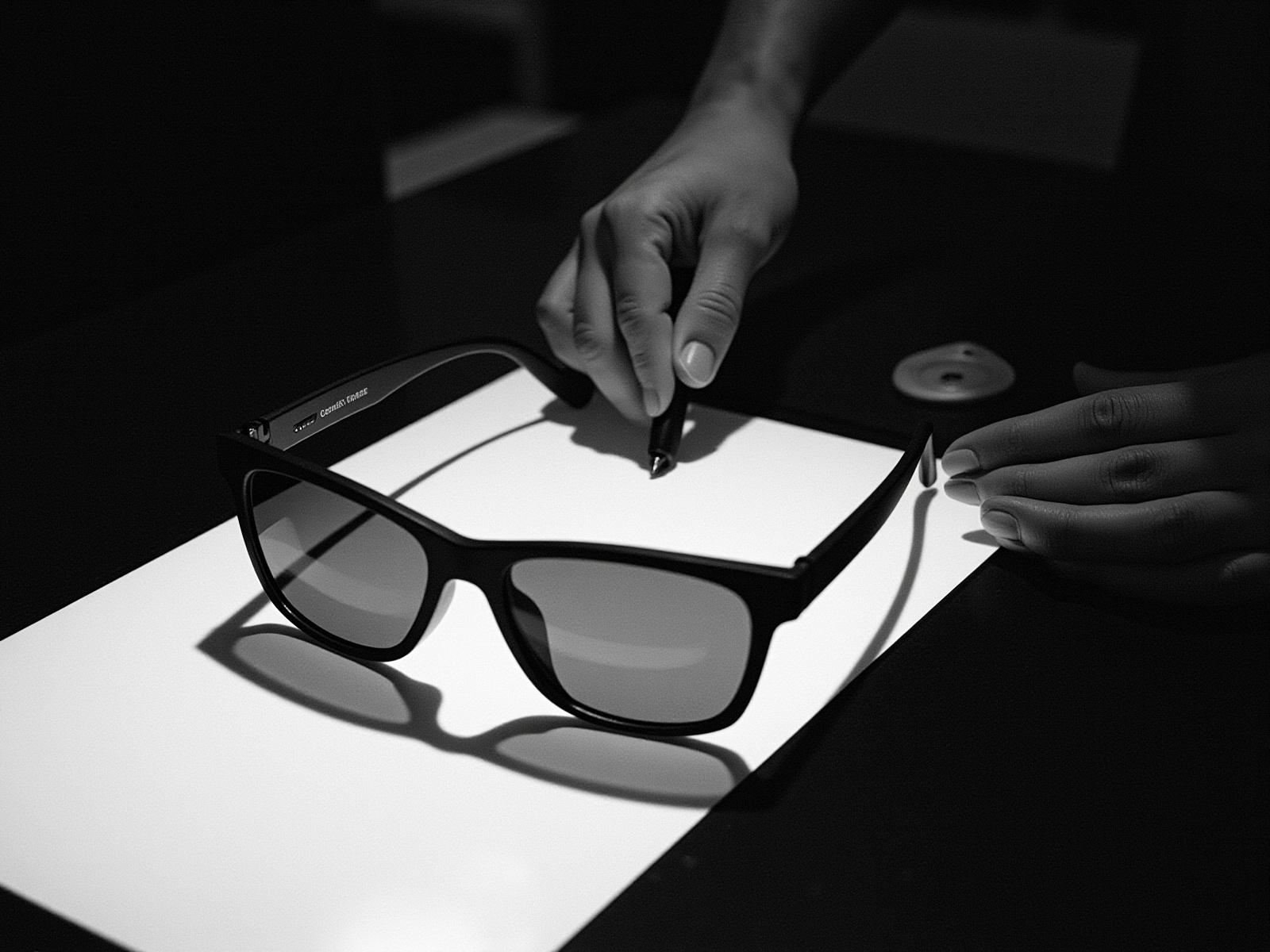
The charging case and the weight, where the catalogue has no row to answer from
Is there a charging case, and what does it add to the parcel?
The S7 page has no charging-case row. That distinction is worth stating precisely, because a row whose capacity is withheld is not the same thing as a row that is missing altogether. In the wider catalogue the situation splits four ways: some models have no case row at all, one states plainly that it has no case, several publish a case capacity, and two carry a case row with no value against it. The catalogue prints a case row where it has one — and this model's page has none.
So the answer to "is there a case" is not in the catalogue, in either direction, and the question that does get answered is what the pack contains. That matters beyond the carton: the transport file, the packing instruction that the declared rating implies, and the declarations on the label all follow from what is inside, and a case that is present is a second lithium cell with its own identifier.
The second point is the one that causes mistakes. The page publishes a capacity, and a capacity is a value rather than an identity. Two models publishing the same capacity number are not automatically covered by the same transport document, because the document has to name the cell rather than a number. The record publishes no cell type, no cell model and no batch for any model, so the only handle a buyer has is the identifier printed on the cell itself.
What to ask: the pack content list for the configuration being ordered, the cell identifier fitted to this model, the transport test summary that names that cell, and the declared rating that the packing instruction follows from. The accessory side of that file is set out in the charging case options analysis, and the shipping weight analysis covers the arithmetic once the pack list is known.
How heavy is it?
Not published for this model. The only weight published anywhere in this catalogue is the 158 g of a different model in a different class, with a different cell and a different camera tier, so it is not a proxy for this one and should not appear in a comparison as though it were.
The answer is a scale and a production unit, and it is also a question about timing: the weight of a production unit and the length of its temples, both taken before the packaging is designed rather than after. The S7 buyer review checklist lays those rows out as a review sheet with owners and tolerances, and a weight request belongs on that sheet.
And the timing of the weighing matters more than the weighing itself. A figure taken from a production unit after the carton is printed changes the carton, and a carton that changes the label declarations and the paperwork that travels with the goods. The weight belongs in the sample stage, where it can still be acted on, and it belongs in the specification sheet next to the rows it will be compared with.
The question list to send, and what this record will not answer
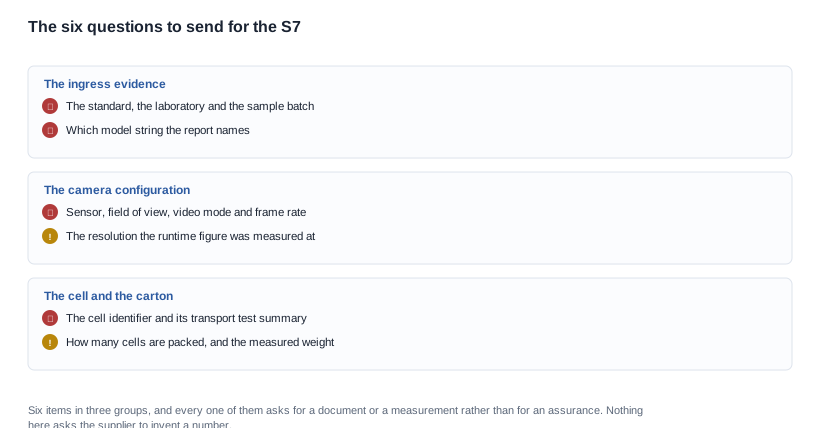
Six questions, grouped by who has to answer them, are enough to close most of what this model leaves open.
For the laboratory. The standard, the laboratory and the sample batch behind the ingress marking, and the model string the report names. Nothing else in the file can substitute for this, and a marking without it is a catalogue statement.
For the supplier, in writing. The camera configuration — sensor, field of view, video resolution and frame rate, plus the place the footage ends up. The endurance figures — the workload at each end of the range, the resolution they were measured at, and the number of units. The cell and the carton — the identifier fitted to this model, the transport test summary naming it, the pack content list, and the measured weight and dimensions of a production unit. The size range behind the detachable inner frame.
How to run the round. All six questions go into one message, each with the document named against it, and they are asked at the sample stage rather than at the artwork stage. Two of them carry the round: the ingress evidence, because it needs a laboratory and a sample batch, and the camera configuration, because it decides what can be written on the box. The other four can be closed by a written answer from the supplier in parallel. A discipline worth keeping is to record each answer in one place with its date and its reference, so the next order reuses the evidence instead of re-requesting it, and so that a change of cell, of configuration or of model string shows up as a change rather than as a silence.
Red flags in the answers are the same ones that appear in every other model in this catalogue, and they are worth naming once. A summary offered in place of a reference. A figure that turns up as a typical value, an industry average, or with no unit at all. A promise to confirm later with no date attached to it. A document that points at a family, a platform or a sample batch instead of the model string on the artwork. And a number that belongs to another model being offered in passing, which is the easiest of these to accept and the most expensive to print.
What this record will not answer, stated plainly so that nothing is mistaken for a gap in the file: there is no camera configuration, no ingress report, no endurance condition, no size range, no measured weight, no cell identifier, no pack content list, no independent product page, and no demonstration video — one product image on the model page is the whole of the available material, and the page numbers printed for this section do not agree with the index at the front, so agree which page your supplier is quoting and write that page number into the agreement.
What we will and will not put in writing. We will put in writing the published rows for this model, the position the company states for it, and the exact request that closes each of the six questions. We will not treat the ingress marking as a tested result, we will not state a video specification the catalogue does not contain, we will not collapse the endurance range into a single figure, and we will not quote a weight or a capacity from a different model. The S7 certification status piece sets out the same evidence chain for the documents behind this model, and the sport smart glasses range is where it sits.
Tell us which of the six questions is on your critical path, which market the goods are going to and what your packaging has to say, and we will tell you which of them the record answers, which need a document, and which need a measurement before anything is printed.
Reading that sits next to this one
- Picking within the sport group — choosing a model in the sport group
- The rows this model publishes — S7 smart glasses specifications and features
- Ordering discipline for this range — OEM ready platforms sample before bulk
Tell us the six questions you actually need answered, and we will tell you which of them the record settles and which need a document from the supplier.


